
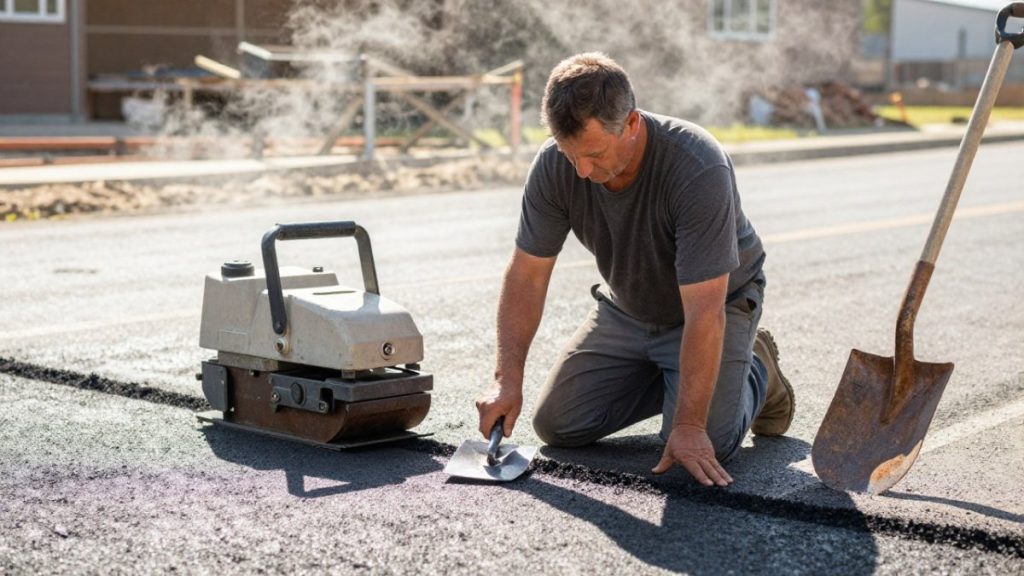
Last Updated: November 8, 2026
Quick Summary
Paving equipment financing lets you acquire pavers, rollers, and trucks while spreading the cost over a set term, so machines are ready before the first job pays. Map equipment to a contract, compare loans and leases, match payments to seasonal revenue, then get pre-approved with Always Capital in as little as two to four hours.
- Nearly 9 in 10 U.S. companies use some form of financing when acquiring equipment.
- Start with the job, not the dealership: finance the machine that unlocks the most billable work.
- Always Capital structures terms from 24 to 84 months with 30-, 60-, or 90-day deferred payment plans.
- Application-only approvals reach up to $500,000 with no financial statements required and soft credit pulls.
- Bid the work first, then finance the capacity to deliver it.
Table of Contents
- Why Paving Contractors Use Equipment Financing to Grow
- Step 1: Map the Equipment Your Next Contract Requires
- Step 2: Compare Paving Equipment Loans, Leases, and Payment Structures
- Step 3: Decide Between New and Used Paving Equipment Financing
- Step 4: Match Asphalt Equipment Financing to Seasonal Revenue
- Step 5: Meet the Equipment Financing Application Requirements
- Step 6: Build the Capacity to Bid Larger Projects
- Step 7: Get Pre-Accredited With Always Capital
- Frequently Asked Questions
Why Paving Contractors Use Equipment Financing to Grow
Paving equipment financing is a funding arrangement that lets a paving company acquire machinery and trucks while spreading the cost over a set term.
Always Capital works with paving contractors on paving equipment loans built around how asphalt work actually pays.
The core problem is timing. A paver, roller, or dump truck must be ready before the first job, but the check for that job arrives weeks later.
A quick look at what each step covers:
| Step | What You Do | Why It Matters |
|---|---|---|
| 1 | Map equipment to your next contract | Avoids buying machines you cannot bill for |
| 2 | Compare loans, leases, and payment plans | Controls upfront cost and ownership |
| 3 | Choose new or used equipment | Balances total cost against reliability |
| 4 | Match payments to seasonal revenue | Protects cash flow in slow months |
| 5 | Prepare application requirements | Speeds up approval |
| 6 | Build capacity for larger bids | Unlocks bigger contracts |
| 7 | Get pre-approved | Locks in buying power |
Step 1: Map the Equipment Your Next Contract Requires
Start with the job, not the dealership. List every machine the contract demands, then check what the current fleet can already cover. The gap is what you finance.
Which Machines to Add First
Priority goes to the machine that unlocks the most billable work. For most paving companies, that means:
A common mistake is buying the newest paver first when the real bottleneck is hauling. If mix arrives late, the paver sits. Match the purchase to the constraint, not the wish list.
Step 2: Compare Paving Equipment Loans, Leases, and Payment Structures
A loan builds ownership; a lease buys use for a set term. The right choice depends on how long you plan to keep the machine and how much cash you want to hold back.
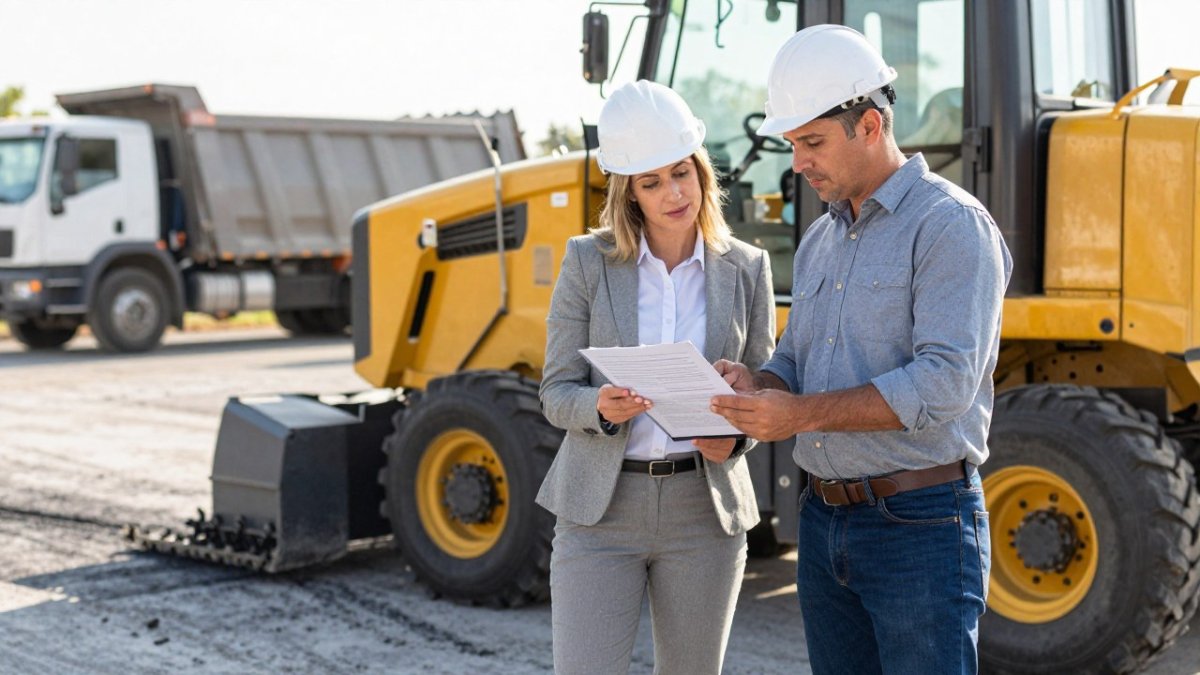
Here is how the three structures stack up:
| Structure | Ownership | Upfront Cost | Best For |
|---|---|---|---|
| Equipment loan | You own it | Higher | Long-term fleet assets |
| Equipment lease | Lessor owns it | Lower | Short-term or seasonal needs |
| Deferred payment plan | Depends on contract | None during deferral | Slow-start seasons |
Compare an equipment loan vs an equipment lease before you sign, since the end-of-term options differ sharply.
Always Capital structures terms from 24 to 84 months with deferred payment plans of 30, 60, or 90 days.
Step 3: Decide Between New and Used Paving Equipment Financing
Used equipment stretches buying power further, but condition drives total cost of ownership. A used paver that needs a screed rebuild can cost more than the savings on the purchase. The decision is not about sticker price, it is about which machine keeps a crew billable for the next several seasons.
Total Cost of Ownership for Paving Iron
Compare any two machines on the same four lines before you finance either one:
- Purchase price and financing cost. The financed amount, term length, and any deferred-payment structure all change the monthly obligation. A lower purchase price on a short term can still produce a higher payment than a slightly higher price stretched over a longer term.
- Maintenance and wear parts. Paving equipment wears in predictable places: screed plates, augers, conveyor chains, drum flighting, roller drums, and water systems. Ask for the last two years of service records and price the wear items you will likely replace in year one.
- Downtime exposure. A machine that is down during the paving window costs more than the repair bill, it costs crew hours, hauling coordination, and possibly a missed completion date. Common models with broad parts availability shorten downtime; orphan models do not.
New Versus Used by Equipment Type
The right answer differs by machine:
- Pavers. A new paver buys warranty coverage and consistent mat quality on high-spec work. A used paver can be a strong first asset if the screed and augers are sound and parts are easy to source.
- Rollers and compactors. These are often the best used buys, simple mechanically, widely available, and easy to service. Verify drum condition and vibration function before committing.
- Cold planers. Milling machines carry high wear on the drum and teeth. A used planer needs a close inspection of the cutting drum and conveyor system, and a repair reserve built into the plan.
Utilization Math Before You Commit
Before financing any machine, estimate how many billable days it will actually work in your season. A roller that runs most paving days is easy to justify.
Always Capital finances older, high-hour, and high-mileage machines with no age or mileage restrictions, and applies the same loan and lease frameworks to new or used iron. For a deeper walkthrough, read the guide on used equipment finance and how to qualify fast, and see how financing for older equipment and trucks works when age would otherwise be a barrier.
Watch out: buying a used machine with no service history to save on the purchase price can erase the savings in the first repair window, always price the wear items before you sign.
Step 4: Match Asphalt Equipment Financing to Seasonal Revenue
Paving revenue swings with weather. A payment schedule that ignores that swing creates cash crunches every winter. Seasonal payment structures fix the mismatch, but they only work when they are built on a real cash-flow plan rather than a guess.
Build the Seasonal Cash-Flow Picture First
Before you choose a payment structure, map the year in three blocks:
- Peak paving months. Revenue is highest, crews run long days, and hauling is the constraint. This is when the business can absorb the largest payments.
- Shoulder months. Volume drops but some work continues, patching, seal work, small commercial jobs. Payments should step down, not disappear.
- Off-season. Weather-dependent revenue falls sharply in cold markets. Payments should be lowest or deferred here, and the reserve should carry fixed costs.
Line up expected receivables against expected payments month by month. If a month shows payments exceeding expected collections, that is the month the structure needs to change, not the month the payment is due.
Translate the Plan Into a Payment Structure
Once the seasonal picture is clear, match it to the structure:
- Seasonal payment capabilities let you set higher payments during peak months and lower payments during the off-season, so the obligation tracks revenue instead of fighting it.
- 30-, 60-, or 90-day deferred payment plans push the first payment out far enough to generate operational revenue on the new machine before the first remittance. This is most useful when a machine is bought just before the season starts.
- Custom tailored structures align payment frequency to your predictable accounts receivable cycle, for example, matching due dates to when progress payments typically land.
Always Capital offers seasonal payment capabilities and deferred start options, which can help a contractor in a cold-weather market manage payments during slower months. Terms run from 24 to 84 months, which lets you stretch the obligation across more than one season and keep the peak-month payment manageable. For capacity planning across seasons, see evaluating heavy equipment needs for seasonal growth.
Public-Sector Work Changes the Timing
DOT and municipal contracts pay on their own schedule, and that schedule rarely matches a machine payment. Mobilization costs come out before the first check, retainage holds back a portion of each payment until the job is accepted, and final payment can lag completion by weeks or longer. A paving company that finances equipment against public work needs to plan for that lag explicitly:
- Keep a reserve sized to cover at least one full payment cycle during a retainage hold.
- Time deferred-payment starts so the first remittance lands after the first progress payment, not before it.
- Avoid financing a new machine at the expense of the operating cash needed to mobilize the crew that will run it.
Build a Wet-Weather Contingency
A wet spring can wipe out weeks of paving days. The payment plan should assume that happens at least once in the term:
- Hold a cash reserve equal to a set number of monthly payments, funded during peak months.
- Keep a short-term operating line separate from equipment obligations so a weather delay does not force a missed equipment payment.
- Choose a structure with the lowest off-season payment you can support, so a slow start does not compound into a cash crunch.
Watch out: signing a flat twelve-month payment schedule on a machine that only earns in eight months of the year is the most common way seasonal paving businesses get squeezed, build the off-season into the structure before you sign.
Step 5: Meet the Equipment Financing Application Requirements
Most equipment financing applications ask for a short list of items. Getting them ready in advance is the fastest path to approval.
The core requirements are:
- Business name, address, and time in business
- Basic revenue figures
- Equipment details, including make, model, and year
For a full list, review the steps to get pre-approved for heavy equipment loans. Always Capital offers application only equipment financing approvals up to $500,000 with no financial statements required, and accepts all credit types, including challenged profiles.
Step 6: Build the Capacity to Bid Larger Projects
More equipment means more capacity, and more capacity means bigger bids. That is the real payoff of scaling a paving business with equipment financing.
The pattern is consistent. Add a second paver and a roller, and suddenly a two-crew schedule is possible.
Watch out: overextending on machines before the contracts exist can bury a crew in payments. Bid the work first, then finance the capacity to deliver it.
Step 7: Get Pre-Accredited With Always Capital
Pre-approval can help a contractor move quickly when the right machine appears.
Always Capital provides fast, flexible heavy equipment and commercial truck financing with approvals in as little as two to four hours. The key features:
- 100% financing options up to $5 million
- Application-only approvals up to $500,000
- Soft credit pulls only, with no impact on your score
For contractors ready to scale, construction equipment financing covers excavators, dozers, pavers, and trucks in one place, including dump truck financing for the hauling capacity that keeps a paving crew moving.
Scaling a paving business comes down to matching the right machine to the right contract at the right payment structure. Always Capital offers two-to-four-hour approvals, 100% financing, soft credit pulls, and terms from 24 to 84 months.
Frequently Asked Questions
How hard is it to get paving equipment financing with a rough credit history?
It is more achievable than many contractors expect. Lenders that look at the machine itself as collateral can approve applications that a conventional bank would decline, because the equipment secures the deal. **Always Capital** works with all credit types and uses soft credit pulls, so checking your options does not affect your score. Approvals can come back in as little as two to four hours, and financing up to 100% is available for qualifying businesses.
What paving equipment should a growing business finance first?
Start with the machine that removes your biggest bottleneck on the jobs you already win. Financing one asset at a time keeps payments manageable while you prove the new capacity pays for itself.
Can a paving business finance a used paver or roller?
Yes. Used paving equipment financing is widely available, and some lenders place no age or mileage restrictions on the machines they fund. A used paver that is mechanically sound can cost far less than new while still delivering the capacity you need for larger contracts. Have the machine inspected before you commit, and confirm the lender will finance private-party and auction purchases if that is where you are sourcing it.
How can a paving company match equipment payments to seasonal revenue?
Ask for a payment structure built around your compressed paving season rather than a flat monthly schedule. **Always Capital** offers 30, 60, and 90-day deferred payment plans plus seasonal payment capabilities, so the first remittance can land after your crews are already generating revenue. Pair that with terms stretching from 24 to 84 months and you can keep payments manageable through slower winter months.
