
Last Updated: November 9, 2026
Quick Summary
Financing a waste collection route acquisition bundles three costs: route rights, rolling stock, and working capital. Always Capital funds up to 100% of the trucks and route purchase with approvals in two to four hours, and pairs equipment loans with business credit lines so you cover payroll and fuel after close.
- Route purchases split into route rights, rolling stock, and working capital, and each needs its own funding structure.
- Always Capital offers up to 100% financing with approvals in as little as two to four hours and soft credit pulls only.
- Equipment loans run 24 to 84 months and are secured by the trucks, while working capital bridges your first 90 days.
- Verify route density, churn, and contracted revenue before you sign, and confirm contracts assign to a new owner.
- Always Capital funds up to $500,000 application-only and scales total capacity to $5 million.
Table of Contents
- What Financing a Waste Collection Route Acquisition Actually Covers
- Dump Truck Financing and Roll-Off Truck Funding for Haulers
- Fleet Expansion Capital: Buying the Route and the Trucks Together
- Equipment Loans vs. Working Capital for Route Acquisitions
- Valuing the Route Before You Sign: Density, Churn, and Contracted Revenue
- Due Diligence Checklist for a Waste Collection Route Purchase
- Post-Acquisition Integration Financing and Lender Risk Assessment
- Get Pre-Approved with Always Capital Before You Bid
- Frequently Asked Questions
What Financing a Waste Collection Route Acquisition Actually Covers
Financing a waste collection route acquisition is the process of funding the purchase of customer contracts, trucks, and day-to-day operating cash in a single package.
That scale explains why route deals attract buyers. It also explains why lenders look closely at what they are funding.
Always Capital works with haulers who need this capital fast. The company offers up to 100% financing with approvals in as little as two to four hours, and it runs soft credit pulls only, so a pre-qualification does not hurt a personal or business score.
The Three Cost Buckets: Route Rights, Rolling Stock, and Working Capital
Every route purchase splits into three parts, and each one needs a different funding structure.
- Route rights: the customer list, contracts, and goodwill you are buying
- Rolling stock: the trucks, carts, and containers that service the stops
- Working capital: payroll, fuel, disposal fees, and the gap before collections arrive
Most buyers focus on the purchase figure and forget the third bucket. That is where deals stall.
Dump Truck Financing and Roll-Off Truck Funding for Haulers
Dump truck financing and roll-off truck funding cover the vehicles that make a route run.
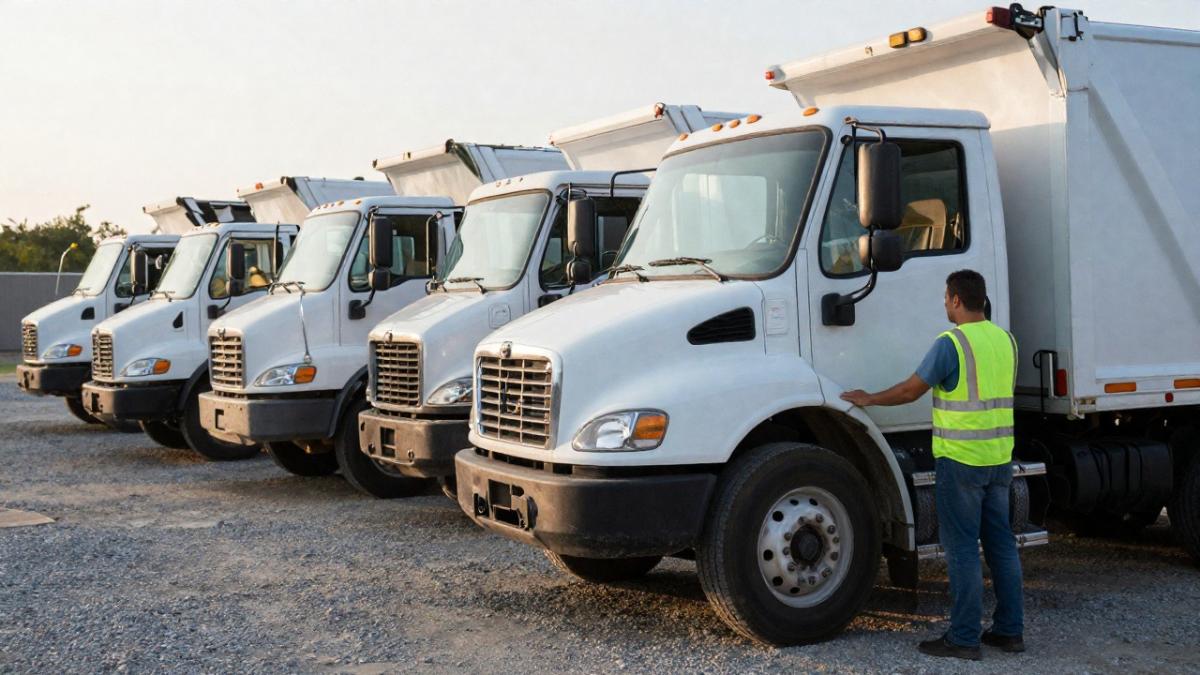
Always Capital finances both categories. The company covers heavy-duty vocational trucks, single-axle, tandem, and tri-axle dump trucks, Class 8 tractors, and vocational roll-off units for waste and scrap operations.
For a hauler comparing programs, roll off truck financing options lay out the truck types and approval paths side by side.
Fleet Expansion Capital: Buying the Route and the Trucks Together
Fleet expansion capital is the funding that lets a buyer add route contracts and vehicles in one move rather than two.
That is the case for a single application that covers both. Always Capital finances multiple vehicle acquisitions at once for fleet logistics businesses, which suits a hauler expanding its fleet.
A dump truck financing program built for fleet growth shows how to plan capacity without draining cash reserves.
Equipment Loans vs. Working Capital for Route Acquisitions
Equipment loans and working capital solve different problems, and a route purchase usually needs both. Equipment loans are secured by the trucks themselves, while working capital covers the operating gap.
Here is how the two compare:
| Funding type | What it covers | Best for | Typical structure |
|---|---|---|---|
| Equipment loan | Trucks, containers, carts | Adding rolling stock | Secured by the asset, 24 to 84 months |
| Equipment lease | Trucks with a fixed term | Preserving cash | Lease terms with an option at the end |
| Working capital | Payroll, fuel, disposal fees | Bridging the first 90 days | Term loan or business credit line |
| Asset-based lending | Receivables and equipment | Contracted revenue gaps | Tied to collateral value |
Always Capital offers term loans and business credit lines, so a buyer can combine an equipment loan for the trucks with a credit line for operating costs. A guide to adding roll-off trucks to an existing fleet covers the sequencing.
Watch out: buyers who fund only the trucks and skip working capital often miss the first payroll after close, which damages the customer relationships they just paid for.
Valuing the Route Before You Sign: Density, Churn, and Contracted Revenue
Route valuation comes down to three numbers: route density, churn rate, and contracted revenue. Density means stops per mile, and denser routes cost less to service. Churn is the share of customers lost each year. Contracted revenue is the portion locked into agreements rather than picked up month to month.
Those three numbers do not sit in isolation. They compound. A route with strong density but high churn is a route that looks efficient on paper and bleeds accounts every quarter. A route with low churn but thin density is stable but expensive to run.
How to Compute Each Metric Before You Make an Offer
Density is calculated by dividing total stops by total route miles driven in a service cycle.
Churn is calculated by dividing accounts lost during a 12-month period by the accounts active at the start of that period.
Contracted revenue is the share of monthly billings backed by a signed agreement with a remaining term. Month-to-month residential stops are not contracted revenue even when they have paid reliably for years.
What Lenders Actually Read in These Numbers
Lenders underwrite the collateral and the repayment source, which changes which numbers matter.
Always Capital evaluates asset utility and revenue alongside standard scores, and uses in-house asset evaluation models to appraise machinery. That separation matters in a route deal because the trucks carry resale value the contracts do not. A dump truck financing program built for fleet growth shows how the vehicle side of the package is structured.
The Route-Level Evidence a Seller Should Hand You
Aggregate market figures will not value a specific route.
Commercial Credit Group’s analysis of route value considerations makes the same point: route-level evidence is what matters, not broad market growth.
Ask for revenue by customer for 24 months, the lost-account list with departure reasons, the contract assignment clauses, the disposal and transfer station agreements, and the maintenance history on every truck.
Due Diligence Checklist for a Waste Collection Route Purchase
Due diligence on a route purchase means verifying the customer base, the equipment, and the obligations before money changes hands. Most buyers skip at least one item on this list.
Customer and Contract Verification
- Pull 24 months of revenue by customer, not just a total
- Confirm the churn rate and ask why each lost account left
- Check whether contracts assign to a new owner or need consent
Contract assignment is the item that most often derails a closing. Many commercial hauling agreements require written consent before they transfer, and a route sold without that consent is a list of names, not a book of business. A lender will ask for the assignment language on the top accounts before funding the route-rights portion of the deal.
Equipment and Fleet Inspection
- Inspect every truck, including hours and maintenance records
- Verify the title status and check for any existing liens
- Confirm the body type matches the route, rear-loader, side-loader, or roll-off
- Review cart and container inventory and condition
The trucks are the collateral. A lender financing the rolling stock will want clean titles and a condition assessment, and any existing lien has to be cleared before a new structure can attach. Always Capital finances older, high-hour, and high-mileage machines that many traditional lenders avoid, and it applies the same loan and lease frameworks to new and used iron, which matters when a route comes with a mixed-age fleet.
Operational and Compliance Review
- Verify disposal agreements and transfer station access
- Confirm environmental compliance permits transfer cleanly
- Review driver employment terms and license status
- Check commercial driver qualification files and safety scores
Permits and disposal access are the operational backbone of a route. If the transfer station agreement does not survive the ownership change, the route cannot tip its loads, and no amount of customer goodwill fixes that. Driver files matter for the same reason, a route that depends on two drivers with expiring qualifications is a route with a staffing risk the lender will price into the structure.
What the Checklist Changes About Your Financing
Each weak item on this list shifts how a deal gets structured. Weak contract assignment pushes more of the purchase toward equipment-secured funding. Thin density or high churn pushes the lender toward a shorter term or a larger buyer contribution.
Always Capital offers an application-only tier that funds up to $500,000 without requiring extensive company financial statements, and total capacity scales to $5 million. That speed helps, but it does not replace the checklist, the stronger the evidence a buyer brings, the cleaner the structure. A business loan approval guide covers how term loans and business credit lines fit around the transition period.
Watch out: buyers who treat due diligence as a box-checking exercise and skip the contract assignment review often close on a route they cannot legally bill, which turns a financed acquisition into an immediate restructuring problem.
Post-Acquisition Integration Financing and Lender Risk Assessment
Post-acquisition integration financing covers the costs that appear after closing: new branding, billing systems, route re-optimization, and retained drivers. Lenders assess risk on the same factors a buyer should.
Axia Growth’s 2026 waste and recycling M&A outlook reported 178 deals in 2025, with financial buyers at 52.8% of volume, which means lenders now see a steady flow of route deals and know what a weak one looks like.
Always Capital accepts all credit types and works with businesses under two years old for up to $150,000, so a first-time buyer is not shut out. Application-only approvals reach $500,000 without full financial statements, and total capacity scales to $5 million. A business loan approval guide covers term loans and credit lines for the transition period.
Get Pre-Approved with Always Capital Before You Bid
Route deals move fast, and a buyer without funding in place loses to one who has it. Always Capital provides heavy equipment and commercial vehicle financing with approvals in two to four hours, 100% financing, terms from 24 to 84 months, and 30, 60, or 90-day deferred payment plans that let a new route generate revenue before the first payment lands.
The company also finances auction purchases, older trucks, and private-party equipment. Compare waste collection financing strategies before committing to a structure.
A route acquisition rewards the buyer who lines up capital before the auction, not after. Always Capital offers soft credit pulls only, application-only approvals up to $500,000, and same-day funding timelines that keep a bid competitive. Get pre-approved with Always Capital and close on the route while rivals are still filling out forms.
Frequently Asked Questions
How do I finance the purchase of a waste collection route?
Most buyers split the deal into two parts. The route rights, customer contracts, and goodwill are funded through acquisition or business debt, while the trucks and containers are funded through equipment loans or leases. **Always Capital** handles the equipment side with up to 100% financing, terms from 24 to 84 months, and decisions in as little as 2 to 4 hours. Get pre-approved before you make an offer so the seller knows you can close.
What equipment is needed for a new waste collection route?
A residential route typically needs rear-loading or side-loading packer trucks. Commercial and construction routes lean on roll-off trucks, front-loaders, and dump trucks for debris hauling. You will also need containers, a yard or transfer point, and a service truck for maintenance. **Always Capital** finances roll-off trucks, dump trucks, and heavy equipment with no age or mileage restrictions, so used units from an auction or private seller can be included in the deal.
Can I get financing for a waste route if I have challenged credit?
Yes. **Always Capital** works with all credit types, from A+ profiles down to deeply challenged histories, and uses soft credit pulls only so applying does not hurt your score. Underwriting weighs the asset’s utility and the route’s revenue alongside credit scores, and there is no minimum score lockout. Asset-backed structures use the trucks themselves as collateral, which lowers the outside collateral requirement. Applications are accepted from every credit profile.
How fast can I get approved for waste management equipment financing?
**Always Capital** delivers application decisions in as little as 2 to 4 hours, with same-day funding timelines. Application-only approvals are available up to $500,000 without extensive company financial statements, and total capacity scales to $5 million. That speed matters at auction, where a pre-approval letter lets you bid with confidence instead of losing the truck to a slower buyer. Apply before the sale, not after.
