
Last Updated: November 7, 2026
Quick Summary
Fleet financing is the use of borrowed capital or a lease structure to acquire commercial vehicles and heavy equipment, spread across a repayment term instead of paid in one lump sum. Always Capital funds trucks and equipment, new or used, with decisions in as little as two to four hours and terms from 24 to 84 months.
- Always Capital uses soft credit pulls only, so pre-qualification does not hurt your credit.
- Application-only approvals are available up to $500,000 without extensive financial statements.
- Businesses under two years old can access capital up to $150,000.
- Always Capital finances older, high-hour, and high-mileage equipment with no age or mileage restrictions.
- Deferred payment programs of 30, 60, or 90 days help match remittance to revenue.
Table of Contents
- What Fleet Financing Really Covers
- Commercial Truck Financing: Matching the Structure to the Asset
- Fleet Financing Application Requirements: What Lenders Actually Ask For
- Used Truck Financing: Why Age and Mileage Should Not Block You
- Fleet Expansion Financing: Adding Units Without Stalling Cash Flow
- Financing Versus Leasing: Which Fits Your Fleet Lifecycle
- Why Always Capital Funds Fleets Other Lenders Pass On
- Get Pre-Approved for Fleet Financing Before Your Next Purchase
- Frequently Asked Questions
What Fleet Financing Really Covers
Fleet financing is the use of borrowed capital or a lease structure to acquire commercial vehicles and heavy equipment, spread across a repayment term instead of paid in one lump sum. Always Capital funds both sides of that equation: trucks and iron, new or used, with decisions in as little as two to four hours.
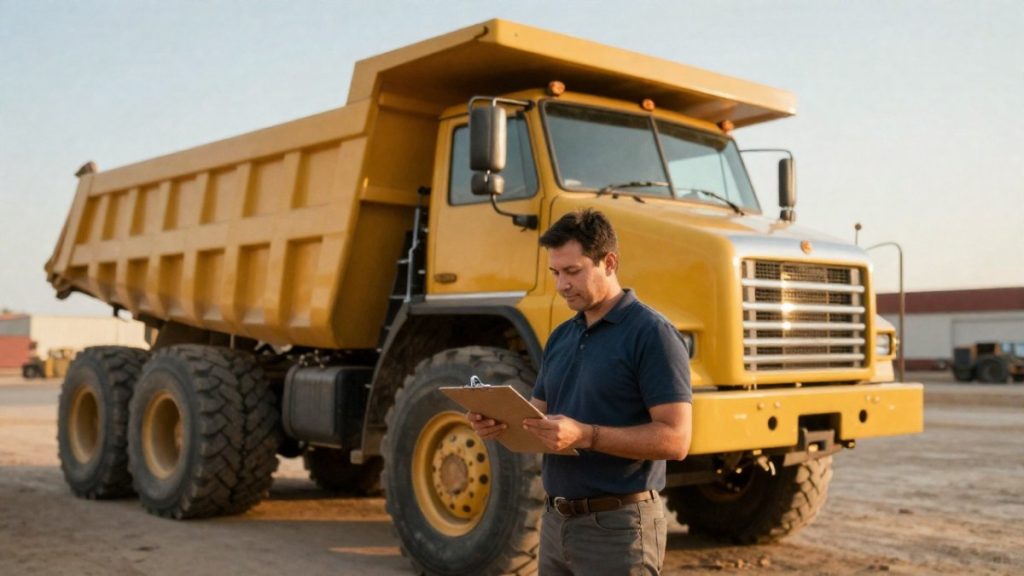
- Truck acquisitions: dump trucks, day cabs, Class 8 tractors, box trucks, roll-off units
- Heavy equipment: excavators, dozers, loaders, skid steers, backhoes, pavers, compactors
- Fleet expansion: adding units without draining cash reserves
- Working capital protection: keeping operating cash free while assets go to work
- Auction purchases: pre-approved bidding capacity so a lot purchase does not stall at the gavel
Equipment & Truck Financing Made Easy with Always Capital covers both under one application.
The man is American.
Commercial Truck Financing: Matching the Structure to the Asset
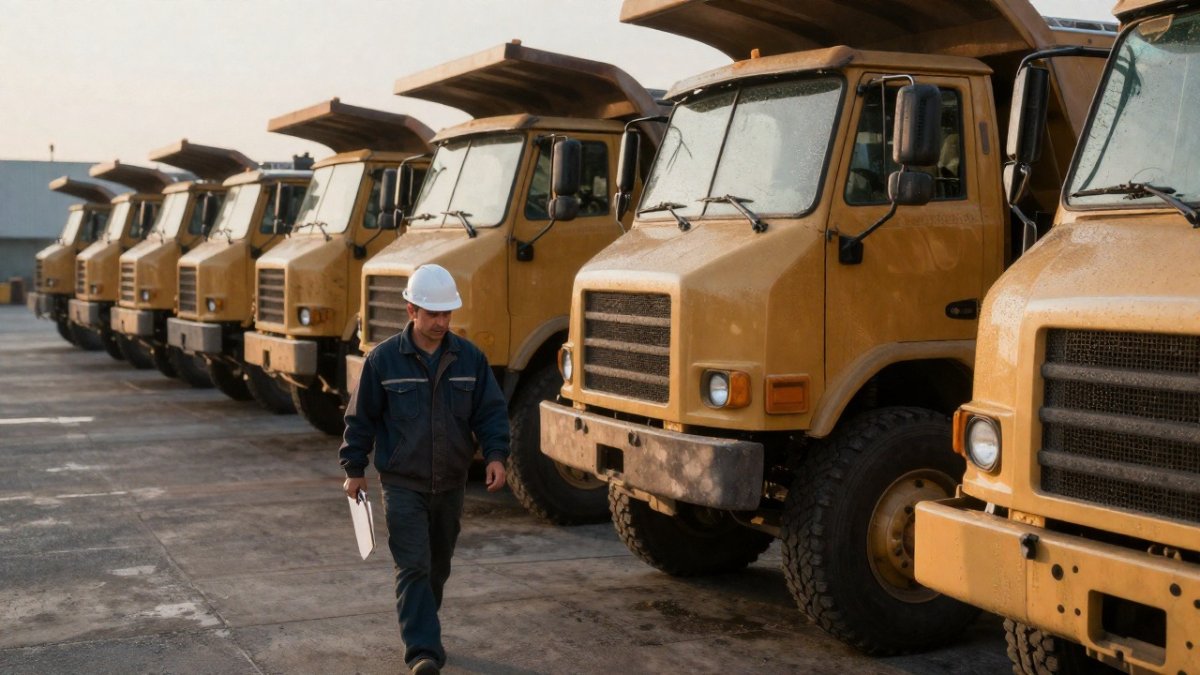
A Class 8 tractor pulling long-haul freight and a tri-axle dump truck running local aggregate have different duty cycles, and the structure should reflect that.
Here is where structure decisions actually split:
| Asset Type | Typical Structure Fit | Why |
|---|---|---|
| Class 8 day cab or sleeper | Longer term, fixed payment | High use, long service life |
| Tri-axle dump truck | Term matched to seasonal revenue | Weather-dependent earning cycles |
| Box truck, medium duty | Shorter term | Faster depreciation curve |
| Roll-off truck | Term with deferred start | Ramp-up time on new routes |
| Excavator, dozer, loader | Term tied to project pipeline | Multi-year contract work |
Always Capital finances equipment and trucks from a range of manufacturers, including those named in our equipment financing listings: Peterbilt dump trucks, Mack dump trucks, Caterpillar, John Deere, Komatsu, Hitachi, and Kubota equipment.
A common mistake is financing a low-hour specialty unit on the same term as a high-hour workhorse. The payment looks fine until the machine is worn out and the balance is not.
Fleet Financing Application Requirements: What Lenders Actually Ask For
Most fleet financing applications come down to four things: business identity, asset details, revenue evidence, and credit history. Always Capital uses soft credit pulls only, so pre-qualification does not hurt your credit. What separates a two-hour decision from a two-week back-and-forth is how completely those four buckets are filled before the file reaches underwriting.
The four buckets, in the order underwriting reads them
- Business identity. Legal entity name, formation date, physical address, ownership structure, and the signer’s authority to bind the company. Entity type shapes which documents prove the business exists.
- Asset details. Year, make, model, hours or mileage, VIN or serial number, and seller information. For auction purchases, the lot number and auction house invoice stand in for a dealer buyer’s order. For private-party deals, a bill of sale and photos carry the file.
- Revenue evidence. Bank statements or financials, waived on application-only approvals up to $500,000. Three to six months of business bank statements for smaller tickets; a fuller package for larger or multi-unit deals.
- Credit history. Reviewed in context, not as a single gate. A challenged credit file with strong revenue and a sensible asset often beats a pristine file with no operating history.
Eligibility by entity type
| Entity type | What proves the business | What underwriters watch |
|---|---|---|
| Sole proprietor | Schedule C or business bank statements | Personal and business credit blend together |
| Single-member LLC | Articles of organization, EIN letter | Whether the LLC has its own banking history |
| Multi-member LLC or partnership | Operating agreement, EIN letter | Signature authority and ownership split |
| S-corp or C-corp | Articles of incorporation, bylaws, EIN | Corporate resolution authorizing the debt |
| New entity under two years | Formation documents plus owner experience | Operators under two years old can access capital up to $150,000 |
What a complete package looks like
A clean file usually contains: the signed application, entity formation documents, an EIN confirmation, the signer’s government ID, three to six months of business bank statements, the asset quote or invoice, and, for used or private-party units, photos, hour or mileage readings, and the seller’s contact information. Always Capital offers an application-only tier with minimal paperwork.
Where applications stall
Watch out: the single most common delay is an asset description that does not match the invoice, a serial number transposed, a model year off by one, or an attachment listed that is not on the bill of sale.
The second stall is revenue evidence that does not cover the requested term.
Commercial Truck Financing Requirements: Dealer Review walks through the approval sequence step by step, and Equipment & Truck Financing Made Easy with Always Capital shows how one package covers both trucks and iron.
Used Truck Financing: Why Age and Mileage Should Not Block You
Used truck financing is where most operators get turned away, usually for reasons that have nothing to do with the truck’s earning capacity.
Always Capital finances older, high-hour, and high-mileage equipment with no age or mileage restrictions.
Three things move a used deal forward:
- Accurate asset valuation based on true machinery utility, not a book formula
- A clear maintenance record or inspection
- A realistic term that ends before the asset does
Financing for High Mileage Commercial Trucks in 2026 covers the approval path for exactly this situation.
Fleet Expansion Financing: Adding Units Without Stalling Cash Flow
Fleet expansion financing is the difference between bidding the contract you can handle and bidding the one you want.
Deferred payment programs of 30, 60, or 90 days close that gap, and seasonal structures let weather-dependent operations match remittance to revenue.
Always Capital offers financing options for fleet expansion, including:
- Up to 100% financing to avoid a large upfront outlay
- Terms from 24 to 84 months, fixed and predictable
- Multi-unit bundling so a fleet addition closes as one transaction
Manufacturer mix matters here too. Expanding a grading crew means loaders and skid steers. Expanding hauling means dump trucks and day cabs. Expanding excavation means tracked units. Financing Options for Expanding a Construction Fleet lays out the structures for each.
Financing Versus Leasing: Which Fits Your Fleet Lifecycle
Leasing wins when the asset leaves before it wears out; financing wins when the asset stays until it is used up. That single test resolves most of the debate.
| Factor | Loan | Lease |
|---|---|---|
| Ownership | You own the asset | Lessor owns, you use |
| End of term | Keep or sell | Return, buy out, or upgrade |
| Best for | Long-hold workhorses | Short-cycle replacement |
| Cash outlay | Up to 100% financed | Typically lower upfront |
| Resale exposure | Yours | Lessor’s |
| Mileage or hour limits | None | Usually capped |
| Disposal work at end | You handle it | Return to lessor |
The lifecycle test, applied
A paving company running a paver for eight seasons should finance. A delivery outfit cycling box trucks every three years should look hard at leasing.
The test sharpens when you map it to the asset’s working life:
End-of-term mechanics nobody explains
On a lease, the end-of-term decision is a three-way fork: return the asset, buy it out at the residual, or roll into a new unit. Returning means paying for excess wear and over-limit miles or hours. Buying out means paying the residual, which may be above or below market.
On a loan, the end-of-term decision is simpler: the asset is yours, and the question is whether to keep running it, sell it, or trade it. Resale exposure is yours either way, which is why configuration and service records matter more on a financed fleet.
Replacement cycles and resale planning
Fleets that plan replacement cycles before they sign get better outcomes in both structures. Set a target replacement point, hours on iron, miles on trucks, and match the term so the final payment lands near that point.
Always Capital offers financing with terms from 24 to 84 months, 30, 60, or 90-day deferred payment plans, and no age or mileage restrictions on the equipment. Financing Options for Expanding a Construction Fleet lays out the structures for each equipment category, and Financing for High Mileage Commercial Trucks in 2026 covers the approval path when the asset is already deep into its working life.
Why Always Capital Funds Fleets Other Lenders Pass On
Always Capital accepts all credit types and considers asset utility and revenue alongside standard scores, with no minimum score lockouts.
The man is American.
The reasons operators choose Always Capital to grow a fleet:
- Speed: decisions in two to four hours, same-day funding timelines
- Access: application-only approvals up to $500,000, no extensive financial statements
- Scale: funding capacity up to $5 million
- Coverage: trucks, trailers, excavators, dozers, loaders, skid steers, pavers, compactors
- Flexibility: no age or mileage restrictions, private-party and auction purchases included
- Credit: all profiles accepted, from strong files to deeply challenged histories
- Young businesses: operators under two years old can access capital up to $150,000
- Terms: 24 to 84 months, with 30, 60, or 90-day deferrals
- No impact: soft credit pulls only, so pre-qualifying costs nothing
Always Capital is a one-stop source for equipment and commercial truck financing, and it helps protect existing bank lines.
Get Pre-Approved for Fleet Financing Before Your Next Purchase
Pre-approval changes the negotiation.
The process is short:
- Submit the application with business and asset details
- Receive a soft-pull pre-qualification
- Review the structure: term, deferral, payment
- Get a decision in two to four hours
- Close and take delivery
Fastest Commercial Truck Financing: 2-Hour Approvals shows what the timeline looks like in practice.
Fleet growth stalls when capital moves slower than opportunity. Always Capital closes that gap with approvals in two to four hours, up to 100% financing, soft credit pulls, and no age or mileage restrictions on trucks and equipment. Get pre-approved with Always Capital and put the next unit to work before the competition finishes its paperwork.
Frequently Asked Questions
Can fleet financing cover more than one vehicle at a time?
Yes. Fleet financing can bundle multiple units into a single structure, so a logistics company adding three daycabs or a construction firm buying two dump trucks and a loader can finance them together. Bundling keeps the paperwork to one application and one set of terms. Always Capital handles multi-unit fleet expansion alongside single-unit purchases, so a solo operator buying one truck gets the same process as a company adding ten.
Can a business finance used trucks and heavy equipment?
Used truck financing is standard practice, and asset age should not disqualify you. Always Capital finances older, high-hour, and high-mileage machines that many lenders avoid, and applies the same loan and lease frameworks to new and used iron. Private party purchases and auction acquisitions are also supported, which matters when the right truck shows up at a sale rather than a dealership.
What information may a business need to apply for fleet financing?
Most applications start with basic business details, the equipment or vehicles you intend to buy, and a soft credit pull that does not affect your score. Always Capital offers an application-only tier that funds up to $500,000 without extensive company financial statements, and approvals can come back in two to four hours. Larger requests may involve more documentation, but the initial conversation stays short.
Can businesses with challenged credit still qualify for fleet financing?
Credit profiles ranging from strong to deeply challenged are accepted at Always Capital, with no minimum score lockout. Underwriting weighs the asset’s utility and your revenue alongside credit history, and the machinery itself serves as collateral to reduce outside collateral needs. That structure is why businesses that were turned down elsewhere can still add the trucks and equipment their contracts require.
