

Table of Contents
- Why Construction Equipment Financing for Contractors Beats Paying Cash
- Equipment Financing Requirements: What Lenders Actually Look At
- The Equipment Financing Application Process, Step by Step
- Used Equipment Financing: Older Machines, No Age or Mileage Restrictions
- Equipment Financing for Small Businesses and Growing Fleets
- Equipment Loans vs. Equipment Leasing: Which Fits Your Construction Business?
- How Deferred Payments and Seasonal Terms Protect Contractor Cash Flow
- Common Mistakes Contractors Make When Financing Construction Equipment
- Frequently Asked Questions
Last Updated: October 13, 2026
Why Construction Equipment Financing for Contractors Beats Paying Cash
Construction equipment financing for contractors is the practice of spreading the cost of a machine or truck across a fixed monthly payment instead of draining reserves on day one.
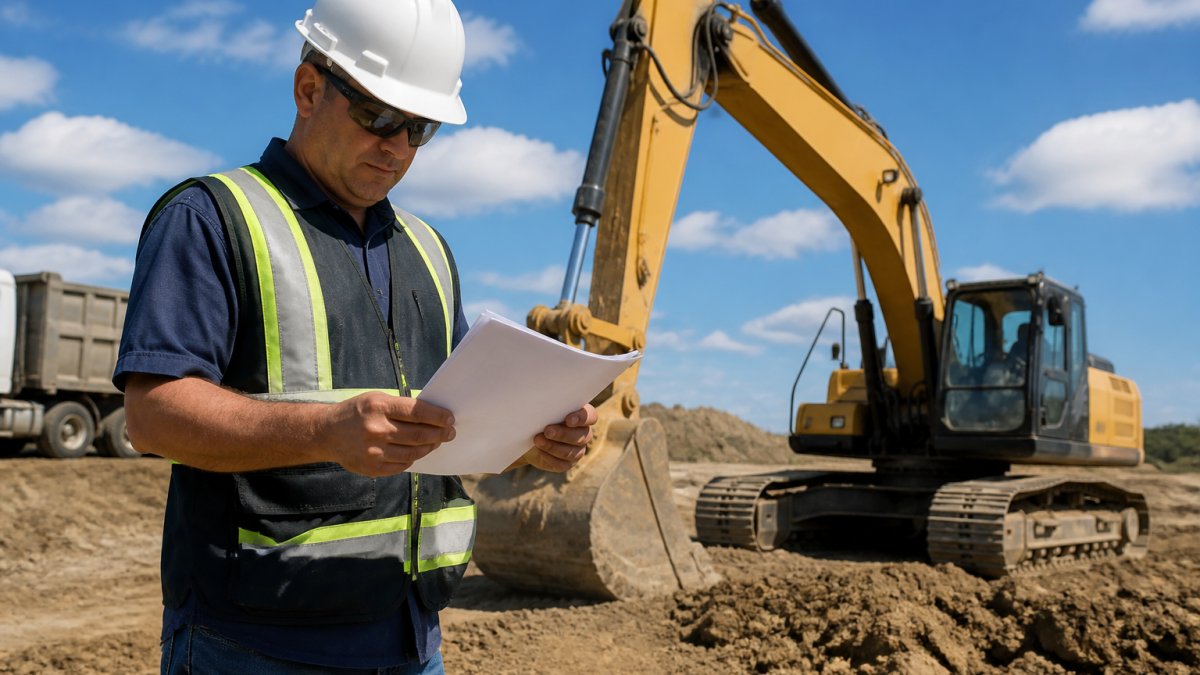
That cushion matters because construction revenue is lumpy. Progress payments arrive weeks after payroll goes out, and a single delayed draw can stall a crew.
There is also the question of what else that cash could do. Money tied up in iron cannot fund a second crew, a bond, or a service truck.
Equipment Financing Requirements: What Lenders Actually Look At
Most equipment financing requirements come down to three things: time in business, credit history, and the machine itself. Lenders want to know the business can service the payment, and they want collateral that holds value if it cannot.
The good news for contractors is that the equipment does much of the talking. A financed excavator or dump truck is an asset-backed loan, which means the machine secures the debt.
Credit History and Challenged Credit
Challenged credit is not an automatic no. Many equipment funders, Always Capital included, work with all credit types and accept every application.
What changes with credit history is the shape of the offer, not necessarily whether one exists. A stronger file may unlock longer terms or a lighter down payment.
Down Payments, Collateral, and UCC-1 Filing
A down payment reduces how much the lender has at risk. Some programs offer no down payment options, while others ask for a percentage of the purchase price.
Collateral is the equipment itself, and the lender files a UCC-1 financing statement to record its claim. That filing is routine and does not stop a contractor from using, storing, or insuring the machine.
Ask whether the lender pulls credit softly at pre-qualification. A soft pull lets a contractor see real numbers before committing, without denting a personal or business credit file.
The Equipment Financing Application Process, Step by Step
The equipment financing application process is short when the paperwork is ready in advance. Most delays come from missing documents, not from underwriting.
- Pre-qualify. Share basic business details and the equipment you want. A soft credit pull at this stage keeps the inquiry off your credit report.
- Receive terms. Review the term length, payment structure, and any deferred payment window.
- Submit the full application. Provide business identity, ownership, and equipment details.
- Get approved. Straightforward deals can move to approval within hours.
- Sign and fund. Once signed, funds go to the dealer or seller and the equipment is released.
- Take delivery. Confirm the machine matches the invoice and serial numbers on the agreement.
Documents Contractors Should Have Ready
- Business name, address, and entity type
- Owner identification and ownership percentage
- Equipment quote, invoice, or bill of sale
- Dealer or private seller contact information
- Business bank details for funding
The fastest applications are the complete ones. A contractor with a dealer quote in hand can move from inquiry to approval the same day.
Used Equipment Financing: Older Machines, No Age or Mileage Restrictions
Used equipment financing is where a lot of contractors get stuck with other lenders.
APPLY NOW AND GET YOUR BUSINESS PRE-APPROVED FOR FINANCING TODAY ! →
Programs that finance older equipment and trucks with no age or mileage restrictions solve that problem. A high-hour excavator or a well-maintained dump truck can still serve as collateral and still get funded.
This matters for contractors who buy at auction. Auction financing pre-approvals let a buyer walk into a sale knowing the budget before the bidding starts, rather than scrambling afterward.
- Equipment value is assessed on condition and market demand
- Private-party purchases can qualify with a proper bill of sale
- Older units often carry shorter terms, which reduces long-term exposure
Equipment Financing for Small Businesses and Growing Fleets
Equipment financing for small businesses is less about size and more about cash flow.
Fleet expansion capital works the same way. Adding a daycab, a box truck, or a mini excavator is a revenue decision, and financing turns a large one-time outlay into a predictable monthly figure.
Smaller contractors often qualify for application-only approvals, which skip the full financial statement package. That speeds up the process and keeps the focus on the equipment and the business’s operating history.
Do not stack new payments without mapping them against slow months. A fleet that grows faster than its receivables creates a cash crunch, even when every individual deal looks sound.
Equipment Loans vs. Equipment Leasing: Which Fits Your Construction Business?
Equipment loans versus equipment leasing is the decision that shapes everything downstream. An equipment loan buys the machine. At the end, the contractor owns it outright. A lease rents the use of the machine for a set period, and the contractor can upgrade at the end of the term instead of keeping a depreciating asset.
| Factor | Equipment Loan | Equipment Lease |
|---|---|---|
| Ownership | Contractor owns at payoff | Lessor retains ownership |
| Monthly payment | Higher | Lower |
| End of term | Keep the machine | Return, upgrade, or buy out |
| Best for | Long-life core equipment | Short-cycle or seasonal needs |
| Who holds the title | Contractor, subject to the lender’s lien | Lessor throughout the term |
| Maintenance responsibility | Contractor | Set by the agreement, often the lessee |
| Upgrade flexibility | Sell or trade the owned unit | Swap at term end |
Match the Structure to the Machine
The practical rule: finance the machines you plan to run for a decade, and lease the ones you will trade before they wear out. In construction terms, that usually breaks down like this:
- Excavator financing, backhoe financing, loader financing, and dozer financing, core iron that stays on the payroll for years. A loan builds equity and ends with a owned asset.
- Skidsteer financing and compact tractor financing, often leased, because attachments and job mix change faster than the machine wears out.
- Dump truck financing, daycab financing, and box truck financing, a loan suits a truck you will run to the end of its service life; a lease suits a unit you plan to cycle out before major powertrain work.
- Paver financing, seasonal use makes a lease with a return option attractive in markets with short paving windows.
What the End of the Term Actually Looks Like
A loan ends when the final payment clears. The lender releases its lien, and the contractor holds a clean title. That is the whole story.
A lease ends with a decision. The contractor can return the unit, upgrade to a newer model, or exercise a buyout. Each path has obligations attached, return-condition standards, mileage or hour thresholds, and buyout terms set at signing. Read those clauses before signing, not at the end of the term.
Questions to Ask Before Choosing
- Will this machine still be earning for me in five years?
- Do I need to own it, or do I need to use it?
- What does the agreement require at return, and can I meet that standard?
- Does the structure match my project calendar or fight it?
There is no universal winner between a loan and a lease. The right answer depends on how long the machine stays productive, how fast the work changes, and what the agreement demands at the end. Always Capital finances both heavy equipment loans and term loans.
How Deferred Payments and Seasonal Terms Protect Contractor Cash Flow
Deferred payments are the single most useful tool for a construction business with uneven revenue.
APPLY NOW AND GET YOUR BUSINESS PRE-APPROVED FOR FINANCING TODAY ! →
That timing matters in regions with hard winters, where paving and grading slow to a crawl.
Customized payment structures do the same job over a longer horizon. Terms can be shaped around a project schedule or a seasonal cycle so the heaviest payments land in the strongest months.
- Line up the deferral with the first invoice, not the delivery date
- Match term length to the equipment’s working life
- Keep total monthly obligations inside a comfortable share of average revenue
Common Mistakes Contractors Make When Financing Construction Equipment
The most expensive mistakes in equipment financing are made before the application is ever submitted. Contractors fall in love with a machine, rush the paperwork, and accept terms that fight their own cash flow. What most guides skip is the contract review and the seasonal planning that separate a deal that works from one that strains the business.
Contract Terms Worth Reading Twice
Every equipment financing agreement carries clauses that matter more than the payment figure. Before signing, walk through these with the funder:
- Prepayment terms. Some agreements allow early payoff without penalty; others attach a charge. If you plan to pay off early, confirm the terms in writing.
- Personal guarantee. Many agreements require an owner’s personal guarantee. Understand what it covers and how long it lasts.
- Blanket lien provisions. Some agreements secure not just the financed machine but other business assets. Ask exactly what collateral the agreement covers.
- Default and cure terms. Know what triggers default, how much notice you get, and what the cure window looks like.
- End-of-lease obligations. Return-condition standards, hour or mileage thresholds, and buyout terms should be clear at signing.
- Insurance requirements. Confirm what coverage the funder requires and when proof is due, before delivery, not after.
Seasonal and Project-Based Repayment Planning
Construction revenue is lumpy, and a payment schedule that ignores that reality creates avoidable strain. A few patterns that work:
- Align the deferral with the first invoice, not the delivery date. A machine that arrives in March but does not bill until May needs a deferral that reaches May.
- Match term length to the equipment’s working life. A short term on a long-life machine crowds the payment; a long term on a short-cycle unit leaves you paying for iron that is already off the job.
- Map payments against slow months. In markets with hard winters, paving and grading slow to a crawl. A paver financed in the fall with a 90 day deferral does not compete with a thin winter for cash.
- Account for retainage. Progress payments often arrive weeks after payroll goes out, and retainage can hold a chunk of the contract back until final acceptance. Build that lag into the schedule.
Other Mistakes That Show Up Again and Again
- Skipping pre-qualification and guessing at the budget instead of seeing real numbers first
- Choosing the longest term without checking total cost of ownership over the life of the machine
- Leaving the deferral unplanned and letting the first payment land before the equipment is on a job
- Failing to confirm insurance requirements before delivery
- Financing a machine that is too small for the work, then needing a second unit within a year
What most guides miss is how much a dealer relationship affects the outcome. Dealers who work with a funder regularly can confirm invoices quickly, which shortens the approval process and reduces back-and-forth. The contractors who get the best outcomes treat financing as part of the equipment decision, not an afterthought once the deal is signed.
Do not stack new payments without mapping them against slow months. A fleet that grows faster than its receivables creates a cash crunch, even when every individual deal looks sound.
Frequently Asked Questions
What documents should contractors prepare when applying for equipment financing?
Most contractors need a completed loan application, a purchase agreement or equipment quote, proof of business registration, and basic contact information. Always Capital offers application-only approvals up to $500,000 with no financials required, so bank statements and tax returns are often unnecessary at that level. Having your equipment details and vendor information ready speeds up the process considerably.
Can contractors with challenged credit still qualify for construction equipment financing?
Yes. Always Capital works with all credit types and accepts every application. The equipment itself serves as collateral, which reduces lender risk and opens doors for contractors with past credit issues. Always Capital uses soft credit pulls only, so checking your options does not hurt your credit score. Many contractors with challenged credit get approved and financed the same day.
How quickly can a contractor receive an equipment financing decision?
Always Capital delivers approvals in as little as two to four hours. The application process is designed for speed: submit your information, receive a soft-pull pre-qualification, and get a decision the same day. Once approved, funds can be available quickly so you can secure the excavator, dozer, or dump truck you need without losing the deal.
Can contractors finance used construction equipment or machines with high hours?
Yes. Always Capital finances older equipment and trucks with no age or mileage restrictions. Whether you are buying a used excavator, a high-hour bulldozer, or a pre-owned dump truck, the equipment value and condition matter more than the model year. This flexibility lets contractors access affordable machines that still deliver strong ROI on the job site.