

Table of Contents
- Why Used Equipment Finance Beats Paying Cash
- Used Heavy Equipment Financing: What Lenders Actually Review
- Used Commercial Truck Financing for Fleets of Any Size
- Equipment Financing for Small Businesses: No Financials Required
- Financing Older Equipment When Others Say No
- How Always Capital Approves in Two Hours
- Conclusion: Get Pre-Approved for Used Equipment Finance
- Frequently Asked Questions
Last Updated: October 9, 2026
Why Used Equipment Finance Beats Paying Cash
Used equipment finance lets a business acquire pre-owned machinery or commercial vehicles while spreading the cost over a set repayment period, using the asset itself as collateral. For most operators, it beats paying cash because the cash stays in the business.
A single excavator or dump truck can absorb months of operating capital in one transaction. Financing that purchase keeps payroll, fuel, maintenance, and materials funded while the machine starts earning.
Preserve Working Capital While You Grow
Working capital is the oxygen of a construction, hauling, or grading operation. Paying cash for a machine stops that money from working; financing it keeps capital available for the daily costs that keep crews moving.
Financing preserves cash flow through slow seasons and lets businesses take on bigger jobs without turning down work. A paving company that finances a new paver in spring keeps enough cash to cover materials and labor through the busy months instead of tying everything up in one asset.
The core argument for used equipment finance is simple: keep cash liquid, let the machine pay for itself over time, and stay ready for the next opportunity.
Asset-Backed Lending: How Your Machine Secures the Deal
Asset-backed lending makes used equipment finance accessible to businesses traditional banks overlook. The equipment itself serves as collateral, which lowers the lender’s risk and opens doors for owners with imperfect credit.
This structure is why Always Capital can accept all credit types and still approve quickly. The machine backs the loan, so the decision leans on the asset’s value and the business’s ability to operate it, not just a credit score.
Used Heavy Equipment Financing: What Lenders Actually Review
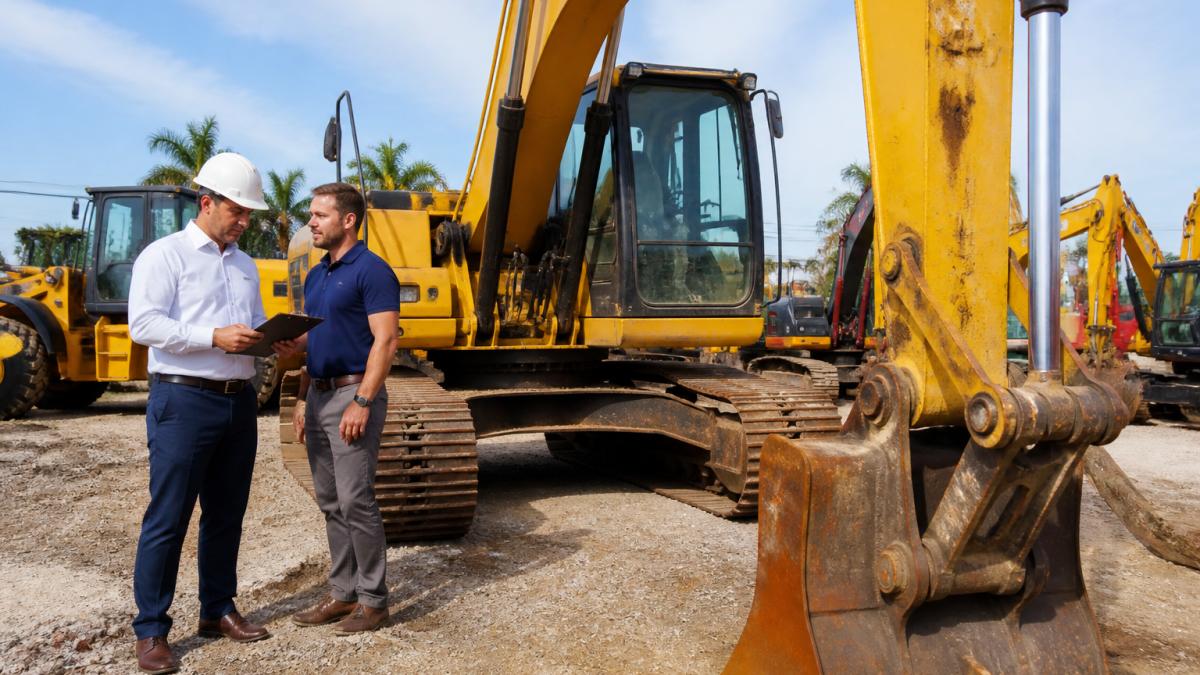
Used heavy equipment financing hinges on three things: the age of the machine, the hours on the meter, and its overall condition.
Always Capital looks at the whole picture, not a single number, which is why equipment with no age or mileage restrictions still finds financing here.
Equipment Age, Hours, and Condition
Age alone rarely disqualifies a machine. What matters is maintenance and hours logged. A well-kept excavator with high hours can still be a strong candidate, while a neglected unit with low hours raises flags.
- Age: Older units can still qualify, especially when maintenance records are clean
- Hours: Lower hours generally support stronger terms, but condition carries equal weight
- Condition: Service history, visible wear, and inspection results drive the decision
Always Capital finances older equipment and trucks specifically because it evaluates the asset rather than applying a blanket cutoff.
A Practical Inspection and Valuation Checklist
A used-equipment inspection protects both the buyer and the financing arrangement. Before committing, walk the machine and document everything.
- Verify the serial number against the title and service records
- Check engine hours and compare them to the hour meter history
- Inspect hydraulic lines, seals, and cylinders for leaks
- Test all controls, including boom, bucket, and swing functions
- Examine undercarriage wear on tracked machines
- Review tire or track condition and estimate remaining life
A common mistake is skipping the service records. A machine with documented maintenance, even at higher hours, often finances more easily than a low-hour unit with no paper trail.
Used Commercial Truck Financing for Fleets of Any Size
Used commercial truck financing covers everything from a single daycab to a full fleet expansion. Whether a business runs one box truck or a dozen dump trucks, the structure adapts to the operation.
Always Capital finances all heavy equipment and commercial truck financing, including daycab, box truck, and roll off truck options. Fleet owners can fund multiple units, while owner-operators can add a single vehicle without overextending.
| Truck Type | Common Use | Financing Consideration |
|---|---|---|
| Daycab | Local hauling, short routes | Lower mileage, quick turnaround |
| Dump truck | Construction, aggregates | Condition and bed wear reviewed |
| Box truck | Delivery, logistics | Cargo capacity and body condition |
| Roll off truck | Waste, debris removal | Hydraulic system inspection |
Equipment Financing for Small Businesses: No Financials Required
Equipment financing for small businesses often stalls on paperwork. Traditional lenders want financial statements and lengthy operating histories that small operators rarely have organized. Always Capital takes a different approach: application-only approvals up to $500,000 require no financials, removing the biggest hurdle for small businesses.
That structure fits how small operations actually run. A landscaping company adding a skid steer, a grading contractor financing a mini excavator, or an owner-operator picking up a first dump truck usually has steady work and a clear use for the machine, but not a tidy file of bank statements and returns.
What a Small Business Actually Needs to Prepare
The application-only path is short by design. In most cases, a small operator needs:
- Business name, entity type, and time in business
- Basic contact and ownership information
- Details on the equipment: make, model, year, hours or mileage, and seller
- A soft-pull credit authorization, which does not hurt credit
That is the whole list for many approvals. No financial statements, no lengthy history, no stack of returns.
Matching the Structure to the Size of the Business
Business size changes the shape of the deal, not eligibility. A single owner-operator adding one machine and a growing company adding several units are both served by the same core model, up to 100% financing, terms from 24 to 84 months, and deferred payment plans of 30, 60, or 90 days.
- One-machine operations: A skid steer, mini excavator, or box truck financed on its own, with payments structured around the work that machine generates.
- Small crews adding capacity: A second or third unit financed together so the business can take on larger jobs without draining cash.
- Young businesses: Operations without a long track record still qualify because the asset, not a lengthy history, carries the deal.
Small businesses and young operations that need equipment fast but lack the documentation traditional banks demand.
Why This Matters for Used Equipment Specifically
Used equipment is often the smartest entry point for a small business, a well-maintained pre-owned machine costs less to acquire and can start earning immediately.
Explore the full range of options on our construction equipment financing page, or see how skid steer financing and mini excavator financing are structured for smaller operations. For agricultural and landscaping work, agricultural equipment loans cover tractors and attachments, and material handling equipment financing handles forklifts and warehouse tools.
APPLY NOW AND GET YOUR BUSINESS PRE-APPROVED FOR FINANCING TODAY ! →
Financing Older Equipment When Others Say No
Financing older equipment is where many lenders draw a hard line. Age and mileage cutoffs disqualify machines that still have years of productive life left. Always Capital finances equipment with no age or mileage restrictions, so a well-maintained older unit stays in play.
“No age cutoff” does not mean age is ignored. It means age is weighed alongside the factors that actually predict whether a machine will keep earning.
How Age, Hours, and Condition Are Weighed
Lenders evaluating used equipment look at the asset the way an operator would, through the lens of remaining useful life. A few factors carry most of the weight:
- Model year: Older units are not disqualified, but the year sets the baseline for how much life is expected to remain.
- Hours or mileage: Lower hours generally support stronger terms, but a high-hour machine with documented service can still qualify.
- Condition: Visible wear, hydraulic integrity, undercarriage or tire condition, and service records all factor in.
- Seller type: Dealer sales, private-party sales, and auction purchases each carry different documentation and verification steps.
- Expected useful life: The real question is how many productive years the machine has left, not how many it has already logged.
A well-kept excavator with high hours and clean records often finances more easily than a low-hour unit with no paper trail. Condition and documentation frequently outweigh the raw numbers.
What Older Equipment Means for the Deal Structure
Age and condition can shape the structure of the financing even when they do not block it. Older machines may call for a shorter term that aligns with remaining useful life, or a payment structure that matches how the equipment will be used.
The same logic applies to trucks. See how this works for dump truck financing, daycab financing, and box truck financing, or review heavy equipment loans and term loans.
Buying Older Equipment From a Private Seller or Auction
Older equipment frequently changes hands outside dealerships, and those purchases need extra diligence before financing is finalized. A practical sequence:
- Verify the serial number against the title or ownership records
- Confirm there are no outstanding liens on the machine
- Request maintenance and service records from the seller
- Arrange an independent inspection before committing
- Confirm the seller’s identity and right to sell
- Document the agreed price and terms in writing
For private-party and auction purchases, the inspection contingency is your protection. Make the offer conditional on a satisfactory inspection so a hidden problem does not become your problem after the money changes hands.
Why No Age or Mileage Restrictions Matters
Businesses that buy quality used machines and run them for years should not be penalized for choosing well. Always Capital finances older equipment and trucks specifically because it evaluates the asset, its condition, its records, and its remaining life, rather than applying a cutoff that would sideline a productive machine.
For equipment categories where older units are common, see excavator financing, backhoe financing, dozer financing, loader financing, tractor financing, and paver financing. Fleet owners adding older units can also review logistics fleet funding and fleet expansion capital.
How Always Capital Approves in Two Hours
Two-hour approvals are the centerpiece of how Always Capital works. The process starts with a soft credit pull, so the application does not hurt the applicant’s credit.
The team reviews the equipment and the business, then delivers a decision fast.
Five-star testimonials from operators across construction, hauling, and landscaping point to the same themes: speed, transparency, and a willingness to work with businesses others turned away.
U.S. Small Business Administration guidance on business financing
Conclusion: Get Pre-Approved for Used Equipment Finance
Finding financing for used equipment should not mean weeks of waiting or a stack of paperwork. Always Capital offers approvals in as little as two to four hours, up to 100% financing, and a soft-pull application that protects credit. Businesses of any size, from a single owner-operator to a growing fleet, can get pre-approved for heavy equipment financing and put a machine to work the same day.
Frequently Asked Questions
How does used equipment finance work?
You apply with a lender, who reviews the machine’s age, condition, and your business profile. Once approved, the lender pays the seller and you repay over a set term, typically 24 to 84 months. The equipment itself serves as collateral, which is why approval is often faster and more flexible than unsecured business lending. Always Capital funds used heavy equipment and commercial trucks with decisions in as little as two to four hours.
Can a business with challenged credit qualify for used equipment finance?
Yes. Because the equipment acts as collateral, lenders weigh the asset alongside your credit history. Always Capital works with all credit types and uses soft credit pulls during the application, so your credit score is not affected by applying. Applications are accepted from businesses with past credit challenges, and approvals can arrive within two to four hours.
What used equipment can be financed?
Most business-use machinery qualifies, including excavators, bulldozers, skid steers, backhoes, wheel loaders, compactors, pavers, and forestry equipment. On the truck side, dump trucks, day cabs, box trucks, and roll-off trucks are commonly financed. Always Capital also funds older equipment and trucks with no age or mileage restrictions, so high-hour machines are not automatically disqualified.
How quickly can a business receive a used equipment financing decision?
Always Capital provides approvals in as little as two to four hours, with same-day funding available in many cases. Application-only approvals up to $500,000 require no financial statements, and financing amounts up to $5 million are available with up to 100% financing. The soft credit pull means you can apply and see your options without any impact to your credit score.
Businesses that need equipment cannot afford to wait on slow approvals or rigid credit rules. Always Capital solves that with two-hour approvals, 100% financing, soft credit pulls, and support for all credit types. Get started with Always Capital and get pre-approved for heavy equipment financing today.