
Table of Contents
- Why Pre-Season Is the Smartest Time to Get Approved
- 1. Compact Track Loaders and Skid Steers: The Core Seasonal Equipment Upgrade
- 2. Mini Excavators: Speed Up Every Dig and Trench
- 3. Dump Trucks and Commercial Truck Financing for Haul Capacity
- 4. Attachments and Hydraulic Systems: Cheapest Output Gains
- 5. Climate Control, Visibility, and Lighting Upgrades
- 6. Preventative Maintenance and Fluid Management Upgrades
- 7. Heavy Equipment Financing: How to Fund the Whole Upgrade List
- Frequently Asked Questions
Last Updated: September 25, 2026
Why Pre-Season Is the Smartest Time to Get Approved
Seasonal contractors who wait for the first job calls to line up capital spend the whole season behind, which is why the 7 best equipment upgrades for seasonal businesses should be planned before peak demand. The 7 best equipment upgrades for seasonal businesses only pay off if the machines are in the yard, insured, and working before peak demand hits. That is why smart operators get pre-approved with Always Capital in the off-season, when there is time to compare machines and lock in the best equipment deals before inventory tightens.
Always Capital is a heavy equipment and commercial truck financing company built for exactly this timing problem. Always Capital offers 100% business financing, accepts all credit types, and runs soft credit pulls only, so an application never hurts your credit. Most Always Capital approvals land in two to four hours.
Pre-season approval also protects your negotiating position: a buyer with financing in place can move on a good machine the day it appears.
Dealers clear inventory hardest in the off-season. Walking in with an Always Capital pre-approval letter already in hand puts you in the strongest possible seat at that table.
1. Compact Track Loaders and Skid Steers: The Core Seasonal Equipment Upgrade
The compact track loader is the first machine most seasonal crews should finance. It grades, loads, hauls, and clears snow with the right attachment, so one unit covers several revenue lines.
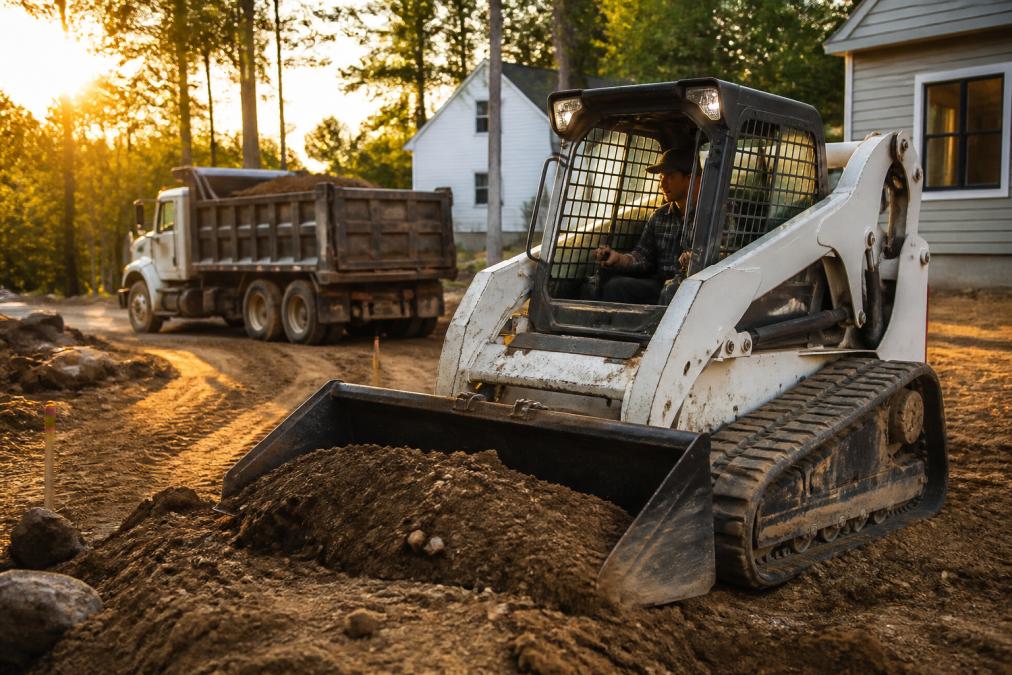
Skid steer financing through Always Capital covers wheeled and tracked units, including older machines with no age or mileage restrictions. A well-maintained used loader often delivers the same field performance as a new one for far less.
A common mistake is buying the smallest machine that fits today’s jobs. Seasonal work swings hard, and an undersized loader becomes the bottleneck the moment peak demand arrives.
2. Mini Excavators: Speed Up Every Dig and Trench
Mini excavators turn a two-person digging job into a one-person job. For trenching, drainage, and utility work, time saved per site is the clearest productivity metric a seasonal business can track.
Always Capital mini excavator financing and excavator financing cover machines across size classes, and Always Capital works with all credit types, including businesses still building their financial history.
Find Out How Much You Can Borrow for Your Business Today! →
3. Dump Trucks and Commercial Truck Financing for Haul Capacity
Haul capacity decides how many jobs a crew can run in a day. A dump truck that is always full, late, or in the shop caps revenue no matter how good the crew is.
| Upgrade | Primary Gain | Best For |
|---|---|---|
| Compact track loader | Multi-task capability | Grading, loading, snow |
| Mini excavator | Faster digging and trenching | Utility and drainage work |
| Dump truck | More loads per day | Haul-heavy crews |
| Attachments | Output from existing machines | Any fleet |
| Cab upgrades | Longer productive hours | Hot and cold climates |
4. Attachments and Hydraulic Systems: Cheapest Output Gains
Attachments are the highest-return line on this list. A new bucket, grapple, breaker, or hydraulic thumb costs far less than a second machine and immediately raises the output of equipment you already own, letting a seasonal business bid more jobs with the same crew and trailer count.
- Grading and digging buckets, the baseline tool for loaders and mini excavators; a clean edge and correct width change cycle times more than most operators expect.
- Hydraulic thumbs and grapples, turn a digging machine into a material-handling machine for clearing, demolition, and brush work.
- Hydraulic breakers, open up concrete, rock, and frost work that would otherwise require a rented hammer and a second mobilization.
- Forks and material buckets, let a loader double as a yard machine for pallets, pipe, and lumber between jobs.
- Snow and ice attachments, plows, pushers, and spreaders convert the same loader into winter revenue instead of a parked asset.
Used vs. New Attachments: Where the Money Goes Further
Seasonal businesses operate on tight margins, so the used-versus-new decision matters as much on attachments as on machines. A common pattern is to buy the machine new and the attachments used, because buckets and forks wear predictably and are easy to inspect. A used bucket with a straight cutting edge and no cracks is functionally identical to a new one.
Match the attachment to the hydraulic flow rating before you buy either. A breaker that stalls on a standard-flow machine is a sunk cost, not an upgrade.
A Simple Payback Frame for Attachments
Most practitioners justify an attachment by comparing the added revenue it unlocks against its purchase amount, then dividing to find how many jobs it takes to pay for itself. A grapple that lets a crew clear a lot in one day instead of two pays back in a handful of jobs, and a breaker that replaces a rented hammer on every concrete job pays back even faster.
5. Climate Control, Visibility, and Lighting Upgrades
Cab comfort is a productivity decision, not a luxury. Heat, air conditioning, and sealed cabs extend the hours an operator can safely work, which matters most in the shoulder seasons when seasonal businesses win or lose the year.
Skipping cab and lighting upgrades to save on the front end usually costs more in lost winter hours than the upgrade would have cost outright. The lost production never shows up on an invoice, which is why it gets ignored.
6. Preventative Maintenance and Fluid Management Upgrades
Preventative maintenance separates a machine that lasts ten seasons from one that quits in year three. Fluid and filter maintenance, scheduled inspections, and a real service log protect the asset and the financing behind it.
A practical pre-season routine looks like this:
- Change engine oil, hydraulic fluid, and filters on every unit
- Pressure-test hydraulic systems and replace weeping hoses
- Inspect undercarriage, tracks, and tires for wear
- Test all lights, alarms, and backup cameras
- Service climate control before the first hot or cold week
- Log every service date for resale and financing records
7. Heavy Equipment Financing: How to Fund the Whole Upgrade List
Heavy equipment financing turns a wish list into a working fleet. Rather than buying one machine at a time as cash allows, a single financing package can cover loaders, excavators, trucks, and attachments together, which matters most for seasonal businesses that need the whole fleet ready before the first contract lands.
Find Out How Much You Can Borrow for Your Business Today! →
The Cost-Justification Framework Most Guides Skip
Most articles tell you when to upgrade. Few tell you how to justify the spend. For a seasonal business, the frame is straightforward: compare the added revenue the upgrade unlocks across a season against the total cost of acquiring it, then ask how many seasons it takes to pay back. The variables that move the answer most are utilization hours per season, the jobs the upgrade lets you bid that you currently turn down, and the downtime it removes.
A practical way to run it:
- Estimate added billable hours per season. If a mini excavator turns a two-person dig into a one-person job, the saved labor hours are the first line of value.
- Estimate jobs won that you currently decline. A dump truck that adds haul capacity often unlocks contracts a smaller fleet cannot bid.
- Estimate downtime removed. A machine that starts every morning in peak season is worth more than one that spends a week in the shop.
- Compare against total acquisition cost. Include the machine, the attachments, and any transport or setup.
- Divide to find the payback period in seasons. If the upgrade pays back inside two seasons, it is usually worth pursuing; if it stretches past the machine’s realistic service life, it is not.
Used vs. New: A Funding Decision, Not Just a Buying Decision
Seasonal businesses on tight margins should treat used-versus-new as a funding question. A well-maintained used loader often delivers the same field performance as a new one for far less, which shortens the payback period. The trade-off is inspection risk and potential downtime. The rule most operators follow: buy used when wear items are visible and serviceable, buy new when the machine is a production bottleneck and downtime would cost more than the price difference.
Off-Season Timing Is a Funding Lever
The best equipment deals go to buyers who are already approved. Always Capital pre-approval in the off-season is what lets a seasonal business say yes on the spot when the right machine appears.
Get pre-approved for Heavy Equipment Financing with Always Capital and start the season with the fleet already working.
Frequently Asked Questions
When is the best time to upgrade seasonal equipment?
The off-season, roughly one to three months before demand picks up. Ordering before the rush means you take delivery, get operators trained, and run a shakedown on the machine before it hits a paying job. Always Capital funds seasonal equipment upgrades with same day approvals, so you can lock in a machine while inventory is still available instead of waiting until peak season when dealers are backed up.
How can I get approved for heavy equipment financing quickly?
Apply with Always Capital and you can get a decision in as little as two to four hours. Applications up to $500,000 can be approved on an application-only basis with no financials, and Always Capital runs a soft credit pull only, so your credit is not affected. Have your equipment details and business information ready, then apply online at alwayscapital.com/apply-now.
What are the benefits of upgrading to newer heavy equipment?
Newer machines cut downtime, use less fuel, and finish jobs faster, which raises your output capacity per crew. They also carry updated safety features and emissions systems that keep you compliant on commercial sites. For seasonal businesses, the biggest gain is reliability: a machine that starts every morning during a six-week rush protects your schedule and your reputation.
Can I get financing for older heavy equipment?
Yes. Always Capital finances equipment and trucks with no age or mileage restrictions, so a well-maintained used machine is still fundable. This matters for seasonal businesses that want proven models at lower cost. Always Capital works with all credit types and offers terms from 24 to 84 months, plus deferred payment plans of 30, 60, or 90 days to match your cash flow.