

Table of Contents
- What Is Day Cab Financing?
- Benefits of Day Cab Financing vs. Other Acquisition Methods
- Eligibility Requirements for Day Cab Financing
- Commercial Truck Insurance Requirements for Financed Vehicles
- How the Application Process Works
- Financing for Older Commercial Trucks
- Total Cost of Ownership and Financial Planning
- Conclusion
- Frequently Asked Questions
Last Updated: September 24, 2026
What Is Day Cab Financing?
A day cab is a commercial truck designed for short-haul or local delivery routes, with no sleeping compartment. Unlike over-the-road tractors that include a sleeper cab for long-distance drivers, day cabs prioritize cargo capacity and maneuverability in urban and suburban environments. Day cab financing is the process of securing a business loan specifically for purchasing these vehicles, allowing fleet operators and owner-operators to acquire equipment without large upfront capital.
Day cab financing works differently from traditional equipment loans because these trucks serve specialized roles in regional distribution, construction logistics, and local hauling. The financing covers the full purchase price of the vehicle, and terms typically range from 24 to 84 months depending on the borrower’s situation and the truck’s age. Always Capital offers flexible loan terms from 24 to 84 months.
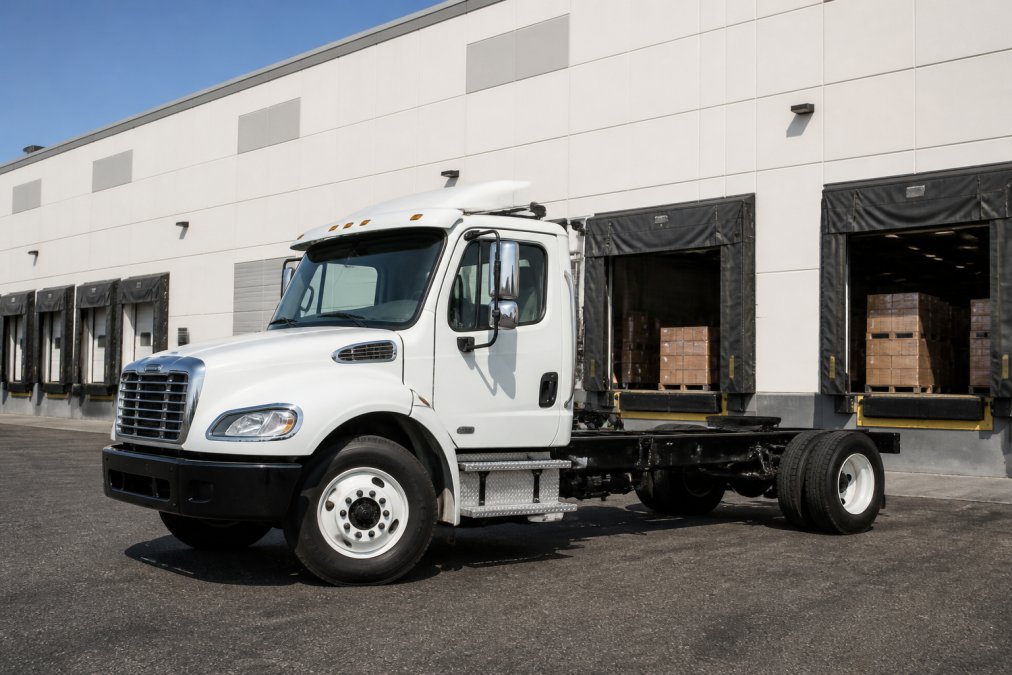
At Always Capital, we’ve helped hundreds of fleet operators secure day cab financing quickly. Whether a business needs a single vehicle or multiple units, the application process focuses on the business’s ability to generate revenue from that equipment rather than requiring extensive financial documentation upfront.
Day cab financing moves faster than traditional commercial lending because the truck itself serves as collateral. Lenders evaluate the equipment’s earning potential in your specific industry, not just your personal credit history.
Benefits of Day Cab Financing vs. Other Acquisition Methods
Day cab financing offers distinct advantages over outright purchase or other vehicle acquisition methods. The primary benefit is capital preservation, rather than depleting cash reserves on a single large purchase, businesses can deploy that capital toward operations, payroll, or growth initiatives while the truck generates revenue to cover financing payments.
Financing also provides flexibility in fleet expansion. A growing logistics company can add vehicles incrementally as demand increases, scaling equipment investments with actual business needs. This approach reduces the risk of over-investing in assets before demand justifies them.
Another key advantage is access to current equipment. Newer day cabs feature improved fuel efficiency, advanced safety systems, and lower maintenance costs compared to older models. Financing allows operators to upgrade vehicles regularly rather than holding onto aging equipment that becomes increasingly expensive to maintain.
Working capital preservation matters significantly for small operations. When a business finances day cabs through a provider like Always Capital, it retains liquidity for unexpected expenses, seasonal slowdowns, or opportunities. This financial flexibility can be the difference between weathering a difficult quarter or facing operational strain.
Day cab financing enables businesses to match equipment investments with revenue generation, rather than betting the entire operation on a large upfront purchase.
Eligibility Requirements for Day Cab Financing
Most day cab financing programs accept businesses across many credit profiles. Always Capital works with all credit types, meaning past financial challenges don’t automatically disqualify applicants. The focus shifts from perfect credit to demonstrating that the business can generate sufficient revenue to support equipment payments.
Typical eligibility factors include:
- Business operation status: The business should be actively generating revenue or have a clear plan to do so. Some providers, including Always Capital, support newer operations that lack extensive financial history.
- Business structure: Sole proprietorships, LLCs, S-corps, and C-corps all qualify. The business must be registered and operating legally.
- Vehicle use: The truck must be used for legitimate commercial purposes, construction, delivery, hauling, or similar operations.
- Ownership: The applicant must have authority to make financing decisions for the business.
Credit score requirements vary by lender, but many providers no longer treat credit scores as absolute barriers. Always Capital performs soft credit pulls during the application phase, meaning the inquiry doesn’t damage the applicant’s credit profile. This approach allows businesses to explore financing options without the risk that multiple hard inquiries would create.
Find Out How Much You Can Borrow for Your Business Today! →
Age and mileage restrictions are minimal with many modern financing programs. Always Capital finances both new and used trucks with no age or mileage restrictions, recognizing that older equipment can still generate strong returns for the right operator.
Commercial Truck Insurance Requirements for Financed Vehicles
Any financed commercial vehicle must carry appropriate insurance coverage. Lenders require proof of insurance before funding is released, and coverage must remain active throughout the loan term. This protects both the business and the lender’s investment in the equipment.
Commercial auto insurance for day cabs typically includes:
- Liability coverage: Required by law in all states, this covers bodily injury and property damage caused by the truck. Minimum coverage levels vary by state but generally start at 100/300/50 (meaning $100,000 per person, $300,000 per accident, $50,000 for property damage).
- Physical damage coverage: This protects the truck itself against collision, comprehensive damage (theft, weather, vandalism), and other perils. Lenders almost always require this as a condition of financing.
- Commercial general liability: Some operations may need additional general liability coverage depending on the cargo or services involved.
Insurance requirements are more stringent for financed vehicles than for personally-owned equipment. The lender is named as a loss payee, meaning insurance proceeds go toward the loan balance if the truck is damaged or totaled. This requirement protects the lender’s collateral and ensures the business can replace the vehicle if needed.
Operators should obtain insurance quotes before applying for financing. Insurance costs vary based on the truck’s value, the driver’s experience, the business’s safety record, and the types of cargo transported. Including insurance costs in the total cost of ownership calculation helps businesses understand the true expense of vehicle acquisition.
Letting commercial truck insurance lapse while a vehicle is financed can trigger loan default clauses. Many lenders require proof of active coverage at regular intervals throughout the loan term.
How the Application Process Works
Day cab financing applications emphasize speed and simplicity. Always Capital approves applications within 2-4 hours in many cases, allowing businesses to move forward quickly once they’ve identified the right vehicle.
The typical process follows these steps:
Step 1: Initial Application, Provide basic business information, the truck’s details (make, model, year, price), and intended use. Always Capital accepts applications online and can process them immediately.
Step 2: Soft Credit Pull, The lender performs a soft credit inquiry, which doesn’t affect the applicant’s credit score. This gives the lender a preliminary view of creditworthiness without the negative impact of a hard pull.
Step 3: Quick Approval Decision, For qualified applicants, approval can come within hours.
Find Out How Much You Can Borrow for Your Business Today! →
Financing for Older Commercial Trucks
Older day cabs and commercial trucks can be financed through specialized programs that recognize their continued utility. Many businesses operate profitable fleets using vehicles that are 5, 10, or even 15+ years old. These trucks often have lower purchase prices but require careful evaluation of maintenance costs and reliability.
When considering older truck financing, operators should:
- Obtain a pre-purchase inspection from a qualified mechanic to identify any mechanical issues
- Review maintenance records to understand the truck’s service history
- Calculate expected repair costs and factor them into total ownership expenses
- Verify title and registration are clear and current
Total Cost of Ownership and Financial Planning
Understanding total cost of ownership (TCO) is essential for making sound day cab financing decisions. TCO includes the truck’s purchase price, financing costs, fuel, maintenance, insurance, registration, and repairs, essentially every expense required to operate the vehicle profitably.
Key TCO components:
- Purchase price: The negotiated cost of the truck
- Financing costs: Monthly payments over the loan term (typically 24-84 months with Always Capital)
- Fuel costs: Varies by truck efficiency, fuel prices, and miles driven
- Maintenance and repairs: Oil changes, tire replacements, mechanical work
- Insurance: Commercial auto and liability coverage
- Registration and permits: Annual state registration and any required commercial permits
- Downtime and depreciation: Lost revenue during repairs and the truck’s declining value over time
Total cost of ownership typically exceeds the purchase price by 40-70% over the vehicle’s useful life. Accurate TCO calculations prevent financing decisions that look good on paper but strain operational cash flow.
Conclusion
Day cab financing enables fleet operators and owner-operators to acquire vehicles without depleting working capital or waiting months for traditional lending approval. The process prioritizes business revenue potential and equipment utility over credit perfection, making it accessible to operators at various stages of business development.
| Financing Aspect | Key Consideration | Impact on Business |
|---|---|---|
| Approval speed | 2-4 hour decisions | Faster fleet expansion and revenue generation |
| Credit requirements | All credit types accepted | Access for businesses with past credit challenges |
| Documentation | Application-only up to $500K | Reduced administrative burden and faster funding |
| Loan terms | 24-84 months available | Flexibility to match payment capacity |
| Vehicle age | No age or mileage restrictions | Financing for used and older equipment |
| Deferred payments | 30, 60, or 90-day options | Better cash flow alignment during acquisition |
Frequently Asked Questions
What documentation is required for day cab financing?
Documentation requirements vary by lender and loan amount. For application-only financing up to $500,000, you may not need tax returns or bank statements upfront. For larger amounts, expect to provide business tax returns, bank statements, proof of ownership for existing equipment, and driver’s license or business license. Always Capital accepts all credit types and uses soft credit pulls, which means your application won’t damage your credit score during the approval process.
How quickly can I get approved for day cab financing?
Fast approval is a hallmark of modern commercial truck financing. Many lenders, including Always Capital, offer approvals within 2 to 4 hours for qualified applicants. Same-day funding is possible for applications submitted early in the business day. The speed depends on application completeness and whether you qualify for application-only approvals, which streamline the underwriting process significantly.
Can I finance older day cab trucks with high mileage?
Yes. Many lenders now offer financing for older commercial trucks without age or mileage restrictions. This is particularly valuable for owner-operators and small fleets looking to expand without the expense of new vehicle acquisition. Always Capital finances equipment and trucks regardless of age or mileage, making it possible to acquire used day cabs that still have operational life remaining and strong resale value.
Does a soft credit pull affect my credit score when applying for truck financing?
No. A soft credit pull does not impact your credit score. Hard inquiries, which do affect your score, occur only after you formally accept a loan offer. Soft pulls allow lenders to assess your creditworthiness during the application phase without penalty. This is why Always Capital uses soft credit pulls only, it means you can explore financing options and get pre-approved without worrying about credit damage.