
Table of Contents
- Step 1: Know What Compact Track Loader Financing Covers
- Step 2: Heavy Equipment Financing for Landscaping, Explained
- Step 3: How to Get Approved for Construction Equipment Loans
- Step 4: Financing Older Heavy Equipment for Landscaping
- Step 5: Compare Your Financing Options Side by Side
- Step 6: Common Mistakes to Avoid When Financing a Compact Track Loader
- Frequently Asked Questions
Last Updated: September 18, 2026
Step 1: Know What Compact Track Loader Financing Covers
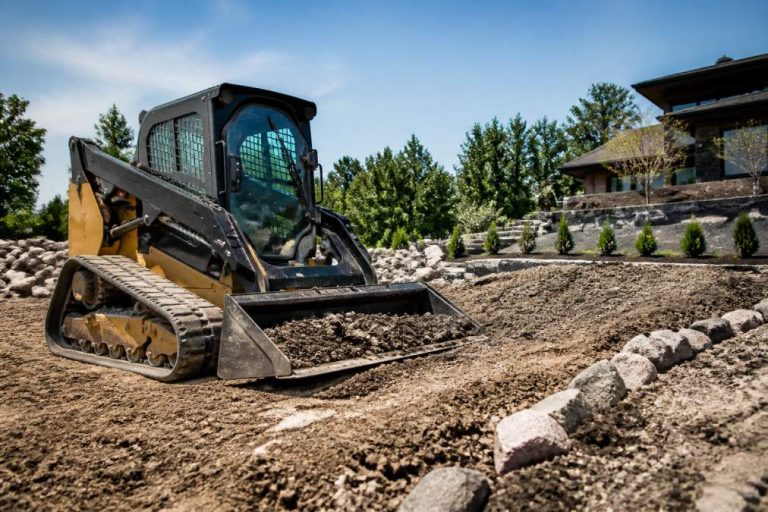
Compact track loader financing is a commercial funding arrangement that pays for a rubber-tracked skid steer machine over a set term, usually 24 to 84 months, while the machine itself serves as collateral. For small landscaping businesses, this means the equipment can start earning on jobs before the balance is paid off.
New vs. Used Compact Track Loaders
New units come with full manufacturer warranties and the latest track and hydraulic designs. Used units cost less upfront and are widely available through dealer lots and auction channels.
What Lenders Look At Before Approving
Approval decisions rest on four things: time in business, credit profile, the machine’s value, and how the equipment will be used. Lenders want to see that the business generates revenue and that the collateral holds value.
Step 2: Heavy Equipment Financing for Landscaping, Explained
Heavy equipment financing for landscaping is a loan or lease structured around the machine’s useful life, with the loader acting as collateral and repayment spread across monthly installments. It differs from a general business loan because the funding is tied to a specific asset.
Why Landscapers Need Track Loaders
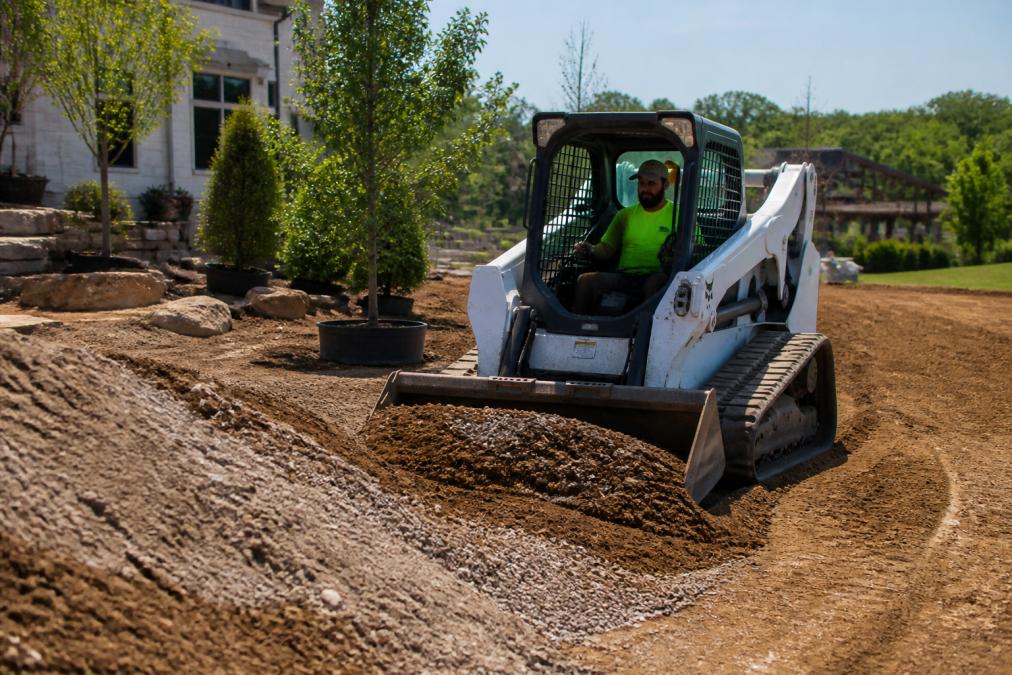
Track loaders handle grading, trenching, material spreading, and site prep that wheeled skid steers struggle with on soft or uneven ground. Low ground pressure means less turf damage, which matters on residential and commercial landscaping jobs where lawns and finished surfaces must stay intact.
Step 3: How to Get Approved for Construction Equipment Loans
Getting approved for construction equipment loans starts with matching the request to the right program. Applications that need no financial statements are typically capped at a certain amount, while larger requests move into full underwriting with supporting documents.
The practical sequence looks like this:
- Gather business formation documents and a valid ID
- Identify the machine, year, and dealer or seller
- Submit a pre-qualification request for a soft credit check
- Review the offer terms and equipment description
- Sign and take delivery once approved
The Step-by-Step Documentation Checklist
Use this list before submitting anything:
- Business legal name, address, and formation date
- Owner identification and contact details
- Machine make, model, year, and serial number
- Dealer or private seller information
- Proof of business bank account
- Down payment source, if applicable
- Insurance certificate naming the equipment
Lenders that fund older machines may ask for photos and a condition report instead of full financials. Keeping this packet ready shortens the gap between application and delivery.
Step 4: Financing Older Heavy Equipment for Landscaping
Financing older heavy equipment for landscaping is possible with lenders that underwrite on machine condition and business revenue rather than age alone. No age or mileage restrictions mean a well-kept loader with 4,000 hours can still secure funding.
Step 5: Compare Your Financing Options Side by Side
Choosing between structures comes down to ownership goals, cash flow, and how long the machine will realistically stay on the crew. Equipment financing builds equity and ends with ownership. Leasing keeps payments lower and preserves capital for payroll and materials. A general business loan offers the most flexibility but is not tied to the asset.
Option | Ownership | Best For | Typical Term |
|---|---|---|---|
Equipment financing | Yes, at term end | Long-term fleet building | 24-84 months |
Capital lease | Yes, at term end | Businesses wanting ownership with fixed payments | 24-60 months |
Operating lease | No | Seasonal or short-cycle work | 12-48 months |
Business loan | N/A | Working capital plus equipment | Varies |
Equipment Financing vs. Leasing vs. Business Loans
Equipment financing suits landscapers who plan to keep the machine for years. Leasing fits crews that rotate equipment or want to preserve cash. A business loan works when the funding must cover both the machine and day-to-day operations.
The Insurance Requirement Most Guides Skip
Every lender that holds a lien on a financed compact track loader requires the machine to be insured for the life of the agreement, with the lender named as loss payee on the policy. This is not optional and it is not a formality. If the loader is damaged, stolen, or totaled on a job site, the lender’s interest is protected first.
- A commercial inland marine or equipment floater policy is the common instrument for mobile machinery that moves between job sites.
- The policy limit typically needs to cover the replacement value of the machine, not the remaining balance.
- Proof of coverage is usually required before delivery, and lapses can trigger a default clause.
- If the loader is used on public roads or hauled on a trailer, separate auto liability may apply.
Total Cost of Ownership: Ownership vs. Renting
Most financing guides stop at the monthly payment. The real comparison for a small landscaping business is total cost of ownership over the life of the machine versus the cumulative cost of renting the same unit season after season.
Ownership costs to weigh:
- The financing installment across the full term
- Track replacement, which is the single largest recurring wear item on a compact track loader
- Hydraulic service, undercarriage inspection, and routine maintenance
- Insurance premiums for the life of the loan
- Fuel and operator time
- Resale or trade-in value at the end of the term
Renting costs to weigh:
- The daily, weekly, or monthly rental charge every time the machine is needed
- Delivery and pickup fees on each rental cycle
- Lost billable hours when the rental yard has no unit available during peak season
- No equity and no resale value at the end
Financing Used vs. New in the Comparison
The structure comparison changes when the machine is used. A used compact track loader financed through a lender with no age or mileage restrictions can carry a shorter term and a slightly higher down payment expectation than a new unit, but the lower acquisition cost often keeps the monthly outlay in the same range. Always Capital funds older equipment with no restrictions on age or mileage, which keeps well-maintained high-hour machines in the running alongside new units.
Step 6: Common Mistakes to Avoid When Financing a Compact Track Loader
The first mistake is applying before knowing the machine’s actual value. Lenders fund against collateral, and an inflated asking price slows or kills the approval. Pull the make, model, year, and serial number before the application goes in, and get a condition report on any used unit.
Mistake Four: Skipping the Insurance Requirement
Financed equipment must be insured for the life of the agreement, with the lender named as loss payee. Landscapers who learn this at the closing table scramble to bind a policy and sometimes accept worse coverage than they needed. The fix is simple: get the lender’s coverage language early, hand it to a commercial insurance agent, and have the certificate ready before delivery.
Mistake Five: Mismatching the Term to the Machine’s Working Life
A term that outlasts the equipment leaves the business paying for a loader that no longer runs. Match the term to how long the machine will realistically stay in service, factoring in hours per season and the type of ground it works on. A high-hour used unit on rocky sites will not have the same service life as a new machine on residential lawns.
Mistake Six: Overlooking the Documentation Packet
Applications stall when paperwork is incomplete. Keep a ready packet with the business legal name, formation date, owner ID, machine details, dealer information, proof of business bank account, and the insurance certificate. Lenders that fund older machines may ask for photos and a condition report instead of full financials, so having those on hand shortens the gap between application and delivery.
Frequently Asked Questions
What credit score do I need for compact track loader financing?
There is no single cutoff. Many lenders work with a range of credit profiles, and some approve applications without a traditional credit score review at all. A soft credit check lets you see your options without hurting your credit. Landscaping businesses with challenged credit can still qualify, especially when the loader itself serves as collateral. The strongest applications show steady revenue and a clear plan for how the machine will earn.
What documents are required to apply for compact track loader financing?
Basic applications usually need your business name, contact details, and the equipment you want. Application-only approvals up to $500,000 often skip bank statements and financial statements entirely. Larger requests may require financials, proof of revenue, and equipment details. Having your documentation ready before you apply speeds up the process. Always Capital offers same-day approvals in as little as two to four hours for qualifying applications.
Can landscaping businesses finance used compact track loaders?
Yes. Financing older heavy equipment for landscaping is common, and some lenders place no restrictions on age or hours. A used compact track loader can cost significantly less than a new unit while still handling grading, trenching, and material handling. Lenders may look more closely at machine condition and resale value, so have service records ready. Deferred payment plans of 30, 60, or 90 days can help bridge the gap before the machine starts generating revenue.
How does equipment financing differ from traditional business loans?
Equipment financing is tied directly to the machine you buy, which serves as collateral. That structure often means faster approvals and more flexible credit requirements than unsecured business loans. Traditional loans may require extensive financial documentation and a longer review. Equipment financing can also cover working capital needs alongside the purchase. Always Capital offers 100% financing options and terms from 24 to 84 months.