
Table of Contents
- What Heavy Equipment Loans Are and How They Work
- Types of Heavy Equipment Financing Available
- Heavy Equipment Auction Financing for Budget-Conscious Buyers
- Financing for Older Equipment and Trucks
- Key Eligibility Requirements for Small Business Equipment Loans
- How to Choose the Right Equipment Lender for Your Business
- Equipment Loans vs. Leasing: Which Strategy Fits Your Business
- Frequently Asked Questions
Last Updated: September 19, 2026
What Heavy Equipment Loans Are and How They Work
Heavy equipment loans help small businesses acquire machinery and vehicles without depleting cash reserves. Construction companies, landscaping firms, and equipment-dependent businesses use these loans to purchase excavators, backhoes, dump trucks, loaders, and other essential machinery.
A business applies for a loan, receives approval, and uses the funds to purchase equipment. The equipment serves as collateral, and the business repays the loan over a set period, spreading costs across the months or years the equipment generates revenue.
Heavy equipment loans offer extended repayment periods from 24 to 84 months because equipment has tangible value and long lifespan, keeping payments manageable for significant purchases.
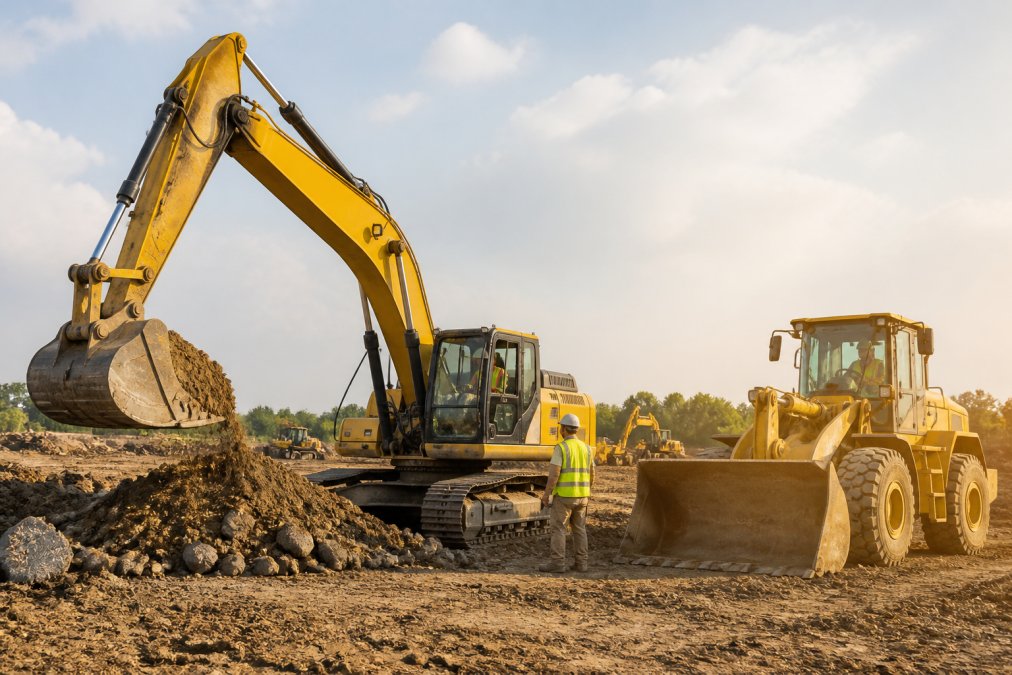
Small businesses gain immediate access to equipment without waiting to save capital. A landscaping company needing a skid steer loader can secure financing and deploy equipment immediately, using generated revenue to cover loan payments.
At Always Capital, the team understands that speed matters in equipment acquisition. Approvals can happen within hours, not weeks, so businesses can move forward without unnecessary delays.
Types of Heavy Equipment Financing Available
Businesses have several financing structures to choose from, each suited to different situations and needs.
Purchase loans are the most common type. A business borrows money to buy equipment outright, with ownership transferring immediately. This works well for companies planning long-term use and building equity.
Lease-to-own arrangements let businesses lease equipment with an option to buy at the end, providing flexibility if needs change.
Operating leases are rental agreements where the lender retains ownership and the business pays monthly. Equipment returns to the lessor at lease end, suiting temporary needs or businesses avoiding ownership responsibilities.
Capital leases are longer-term arrangements functioning like purchases, with an option to buy at the end for a nominal amount.
Term loans provide general business capital for equipment purchases and other operational needs, offering deployment flexibility.
Heavy equipment auction financing deserves special attention for budget-conscious buyers. Rather than purchasing new equipment from dealers, some businesses source used machinery from auctions and finance those purchases separately. This can reduce equipment costs significantly while maintaining access to quality machinery.
Heavy Equipment Auction Financing for Budget-Conscious Buyers
Auction financing lets businesses source equipment from auctions, though auction equipment is typically sold as-is without warranties.
Auction purchases require equipment appraisal and title verification. Always Capital supports heavy equipment auction financing, allowing businesses to bid on used equipment and secure funds to complete purchases. Buyers must inspect carefully before bidding since auction equipment is sold as-is.
Financing for Older Equipment and Trucks
Many lenders decline loans for machinery older than 10-15 years. Always Capital finances equipment with no age or mileage restrictions, opening access to older but functional machinery for budget-conscious businesses.
How Used Equipment Financing Differs from New Equipment Loans
Used equipment financing uses different loan-to-value (LTV) ratios than new equipment. New equipment typically finances at a higher LTV due to manufacturer warranties and predictable resale value. Used equipment finances at a lower LTV due to unknown maintenance history and less predictable resale value, potentially requiring larger upfront capital from the business.
Appraisal and Condition Assessment
Used equipment appraisal assesses condition, maintenance history, operating hours, and market demand. Equipment with documented service records commands higher valuations. A well-maintained 20-year-old loader with full service records may be financed readily; a neglected machine of the same age may be declined or financed at lower LTV.
Used Equipment Sourcing: Dealer vs. Auction vs. Private Sale
Dealer inventory offers equipment with warranty and condition reports but costs more than auction or private purchases. Auction purchases cost 20-40% less but are sold as-is without warranties; Always Capital supports heavy equipment auction financing. Private sales yield competitive pricing but require independent condition assessment and title verification.
When Used Equipment Makes Financial Sense
Used equipment financing benefits budget-constrained businesses, those building first fleets, seasonal operations, and contractors seeking proven reliability at lower cost.
Risks and Mitigation
Used equipment may fail sooner, have unexpected repair costs, or depreciate faster than anticipated. Mitigate risks by hiring independent inspectors, requesting maintenance records, purchasing equipment with warranty options, and financing conservatively to preserve equity. Always Capital finances equipment with no age or mileage restrictions.
Key Eligibility Requirements for Small Business Equipment Loans
Lenders evaluate several factors when deciding whether to approve equipment financing. Understanding these criteria helps businesses prepare stronger applications and know what to expect.
Business Credit Profile and Credit Type Flexibility
Traditional lenders decline businesses with low credit scores or recent late payments. Always Capital works with all credit types, evaluating current ability to generate revenue and service debt rather than historical credit performance. A construction company with challenged credit but strong monthly revenue qualifies based on business performance, not credit score alone.
Time in Business and Revenue Stability
Many lenders require 2+ years of operating history, excluding young businesses needing equipment. Always Capital supports businesses under two years old. Revenue stability and growth trajectory matter more than age. Lenders evaluate monthly consistency, year-over-year growth, and seasonal patterns. A paving contractor in year one with $300,000 annual revenue and a full project pipeline may qualify despite being under two years old.
Revenue and Cash Flow Documentation
Traditional lenders require two years of financial statements, bank statements, and profit-and-loss statements. Always Capital offers application-only approvals up to certain thresholds, bypassing extensive documentation for businesses with complex tax situations, recent ownership changes, or seasonal revenue patterns.
Collateral Value and Loan-to-Value (LTV) Ratios
The equipment secures the loan. Loan-to-value (LTV) is the loan amount divided by equipment value. New equipment typically finances at a higher LTV, used equipment at a lower LTV, and older equipment at an even lower LTV. Always Capital offers 100% financing on new equipment, removing down payment barriers for qualified businesses.
Soft Credit Pulls and Credit Score Protection
Hard inquiries temporarily lower credit scores and remain on reports for a period. Always Capital uses soft credit pulls, so applying doesn’t damage credit scores. This allows comparison shopping and exploring options without harming credit profiles for future financing.
Industry-Specific Evaluation Patterns
Different industries present different risk profiles to lenders:
Construction and excavation: Lenders understand seasonal revenue, project-based income, and equipment-dependent operations. A general contractor with a $500,000 annual revenue and a $200,000 equipment loan is viewed as manageable. Equipment financing is common in this sector.
Landscaping and grounds maintenance: Highly seasonal, with revenue concentrated in spring and summer. Lenders evaluate annual revenue and cash reserves to cover winter months. A landscaping company with $300,000 annual revenue but minimal cash reserves may be declined or offered smaller loan amounts.
Paving and asphalt: Equipment-intensive with high capital requirements. Lenders are familiar with this sector and understand that paving equipment (pavers, rollers, compactors) is essential to operations. Financing is readily available for established paving contractors.
Trucking and logistics: Lenders evaluate driver availability, fuel costs, and freight rates. A trucking company with long-term contracts (showing stable revenue) qualifies more easily than one relying on spot market freight.
The Application Process and Approval Timeline
Understanding the approval process helps businesses prepare. Always Capital approves applications within 2-4 hours, but the process includes:
- Initial application: Business provides basic information (company name, ownership, equipment details, loan amount needed).
- Soft credit pull: Creditworthiness is assessed without damaging credit scores.
- Equipment appraisal: The equipment to be financed is valued to establish LTV.
- Conditional approval: Lender approves subject to documentation (title verification, insurance, etc.).
- Final approval and funding: Once conditions are met, funds are disbursed.
For a construction company needing a backhoe financed, the entire process can complete within hours, enabling equipment purchase and deployment the same day.
How to Choose the Right Equipment Lender for Your Business
Not all equipment lenders operate the same way. Evaluating options helps businesses find the best fit.
Speed of approval varies widely. Some lenders take weeks to make decisions; others approve within hours. For businesses needing equipment urgently, approval speed directly impacts the ability to move forward. Always Capital approves applications within 2-4 hours, enabling rapid deployment.
Flexibility in loan structure matters when business needs are specific. Some lenders offer rigid terms; others customize repayment schedules. Deferred payment options, allowing businesses to delay payments for 30, 60, or 90 days, can ease cash flow challenges during equipment deployment.
Financing limits determine what equipment a business can acquire. Some lenders cap loan amounts at a few hundred thousand dollars; others finance up to several million. Always Capital finances up to $5 million, accommodating everything from single equipment purchases to fleet expansions.
Credit requirements affect who qualifies.
Avoid lenders that pressure rapid decisions or refuse to explain terms clearly. Equipment financing is a significant commitment; take time to understand the agreement before signing.
Equipment Loans vs. Leasing: Which Strategy Fits Your Business
Loans and leases represent different philosophies about equipment ownership and cost management.
Frequently Asked Questions
What types of heavy equipment can be financed?
Heavy equipment loans cover a wide range of machinery essential to construction, landscaping, and grading operations. Excavators, backhoes, skid steers, loaders, dozers, tractors, pavers, compactors, and wheel loaders all qualify. Commercial vehicles including dump trucks, daycabs, box trucks, and roll-off trucks can also be financed. Always Capital finances both new and used equipment with no age or mileage restrictions, making it possible to acquire the specific machinery your business needs to grow.
How quickly can I get approved for heavy equipment loans?
Approval speed depends on your loan amount and documentation. Always Capital offers approvals in as little as two to four hours for qualified applications. For loans up to $500,000, application-only approvals are available with no financials required, which accelerates the process significantly. The soft credit pull approach means your credit score won’t be harmed during the application process, and all applications are accepted regardless of credit history.
Can I get financing for older heavy equipment?
Yes. Many lenders restrict financing to newer equipment, but Always Capital specializes in financing older equipment and trucks with no age restrictions. This opens opportunities for small businesses to acquire reliable used machinery at lower capital expenditure costs. Whether you’re purchasing from equipment auctions or private sellers, older equipment financing allows you to maintain cash flow while still upgrading your fleet.
What documents do I need to apply for equipment financing?
Documentation requirements vary by loan amount. For applications up to $500,000, Always Capital offers application-only approvals without requiring financial statements, tax returns, or bank statements. Larger loans may require business balance sheet information and basic credit profile details. The streamlined application process means you can qualify quickly without extensive paperwork, making it easier for newer businesses or those with limited historical records to access capital.