
Table of Contents
- Why Daycabs Dominate Regional Hauling Operations
- Daycab vs Sleeper Cab: Key Differences for Regional Routes
- Daycab Truck Benefits for Fleet Operators
- Daycab for Regional Routes: Route Flexibility and Driver Retention
- Daycab Financing Options to Grow Your Fleet
- Payload Capacity and Weight Considerations
- Total Cost of Ownership: Daycabs vs Sleeper Trucks
- Frequently Asked Questions
Last Updated: October 11, 2026
Why Daycabs Dominate Regional Hauling Operations
A daycab benefits regional hauling by eliminating the weight and complexity of a sleeper cab while maintaining full hauling capability. Regional carriers and owner-operators increasingly choose daycabs for routes that return drivers home daily or within short cycles. Always Capital has financed thousands of daycab purchases for businesses expanding their regional fleets, and the trend reflects a fundamental shift in how companies approach short-haul logistics.
Daycabs handle regional routes’ specific demands, predictable schedules, familiar territories, driver availability, without sleeper overhead, letting businesses optimize operations while preserving capital for growth.
Regional routes typically cover 200-500 miles per day with drivers returning home nightly or within 2-3 days. This operational pattern makes daycabs the natural choice, not an afterthought.
Daycab vs Sleeper Cab: Key Differences for Regional Routes
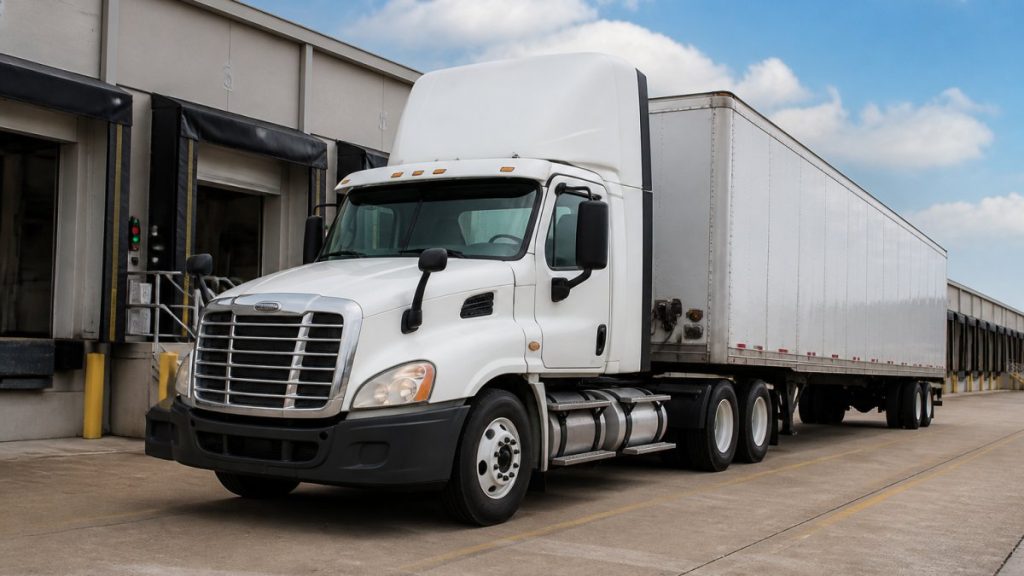
The daycab truck benefits become clear when compared directly to sleeper cabs. A daycab is a semi-truck with no sleeping compartment, designed exclusively for day-shift operation.

For regional hauling, daycabs weigh 10,000-15,000 pounds less than sleeper configurations, enabling more payload per trip and superior maneuverability in warehouse yards and urban areas. Drivers benefit from simplified cab layouts with no sleeper maintenance or bunk cleaning.
| Feature | Daycab | Sleeper Cab |
|---|---|---|
| Weight | Lighter (more payload) | Heavier (less payload) |
| Maneuverability | Superior in yards | Reduced in tight spaces |
| Maintenance | Simpler cab systems | Additional sleeper upkeep |
| Driver Rest | Home or designated facility | On-board sleeping |
| Regional Route Fit | Optimal | Unnecessary complexity |
| Fuel Economy | Better efficiency | Higher consumption |
Daycabs eliminate the “one-size-fits-all” approach. A carrier running 300-mile routes with drivers home by evening doesn’t need sleeper infrastructure. Always Capital structures daycab financing to match regional operation profiles.
Daycabs are purpose-built for regional work. Sleeper cabs add capability regional operators never use, consuming payload capacity and fuel efficiency in the process.
Daycab Truck Benefits for Fleet Operators
Fleet operators see immediate advantages with daycabs: simplified configurations reduce driver training time and maintenance schedules because there’s less equipment to service.
Lower Operating Costs
Lower daycab weight reduces fuel consumption per mile. Fewer mechanical systems lower maintenance frequency and parts costs. Fleet operators report daycab maintenance costs can be lower than sleeper operations.
Insurance premiums can reflect daycab simplicity. Always Capital has helped regional carriers restructure fleets around daycabs.
Improved Maneuverability and Visibility
Daycabs’ compact profiles transform yard operations. Shorter wheelbases and reduced overhangs enable tighter turning radiuses and better visibility. Regional routes with multiple daily stops, supermarkets, distribution centers, manufacturing facilities, benefit directly from improved maneuverability.
Without sleeper compartments extending the cab, daycab drivers see more surroundings, reducing blind spots and improving sightlines in congested regional areas.
Faster Turnaround Times
Daycabs enable rapid dispatch cycles. A driver finishes a 300-mile route and returns ready for the next assignment within hours. Regional carriers can schedule multiple routes per driver weekly, increasing asset use without fatigue concerns.
Always Capital recognizes faster turnaround times improve fleet profitability. Heavy equipment financing options help carriers add vehicles to regional networks, knowing each asset cycles multiple times weekly.
Daycab for Regional Routes: Route Flexibility and Driver Retention
Daycabs create operational flexibility for routes with predictable schedules where drivers return home by evening or within two days. This consistency reduces turnover, critical in an industry facing driver shortages. Carriers offering regional daycab positions report better retention than those forcing long-haul rotations.
Daycabs extend to driver recruitment. New drivers prefer regional work. Daycabs enable carriers to offer regional positions without massive sleeper infrastructure investment. Always Capital has financed daycab purchases for carriers building regional driver pools, strengthening competitive position.
Assessing Route Fit: A Decision Framework
Before committing to daycab financing, carriers should evaluate four key operational dimensions:
Daily Mileage and Round-Trip Feasibility
Daycabs work best for routes averaging 200-500 miles per day with drivers returning by evening. Routes exceeding 500 miles one-way or requiring three+ consecutive nights away become operationally risky. Always Capital structures daycab financing to match verified route profiles.
Dispatch Variability and Unexpected Extensions
Regional operations encounter delays from weather, shipper congestion, or mechanical breakdowns. Carriers must have contingency plans for overnight holds. If your operation cannot absorb occasional overnight stays, daycab fleets require additional infrastructure investment that offsets cost advantages.
Access to Home Terminals and Rest Facilities
Daycabs assume drivers reach safe rest locations within legal driving windows. Carriers in regions with sparse truck stops or limited home terminal access may find daycabs impractical. Metropolitan carriers with multiple nearby distribution centers have ideal daycab conditions.
Driver Composition and Preference Alignment
Driver quality improves when routes align with personal preferences. Carriers must honestly assess whether their driver pool wants regional daycab positions or whether forcing assignments creates turnover.
Carriers that ignore driver preferences and force long-haul assignments on regional-focused drivers see turnover spike within 6-12 months. The cost of replacing experienced drivers far exceeds the savings from consolidating to sleeper fleets. Conversely, carriers that misread their driver pool and purchase daycabs for drivers who prefer long-haul work waste capital on underutilized assets.
Driver Retention and Quality-of-Life Trade-offs
Daycabs make home time economically viable. Drivers completing 300-mile routes and returning home maintain family stability and show measurably lower turnover. Regional carriers with daycab fleets can experience improved driver retention compared to long-haul operations.
This advantage only materializes if routes genuinely support daily or near-daily home time. Always Capital’s daycab financing customers who succeed have honest route profiles and transparent driver communication from hiring.
Daycab Financing Options to Grow Your Fleet
Regional carriers expanding daycab fleets need financing matching their growth timeline. Whether purchasing new daycabs or adding used equipment, Always Capital offers flexible terms structured around operational cash flow.
Always Capital’s daycab financing supports all credit types. Soft credit pulls mean applications don’t damage credit scores, allowing carriers to explore options without penalty, removing barriers traditional lenders impose.
APPLY NOW AND GET YOUR BUSINESS PRE-APPROVED FOR FINANCING TODAY ! →
For carriers managing seasonal fluctuations, Always Capital offers customized payment structures including deferred payment options that preserve working capital during slow periods.
Always Capital finances daycabs with no age or mileage restrictions, meaning carriers can add quality used equipment to their fleets at lower capital costs. This flexibility in daycab financing enables smaller carriers to compete with larger operations by building fleets strategically over time.
Payload Capacity and Weight Considerations
Daycab truck benefits include meaningful payload advantages, but the actual impact depends on freight type, route density, and regulatory constraints. A daycab’s lighter weight translates directly to increased cargo capacity per trip. For regional hauling where drivers complete multiple routes weekly, this payload difference compounds quickly. However, payload gains only matter if your freight type and customer base can utilize the additional capacity.
Weight Advantage Mechanics
A typical daycab semi-truck weighs 10,000-15,000 pounds less than an equivalent sleeper cab configuration. Under federal gross vehicle weight rating (GVWR) limits of 80,000 pounds, this weight savings converts to additional payload capacity per load. A carrier running five routes per week with daycabs gains the equivalent of one additional route weekly through payload efficiency alone, but only if each route is weight-limited rather than cube-limited.
This distinction matters enormously. A carrier hauling dense freight (steel, machinery, automotive parts) benefits from daycab payload gains because weight is the limiting factor. A carrier hauling lightweight, high-volume freight (foam, packaging, textiles) sees minimal benefit because the trailer fills to cube capacity before reaching weight limits. Always Capital finances daycabs for carriers in both categories, but the ROI calculation differs significantly.
Regulatory and Permitting Simplicity
Daycabs operate under standard commercial licensing in most states for regional hauling. The simplified configuration means fewer permitting complications and simpler compliance. Regional routes rarely require the specialized permits that long-haul operations navigate. A daycab carrying standard freight within GVWR limits requires no oversize permits, no escort vehicles, and no route restrictions.
Sleeper cabs, by contrast, sometimes trigger additional scrutiny because their higher curb weight leaves less margin for payload before hitting GVWR. This regulatory simplicity reduces administrative overhead and allows faster dispatch cycles. Always Capital’s daycab financing customers appreciate this operational clarity because it reduces unexpected delays and compliance costs.
Fuel Economy and Operating Cost Per Mile
Fuel economy improves with daycab configuration. Lighter vehicles consume less fuel per mile. Over a year of regional operation, potentially 100,000+ miles, fuel savings become substantial. A daycab typically achieves 1-2 miles per gallon better fuel economy than a sleeper cab under identical driving conditions and freight loads.
For a carrier operating ten daycabs at 100,000 miles annually per vehicle, this translates to approximately 10,000-20,000 additional gallons consumed by sleeper equivalents over one year. At typical diesel costs, this represents meaningful annual savings. However, this advantage erodes if routes require frequent idling (dock waits, shipper delays) or if drivers operate in mountainous terrain where weight differences matter less than engine power.
Payload Limitations and Edge Cases
Daycab payload advantages disappear in specific scenarios. A carrier hauling maximum-weight freight (40,000+ pounds per load) may find that daycab weight savings provide minimal additional capacity because the freight itself approaches GVWR limits. In these cases, the daycab’s maneuverability and fuel economy become the primary benefits, not payload expansion.
Additionally, some regional routes involve backhaul or mixed-freight scenarios where payload flexibility matters less than equipment versatility. A carrier that sometimes hauls palletized goods, sometimes loose freight, and sometimes requires refrigeration may find that sleeper cabs’ additional space and flexibility justify their weight penalty. Always Capital structures daycab financing around verified freight profiles, ensuring carriers don’t overcommit to daycabs for operations that require equipment flexibility.
Payload gains from daycabs are real but conditional. Weight-dense freight in high-frequency regional routes maximizes the advantage. Lightweight, cube-limited, or mixed-freight operations see minimal benefit and may be better served by sleeper flexibility or specialized equipment.
Total Cost of Ownership: Daycabs vs Sleeper Trucks
Evaluating daycab benefits regional hauling requires understanding total cost of ownership across the vehicle lifecycle. Purchase price represents only the initial component. Maintenance, fuel, insurance, and resale value determine true operational cost.
Daycabs can cost less than equivalent sleeper configurations, reducing initial capital requirements. Always Capital’s dump truck financing options help carriers manage this capital requirement through flexible terms and fast approvals.
Maintenance costs favor daycabs substantially. Fewer systems mean fewer failure points. Daycab operation can result in lower maintenance costs than sleeper equivalents.
Resale value remains strong for daycabs because regional carriers continuously seek them.
The cumulative effect can be significant. This economic reality drives daycab adoption across regional hauling operations.
Always Capital helps carriers finance daycabs with this total cost perspective in mind.
Frequently Asked Questions
What are the main benefits of a daycab for regional hauling?
Daycabs offer lower fuel consumption, improved maneuverability in tight spaces, faster turnaround times, and reduced maintenance costs compared to sleeper cabs. They work best for routes where drivers return home daily or within 24 hours. The compact design improves visibility and makes yard operations easier. Always Capital finances daycabs with 100% financing options, making it simple to upgrade your fleet without large down payments.
How does a daycab differ from a sleeper cab?
A daycab has a compact cab with no sleeping compartment, while a sleeper cab includes a bunk for overnight rest. Daycabs weigh less, consume less fuel, and offer better maneuverability. Sleeper cabs provide space for multi-day routes but add weight, cost, and maintenance overhead. For regional hauling where drivers return home daily, daycabs eliminate the need for sleeping quarters. Always Capital provides daycab financing tailored to regional carriers needing quick approvals.
Can daycabs handle regional routes effectively?
Yes. Daycabs excel on regional routes where drivers operate within 200-500 miles from home and return daily or within 24 hours. They’re ideal for construction supply delivery, local freight, and regional expedited trucking. The compact design and weight savings make them faster and more economical than sleeper trucks. Always Capital approves daycab financing in as little as 2-4 hours, helping regional carriers scale quickly without operational delays.
How can I finance a daycab for my fleet?
Always Capital specializes in daycab financing with flexible terms, 100% financing options, and approvals in as little as 2-4 hours. We accept all credit types and offer soft credit pulls that don’t damage your score. You can apply with minimal documentation through our application-only approval process up to $500,000. Contact Always Capital today to get pre-approved for daycab financing and start building your regional fleet without traditional bank delays.
Regional hauling demands equipment designed specifically for short-haul operations. Daycabs deliver that purpose-built capability while preserving payload capacity, improving maneuverability, and attracting quality drivers. Always Capital provides daycab financing that matches regional carrier needs, fast approvals, flexible terms, and support for all credit types. Get pre-approved for daycab financing with Always Capital and build the regional fleet your business requires.