

Table of Contents
- What the Best Terms for Skidsteer Financing Actually Look Like
- Loan, Lease, or Dealer Financing: A Side-by-Side Comparison
- Skid Steer Financing Requirements: What Lenders Look For
- Used Skid Steer Financing: How Age, Hours, and Condition Affect Terms
- The Equipment Financing Application: Documents and Steps
- Equipment Financing Approval Time: From Application to Funds
- How Always Capital Delivers the Best Payments and Fastest Approvals
- Conclusion: Matching Terms to Your Cash Flow
- Frequently Asked Questions
Last Updated: October 4, 2026
What the Best Terms for Skidsteer Financing Actually Look Like
The best terms for skidsteer financing come down to four things: down payment, loan term, approval speed, and how well the payment schedule matches your cash flow. This guide from Always Capital breaks down what separates a workable deal from one that strangles a crew’s cash flow.
The Four Terms That Decide Your Deal
Every skid steer financing agreement rests on four moving parts:
- Down payment – how much cash leaves your account on day one
- Loan term – how many months you’re committed to paying
- Approval speed – how long your money is tied up waiting
- Payment structure – whether payments start immediately or defer
Get all four right and the machine pays for itself. Get one wrong and you’re financing a paperweight.
The best payment isn’t the lowest one. It’s the one that matches when your revenue actually lands each month.
Loan, Lease, or Dealer Financing: A Side-by-Side Comparison
Loan, lease, and dealer financing each solve a different problem. The right choice depends on how long you’ll keep the machine, how much working capital you need free, and how fast you need the unit on the job.
| Option | Ownership | Best For | Trade-Off |
|---|---|---|---|
| Equipment loan | You own it | Long-term use, resale value | Higher upfront commitment |
| Equipment lease | Option to buy | Short projects, latest models | No equity built |
| Dealer financing | You own it | Speed and simplicity | Limited lender choice |
A contractor running a machine into the ground for eight years should finance it. A crew testing a new attachment line for two seasons should lease.
What Each Structure Actually Commits You To
An equipment loan is a term commitment: set monthly payments, you hold the title, and the machine is yours at the end.
A lease is a use commitment: you pay for the right to operate the machine for a defined period, then return it, extend, or purchase it outright.
Dealer financing is a convenience commitment: the dealer arranges funding and you sign at the point of sale. The upside is speed; the downside is comparing one offer instead of several.
End-of-Term Choices That Change the Math
The end of the term is where loan and lease structures diverge most. With a loan, the machine is yours, keep it, sell it, or trade it. With a lease, you return the unit, buy it, or roll into a new lease.
Contractors who trade every few years often find a lease keeps them in newer iron without tying up capital. Contractors who run machines until the wheels fall off usually prefer a loan and a paid-off asset.
Where Dealer Financing Fits
Dealer financing is strongest when the machine is on the lot and you need to close today. It’s weakest when you want to compare structures side by side. Many contractors use dealer financing for speed on a single unit and a specialty lender for fleet purchases.
The best structure isn’t the one with the lowest payment. It’s the one whose end-of-term outcome matches what you actually plan to do with the machine.
How Always Capital Fits Into the Comparison
Always Capital works across all three structures, so you can compare a loan, a lease, and a dealer-arranged offer without a new application each time. The process begins with a soft credit pull, so exploring your options doesn’t affect your credit profile.
For a deeper look at how these structures apply to specific machines, see the guides on financing Bobcat equipment, financing Caterpillar equipment, financing John Deere equipment, and financing Case equipment.
Skid Steer Financing Requirements: What Lenders Look For
Skid steer financing requirements vary by lender, but most weigh the same three factors: credit profile, business history, and collateral strength. Understanding these before you apply saves weeks of back-and-forth.
Credit Profile and Business History
Lenders want a pattern, not a perfect score. A business with two years of steady revenue and a rough credit patch often beats a newer operation with clean credit and no history.
APPLY NOW AND GET YOUR BUSINESS PRE-APPROVED FOR FINANCING TODAY ! →
Some lenders, including Always Capital, work with all credit types and use soft credit pulls during application so your credit isn’t dinged while you shop.
Down Payment and Collateral
The machine itself is collateral. A newer skid steer with low hours secures better terms than a high-hour unit because the lender can recover value if things go sideways. Down payment requirements shift based on how much of the equipment’s value the lender will carry.
Ask whether the lender offers 100% financing before you assume you need cash down. Some programs cover the full purchase price, which keeps working capital free for payroll and fuel.
Used Skid Steer Financing: How Age, Hours, and Condition Affect Terms
Used skid steer financing lives or dies on the machine’s numbers. Age, hours, and condition determine whether a lender sees collateral or a liability.
A 2019 unit with 2,000 hours and full service records is easy to finance. A 2012 unit with 9,000 hours and no maintenance history is a harder sell.
Some lenders apply age or mileage restrictions that disqualify older machines outright. Always Capital finances equipment with no age or mileage restrictions, opening options for contractors buying used at auction or from a private seller.
Condition matters as much as hours. Rust, hydraulic leaks, and missing service logs all push terms in the wrong direction.
The Equipment Financing Application: Documents and Steps
The equipment financing application process is shorter than most contractors expect, but the difference between a same-day approval and a week of back-and-forth comes down to preparation. A typical flow:
- Submit basic business information
- Provide the equipment details (make, model, year, hours)
- Receive a soft-pull pre-approval decision
- Review terms and payment structure
- Sign and receive funds
What to Prepare Before You Apply
- Business name and entity type
- Time in business
- Equipment make, model, year, and hours
- Seller or auction details
- Basic revenue information
Application-only approvals mean some lenders can decide without bank statements or other financial documentation, especially for smaller amounts. Larger requests may require financial documentation.
What Happens at Each Stage
Stage 1: Business information. You provide your legal business name, entity type, address, and time in business.
Stage 2: Equipment details. You supply the make, model, year, and hours or mileage, plus the seller’s information.
Stage 3: Pre-approval decision. A soft-pull pre-approval lets the lender review your profile without affecting your credit.
Stage 4: Review terms and payment structure. This is the stage most contractors rush.
Stage 5: Sign and receive funds. Once you accept, the lender coordinates with the seller or auction house and releases funds.
How to Compare Offers Once They Arrive
Comparing offers isn’t about picking the lowest monthly figure. Two offers with the same payment can differ in term length, total outlay, deferred-payment availability, and end-of-term flexibility. Line up each offer against four questions:
- How many months am I committed to?
- When does the first payment come due?
- What is the total amount I’ll pay over the life of the agreement?
- What happens if I want to exit early or trade the machine?
A shorter term usually means a higher monthly payment but less total outlay. A longer term lowers the monthly figure but stretches the commitment. Deferred payment plans shift the first payment out by 30, 60, or 90 days, which matters if the machine won’t generate revenue immediately.
APPLY NOW AND GET YOUR BUSINESS PRE-APPROVED FOR FINANCING TODAY ! →
Common Mistakes That Slow an Approval
- Applying with incomplete equipment details, which forces a second round of questions
- Submitting to multiple lenders without confirming they use soft pulls, which can trigger multiple hard inquiries
- Leaving out the seller’s information, which delays collateral verification
- Assuming a pre-approval is a final approval and committing to a purchase before signing
- Forgetting to ask about deferred payment options until after the paperwork is signed
Ask about deferred payment plans before you sign, not after. A 30, 60, or 90-day deferral can be the difference between a machine that pays for itself and one that strains payroll in its first month.
How Always Capital Streamlines the Process
Always Capital builds the application around speed and simplicity. The process starts with a soft credit pull, so checking your options doesn’t cost you anything on your credit report.
For contractors financing specific brands, the application process is the same whether you’re pursuing Bobcat financing, Caterpillar financing, John Deere financing, Case financing, Doosan financing, JCB financing, Kobelco financing, Terex financing, Wacker Neuson financing, or Tanmar financing.
Applying with multiple lenders at once can trigger multiple hard credit pulls. Confirm each lender uses a soft pull during the application stage, or your credit profile takes the hit.
Equipment Financing Approval Time: From Application to Funds
Equipment financing approval time ranges from a few hours to several days, depending on the lender and the size of the request. Speed matters because a machine sitting at auction doesn’t wait for a slow approval.
Traditional banks often take a week or more. Specialty lenders built around equipment move faster. Always Capital, for example, targets approvals in as little as two to four hours, which matters when you’re trying to close on a machine before someone else does.
How Always Capital Delivers the Best Payments and Fastest Approvals
Always Capital builds skid steer financing around speed and payment fit, not paperwork. The process starts with a soft credit pull, so checking your options doesn’t cost you anything on your credit report.
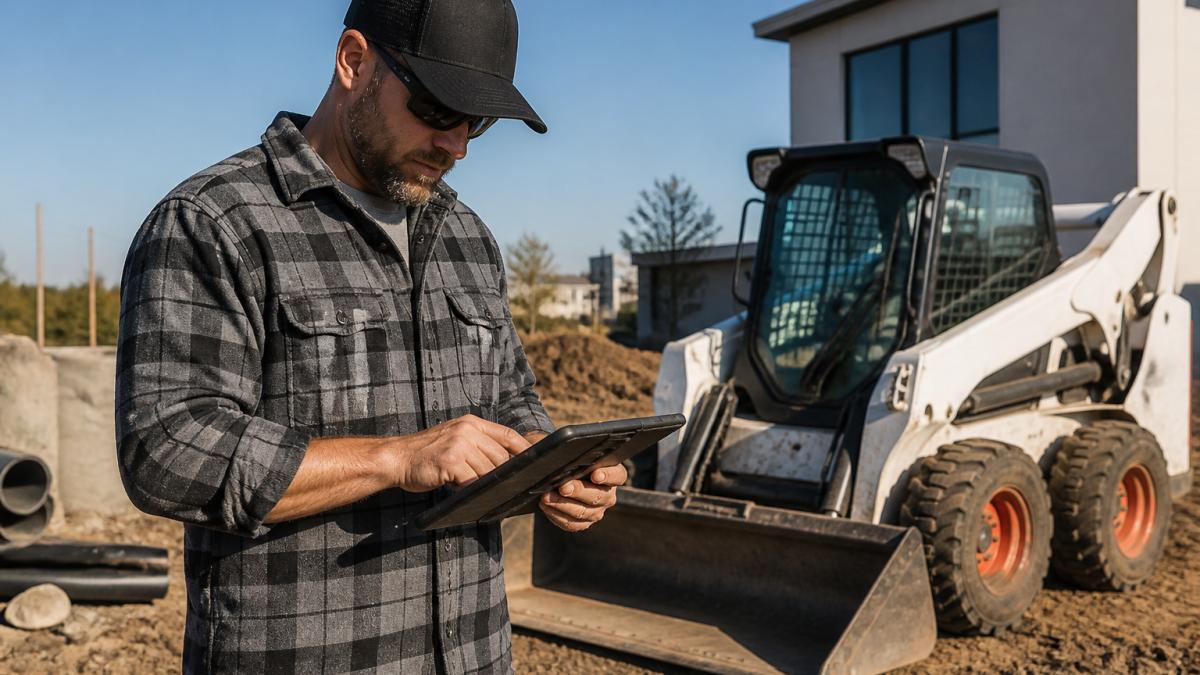
From there, Always Capital offers:
- 100% financing options up to $5 million
- Application-only approvals up to $500,000 with no financials required
- Approvals in as little as two to four hours
- Flexible loan terms from 24 to 84 months
- Deferred payment plans of 30, 60, or 90 days
- Financing for all credit types, including businesses under two years old
- No age or mileage restrictions on equipment and trucks
For contractors who need to move fast, the combination of same-day decisions and deferred payment options means a machine can start earning before the first payment is due.
The deferred payment structure works simply: payments are pushed back 30, 60, or 90 days so the equipment has time to generate revenue first.
Conclusion: Matching Terms to Your Cash Flow
The best terms for skidsteer financing are the ones that fit how your business actually earns. A low payment on a bad schedule still hurts. A slightly higher payment that lines up with your revenue cycle keeps the crew working and the machine running.
Always Capital offers fast approvals, soft credit pulls, 100% financing options, and flexible terms from 24 to 84 months, all built for contractors who need equipment working, not paperwork pending.
Frequently Asked Questions
What is the best way to finance a skid steer?
The best approach depends on how long you plan to keep the machine and how much cash you want to preserve. An equipment loan builds ownership and suits operators who keep machines long term, while a lease lowers upfront cash and fits crews that rotate equipment. Dealer financing is convenient but often less flexible on structure. Always Capital works with all credit types and offers 100% business financing with approvals in as little as two to four hours, so you can compare options before committing.
Can I finance a new or used skid steer?
Yes, both. Used skid steer financing is common, and lenders look at age, hours, and condition rather than refusing used machines outright. Always Capital finances equipment with no age or mileage restrictions, which matters when you are buying a well-maintained unit with higher hours. New equipment usually qualifies for longer loan terms from 24 to 84 months, while used units may get slightly shorter terms based on resale value.
How quickly can I get a decision on equipment financing?
Approval speed varies by lender and application size. Always Capital provides same-day approvals within two to four hours, and application-only approvals up to $500,000 require no financials. The main delay is usually incomplete paperwork, so having your business details and equipment quote ready before you apply keeps the process moving. Soft credit pulls only mean your credit is not affected while you wait for a decision.
Can a business with challenged credit apply for skid steer financing?
Yes. Always Capital offers business financing for all credit types, and all applications are accepted. A challenged credit profile may affect the structure of your terms, such as the down payment or loan term, but it does not automatically disqualify you. Because the application process uses soft credit pulls only, you can find out where you stand without hurting your credit score.