
Table of Contents
- Why Used Roll Off Truck Financing Makes Sense for Your Fleet
- What Lenders Look At: GVW, Class Ratings, and Truck Specs
- Financing for Older Equipment and Trucks: No Age or Mileage Restrictions
- Get Pre-Approve for Heavy Equipment Financing in Hours
- Application Process and Decision Timelines
- Private Seller vs. Dealership Financing
- Conclusion: Take the Next Step
- Frequently Asked Questions
Last Updated: October 3, 2026
Why Used Roll Off Truck Financing Makes Sense for Your Fleet
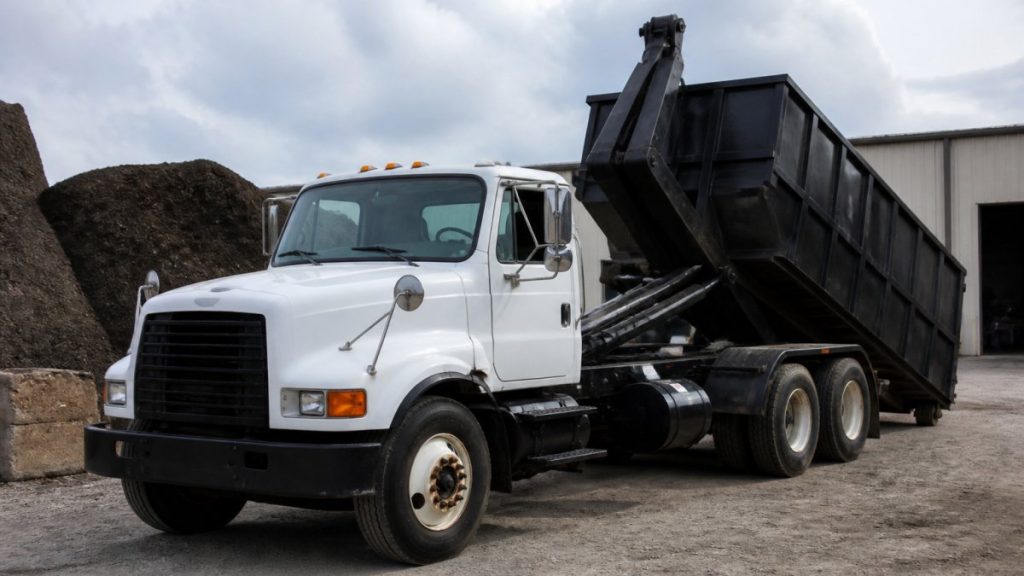
Used roll off truck financing lets a waste hauling or construction business acquire a pre-owned roll-off truck through scheduled payments rather than a single upfront purchase, often the fastest route to a working vehicle for fleets adding capacity without stretching cash reserves.
This guide from Always Capital covers how lenders evaluate these trucks, the application timeline, and how to prepare before you submit.
New vs. Used: The Cost Reality
A new roll-off truck carries a manufacturer premium that a comparable pre-owned unit avoids, a gap that matters most for fleets needing three trucks instead of one. Used units also depreciate more slowly, keeping capital available for containers, dispatch software, and payroll. The trade-off is condition risk: a pre-owned truck needs a real inspection before it earns a place on a route, and that inspection is also what a lender leans on.
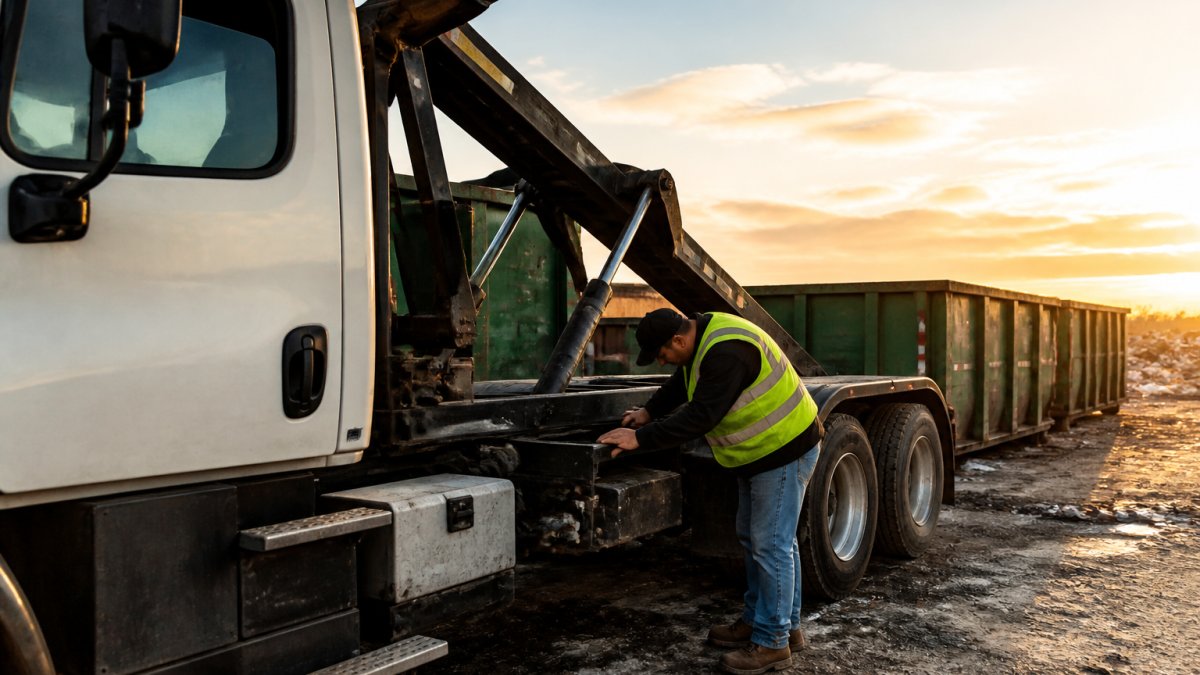
Ask the seller for the hydraulic cylinder service history, not just the truck’s mileage. Roll-off hoists work harder than the odometer suggests, and a rebuilt cylinder is a very different asset from one that has never been touched.
What Lenders Look At: GVW, Class Ratings, and Truck Specs
Lenders evaluate the truck’s specs and your business profile together, because the vehicle is the collateral. GVW, or gross vehicle weight, is the most important number on the spec sheet: it determines the weight class, which drives how a lender views resale demand. Chassis condition, hoist capacity, and the hydraulic system all feed that assessment.
Class 7 and Class 8 Trucks
Class 7 trucks suit lighter roll-off work and residential routes; Class 8 trucks handle the heaviest containers and long-haul disposal runs.
Both classes finance well when specs are documented, a clean spec sheet with chassis make, hoist model, and GVW rating speeds underwriting considerably.
| Truck Factor | What Lenders Check | Why It Matters |
|---|---|---|
| GVW and class | Class 7 vs. Class 8 rating | Sets collateral value and resale demand |
| Chassis | Frame cracks, rust, prior repairs | Determines usable service life |
| Hydraulic system | Cylinder and pump condition | Largest single repair risk |
| Hoist capacity | Rated container size | Matches truck to your routes |
| Mileage | Engine hours and odometer | Signals remaining service window |
Financing for Older Equipment and Trucks: No Age or Mileage Restrictions
Financing for older equipment and trucks is available through Always Capital with no age or mileage restrictions, removing the barrier that stops many haulers from buying well-maintained high-mileage units. A 2012 chassis with a rebuilt hoist can still be a productive truck. Roll-off trucks often run short, heavy routes rather than long highway miles, so a truck with high hours may still have plenty of chassis life left.
Age and mileage are proxies for condition, not condition itself. A documented maintenance record on an older truck often tells a lender more than a low odometer reading on a neglected one.
Get Pre-Approve for Heavy Equipment Financing in Hours
Getting pre-approved for heavy equipment financing means a lender reviews your business profile and issues a conditional decision before you commit to a specific truck, letting a hauler bid at auction or negotiate with a private seller from a position of strength.
Always Capital issues approvals in as little as two to four hours, with application-only decisions available up to $500,000 without financial statements.
Soft Credit Pulls Only
Soft credit pulls only means the initial review does not affect your credit standing. Always Capital works with all credit types, and every application is accepted for review.
Fleets with challenged credit often assume they are locked out of equipment financing. That assumption costs them contracts they could have served.
APPLY NOW AND GET YOUR BUSINESS PRE-APPROVED TODAY ! →
Shopping multiple lenders in the same week can leave hard inquiries across your file. Ask each one whether the initial pull is soft before you hand over your details.
Application Process and Decision Timelines
A used roll-off truck application moves through five stages: submission, soft-pull review, conditional decision, truck documentation, and final approval. Most elapsed time comes from the buyer’s side of the desk.
Stage 1: Submission
You provide the business name, entity type, address, owner identification, and a contact number, nothing about the specific truck yet. This lets a hauler open a file before a target unit appears, so it is already warm when the right chassis shows up.
Stage 2: Soft-Pull Review
Always Capital does soft credit pulls only, so the initial review does not affect your credit standing. All credit types are accepted, and every application is accepted for review, the soft pull allows a conditional decision without the credit-file damage of a hard inquiry.
Stage 3: Conditional Decision
A conditional decision tells you what the business qualifies for before a specific truck is named. Always Capital issues approvals in as little as two hours, with application-only decisions available up to $500,000 without financial statements.
Stage 4: Truck Documentation
Once a specific unit is identified, the lender confirms the truck matches the collateral profile. The items that matter most:
- VIN, year, make, and model
- GVW rating and weight class
- Hoist make, model, and rated container capacity
Missing photos of the data plate and hoist identification plate are the two most common causes of a stalled file.
Stage 5: Final Approval and Purchase
Final approval confirms the specific unit, the seller, and the terms. The purchase then closes with the seller directly, dealership paperwork is usually ready to sign, while private-seller title transfer and lien handling are covered in the next section.
What Actually Slows an Application Down
Three patterns account for most delays:
- Shopping before the file is open. A hauler who finds a truck first and applies second is negotiating against the clock.
- Incomplete truck documentation. A missing hoist plate photo or unreadable VIN photo sends the file back for another round.
- Seller unresponsiveness. Slow title information or a missing bill of sale holds up closing even after approval.
The takeaway: open the file, get the conditional decision, then shop.
Ask the seller for a photo of the title and the truck’s data plate before you schedule an inspection. If the seller cannot produce either, that is a signal about how the rest of the transaction will go.
If you are financing a specific chassis, the manufacturer’s published financing guide on this site walks through the documentation that brand’s dealers typically provide: financing Caterpillar Equipment, financing John Deere Equipment, Freightliner truck financing, Peterbilt truck financing, Kenworth truck financing, Mack Truck financing, Volvo Construction Equipment / Volvo Truck financing, Western Star truck financing, Hino Motors truck financing, Isuzu truck financing, Fuso / Mitsubishi Fuso truck financing, Ford truck financing, GMC truck financing, Chevrolet truck financing, and Sterling Truck financing.
Private Seller vs. Dealership Financing
Most guides treat private seller versus dealership as a price question. It is not. The real difference is who handles the title, the lien, and the inspection, and those three items determine whether a used roll-off truck deal closes in days or drags for weeks.
How a Private Seller Deal Actually Works
A private seller is usually an owner-operator retiring a truck, a small hauler downsizing, or an estate selling equipment. The truck may be excellent. The paperwork is the risk.
APPLY NOW AND GET YOUR BUSINESS PRE-APPROVED TODAY ! →
Three mechanics matter:
- Title and lien. The lender needs a clean title with no existing lien, or a payoff arrangement that clears it at closing. A seller who still owes on the truck adds a step a dealership handles internally.
- Inspection. There is no dealership reconditioning behind a private sale. The buyer arranges the inspection, and the lender leans on that report as part of the collateral assessment. A pre-purchase inspection by a mechanic familiar with roll-off hoists is the highest-value step in a private transaction.
- Payment and title transfer. The lender funds the purchase, the seller signs the title over, and the lien is recorded. A dealership’s title clerk does this weekly.
How a Dealership Deal Actually Works
A dealership carries the title work, often provides a service history, and can usually produce the spec documentation a lender wants within a day. Dealership inventory also tends to be reconditioned to a standard.
Auction Purchases
Auctions sit between the two. The inspection window is short and the sale is as-is. Financing an auction unit requires the conditional decision in hand before the gavel falls, since there is no contingency period afterward.
Side-by-Side Comparison
| Factor | Private Seller | Dealership | Auction |
|---|---|---|---|
| Asking price | |||
| Title and lien handling | Buyer-driven | Dealer-handled | Auction-house-handled |
| Inspection window | Open, buyer-arranged | Pre-reconditioned | Short, as-is |
| Service history | Sometimes | Usually | Rarely |
| Documentation speed | Slowest | Fastest | Moderate |
| Best fit for | Buyers who can inspect | Buyers who need speed | Buyers with a pre-approval in hand |
Which Route Fits Which Buyer
- Choose a private seller if you have a mechanic you trust, the seller has a clean title in hand, and you are not under time pressure.
- Choose a dealership if you need the truck on a route this month, or the unit’s history is thin and you want the dealer’s reconditioning behind it.
- Choose an auction only if you already have a conditional decision and can inspect in person before bidding. Buying sight-unseen is how haulers end up with a hoist rebuild in month one.
The Documentation Difference
A private seller deal needs three things a dealership deal usually supplies automatically: a clean title, a bill of sale, and a service record. If any is missing, the lender has to work around it.
Never send funds to a private seller before the title is verified and the lien status is confirmed. A truck with an unresolved lien cannot be financed cleanly, and unwinding the transaction is far harder than walking away from it.
The right question is not “private seller or dealership?” It is “who is handling the title, and how fast can they produce it?” Answer that first, and the rest of the transaction falls into place.
For brand-specific documentation expectations, see the financing guides on this site: Caterpillar truck financing, CNH Industrial / Case truck financing, financing bobcat equipment, financing Case Equipment, financing Doosan Equipment, Financing JCB Equipment, Financing Kobelco Equipment, Financing Terex Equipment, Financing Wacker Neuson Equipment, Financing Tanmar equipment, financing Hitachi Equipment, and Volvo Construction Equipment / Volvo Truck financing.
Business name, address, and entity type
- Owner identification and contact details
- Truck VIN, year, make, and model
Photograph the truck’s data plate and the hoist identification plate in the same shot. Underwriters use those two plates to confirm the specs match the listing, and having them ready removes a common back-and-forth.
Conclusion: Take the Next Step
Adding a used roll-off truck to a working fleet is a capacity decision, and the financing behind it should not slow that decision down. Always Capital offers approvals in as little as two to four hours, soft credit pulls only, and financing with no age or mileage restrictions on the truck.
Get pre-approved for heavy equipment financing with Always Capital and put the next truck on the road.
Frequently Asked Questions
What credit score do you need to buy a used roll off truck?
Credit score requirements vary by lender, but many providers work with all credit types. Always Capital accepts all credit types and uses soft credit pulls, so your score is not affected during the application. Approval decisions focus on your business revenue and the truck’s value as collateral, not just your personal credit.
Can I get financing for older roll off trucks with high mileage?
Yes. Always Capital offers financing for older equipment and trucks with no age or mileage restrictions. Whether you are buying a 10-year-old truck with 500,000 miles or a pre-owned model with moderate use, the approval process considers the truck’s condition and your business needs, not arbitrary age limits.
How quickly can I get an approval for used roll off truck financing?
Always Capital provides same-day approvals, often within 2 to 4 hours. The process is designed for speed: you apply, receive a soft credit pull, and get a decision quickly. For application-only approvals up to $500,000, no financials are required, which further accelerates the timeline.
Is 100% business financing available for used roll off trucks?
Yes. Always Capital offers 100% business financing for used roll off trucks and other heavy equipment. This means you can finance the full purchase amount without a down payment. Terms range from 24 to 84 months, and deferred payment plans of 30, 60, or 90 days are available to help with cash flow.