
Last Updated: November 19, 2026
Quick Summary
Improving warehouse efficiency with modern forklift fleets starts with measuring a baseline, right-sizing trucks to real shift demand, and matching capability to aisle and rack layout. Then plan charging, preventive maintenance, telematics, and phased operator adoption before funding the upgrade through Always Capital.
- Track five baseline measures: throughput, fleet utilization, travel time per move, downtime, and cost per move.
- Redeploy trucks across shifts before buying, since fleets often run too many on one shift and too few at peak.
- Match aisle width, rack height, and picks per hour before choosing a truck class.
- Use telematics fault codes and impact events to shift maintenance from reactive to predictive.
- Always Capital offers approvals in as little as one to three hours with soft credit pulls and up to 100% financing.
Table of Contents
- Why Modern Forklift Fleets Decide Warehouse Productivity
- Forklift Fleet Management: Build the Baseline Before You Buy
- Match Forklift Capability to Layout, Storage Density, and Throughput
- How Electric Forklifts Change Warehouse Productivity
- Preventive Maintenance and Downtime: The Hidden Cost of Old Iron
- Material Handling Equipment Financing: The Pain Points Behind Delayed Upgrades
- Compare the Benefits: Modernizing Your Forklift Fleet
- Get Pre-Approved for Forklift Fleet Financing
- Frequently Asked Questions
Why Modern Forklift Fleets Decide Warehouse Productivity
Warehouse productivity rises or falls on the strength of its forklift fleets. This guide from Always Capital breaks down seven practical steps to improve warehouse efficiency with modern forklift fleets, from building a baseline to financing the upgrade.
The stakes are simple. A fleet that stalls costs money every hour it sits idle. A fleet that runs clean, charged, and right-sized turns warehouse operations into a competitive edge.
Forklift Fleet Management: Build the Baseline Before You Buy
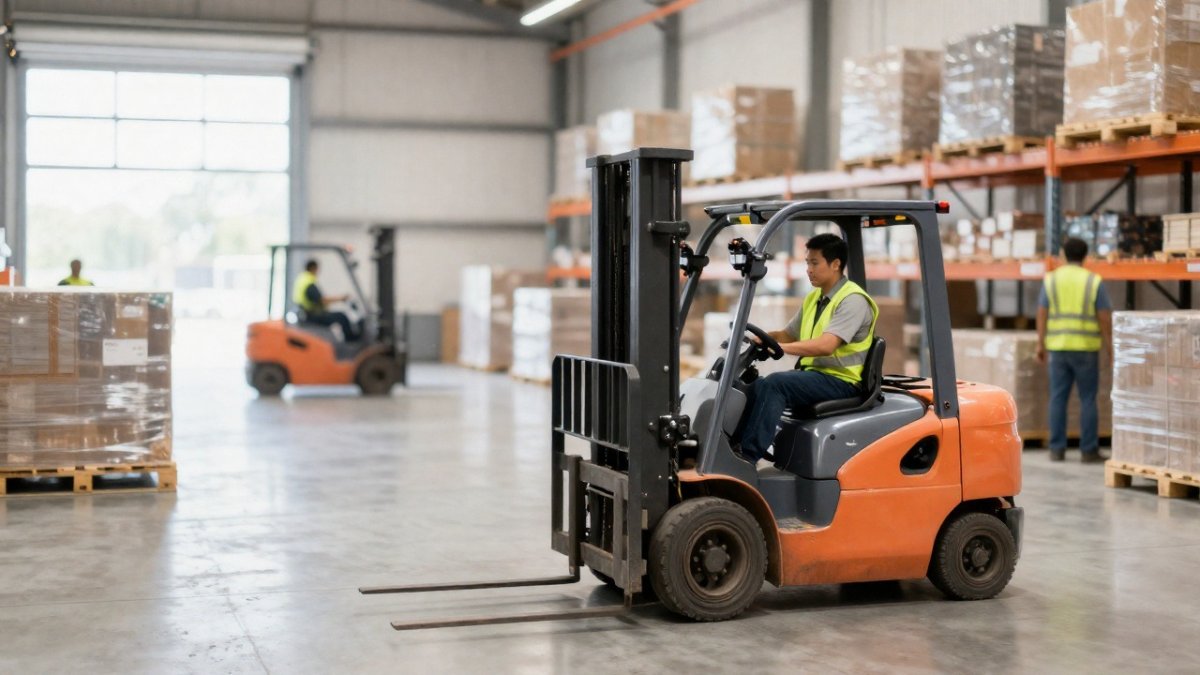
Forklift fleet management is the practice of measuring, deploying, and maintaining lift trucks as a coordinated system rather than a collection of individual machines. The best fleet decisions start with numbers, not brochures. Before buying anything, capture what the current fleet actually does, and capture it the same way every month so the numbers are comparable.
A Practical Baseline-and-Measurement Framework
Five measures, tracked consistently, are enough to steer most fleet decisions. Pick them, define them precisely, and record them for at least four weeks before changing anything.
- Throughput: pallets moved per labor hour, counted at the dock door and at put-away.
- Fleet utilization: share of scheduled available hours each truck is actually in use, logged by shift.
- Travel time per move: average minutes from pick face to staging, sampled by aisle zone.
The bottleneck is not always truck count; it can be travel distance, charging congestion, or a single aisle that every pick routes through. The baseline helps identify which.
Fleet Sizing and Deployment by Shift and Workload
Right-sizing means matching truck count and type to real demand across shifts, not to a gut feeling about how busy the floor looks. Use a repeatable method:
- Map peak demand. Identify the busiest two-hour window in each shift and the pallet volume moved in it.
- Convert volume to truck hours. Divide peak pallet volume by the measured moves-per-hour rate for each truck class.
- Add charging and refueling constraints. Electric units lose availability during charge cycles; build that loss into the available-hours figure rather than assuming every truck is ready.
- Layer the task mix. Receiving, put-away, replenishment, and loading have different travel profiles; a truck optimized for one may be wrong for another.
- Compare against current deployment. The gap between required truck hours and deployed truck hours is your true surplus or shortfall, by shift, not by fleet.
Fleets can run too many trucks on one shift and too few at peak. When the sizing exercise shows a genuine shortfall, Always Capital structures material handling equipment funding around the actual number of units the analysis supports, with approvals in as little as one to three hours, soft credit pulls only, and up to 100% financing, so the fleet plan drives the purchase rather than the other way around.
Turning the Baseline Into a Phased Improvement Plan
The baseline is only useful if it produces a prioritized sequence. Organize findings into three buckets:
- Immediate (no capital): redeploy trucks between shifts, re-route high-traffic aisles, fix charging schedules, retrain operators on the worst-performing zones.
- Medium-term (modest spend): add telematics to underperforming units, adjust rack layout, add battery rotation capacity.
- Capital investment: replace or add trucks only after the first two buckets have been measured and the shortfall persists.
This sequence matters because it protects working capital and keeps the fleet decision tied to evidence. For a deeper walkthrough on sizing a lift truck to aisle widths and rack heights, see this guide on how to choose the right forklift for warehouse operations.
Match Forklift Capability to Layout, Storage Density, and Throughput
Forklift capability must fit the building, not the other way around. Aisle width, rack height, and storage density decide which truck class works. A truck that’s too wide for the aisle slows everything; one that’s too small for the rack height caps throughput.
Match these three factors before choosing a model:
- Layout: aisle width and turning radius
- Storage density: rack height and load weight
- Throughput: picks per hour and transport density
For a deeper walkthrough on sizing a lift truck to aisle widths and rack heights, see this guide on how to choose the right forklift for warehouse operations.
How Electric Forklifts Change Warehouse Productivity
Electric forklifts can change warehouse productivity by reducing emissions and improving air quality compared with internal-combustion units. They also demand a charging plan. Battery performance and battery charging schedules decide whether an electric fleet keeps pace.
Battery Charging, Air Quality, and Operator Safety
Plan charging around shifts, not around convenience. Opportunity charging during breaks is one way to keep trucks available. Cleaner air in enclosed spaces is a commonly cited benefit for operator comfort. Pair electric fleets with operator training on ergonomics and collision prevention to capture the full productivity gain.
Preventive Maintenance and Downtime: The Hidden Cost of Old Iron
Preventive maintenance is one of the most practical productivity tools in a warehouse. A scheduled service plan catches worn parts before they strand a truck mid-shift. Old iron hides its cost in downtime, not in the purchase price, and downtime compounds because a stranded truck pushes work onto the remaining fleet, accelerating their wear.
Building a Maintenance Cadence That Actually Holds
A tiered cadence is a practical way to structure maintenance:
- Daily operator checks: fluid levels, tire condition, horn, lights, and brake feel, logged before the first move of the shift.
- Weekly inspections: mast chains, hydraulic hoses, forks, and battery connections, performed by a trained technician or lead operator.
- Scheduled service intervals: based on manufacturer guidance and hour-meter readings, not calendar dates alone, because a truck that runs two shifts wears twice as fast.
Watch out: skipping scheduled service to save a little now usually costs far more in unplanned downtime later, and the cost lands during peak season when replacement capacity is unavailable.
Using Telematics and Fleet Data to Predict Downtime
Connected technologies change maintenance from reactive to predictive. Telematics units on lift trucks capture hour-meter data, impact events, fault codes, and utilization by shift. The value is not the dashboard, it is the decision it triggers.
- Impact events flag operator behavior that damages racks, loads, and trucks before a repair bill appears.
- Fault-code trends let a technician address a recurring issue during a scheduled service rather than after a breakdown.
- Utilization data confirms whether the right-sizing analysis from the baseline phase still holds after deployment changes.
Telematics data is only useful when it feeds a decision. Avoid that by assigning one person to review the data weekly and by integrating fleet data with the warehouse management system so utilization and throughput are read together rather than in separate silos.
Change Management: Getting Operators to Adopt the New Routine
New equipment and new maintenance routines fail when operators are not brought along. A phased rollout works better than a single cutover:
- Train before deployment, not after, and include the daily check routine in the training so it becomes part of the shift start.
- Solicit feedback from operators on layout, charging placement, and truck assignment, they see the bottlenecks the data only hints at.
- Pilot on one shift or one zone, measure against the baseline, and adjust before scaling.
- Communicate the why: operators who understand that a daily check protects their own shift from a mid-day breakdown adopt it faster.
For strategies that keep aging machines running while a replacement plan is built, read about reducing downtime for construction equipment. If the fleet is already old, this breakdown of how equipment age affects loan approval helps plan a realistic replacement. When replacement is the right call, Always Capital finances older, high-hour, and high-mileage machines with no age or mileage restrictions, offers 30, 60, or 90 day payment deferrals so new trucks earn revenue before payments begin, and provides heavy equipment loans and equipment leases structured around real cash flow.
Material Handling Equipment Financing: The Pain Points Behind Delayed Upgrades
Material handling equipment financing is where most warehouse upgrades stall. The need is clear, the trucks are picked out, and then the funding process grinds to a halt. Those delays carry a real cost in lost throughput.
Why Traditional Lending Stalls Warehouse Upgrades
Traditional lending processes can involve longer paperwork cycles and stricter rules for older equipment. For a warehouse losing productivity every day, that delay is expensive. For guidance on funding the upgrade, see managing business capital for equipment upgrades.
How Always Capital Solves the Financing Gap
Always Capital removes the friction. The company offers approvals in as little as one to three hours, soft credit pulls, and financing options up to $5 million, including up to 100% financing. Application-only approvals reach up to $500,000 without extensive financial statements. All credit types are accepted, and there are no equipment age or mileage restrictions. For material handling fleets, that means forklift financing with fast approvals without the usual wait.
Compare the Benefits: Modernizing Your Forklift Fleet
Modernizing pays off across the board, but it comes with trade-offs. Here’s a clear look at the top 20 benefits of using Always Capital for the upgrade.
# | Benefit | What It Means for Your Warehouse |
|---|---|---|
1 | 1 to 3 hour approvals | Decisions fast enough to act on |
2 | Same-day funding | Capital deployed quickly |
3 | Application-only up to $500,000 | No heavy financial statements |
4 | Minimal paperwork | Less back-and-forth |
5 | Soft credit pulls only | Your score stays protected |
6 | All credit types accepted | A+ down to challenged histories |
7 | Startup-friendly limits | New businesses can access capital |
8 | Asset-backed collateral | The machinery secures the deal |
9 | No minimum score lockouts | Revenue and asset utility count |
10 | Flexible time-in-business rules | Young and established firms qualify |
11 | High lending limits | Capacity scales up to $5 million |
12 | Up to 100% financing | Bypass large down payments |
13 | 24 to 84 month terms | Repayment fits your cash flow |
14 | Working capital preserved | Day-to-day liquidity stays intact |
15 | Fixed, predictable payments | Steady monthly structures |
16 | 30, 60, or 90 day deferrals | Revenue before payments begin |
17 | Seasonal payment options | Match weather-dependent revenue |
18 | No age or mileage limits | Older, high-hour trucks qualify |
19 | Auction and private-party support | Bid with confidence |
20 | Dedicated industry expertise | Specialists who know equipment value |
Pros of modernizing: lower downtime, faster material handling, better operator safety, and reduced operating costs.
Cons of modernizing: upfront disruption during rollout and the need to train operators on new equipment. Both are manageable with a phased plan.
Get Pre-Approved for Forklift Fleet Financing
Always Capital is a one-stop source for equipment financing, built for speed and flexibility. Whether the warehouse needs lift trucks, material handling equipment, or general working capital, the company offers financing options for these needs.
The challenge is simple: every month on aging iron costs productivity. The fix is a fleet plan backed by funding that moves as fast as the warehouse does. Always Capital offers same-day approvals, soft credit pulls, 100% financing, and deferred payment plans that let new equipment pay for itself.
Ready to upgrade the fleet without the wait? Always Capital makes it happen with fast approvals and flexible terms.
Frequently Asked Questions
How can equipment financing help a business update its forklift fleet?
Financing spreads the cost of new or used forklifts across 24 to 84 months, so you replace aging units without draining working capital. Always Capital approves applications in as little as one to three hours, offers up to 100% financing, and uses soft credit pulls that do not affect your score. That speed matters when a warehouse needs replacement units before order volume climbs.
How do I determine whether to add, replace, or reassign forklifts?
Start with utilization data by shift: if units sit idle for most of a shift, reassign them before buying. If queues form at dock doors or aisles during peak hours, add capacity. If maintenance hours per unit keep climbing, replace. Measuring throughput, equipment downtime, and fleet utilization first keeps you from overbuying and gives Always Capital a clear picture of what you need.
How can warehouse managers reduce forklift downtime?
Track downtime by unit, schedule preventive maintenance around shift changes, and keep critical spare parts on hand. When a unit fails repeatedly, replacing it often costs less than repeated repairs and stalled order fulfillment. Always Capital finances older, high-hour machinery too, so a backup unit is within reach even on a tight timeline.
Can modern forklift technology help improve warehouse safety?
Telematics, collision prevention sensors, and operator training tied to real data can support safer operations. Electric forklifts can also reduce emissions in enclosed spaces. Pairing technology with operator adoption, not just hardware, is an important part of any safety program. Financing the upgrade through Always Capital lets you spread the cost while the safety gains start immediately.
