
Last Updated: November 20, 2026
Quick Summary
Skid steer training teaches operators to run a skid steer loader safely, inspect it before each shift, and recognize jobsite hazards. OSHA requires employers to train skid-steer operators to recognize and avoid unsafe conditions under 29 CFR 1926.21(b)(2), and a course certificate alone does not discharge that duty.
- Verify the operator is at least 18 years old and match them to the specific machine and attachment.
- Deliver theory instruction in a language and format the worker understands, then confirm comprehension verbally.
- Supervise hands-on practice covering startup, travel with a low load, slope turning, attachment changes, and shutdown.
- Retrain when an operator is observed operating unsafely, after an incident, or when the machine or site changes.
- A certificate should name the operator, training date, machine type covered, and the trainer who signed off.
Table of Contents
- Why Skid Steer Training Matters Across Dozens of Industries
- Which OSHA Rules Actually Apply to Skid Steer Operators
- The Skid Steer Operator Training Checklist for Employers
- Hazards and Safe Operating Practices Every Operator Must Know
- How to Run a Skid Steer Operator Evaluation
- What a Skid Steer Training Certificate Should Prove
- Popular Skid Steer Manufacturers and Models to Know
- Upgrading Your Skid Steer with Always Capital
- Frequently Asked Questions
Why Skid Steer Training Matters Across Dozens of Industries
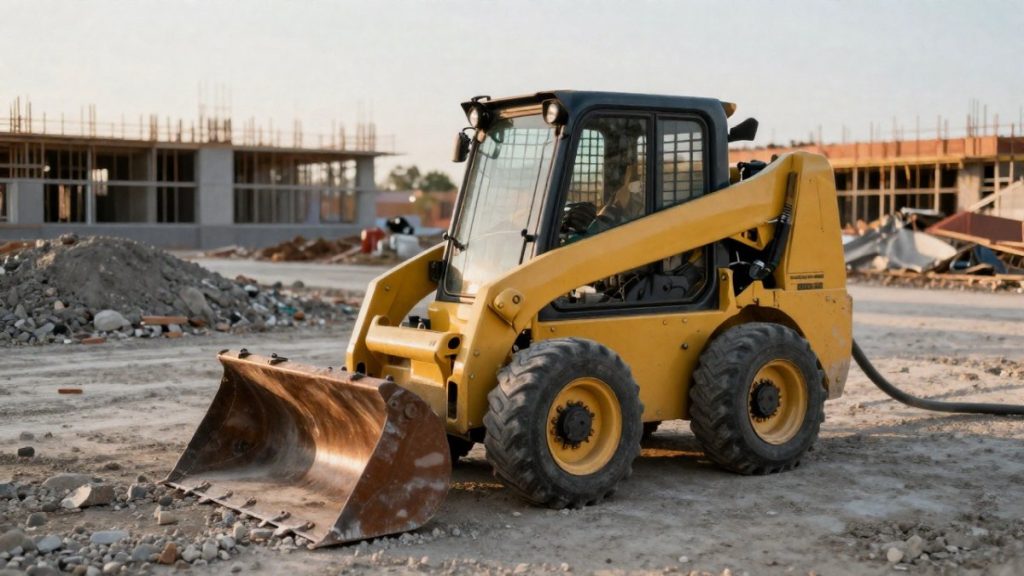
Skid steer training is the structured instruction that teaches an operator to run a skid steer loader safely, inspect it before each shift, and recognize the hazards that cause most jobsite injuries.
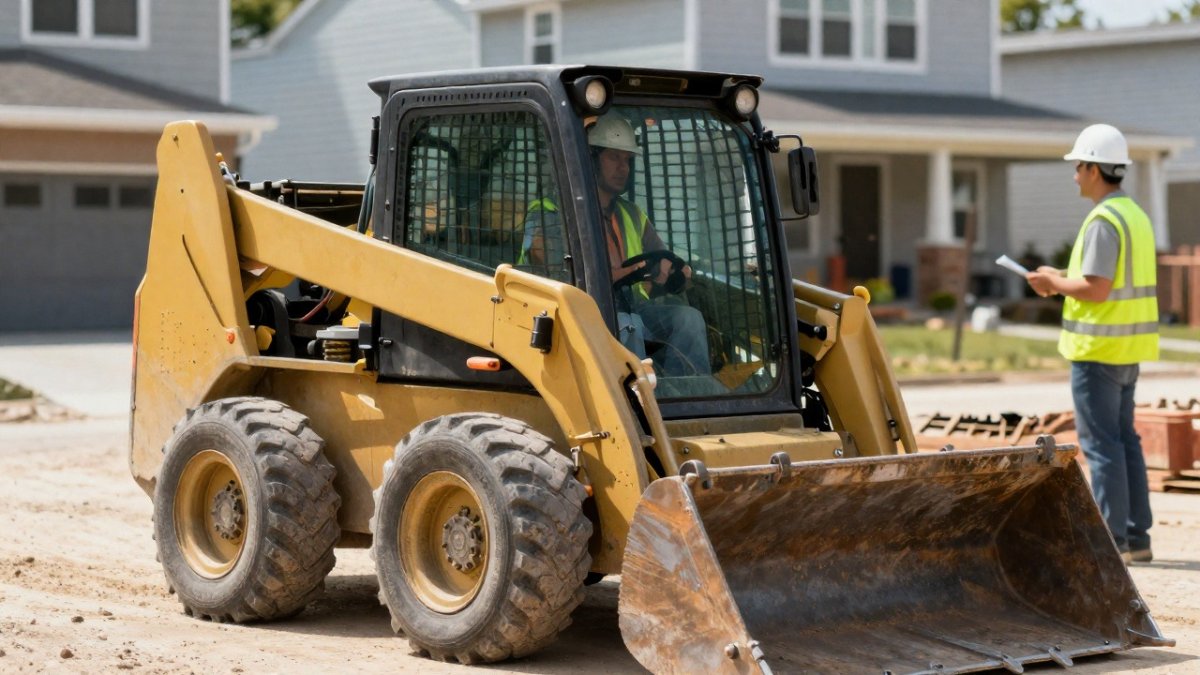
The machine’s footprint explains its reach. A wheeled skid steer and a compact track loader share the same basic layout, but the track version opens up mud, sand, and finished turf where wheels bog down. That versatility pushes skid loaders into construction, landscaping, agriculture, paving, demolition, waste handling, snow removal, forestry, and rental fleets.
Which OSHA Rules Actually Apply to Skid Steer Operators
There is no standalone federal certification for skid steers, and that surprises a lot of employers. The duty instead comes from the general training obligation: OSHA’s interpretation on skid-steer operator training states that employers must train skid-steer operators to recognize and avoid unsafe conditions under 29 CFR 1926.21(b)(2). A course certificate alone does not discharge that duty.
What matters is whether the operator can actually identify hazards on your site. Training must match the work being done, the attachments in use, and the conditions the operator will face.
The Skid Steer Operator Training Checklist for Employers
Step 2, Deliver theory instruction. Cover the machine’s controls, stability characteristics, load charts, blind spots, and the hazards most likely to appear on your jobsite.
Step 3, Supervise hands-on practice. Seat time under direct supervision is what separates a confident operator from a certified one.
Step 4, Run a written and practical evaluation. The written test confirms hazard recognition; the practical evaluation confirms observable skill.
Step 5, Issue written authorization. A certificate proves instruction was delivered; a signed authorization proves the employer determined the operator is competent on a specific machine.
Step 6, Document and retain records. Retain training records, evaluation scores, and authorizations for every operator and every machine type.
Step 7, Schedule refresher training and retraining triggers. Build your own retraining schedule and tie it to events.
Employers matching operators to machines can review skid steer lift capacity and attachment guidance before training begins, and crews adding capacity can explore skid steer financing through Always Capital to keep the training investment productive.
Hazards and Safe Operating Practices Every Operator Must Know
Most skid steer injuries trace back to a short list of failures. Rollover and tip-over top it, usually from traveling with a raised bucket or turning on a slope with a heavy load. Crushing hazards appear when an operator leaves the cab without lowering the lift arms or engages the wrong control. Struck-by incidents happen when a machine swings its tail into a spotter or a pedestrian crosses the blind spot behind the loader.
Safe operation comes down to habits: keep the load low, travel at walking pace, use the seat belt and restraint bar, and never let anyone stand inside the loader’s working radius. Operators should confirm the machine’s stability characteristics for the surface they are on, which is where understanding wheeled versus tracked configurations pays off.
How to Run a Skid Steer Operator Evaluation
A skid steer operator evaluation should test observable behavior, not just recall. Score each operator on a simple rubric:
| Evaluation Area | What to Observe | Pass Standard |
|---|---|---|
| Pre-operation inspection | Fluid checks, tire or track condition, guards, alarms | Completes full check unaided |
| Controls and startup | Correct startup sequence, restraint use | No prompts needed |
| Load handling | Keeps load low, maintains stability on turns | Consistent across ten cycles |
| Hazard recognition | Spots pedestrians, slopes, overhead lines | Identifies all planted hazards |
| Shutdown procedure | Arms lowered, parking brake, key removal | Follows sequence exactly |
Hands-on time is what separates a confident operator from a certified one. Seat time under supervision, followed by a practical evaluation, shows whether the skills hold up under real conditions.
What a Skid Steer Training Certificate Should Prove
A skid steer training certificate is documentation, not a license. It should show the operator’s name, the date of training, the machine type covered, and the trainer who signed off. A certificate proves the employer delivered instruction; it does not replace the employer’s own hazard assessment for a specific site.
Keep records for every operator and every machine type. When an operator moves to a new attachment or a new jobsite condition, retraining belongs on the schedule.
Popular Skid Steer Manufacturers and Models to Know
The market is dominated by a handful of names, and each has a loyal following among contractors for different reasons.
Cat skid steer loaders. Cat offers a range of skid steer and track loader models used across construction and other industries. Operators trained on one brand should be re-evaluated before running a different brand, because control layouts and stability can vary.
John Deere. Deere builds skid steers and compact track loaders used on landscaping and utility crews.
Kubota. Kubota produces skid steer and compact track loader lines used by a range of crews.
Bobcat. Bobcat is a widely recognized manufacturer of skid steer loaders.
Case and Takeuchi. Case and Takeuchi also manufacture skid steer and compact track loaders.
When comparing wheeled versus tracked configurations, the trade-off is straightforward: wheeled skid steers turn tighter on hard surfaces, while compact track loaders float over mud, sand, and finished turf where wheels bog down. Buyers comparing models can explore the most popular skid steer brands and models before committing, and crews weighing a track loader against a wheeled unit can review wheeled versus tracked configurations.
Where Always Capital fits. When training is done and the crew needs a second machine, or a first one, Always Capital does more than approve the financing. The team can help a buyer locate a skid steer nationwide, not just fund one found locally, which matters when the right model, hours, and attachment package are sitting three states away. Always Capital provides heavy equipment financing and commercial truck financing with approvals in as little as one to three hours, soft credit pulls only, up to 100% financing, terms from 24 to 84 months, and application-only approvals up to $500,000 with no financial statements. The programs cover skid steer financing, excavator financing, backhoe financing, loader financing, dozer financing, and dump truck financing, and Always Capital finances older, high-hour machinery with no age or mileage restrictions. Buyers can compare skid steer and compact track loader financing options or explore tailored skid steer financing to see how fast a pre-approval can come together.
Upgrading Your Skid Steer with Always Capital
When training is done and the crew needs a second machine, financing becomes the bottleneck. Always Capital provides heavy equipment financing and commercial truck financing with approvals in as little as one to three hours, and the team does soft credit pulls only, so pre-qualifying does not touch a business or personal score.
The programs cover skid steer financing, compact track loaders, excavator financing, backhoe financing, loader financing, dozer financing, and dump truck financing, with up to 100% financing and terms from 24 to 84 months. Application-only approvals are available up to $500,000 with no financial statements, and Always Capital finances older, high-hour machinery with no age or mileage restrictions.
Here is how the program stacks up against the traditional route:
| Benefit | What It Means for a Buyer |
|---|---|
| 1 to 3 hour decisions | Bidding deadlines stay realistic |
| Soft credit pull only | Pre-qualifying protects your score |
| All credit types accepted | Challenged credit still gets a path |
| Up to 100% financing | Working capital stays in the business |
| Application-only up to $500,000 | No financial statement burden |
| Terms 24 to 84 months | Payments fit the project cycle |
| 30, 60, or 90 day deferrals | Machine earns before payments start |
| No age or mileage limits | Older iron stays financeable |
| Startup-friendly limits | New businesses under two years qualify |
| Up to $5 million capacity | Fleet expansion stays possible |
| Private-party and auction support | Buy outside the dealership |
| Seasonal payment structures | Payments match weather-driven revenue |
| Fixed monthly payments | Cash flow stays predictable |
| Asset-backed collateral | Machinery secures the deal |
| No minimum score lockout | Underwriting weighs the asset |
| Fleet bundle financing | Multiple units in one transaction |
| Protects bank lines | Operating credit stays open |
| Nationwide machine sourcing | Find the right unit anywhere |
| Dedicated equipment specialists | Residual value expertise on hand |
| Five-star rated service | Transparent terms, no surprises |
Ready to move? Compare skid steer and compact track loader financing options or explore tailored skid steer financing and see how fast a pre-approval can come together.
The gap between a trained crew and an untrained one shows up in insurance claims, downtime, and lost bids. Always Capital closes the equipment side of that gap with one to three hour approvals, soft credit pulls only, up to 100% financing, application-only approvals up to $500,000, and no age or mileage restrictions on the machines it funds. Get pre-approved with Always Capital and put a safer, more capable machine on the job.
Frequently Asked Questions
Do you need certification to operate a skid steer?
There is no single federal skid steer certification standard. OSHA requires employers to train operators to recognize and avoid unsafe conditions under 29 CFR 1926.21(b)(2). A course certificate is evidence of training, not a substitute for it. Employers still must confirm the operator can run the specific machine and attachment on their jobsite. Many companies pair a classroom course with hands-on practice and a practical evaluation before authorizing anyone to operate.
What should a skid steer operator training checklist include?
A solid checklist covers pre-operation inspection, machine controls, startup and shutdown procedures, load handling, stability, rollover and tip-over risks, pedestrian and backing safety, and personal protective equipment. It should also record who trained the operator, the date, the machine and attachments covered, and the result of the practical evaluation. Training is commonly delivered before initial operation and refreshed annually, with operators at least 18 years old. Keep the signed checklist in your training records.
How often should skid steer operators receive refresher training?
Annual refresher training is a common baseline. Retraining should also happen after an incident, a near miss, a change of machine or attachment, a new jobsite with different conditions, or any sign that an operator is not following safe procedures. Document each refresher the same way you document initial training so your records stay complete and easy to produce.
Can an employer provide skid steer operator training in-house?
Yes. OSHA places the training duty on the employer, so a qualified supervisor or safety lead can deliver it. The key is covering hazard recognition, machine controls, inspection, and safe operating practices, then confirming competence through supervised seat time and a practical evaluation. Many employers combine in-house instruction with an outside course for the written test. Whatever the format, keep records of who was trained, on which machine, and when.
Are training requirements different for wheeled and tracked skid steers?
The core requirements are the same: hazard recognition, controls, inspection, and safe operation. The differences come from how the machine behaves. Compact track loaders carry more weight and behave differently on soft ground, while wheeled skid steers turn and slide differently on pavement. Train operators on the specific configuration they will run, and repeat the practical evaluation when someone moves between wheeled and tracked units or picks up a new attachment.
How can Always Capital help when training reveals you need a newer machine?
When an aging or high-hour skid steer is holding your crew back, Always Capital can fund the upgrade and help you locate a machine nationwide. Applications get decisions in as little as one to three hours, with up to 100% financing, soft credit pulls only, and programs for all credit types. Application-only approvals reach $500,000 without extensive financial statements. Apply through Always Capital to get pre-approved.
