
Table of Contents
- What Makes a Skid Steer Brand the Most Popular
- Best Skid Steer Brands: What Sets the Leaders Apart
- Skid Steer Models for Heavy-Duty Work
- Skid Steer Financing Pre-Approval: How to Get Approved Fast
- Side-by-Side Financing Comparison Across Top Brands
- Total Cost of Ownership: What to Weigh Beyond the Purchase Price
- Conclusion: Choosing the Right Skid Steer and Financing Partner
- Frequently Asked Questions
Last Updated: October 6, 2026
What Makes a Skid Steer Brand the Most Popular
The most popular skid steer brand is the one contractors see on more job sites, backed by the deepest dealer network and the strongest resale value.
This guide from Always Capital breaks down the leading brands, the models built for heavy-duty work, and how to line up skid steer financing pre-approval before the machine is picked.
A brand earns its ranking through three things: annual unit volume, dealer parts and service coverage, and how well the machines hold value at trade-up time.
How Popularity Is Measured: Sales, Market Share, and Dealer Networks
Sales volume is the clearest signal. Brands that sell the most compact track loaders and skid steer loaders generally have the widest dealer footprint, which matters most when a machine goes down mid-project.
Dealer density is the second measure: a loader that can be serviced within an hour keeps a crew working.
Resale value rounds out the picture. Brands with strong demand for used equipment hold value better, lowering the real cost of ownership over a five-year run.
Popularity is a proxy for uptime. The most popular brand is usually the one a contractor can get serviced fastest, not the one with the flashiest spec sheet.
Best Skid Steer Brands: What Sets the Leaders Apart
The leading skid steer brands separate themselves through rated operating capacity, hydraulic flow, and attachment ecosystem integration. Buyers comparing brands should look at three numbers first: rated operating capacity, engine horsepower, and hydraulic flow.
Rated operating capacity determines what the machine can safely lift, horsepower how hard it can push, and hydraulic flow which attachments it can run at full speed.
The brands that lead this category have spent decades refining all three, and the gap shows up most clearly on high-flow applications like forestry mulching and cold planing.
Association of Equipment Manufacturers industry data tracks equipment sales trends that help buyers understand which brands are gaining ground.
The Brands Contractors Name First
Bobcat built the original compact loader and still sets the reference point for the category.
Caterpillar brings its own undercarriage engineering to the compact track loader line.
John Deere pairs its 320 and 330 series loaders with a dealer network that reaches rural and agricultural markets where skid steers double as farm equipment.
Kubota is the value-and-reliability play.
Takeuchi is the compact track loader specialist.
Case, New Holland, and Gehl round out the field with loyal regional followings, particularly in agricultural and municipal work where a nearby dealer matters more than a national brand name.
APPLY NOW AND GET YOUR BUSINESS PRE-APPROVED FOR FINANCING TODAY ! →
Lifting Capacity, Horsepower, and Hydraulic Flow Compared
| Spec | What It Controls | Why It Matters on Site |
|---|---|---|
| Rated operating capacity | Safe lift weight | Prevents tipping with heavy pallets or bales |
| Engine horsepower | Pushing and digging force | Speeds up grading and trenching |
| Standard hydraulic flow | Attachment speed | Runs grapples, buckets, and augers |
| High flow | Heavy attachment performance | Required for mulchers and planers |
| Operating weight | Stability and footprint | Affects transport and turf damage |
Why the Brand Choice and the Financing Choice Happen Together
Brand loyalty in this category is real, but it is not the whole decision. A contractor who runs Cat excavators may still buy a Bobcat loader because the local dealer stocks parts, and a farmer may stay with Kubota because the same technician services the tractor and the loader.
What every one of those buyers has in common is that the machine has to be funded before it goes to work. That is where skid steer financing from Always Capital fits.
Pick the brand by dealer support, attachment ecosystem, and resale strength. Pick the financing by speed and flexibility. Always Capital handles the second half so the brand decision can be made on the machine, not on the paperwork.
Skid Steer Models for Heavy-Duty Work
Heavy-duty skid steer models are built for high-cycle workloads: demolition, land clearing, road work, and bulk material handling. They pair high-flow hydraulics with reinforced lift arms and larger cooling packages so they can run attachments all day without overheating.
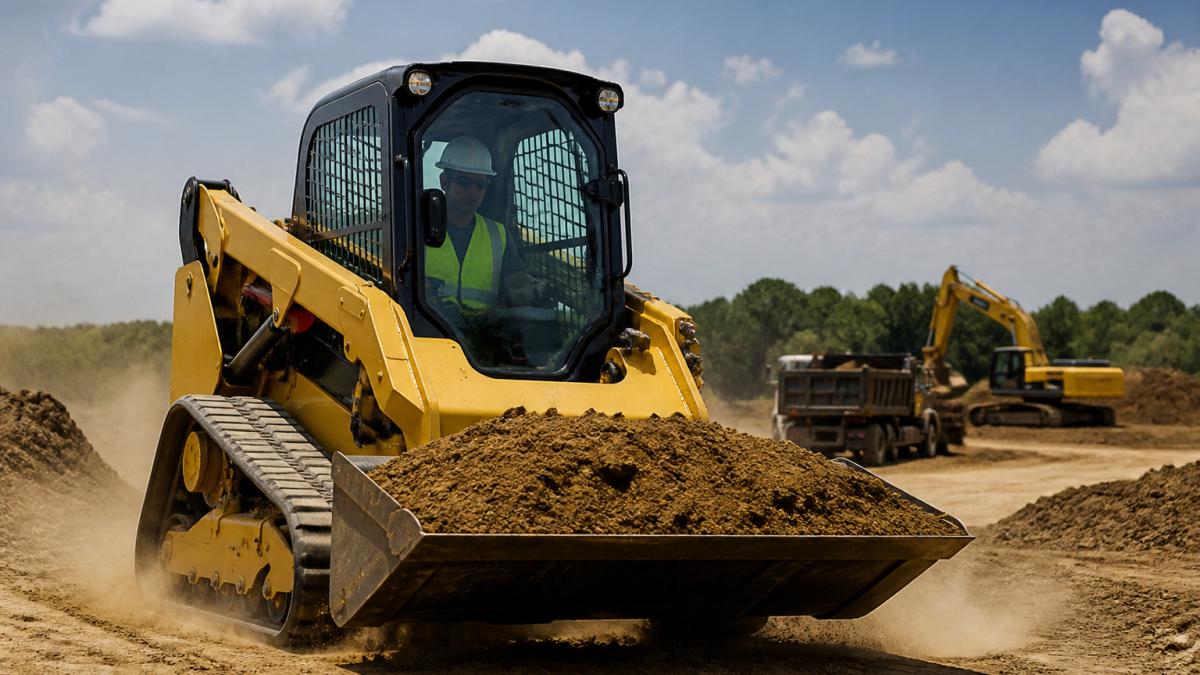
What separates a heavy-duty model from a standard one is rarely the engine alone. It’s the hydraulic system, cooling capacity, and undercarriage.
Models Contractors Reach For on the Hardest Jobs
Bobcat T76 and T86 are the high-flow flagships of the compact track loader line.
Caterpillar 289D3 and 299D3 are the high-flow workhorses of the Cat lineup.
John Deere 333G is the largest and most powerful loader in the Deere compact line.
Takeuchi TL12R2 is a purpose-built high-flow tracked loader that mulching and brush-clearing contractors favor for its hydraulic package and track durability.
Case TV450B and New Holland C345 serve buyers who want a high-capacity tracked loader from a dealer they already trust for other equipment.
Matching the Model to the Workload
For grading and site prep, a mid-size machine with standard flow and a strong bucket often does the job at a lower operating cost. Matching the machine to the workload beats buying the biggest unit on the lot.
A simple way to sort the field:
- Land clearing and mulching: high-flow tracked loaders like the Bobcat T86, Cat 299D3, Deere 333G, and Takeuchi TL12R2
- Demolition and concrete removal: high-flow machines with reinforced lift arms and heavy counterweighting
- Bulk material handling: large-frame tracked loaders with high rated operating capacity
- Grading and site prep: mid-size standard-flow machines with a strong bucket and good visibility
- Farm and ranch work: mid-size wheeled or tracked loaders with comfortable cabs and easy attachment changes
Financing the Heavy-Duty Model You Pick
A high-flow tracked loader is a bigger commitment than a mid-size wheeled machine, and the funding step is where many buyers lose time. Always Capital finances heavy equipment across every major brand and model class, including compact track loaders built for mulching, planing, and demolition.
That combination matters most on the heavy end of the market, where a machine may be a few years old or carry significant hours. Always Capital finances equipment with no age or mileage restrictions, so a well-maintained used high-flow loader is still fundable.
Decide on the model first, then apply. Always Capital can pre-approve a buyer in as little as two to four hours, so a contractor can walk into a dealer conversation with a funded budget and a clear number for the machine they actually want.
Skid Steer Financing Pre-Approval: How to Get Approved Fast
Skid steer financing pre-approval turns a shopping list into a purchase. Always Capital offers approvals in as little as two to four hours with a soft credit pull, so the application does not affect a business credit score.
The fastest path to approval starts with a short application and a clear picture of the equipment being financed. Always Capital works with all credit types and accepts every application, removing the guesswork that slows most buyers down.
A pre-approval letter also strengthens a buyer’s position at the dealer, signaling the purchase is funded and ready to close, which can move a machine off the lot faster.
APPLY NOW AND GET YOUR BUSINESS PRE-APPROVED FOR FINANCING TODAY ! →
Documents and Preparation for a Smooth Application
- Business name, address, and entity type
- Contact details for the primary owner
- Equipment description: make, model, year, and hours
- Dealer or seller information
- Estimated equipment cost or auction listing
- Basic business information for the application
Always Capital offers application-only approvals up to $500,000 with no financials required, and financing up to 100% with terms from 24 to 84 months. Deferred payment plans of 30, 60, or 90 days are available for businesses that need a runway before the first payment.
Apply before shopping, not after. A pre-approval from Always Capital gives a buyer a firm budget and lets the dealer know the deal is funded, which shortens the whole process.
Side-by-Side Financing Comparison Across Top Brands
Financing terms vary less by brand than buyers expect. What changes is how fast a lender can approve, how much of the equipment cost gets financed, and whether older machines or high-mileage trucks qualify.
| Financing Factor | Typical Dealer Program | Always Capital |
|---|---|---|
| Approval speed | Days to weeks | 2 to 4 hours |
| Credit check | Varies | Soft pull only |
| Credit types accepted | Limited tiers | All credit types |
| Financing amount | Varies by program | Up to 100% |
| Equipment age limits | Often restricted | No age or mileage restrictions |
| Terms | Varies | 24 to 84 months |
Always Capital finances all heavy equipment and commercial trucks, including skid steers, excavators, backhoes, dozers, loaders, pavers, dump trucks, daycabs, and box trucks. That range lets a contractor fund a whole fleet through one application instead of juggling multiple programs.
U.S. Small Business Administration financing guidance outlines how equipment loans fit into broader business capital planning.
Total Cost of Ownership: What to Weigh Beyond the Purchase Price
Total cost of ownership covers far more than the sticker on the machine. Maintenance, attachments, undercarriage wear, fuel, insurance, and resale value all shape what a skid steer costs over its service life.
Three costs catch buyers off guard:
- Undercarriage replacement on compact track loaders, which is the single largest wear item on tracked machines
- Attachment purchases, which often add up to a meaningful share of the machine cost
- Downtime, which costs more than any part when a crew is standing around waiting
Financing structure changes how those costs land.
Resale value works in the buyer’s favor at the end. Brands with strong demand for used equipment recover more of the original cost, lowering the true cost of ownership over the full run.
Buying a machine without confirming attachment compatibility is a common and expensive mistake. A high-flow attachment will not run at full performance on a standard-flow machine, and the mismatch often surfaces only after the purchase.
Conclusion: Choosing the Right Skid Steer and Financing Partner
Picking the right skid steer comes down to matching rated operating capacity, horsepower, and hydraulic flow to the actual workload, then confirming the brand has dealer support nearby. The financing side is where speed and flexibility decide how fast a machine gets to work.
Always Capital makes that step simple. The company offers 100% financing, approvals in as little as two to four hours, soft credit pulls that protect a business credit score, and terms from 24 to 84 months with deferred payment options.
Get pre-approved for heavy equipment financing with Always Capital and put the next skid steer to work without the wait.
Frequently Asked Questions
Which skid steer brand is the most reliable?
Reliability often comes down to dealer support and parts availability. Brands with extensive dealer networks and strong warranty coverage tend to score highest in owner surveys. Look for models with proven engine and hydraulic systems, and check that your local dealer stocks common parts. Always Capital can finance any major brand, so you are not limited by financing when choosing the most reliable skid steer for your fleet.
Which brand is the best-selling skid steer?
Best-selling status is typically measured by annual sales volume and market share. A few major manufacturers consistently lead, but the top spot can shift year to year. The most popular skid steer brand often has the widest dealer network and the strongest resale value. For financing, Always Capital works with all brands and offers fast pre-approval so you can act quickly when you find the right machine.
How can a business get pre-approved for skid steer financing?
Start by gathering basic business information: legal name, EIN, and details about the equipment you want. Always Capital uses a soft credit pull that does not affect your credit score, and many applications receive a decision in two to four hours. You can apply online for skid steer financing pre-approval and get terms without a hard inquiry. Approval amounts up to $500,000 are available with application only, and up to $5 million with full documentation.
What documents are useful when applying for equipment financing?
For application-only approvals up to $500,000, you typically need basic business details and equipment information. For larger amounts, having bank statements and a balance sheet ready can speed things up. Always Capital accepts all credit types and offers 100% financing, so even if your documents are not perfect, it is worth applying. A soft pull pre-approval gives you a clear picture without impacting your credit.