
Last Updated: November 15, 2026
Quick Summary
Choose a wheeled skid steer for pavement, concrete, finished turf and snow removal, where tires grip and cost less to buy and run. Choose a tracked skid steer for mud, sand, pasture and demolition, where flotation and traction prevent rutting and stuck machines.
- Wheeled machines were 14.5% of more than 65,000 new compact track loaders and skid-steer loaders financed in a recent ranking period.
- Wheeled skid steers cost 40-60% less to buy and about 20-30% less to run per hour than compact track loaders.
- Rubber tracks pack with snow and lose bite on ice, so a wheeled machine with a plow is the safer snow removal choice.
- Vertical lift suits loading trucks and hoppers, while radial lift suits digging, grading and carrying.
- Tires are replaced individually as they wear, but tracks are typically replaced as a set along with steel rollers, idlers and sprockets.
Table of Contents
- Wheeled vs Tracked Skid Steer: Core Differences That Decide the Purchase
- Traction, Ground Pressure and Surface Damage Compared
- Tracks vs. Wheels Skid Steer in Snow: What Actually Works
- Track or Wheel Skid Steer for Farm Use
- Wheeled vs. Tracked Mini Skid Steer: When Smaller Changes the Answer
- Vertical vs. Radial Lift Skid Steer: Match the Lift Path to the Job
- Cost of Ownership, Maintenance and Resale by Undercarriage
- Skid Steer Manufacturers and What Each Does Best
- Top 20 Benefits of Using Always Capital
- Financing the Machine You Actually Need
- Frequently Asked Questions
Wheeled vs Tracked Skid Steer: Core Differences That Decide the Purchase
Wheeled machines accounted for 14.5% of more than 65,000 new compact track loaders and skid-steer loaders financed in a recent ranking period, according to Equipment World’s best-selling skid steer rankings. That single number explains why this skid steer decision matters: most buyers now choose tracks, but the 14.5% who pick wheels are not wrong. They are matching the undercarriage to the surface.
This wheeled versus tracked skid steer comparison from Always Capital breaks down traction, ground pressure, snow performance, farm use, lift geometry, ownership cost, and manufacturer strengths. Always Capital finances skid steer purchases with approvals in as little as two to four hours.
How Each Undercarriage Transfers Power to the Ground
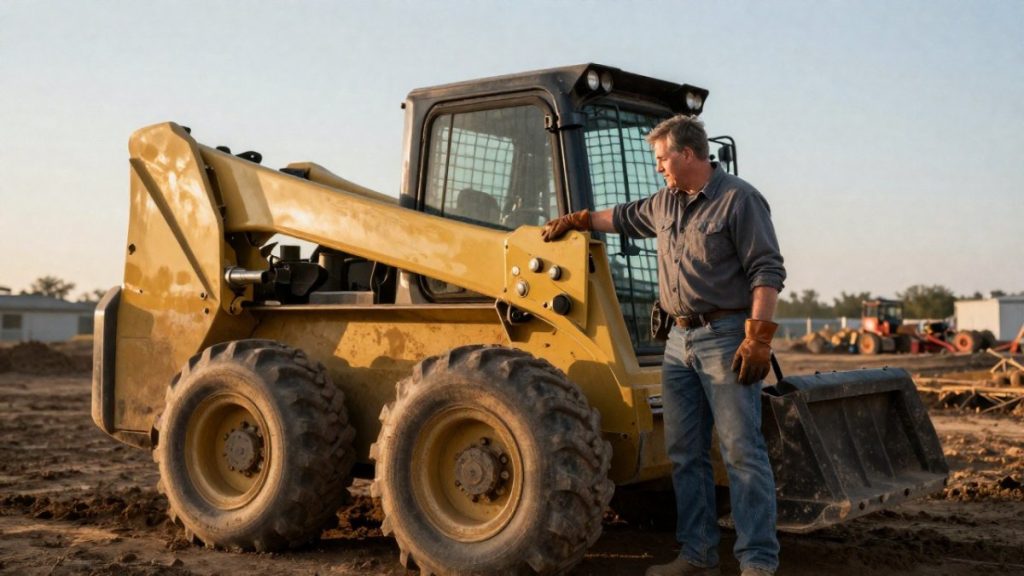
A wheeled skid steer drives through four tires and steers by skidding, which is why it turns on a dime and leaves tire marks on turf. A tracked skid steer, also called a compact track loader, runs on rubber tracks over a steel undercarriage and steers by counter-rotating the tracks.
Tires put the machine’s weight on four small contact patches; tracks spread it across a long footprint. That drives ground pressure, traction, ride comfort, and maintenance cost.
Traction, Ground Pressure and Surface Damage Compared
Tracks win on soft ground; wheels win on hard ground.
Soft Ground, Mud and Rutting
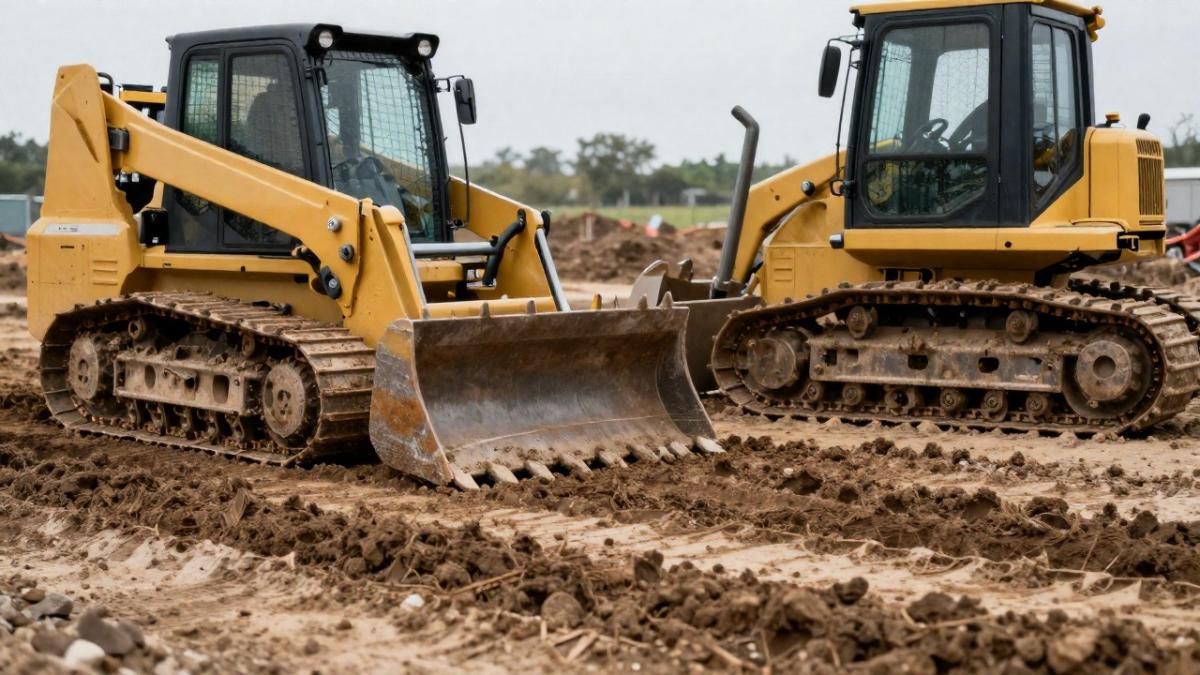
On mud, sand, and loose fill, tracks keep the machine floating where tires dig in. Bobcat’s undercarriage comparison describes compact track loaders as having superior traction and stability, and that advantage shows up as less rutting and fewer stuck machines.
For grading crews and landscapers working wet sites, surface disturbance is the hidden cost: deep tire ruts mean extra repair work before sign-off.
Hard Surfaces, Pavement and Turf
Wheels are the better fit for pavement, concrete, and finished turf. United Rentals’ track loader guidance advises caution when running tracks on concrete or asphalt, and notes tracked machines need more cleaning and maintenance.
A 2026 comparison estimates wheeled skid steers cost 40-60% less to buy and about 20-30% less to run per hour than compact track loaders, per Heavy Vehicle Inspection’s undercarriage analysis.
Tracks vs. Wheels Skid Steer in Snow: What Actually Works
Tires beat tracks in snow removal, which surprises most buyers. SnowWolf’s snow equipment guidance says the right choice depends on where the work happens, and operators in AgTalk forum discussions report tracks sliding and spinning on ice while recommending tires for plowing.
Rubber tracks pack with snow and lose bite on ice, while a tire with chains or a good tread pattern keeps gripping. For snow removal work, a wheeled machine with a plow or pusher is generally the safer choice. Upgrade your snow removal fleet for winter efficiency before the season starts.
Track or Wheel Skid Steer for Farm Use
Farm work splits the decision. Barnyards, feed alleys, and gravel lanes favor wheels because the surface is hard and the machine turns constantly in tight spaces.
A mini skid steer often covers both: small enough for barn aisles, light enough to limit turf damage. For producers financing a first machine, skid steer financing options let the purchase follow the season.
Wheeled vs. Tracked Mini Skid Steer: When Smaller Changes the Answer
On a mini skid steer, the undercarriage trade-off flips slightly.
Where the mini shines is access. Narrow gates, backyard projects, and interior demolition reward a machine that fits; on tight, hard ground, wheels keep operating cost down.
How to choose the right heavy equipment for your business walks through matching unit type to the work before committing.
Vertical vs. Radial Lift Skid Steer: Match the Lift Path to the Job
Vertical lift raises the bucket straight up along a vertical path, giving more height and reach at the top of the cycle. Radial lift sweeps the bucket up and back in an arc, keeping the load closer to the machine through the middle of the lift.
Load trucks and hoppers with vertical lift. Dig, grade, and carry with radial lift. The lift path is independent of the undercarriage, so a buyer can pair tracks with either geometry.
Cost of Ownership, Maintenance and Resale by Undercarriage
Purchase price is the smallest part of the wheeled versus tracked skid steer decision. The undercarriage is a wear item with a scheduled replacement cycle, and how that cycle interacts with your ground conditions, hours, and resale plans determines which machine actually costs less to own. Always Capital structures skid steer financing around the whole ownership picture, with terms from 24 to 84 months.
The Four Cost Buckets That Actually Move
- Acquisition: the purchase price plus any dealer setup, attachment package, and delivery. Tracked units carry a higher sticker because the undercarriage itself is a complex assembly of steel rollers, idlers, sprockets, and rubber belts.
- Undercarriage replacement: tires are replaced individually as they wear; tracks are typically replaced as a set, and the steel components underneath wear on their own schedule. This is the single largest lifetime delta between the two designs.
- Wear rate as a function of surface: abrasive ground (gravel, crushed rock, concrete, cinder) eats rubber tracks quickly and chews tire shoulders during constant skid turns. Soft ground is gentle on both.
What Drives Track Wear and Tire Wear
Track wear is driven by abrasion, tension, and turning style. Concrete, asphalt, and sharp counter-rotations on abrasive ground accelerate belt and roller wear.
Tire wear is driven by skid turns and load. A wheeled skid steer steers by dragging its tires sideways, so shoulder wear is normal on hard surfaces.
Watch out: budgeting only for the visible rubber misses the steel.
A Practical Used-Machine Inspection Checklist
Because the undercarriage is where the money hides, inspect it before you buy used.
Tracked machines:
- Measure remaining tread depth across the belt and check for uneven wear side to side.
- Inspect belt edges for cuts, chunking, and exposed cords.
- Check roller and idler surfaces for flat spots, seal leaks, and play.
Wheeled machines:
- Check tire age, tread depth, and shoulder wear patterns.
- Look for sidewall cracks and signs of chronic underinflation.
- Inspect wheel studs, rims, and axle seals for leaks.
For either design, verify hydraulic function across the auxiliary circuit, check for cylinder seepage, review the service history, and confirm the hour meter against visible wear.
Matching the Payment Structure to the Wear Cycle
Because undercarriage replacement is predictable, the financing structure should be too. Always Capital offers fixed, predictable payments, 30, 60, or 90-day deferrals, and seasonal payment capability so a snow-removal operator or landscaper can align repayment with revenue. Up to 100% financing preserves working capital for that first undercarriage replacement, and asset-backed collateral means the machine itself secures the deal. Always Capital accepts all credit profiles, runs soft credit pulls only, and imposes no age or mileage restrictions. The skid steer guide to costs, uses, and financing covers how each machine is funded across credit types.
| Factor | Wheeled Skid Steer | Tracked Skid Steer |
|---|---|---|
| Purchase price | Lower | Higher |
| Undercarriage replacement | Per-tire, granular | Per-set, plus steel components |
| Wear driver | Skid turns, load, pavement | Abrasion, tension, turning style |
| Soft ground traction | Limited | Strong |
| Pavement performance | Strong | Caution needed |
| Snow and ice | Better with tires | Tends to slip |
| Resale demand | Steady in ag, snow, pavement | Strong in construction |
| Best fit for financing | Seasonal, pavement, snow | Construction, earthmoving |
A Decision Matrix by Job Type and Surface
Use the surface first, then the job, then the season.
| Job / Surface | Better Undercarriage | Why |
|---|---|---|
| Landscaping on finished turf | Wheels | Less turf damage, cheaper tire swaps |
| Muddy or sandy sites | Tracks | Flotation and traction |
| Demolition on rubble | Tracks | Abrasion tolerance and stability |
| Snow removal on pavement | Wheels | Tires bite where tracks slip |
| Grading and finish work | Either, radial lift preferred | Load stays close through the lift |
| Pavement and concrete work | Wheels | Tracks wear fast on abrasive hard surface |
| Loading trucks and hoppers | Either, vertical lift preferred | Height and reach at top of cycle |
| Tight-access backyard work | Mini, either design | Size matters more than undercarriage |
When the job mix spans both columns, many buyers run a wheeled machine for pavement and snow and a tracked unit for dirt, and Always Capital can finance both under one relationship with lending capacity up to $5 million. Get pre-approved for heavy equipment financing with Always Capital and put the right undercarriage on each job.
Skid Steer Manufacturers and What Each Does Best
Every major builder has a personality, and matching it to the work matters as much as the undercarriage. Always Capital finances every major brand, including Cat Equipment financing and John Deere equipment Financing, so the brand decision is never constrained by the funding decision.
The Major Full-Line Builders
Bobcat is one of the best-known builders of skid steers.
Caterpillar is a well-known builder of skid steer loaders and compact track loaders. Cat Equipment financing is widely available, and Always Capital matches that with fast approvals and no age restrictions.
John Deere builds skid steers and compact track loaders that are common on farms and ranches. John Deere equipment Financing pairs naturally with Always Capital‘s seasonal payment structures for ag operations.
Kubota builds compact and mini machines used in landscaping and residential work.
Case builds skid steers used by many owner-operators.
New Holland builds skid steers used in agriculture and construction.
The Track-Loader Specialists
Takeuchi builds compact track loaders used on grading and excavation work.
ASV builds track machines used in a range of ground conditions.
The Value and Compact Builders
Gehl and Mustang build skid steers and track loaders used by smaller fleets.
Wacker Neuson builds compact and mini loaders.
Yanmar builds compact loaders used in landscaping and light commercial work.
Matching Brand to Work and to Funding
A common pattern is that the brand choice follows the dealer relationship and the attachment plan more than the spec sheet. Always Capital finances new and used machines with no age or mileage restrictions, so a used unit or a new Cat skid steer loader can both be considered. Compare brands side by side with the fastest skidsteer financing and best brands to buy before choosing, and use How to choose the right heavy equipment for your business to match unit type to the work.
Always Capital is a top-rated equipment funder with high approval rates, transparent loan terms, and a hassle-free loan process. Whether the machine is a Bobcat, a Cat skid steer loader, a Kubota, or a used unit from an auction, Always Capital is your one-stop source for equipment financing. Get pre-approved for heavy equipment financing with Always Capital and put the right brand on the job this week.
Top 20 Benefits of Using Always Capital
| # | Benefit | What It Means for a Skid Steer Buyer |
|---|---|---|
| 1 | Approvals in 2 to 4 hours | Machine decision and funding in one day |
| 2 | Same-day funding timelines | Capital deployed before the auction closes |
| 3 | Application-only tier up to $500,000 | No extensive financial statements required |
| 4 | Simplified application | Minimal paperwork, less back-and-forth |
| 5 | No-impact soft credit pulls | Pre-qualify without hurting credit scores |
| 6 | All credit profiles accepted | A+ through deeply challenged histories |
| 7 | Startup-friendly limits up to $150,000 | New businesses under two years old qualify |
| 8 | Asset-backed collateral | The machine itself secures the deal |
| 9 | No minimum score lockouts | Asset utility and revenue weigh in |
| 10 | Flexible time-in-business guidelines | Young and established firms both fit |
| 11 | Lending capacity up to $5 million | Single units or fleet expansion |
| 12 | Up to 100% financing | Bypass large down payments |
| 13 | Terms from 24 to 84 months | Match repayment to machine life |
| 14 | Working capital preserved | Cash stays in operations |
| 15 | Fixed, predictable payments | Steady monthly structures |
| 16 | 30, 60, or 90-day deferrals | Equipment earns before payments start |
| 17 | Seasonal payment capability | Match weather-dependent revenue |
| 18 | No age or mileage restrictions | Older, high-hour machines finance |
| 19 | Auction and private-party support | Bid and buy with confidence |
| 20 | Dedicated equipment specialists | Residual values understood |
Always Capital finances skid steers, excavators, backhoes, dozers, loaders, dump trucks, daycabs, and box trucks. Deferred payment structures and up to 100% financing are available, and Always Capital accepts all credit types.
Financing the Machine You Actually Need
The undercarriage question is settled by the ground under the machine. Buy tracks for mud and pasture, wheels for pavement and snow, and match the lift path to the task.
Always Capital funds skid steer purchases with two-hour approvals, 100% financing, soft credit pulls, and no age or mileage restrictions on the asset. Get pre-approved for heavy equipment financing with Always Capital and put the right machine on the job this week.
Frequently Asked Questions
Is it better to have a wheeled or tracked skid steer?
It depends on your dominant surface. Wheeled skid steers suit hard, stable ground, pavement and tight spaces, and they cost less to buy and run. Tracked machines win on soft, muddy or uneven terrain where flotation and traction matter. Tracks dominate many new purchases, so match the undercarriage to the jobs you bid most. Match the undercarriage to the jobs you bid most.
Are tracks or wheels better on a skid steer in snow?
Wheels are usually the safer pick for snow removal. Rubber tracks can slide and spin on ice, while tires with chains or good tread bite more predictably on packed snow and pavement. Tracks still help in deep, loose snow or on soft shoulders. If snow removal is a core contract, a wheeled machine keeps traction predictable and avoids track cleaning between jobs.
Should I choose a wheeled or tracked mini skid steer?
Mini skid steers are often bought for landscaping and tight residential access. Wheeled minis turn sharply, run faster on pavement and cost less to maintain, which suits hardscape and turf work. Tracked minis distribute weight better and protect soft lawns and grades. If you cross finished lawns daily, tracks reduce turf damage. If you mostly move material on driveways and gravel, wheels keep operating costs down.
Can you add tracks to a wheeled skid steer?
Yes, track-over-tire systems exist and convert a wheeled machine for seasonal soft-ground work. They are not the same as a purpose-built compact track loader: the undercarriage geometry, final drive and cooling are designed differently. Over-the-tire tracks add wear to tires and running gear and are best treated as a short-term or seasonal solution. For year-round track performance, a dedicated tracked machine is the better long-term buy.
