
Last Updated: October 29, 2026
Quick Summary
To choose the right heavy equipment for your business, describe every task the machine must perform, note your site conditions, estimate weekly hours, and set a budget ceiling before you shop. Pick the smallest machine class that clears your heaviest recurring job, then compare new and used units on hours remaining, emissions tier, dealer support, and replacement cost.
- Machine class is defined by operating weight, horsepower, and reach; capacity is what it moves per hour.
- Compact track loaders, excavators, wheel loaders, dozers, and backhoes led first-half 2026 demand.
- Size a loader bucket so you fill your truck bed in three or four passes.
- Engine hours and duty cycle drive used value more than the calendar year.
- Always Capital offers terms from 24 to 84 months with 30-, 60-, or 90-day payment deferrals.
Table of Contents
- Start With the Work, Not the Machine
- Match Machine Class and Capacity to the Job
- New or Used: Weighing the Real Cost of Each
- Heavy Equipment Manufacturers and the Units They Build
- Heavy Equipment Financing Options That Fit Your Cash Flow
- Financing Used Heavy Equipment Without Age or Mileage Limits
- Why Now Is the Time to Finance a New or Used Unit
- Get Pre-Approved Before You Bid on the Machine
- Frequently Asked Questions
Start With the Work, Not the Machine
The global heavy equipment market is projected to reach USD 242 billion by the end of 2026, according to CSG Talent’s heavy equipment industry trends analysis. That volume means buyers have more choices than ever, and more ways to buy wrong. Learning how to choose the right heavy equipment for your business starts with one rule: describe the work before you shop the iron.
Here is the sequence that keeps buyers out of that trap:
- List every task the machine must perform in a typical month
- Note the site conditions: soil, slope, access width, overhead clearance
- Estimate hours per week the unit will actually run
- Set a budget ceiling before you look at a single listing
A machine that fits the work beats a bigger machine that sits idle.
Match Machine Class and Capacity to the Job
Machine class is the size band a unit falls into, defined by operating weight, horsepower, and reach. Capacity is what that class can move, lift, or dig per hour in real conditions. The right pick sits at the smallest class that clears your heaviest recurring task, not your once-a-year worst case.
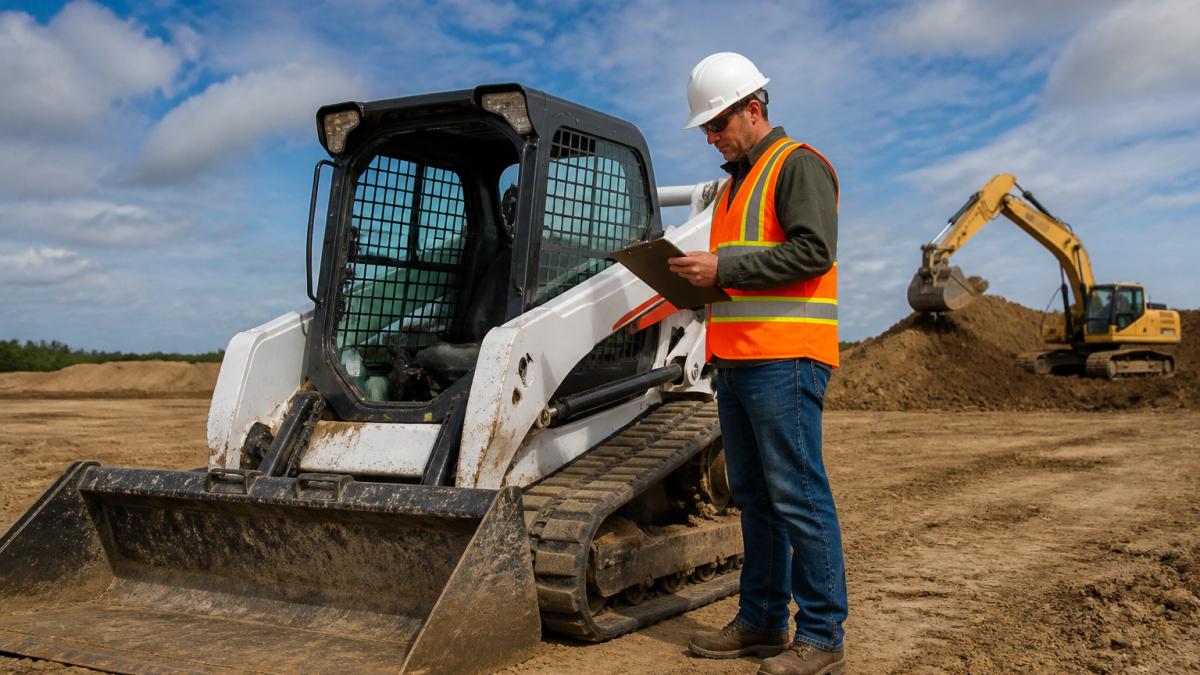
First-half 2026 sales data from Fusable’s EDA, reported by Equipment World shows compact track loaders, excavators, wheel loaders, dozers, and backhoes leading demand, versatile units that earn their keep across many jobs.
Sizing shortcuts that hold up in practice:
- Excavators: match digging depth to your deepest routine trench, not the deepest one you have ever quoted
- Loaders: size the bucket to your truck bed so you fill it in three or four passes
- Dozers: pick blade width against the width of your typical cut
- Skid steers and CTLs: check rated operating capacity against your heaviest attachment plus load
For a deeper walkthrough of excavator classes and specs, see how to choose the right excavator for your business.
New or Used: Weighing the Real Cost of Each
New equipment brings a full warranty, current emissions compliance, and the latest telematics. Used equipment brings a lower entry point and value already absorbed by the first owner. The real comparison is hours remaining, maintenance history, regulatory life, and how long you plan to keep the unit.
Industry guidance for 2026 stresses a framework built on Total Cost of Ownership, machine capacity, site assessments, and logistics, per Scott Equipment’s equipment selection guide. TCO includes fuel, wear parts, downtime, and resale, not just the purchase figure.
Factor | New Unit | Used Unit |
|---|---|---|
Upfront cost | Higher | Lower |
Warranty | Full coverage | Limited or none |
Downtime risk | Low | Higher without inspection |
Value retained | Steepest early decline | Already absorbed |
Financing flexibility | Broad | Broad with the right lender |
Telematics | Factory-installed | May need aftermarket retrofit |
The Angle Most Guides Miss: Track Hours, Not Just Years
Most new-vs-used advice treats age as the only variable. In practice, engine hours and duty cycle drive value far more than the calendar. A 2018 excavator with 4,000 hours of light utility work can be a better asset than a 2022 unit with 9,000 hours of rock work. That is why Always Capital underwrites on asset utility and revenue alongside credit scores, not on a year cutoff.
Regulatory Life Is Part of the Cost
Emissions standards quietly drive used-unit value. Tier 4 Final is the current baseline for most on-road and many off-road applications, and older tiers face access restrictions on certain projects. That makes tier a fit-for-application decision: a Tier 3 excavator that never leaves a private yard is a different asset than one bidding public-works contracts.
Replacement-Cost Pressure Favors Buying Now
Machinery prices have risen across recent cycles, and replacement cost is the number that matters for future capital planning. A unit bought today locks in today’s asset price; a unit deferred two years is exposed to whatever the market does in between, the inflation-hedge argument for financing now. See why now is the time to finance.
When Used Iron Makes More Sense
Always Capital finances used equipment and new equipment with no age or mileage restrictions. For a full walkthrough of used equipment finance, including how to qualify and get approved fast, see the guide.
Always Capital offers up to 100% financing on new and used units, terms from 24 to 84 months, and 30-, 60-, or 90-day payment deferrals. Every application uses a soft credit pull, and all credit profiles are accepted, from pristine A+ to deeply challenged histories.
Heavy Equipment Manufacturers and the Units They Build
Every major manufacturer covers a different slice of the market, and the brand you pick shapes three things that outlast the purchase: parts availability, dealer service density, and resale strength. For a full view of what we fund, see construction equipment financing.
APPLY NOW AND GET YOUR BUSINESS PRE-APPROVED FOR FINANCING TODAY ! →
Earthmoving and Excavation Manufacturers
- Caterpillar (CAT): The broadest earthmoving lineup in the market, excavators from mini to mass-excavation class, dozers, wheel loaders, backhoes, motor graders, and articulated trucks.
- Komatsu: Excavators, dozers, wheel loaders, rigid dump trucks, and motor graders.
- John Deere: Excavators, dozers, wheel loaders, backhoes, and articulated dump trucks.
- CNH Industrial / CASE Construction: Excavators, dozers, wheel loaders, backhoes, and skid steers.
- Volvo Construction Equipment (Volvo CE): Excavators, wheel loaders, haulers, pavers, and compactors.
- Hitachi Construction Machinery: Excavators, wheel loaders, and rigid haul trucks.
- Kobelco Construction Machinery: Excavators and crawler cranes.
- Doosan Bobcat: Skid steers, compact track loaders, mini excavators, and telehandlers.
- Develon: Excavators, wheel loaders, articulated dump trucks, and dozers.
- HD Hyundai Construction Equipment: Excavators, wheel loaders, and forklifts.
- JCB: Backhoes, telehandlers, excavators, wheel loaders, and compactors.
- Kubota Corporation: Mini excavators, compact tractors, wheel loaders, and utility vehicles.
- Takeuchi: Compact track loaders, mini excavators, and skid steers.
- Yanmar: Mini excavators, compact track loaders, and wheel loaders.
- Sumitomo Heavy Industries: Excavators and lattice boom cranes.
- Liebherr Group: Excavators, dozers, loaders, cranes, and mining trucks.
- LiuGong Machinery: Excavators, wheel loaders, dozers, and rollers.
- Lonking: Wheel loaders, excavators, and forklifts.
- Shantui: Dozers, rollers, and motor graders.
- SANY Heavy Industry: Excavators, cranes, concrete equipment, and port machinery.
- XCMG Group: Excavators, loaders, dozers, rollers, and cranes.
- Zoomlion: Excavators, cranes, and concrete machinery.
- Wacker Neuson: Compact excavators, wheel loaders, rollers, and compaction equipment.
- Sandvik Mining & Rock Technology: Drilling rigs, loaders, and haul trucks for mining.
Lifting, Paving, and Specialty Manufacturers
- Manitowoc Cranes: Crawler cranes, tower cranes, and boom trucks.
- Oshkosh / JLG Industries: Aerial work platforms, telehandlers, and boom lifts.
- Tadano: Mobile cranes and aerial platforms.
- Terex Corporation: Cranes, aerial platforms, and materials processing.
How Brand Choice Affects Financing
Always Capital provides heavy equipment financing, with approvals in as little as two to four hours. All credit profiles are accepted, and soft credit pulls do not affect personal or business scores.
Heavy Equipment Financing Options That Fit Your Cash Flow
Equipment financing is structured around the machine itself, with the asset serving as collateral. Match the structure to how the machine earns: steady monthly work favors fixed payments, while seasonal work favors deferred or seasonal schedules.
Always Capital builds heavy equipment financing options around four levers:
- Term length: 24 to 84 months
- Deferred payments: 30, 60, or 90 days before the first payment
- Down payment: up to 100% financing available
- Approval size: application-only approvals up to $500,000, with capacity up to $5 million
A common mistake is matching the term to a default rather than the asset’s working life. A compact track loader running 1,500 hours a year should not carry the same term as a Class 8 tractor.
Financing Used Heavy Equipment Without Age or Mileage Limits
Always Capital finances older equipment and trucks with no age or mileage restrictions. Underwriting looks at asset utility and revenue alongside credit scores, and every application uses a soft credit pull that does not affect personal or business scores.
Financing used heavy equipment works best when you bring three things to the application:
- Machine year, make, model, and hours
- Serial number and a photo set
- Seller details, including private party or auction source
Private party transactions and auction purchases are both supported. That matters at equipment auctions, where fast pre-approval lets you bid with confidence instead of watching from the sidelines.
Why Now Is the Time to Finance a New or Used Unit
Two forces make 2026 a practical year to add capacity. First, market growth: Business Research Insights projects the heavy equipment market growing from $680.83 billion in 2026 to $920.65 billion by 2035. Second, replacement cost pressure: locking in asset pricing today hedges against future increases.
Deferred payment plans include 90-day deferrals.
For buyers ready to move, heavy equipment financing is available for all credit types, with approvals in as little as two to four hours.
Get Pre-Approved Before You Bid on the Machine
Pre-approval turns a buyer into a bidder. Follow the steps to get pre-approved for heavy equipment loans before you bid. It sets your ceiling, shortens dealer negotiations, and lets you act on auction lots that close in hours.
Verbal or conditional approvals can arrive in as little as two to four hours.
Always Capital offers financing for all credit types, from pristine A+ profiles to deeply challenged histories. Businesses under two years old can access up to $150,000.
Frequently Asked Questions
What factors should I consider when buying heavy equipment?
Start with the work itself: soil conditions, access width, lift height, and how many hours the machine will run each week. Then weigh total cost of ownership, local dealer support, parts availability, and resale value. Financing structure matters too, since payment timing should match your receivables cycle rather than fight it.
Should I buy new or used heavy equipment for my business?
Always Capital finances used equipment with no age or mileage restrictions.
How can I finance heavy equipment with a challenged credit profile?
Always Capital accepts all credit types, offers application-only approvals up to $500,000 without extensive financial statements, and provides soft credit pulls for initial evaluation without affecting personal or business scores. Businesses under two years old can access up to $150,000, and verbal or conditional approvals can arrive in as little as two to four hours.
What are the benefits of using specialized financing for heavy machinery?
Always Capital offers up to 100% financing, terms from 24 to 84 months, and 30-, 60-, or 90-day payment deferrals.
The machine that fits the work, bought on terms that fit the cash flow, is the difference between an asset and a burden. Always Capital finances excavators, dozers, skid steers, loaders, dump trucks, and daycabs with up to 100% financing, soft credit pulls, and approvals in as little as two to four hours. Get started with Always Capital and put the right iron on your next job.
