
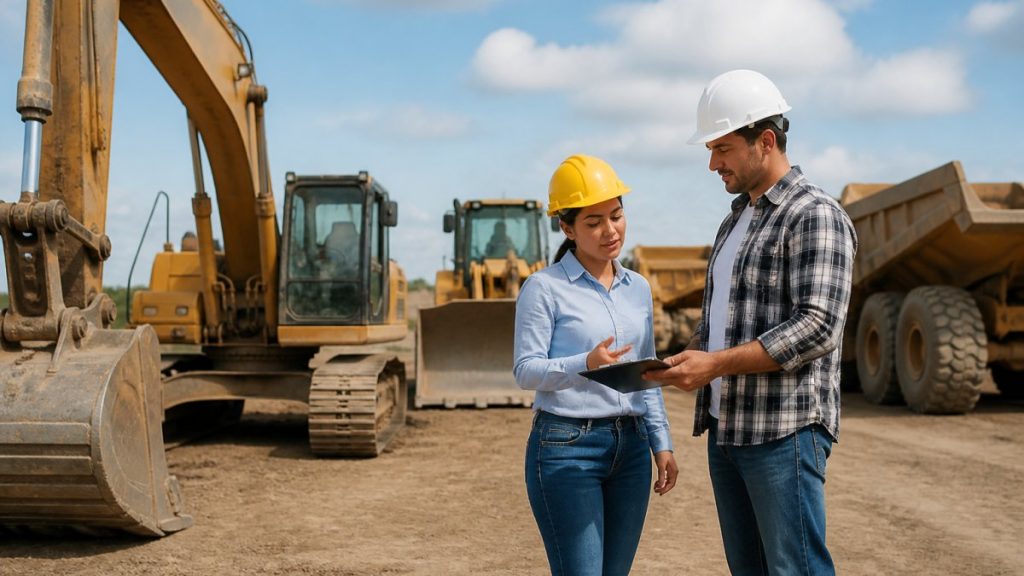
Last Updated: October 24, 2026
Quick Summary
New construction companies can get equipment loans by matching the machine to the job, building a complete application packet, and proving revenue through signed contracts and bank statements. Lenders accept businesses under two years old, with application-only approvals up to $500,000 and up to $150,000 for new businesses.
- Gather entity records, equipment quotes, bank statements, and signed contracts before applying to speed approval.
- A larger down payment offsets a thin credit file and widens approval options for new companies.
- Choose 30, 60, or 90-day deferrals so the first job generates revenue before the first payment.
- Terms from 24 to 84 months lower the monthly obligation and buffer billing gaps.
- Always Capital uses soft pulls only, so pre-qualifying does not affect your credit score.
Table of Contents
- Why Equipment Loans Beat Paying Cash for New Contractors
- Equipment Financing Requirements for a Brand-New Company
- Step 1: Match the Machine to the Job Before You Apply
- Step 2: Build Your Application Packet
- Used Construction Equipment Financing Without the Age Penalty
- Equipment Financing for Bad Credit: What Still Gets Approved
- Step 3: Protect Construction Business Cash Flow From Day One
- Get Pre-Approved Before You Bid Your Next Project
- Frequently Asked Questions
Why Equipment Loans Beat Paying Cash for New Contractors
A new construction company rarely has the cash to buy a machine outright.
Cash drains working capital. See a direct comparison of equipment loans vs lines of credit for cash flow.
Always Capital works with new businesses every week, and the pattern is consistent. The contractors who finance preserve liquidity.
Below, we break down the exact steps a new company can follow to get approved.
Equipment Financing Requirements for a Brand-New Company
Lenders look for three things: ability to pay, a real asset, and a believable plan. For a deeper walkthrough, see how to qualify for heavy equipment loans. New companies can prove all three without years of history.
A Federal Reserve small business credit survey found that 56% of employer firms sought financing for operating expenses. Lenders know new businesses need capital to run.
What Lenders Actually Look At
- Time in business: Some lenders want two years. Others, like Always Capital, work with companies under two years old.
- Revenue and contracts: Signed jobs and bids carry weight.
- Credit profile: All credit types get reviewed, not just pristine files.
Step 1: Match the Machine to the Job Before You Apply
Pick the machine the job actually needs, not the biggest one on the lot. A mini excavator that fits the site beats a larger unit that sits idle.
Match the asset to the work:
- Excavator financing for digging and trenching crews
- Skid steer financing for tight residential sites
- Dump truck financing for hauling and grading
Which Machines Qualify
Almost any revenue-producing machine qualifies. That includes excavators, backhoes, loaders, dozers, pavers, compactors, graders, and commercial trucks. Always Capital finances all heavy equipment and commercial truck types.
Step 2: Build Your Application Packet
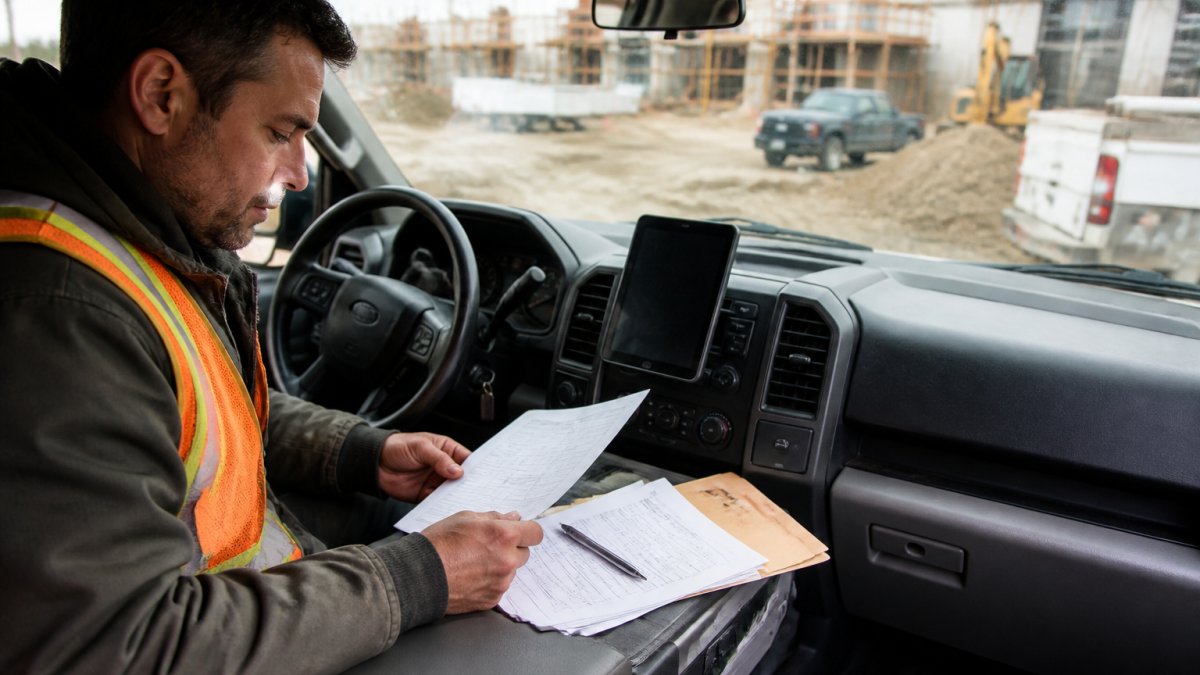
A complete packet speeds up approval. Missing documents are the most common reason applications stall, and for a new construction company, the packet is also the only place to prove a track record the company does not yet have on paper.
The Document Checklist
Gather these before you apply. Each one answers a specific question an underwriter is asking.
Entity and identity records
- Articles of incorporation or organization, or your LLC filing receipt
- Employer Identification Number confirmation letter
- Business license and, where required, contractor license
Why it matters: this proves the business legally exists and that the person signing is authorized to obligate it.
Equipment documentation
- Dealer quote, invoice, or bill of sale with year, make, model, hours or mileage, and serial number
- Photos of the unit, including the hour meter or odometer
- For private-party purchases, the seller’s contact information and a written description of condition
Why it matters: the machine is the collateral. Underwriting values the specific unit, not the category.
Financial evidence, scaled to what you have
- Three to six months of business bank statements
- Personal bank statements if business accounts are new
- Business or personal returns for the most recent filed year, if available
Why it matters: a young company often cannot show two years of business returns. Bank statements showing deposits from real jobs do more work than a thin return.
Revenue and pipeline proof
- Signed contracts or purchase orders for current work
- Letters of intent or bids you are shortlisted on
- A simple accounts receivable schedule showing what is billed and what is outstanding
Why it matters: signed work and a believable pipeline substitute for history.
Credit and background information
- Owner authorization to pull credit
- Explanation letters for any past derogatory items, if applicable
- Existing debt schedule with current balances and monthly obligations
How the Packet Changes for a Brand-New Company
A company formed last quarter cannot lead with business financials, so the packet shifts weight to four other places:
APPLY NOW AND GET YOUR BUSINESS PRE-APPROVED FOR FINANCING TODAY ! →
- The owner’s personal profile. Personal credit, personal bank statements, and any prior industry experience carry the file.
- The contract stack. Even one signed job with a defined scope and payment schedule is stronger evidence than a projection.
- The down payment position. A larger initial payment reduces the lender’s exposure and offsets a thin file. Up to 100% financing is available, but a company with limited history may choose to put more in to widen its options.
- The asset itself. Equipment with strong resale value and broad utility is easier to approve than a niche unit with a thin secondary market.
With Always Capital, application-only approvals are available up to $500,000 without extensive financial statements. That removes the biggest paperwork hurdle for new companies. New businesses under two years old can access up to $150,000 in heavy capital, and single-transaction or cumulative capacity scales up to $5 million as the company grows.
Common Packet Mistakes
- Submitting a spec sheet instead of a quote. Underwriting needs a price and a seller, not a manufacturer brochure.
- Listing a machine the job does not require. A unit that is oversized for your work invites questions about utilization.
- Leaving out the pipeline. A blank revenue section reads as no work; a documented pipeline reads as a plan.
If your credit history is the concern, read how to get equipment loans with bad credit before you submit.
Used Construction Equipment Financing Without the Age Penalty
Older machines still earn money. Many lenders reject high-hour equipment, but that leaves good iron on the table.
Always Capital finances equipment with no age or mileage restrictions. Read the full guide to securing financing for used construction equipment. Used excavators, older dump trucks, and high-hour loaders all qualify under the same framework as new units.
Equipment Financing for Bad Credit: What Still Gets Approved
A rough credit history does not close the door. Underwriting weighs asset utility and revenue alongside the score.
Watch out: applying to several lenders at once can trigger multiple hard pulls that hurt a challenged file. Always Capital uses soft pulls only, so pre-qualifying does not affect credit.
Step 3: Protect Construction Business Cash Flow From Day One
Construction cash flow is lumpy in ways that other trades never see. You spend before you bill, you bill before you collect, and a percentage of every invoice is held back until the job closes out. A payment schedule that ignores those mechanics will strain the business even when the work is profitable.
The Four Cash-Flow Drags Specific to Construction
Mobilization costs come first. Fuel, hauling the machine, site prep, and labor hit before the first invoice goes out.
Progress billing lags the work. You complete a phase, submit a pay application, wait for approval, then wait for the check.
Retainage holds a slice of every invoice. A common arrangement holds back a percentage of each payment until substantial completion, then releases it after punch list.
Seasonal revenue swings. Paving, grading, and earthmoving slow in winter in most of the country.
How to Structure the Loan Around Those Drags
- 30, 60, or 90-day deferrals to let the first job generate revenue before the first remittance. A 90-day deferred start lines up well with a first progress payment plus retainage release on a short job.
- Seasonal payment schedules for weather-dependent work, heavier remittances in the earning months, lighter in the slow ones.
- Terms from 24 to 84 months to match the asset’s working life. A longer term lowers the monthly obligation and widens the buffer between billing and collection.
A Simple Way to Test a Payment Before You Sign
Take your slowest revenue month from the past year, or, for a new company, the most conservative month in your business plan. Subtract fixed overhead, fuel, insurance, and payroll. What is left is the most a machine payment can safely consume in that month.
Fixed monthly payments shield the budget from surprises, and deferred starts ease the pressure of onboarding a new machine. But the structure has to reflect how construction money actually moves.
Protecting Your Other Credit
Financing the machine through a dedicated equipment facility also keeps your local bank lines open for short-term operational needs, payroll gaps, material deposits, and the retainage window.
If you are still deciding between buying new and buying used, a lower acquisition cost is itself a cash-flow tool.
The article lays out several ways to structure the loan around construction’s lumpy cash flow.
Structure | What it does | Note |
|---|---|---|
30, 60, or 90-day deferrals | Let the first job generate revenue before first remittance | 90-day start fits first progress payment plus retainage release |
Seasonal payment schedules | Heavier remittances in earning months, lighter in slow ones | For weather-dependent work |
Terms from 24 to 84 months | Match the asset’s working life | Longer term lowers monthly obligation |
Up to 100% financing | Avoid a large down payment | Keeps cash for mobilization |
Custom payment frequency | Matched to your accounts receivable cycle | Lands after typical pay-application approval window |
Get Pre-Approved Before You Bid Your Next Project
Pre-approval turns a bid into a credible offer. Start with the Always Capital financing application to get the process moving. Contractors who already know their funding limit can chase larger contracts with confidence.
Always Capital delivers verbal or conditional approvals in as little as 2 to 4 hours. The process is digital, and all credit types are accepted.
Ready to move? Apply Now and get pre-approved for heavy equipment financing.
Frequently Asked Questions
How hard is it to get equipment loans for a new construction company?
Harder than for an established firm, but far from impossible. Traditional banks often want two years of business history. Specialty lenders weigh the machine itself, your contract pipeline, and your revenue instead. Application-only programs can approve up to $500,000 without extensive company financial statements, and some lenders deliver conditional approvals in as little as two to four hours. The key is applying with a lender that funds new businesses rather than one that treats a short history as an automatic decline.
Can a new construction company finance used equipment?
Yes. Used construction equipment financing is widely available, and some lenders apply the same loan framework to new and used machinery alike. Age and mileage restrictions vary by provider, so ask directly whether high-hour machines qualify. Used units often cost less, which lowers the amount financed and keeps more of your construction business cash flow free for payroll and materials. Have the machine inspected and get a written quote before you apply.
What documents should a new construction company prepare for equipment financing?
Start with your business formation documents, a valid business bank account, and a government-issued ID. Add the equipment quote or bill of sale, your contractor license, and any signed contracts or bids that show incoming revenue. For application-only tiers, extensive financial statements may not be required, but having them ready speeds up final contract execution. A short cover sheet listing your project pipeline and expected receivables helps underwriting see how the machine pays for itself.
Can construction equipment serve as collateral for financing?
Yes. The machine you buy typically secures the loan, which is why lenders can approve businesses with thin or challenged credit files. Asset-backed lending means underwriting evaluates the equipment’s utility and resale value alongside your credit score. That structure reduces the outside collateral a new company needs to pledge. Expect the lender to appraise the unit or request photos, hours, and serial numbers before final approval.
New construction companies face a real funding gap, and waiting on a slow bank can cost a bid. Always Capital closes that gap with approvals in as little as two to four hours, up to 100% financing, and terms stretching to 84 months. Get started with Always Capital and put the right machine on your next job site.
