
Last Updated: October 26, 2026
Quick Summary
Match machine capabilities to your project scope, track repair costs, downtime and utilization, then compare new versus used construction machinery on total cost of ownership rather than purchase price alone. Weigh fuel, maintenance, resale value and productivity per hour, and secure financing early so an approved unit can join the fleet before the next phase begins.
- U.S. construction equipment market value reached an estimated $37.68 billion in 2026, up from $35.04 billion in 2025.
- Compare each machine against its own prior quarter, not the fleet average, which hides outliers.
- A new unit loses value fastest in year one; a used unit has already absorbed that drop.
- Always Capital offers up to 100% financing with terms from 24 to 84 months and fixed payments.
- Approvals can arrive in as little as two to four hours, with same-day equipment financing available.
Table of Contents
- Why Now Is the Right Time to Upgrade Your Construction Machinery
- Match Machine Capabilities to Project Scope and Job Requirements
- When to Replace Construction Equipment: Measurable Upgrade Triggers
- New vs. Used Construction Equipment: Which Fits Your Fleet
- Total Cost of Ownership: Purchase Price, Fuel, Maintenance, and Downtime
- How Construction Equipment Productivity Drives Your Upgrade Decision
- Construction Equipment Financing: Speed, Terms, and 100% Funding
- Get Pre-Approved for Heavy Equipment Financing with Always Capital
- Frequently Asked Questions
Why Now Is the Right Time to Upgrade Your Construction Machinery
U.S. construction equipment market value hit an estimated $37.68 billion in 2026, up from $35.04 billion in 2025, according to Market Data Forecast’s U.S. Construction Equipment Market analysis. That jump tells you something: contractors are buying. This guide from Always Capital breaks down the factors to consider when upgrading construction machinery, so you can decide with numbers instead of gut feel.
Below, we’ll show you how to weigh new against used iron and consider funding for an equipment upgrade.
Always Capital offers verbal or conditional approvals in as little as two to four hours.
Match Machine Capabilities to Project Scope and Job Requirements
The first question isn’t “what’s the newest model?” It’s “what does this job actually demand?” Equipment selection starts with project scope, site conditions, and terrain. A mini excavator or wheel loader should be assessed against the demands of the project.
Start with a written job list:
- Machine capabilities required per task
- Site access limits: gate width, slope, ground pressure
- Transport rules between jobs
- Attachment needs for each phase
If the scope has outgrown the fleet, financing options for expanding a construction fleet are worth reviewing before bidding on larger contracts.
When to Replace Construction Equipment: Measurable Upgrade Triggers
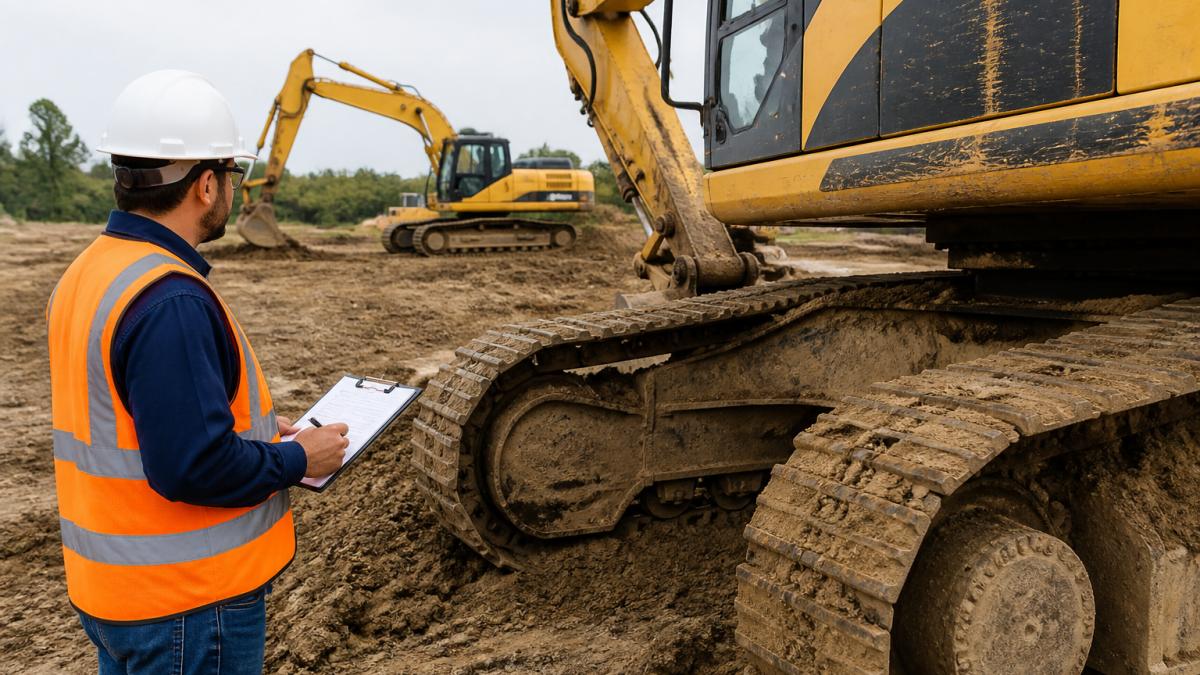
Repair costs, downtime, and lost productivity are factors to consider when evaluating whether to replace construction equipment. Here is how to assess them.
The three-signal repair-versus-replace framework
Consider repair frequency, downtime hours, and remaining service life when evaluating a high-hour machine.
The triggers worth tracking in your operating records
- Repair spend climbing month over month on the same unit
- Downtime hours per machine per month rising while utilization holds
- Operator complaints about controls, visibility, or cycle time
Use telematics to make the call measurable
Telematics and equipment data turn this from opinion into a report. Fleet management platforms commonly surface idle time, fault codes, utilization percentage, and fuel burn per hour. Pull a monthly report per machine and compare it against the same machine’s own prior quarter, not against the fleet average, which hides the outliers. Supervisors who log hours and failures can spot a machine trending wrong before it strands a crew.
Why the timing matters more than the trigger
Always Capital’s equipment financing is built for exactly this moment: approvals in as little as two to four hours, so a machine identified on Monday can be in the fleet before the next phase starts.
New vs. Used Construction Equipment: Which Fits Your Fleet
New vs. used construction equipment is a cash-flow question as much as a mechanical one. New machines bring warranty coverage and current emissions technology. Used machines bring lower purchase cost and faster availability.
The catch is resale value and depreciation. A new unit loses value fastest in year one. A used unit has already absorbed that drop.
Here’s how the trade-offs stack up:
Factor | New Equipment | Used Equipment |
|---|---|---|
Purchase cost | Higher | Lower |
Depreciation curve | Steep early | Flatter |
Warranty | Full coverage | Limited or none |
Availability | Order lead times | Often immediate |
Parts and dealer support | Current models | Varies by age |
The pros and cons of financing used heavy equipment are worth a look before committing either way.
Total Cost of Ownership: Purchase Price, Fuel, Maintenance, and Downtime
Total cost of ownership can include purchase price, fuel, maintenance, repairs, downtime, transport, and storage. A side-by-side comparison can help organize these factors.
Build the comparison on five lines
Put the incumbent machine and the candidate replacement in two columns and compare them line by line over the same ownership window, typically the length of your financing term:
APPLY NOW AND GET YOUR BUSINESS PRE-APPROVED FOR FINANCING TODAY ! →
Cost line | Incumbent machine | Candidate replacement |
|---|---|---|
Acquisition or remaining book value | Already owned | Purchase price financed |
Fuel per hour | Rising above its own baseline | Current engine technology |
Maintenance and repairs per year | Climbing with hours | Warranty-covered early years |
Downtime hours per year | Rising | Lower on a newer unit |
Productivity per hour | Declining cycle times | Better-matched to the job |
Fuel efficiency is a real line item, not a brochure claim
Fuel efficiency separates machines that look identical on the lot. A unit burning more per hour quietly drains the project budget across a season. Track fuel per hour on your own jobs rather than trusting the spec sheet, the same model can burn very differently depending on application, operator, and attachment. Over a full season, the gap between a tired unit and a current one shows up clearly in your fuel records.
Maintenance, repairs, and the reliability premium
Maintenance costs and repair costs follow the same logic: budget machines can cost more in parts over five years than a better-built unit costs up front. Reliability and durability deserve real weight. Ruggedness isn’t a brochure word when a breakdown stalls a pour. When you compare, ask your service manager for the parts and labor history on the incumbent and a realistic first-year service estimate on the candidate. That is the honest comparison.
Downtime is the silent line item
Downtime rarely appears on an invoice, which is why owners underestimate it. Reducing downtime for construction equipment pays for itself faster than most owners expect, because a stalled crew still burns labor, schedule, and penalty exposure. Put a number on a downtime hour, crew cost plus schedule impact, and multiply it by the hours the incumbent lost last year. That figure belongs in the comparison table.
Resale value closes the loop
A new unit loses value fastest in year one; a used unit has already absorbed that drop. Factor resale value into the comparison at the end of the ownership window, not just at the start. The net cost of ownership is acquisition cost minus resale value, plus fuel, maintenance, repairs, and downtime. That net figure is the one to compare.
Fund the upgrade without draining working capital
Always Capital offers up to 100% financing, terms from 24 to 84 months, fixed predictable payments, and deferred payment plans of 30, 60, or 90 days. The machinery itself functions as security to minimize outside collateral needs.
How Construction Equipment Productivity Drives Your Upgrade Decision
Construction equipment productivity is output per hour, per dollar, per operator. A faster cycle time on a loader or excavator compounds across every shift. That’s why productivity, not price, should anchor the upgrade call.
Run the comparison honestly:
- Cycle times on your actual jobs
- Idle hours caused by machine limits
- Operator hours lost to workarounds
Operational efficiency gains from a better-matched machine often exceed the payment difference. Ease of use matters too: skilled operators get more from a machine built for the task, and operator training goes further on equipment that fits the work.
Workplace safety and accident prevention belong in this math. Older machines with worn controls and poor visibility raise risk on site.
Construction Equipment Financing: Speed, Terms, and 100% Funding
Always Capital offers up to 100% financing, terms from 24 to 84 months, and fixed, predictable payments.
Speed is the differentiator. Fastest heavy equipment financing same day approvals let a reader who needs speed apply through a page built for it. Always Capital delivers approvals in as little as two to four hours, with same-day equipment financing available. Soft credit pulls only, so pre-qualifying doesn’t hurt your credit. All credit types are accepted, and the application process is digital and lean.
Deferred payment plans of 30, 60, or 90 days are available. Auction financing pre-approvals are available.
Always Capital offers financing for excavators, skid steers, bulldozers, loaders, dump trucks, and daycabs, including older equipment with no age or mileage restrictions.
Get Pre-Approved for Heavy Equipment Financing with Always Capital
Always Capital offers an application-only tier up to $500,000 without requiring extensive company financial statements, and funding capacity up to $5 million. Equipment financing pre-approval can be secured quickly through a streamlined digital application. Businesses under two years old can access up to $150,000. All credit profiles are accepted.
Frequently Asked Questions
How do you know when it is time to upgrade construction machinery?
Track operating records for repair frequency and downtime hours. Always Capital uses soft credit pulls to evaluate initial options.
Should a construction business buy new or used equipment?
The right choice depends on your project pipeline and how many hours per year the machine will run. Compare the factors relevant to your business before deciding.
How can upgrading construction equipment improve productivity?
Newer machines typically cycle faster, burn less fuel per hour, and need fewer repair stoppages, so more of every shift goes to billable work. Telematics on late-model units show utilization and idle time, which helps supervisors redeploy equipment where it earns the most. Skilled operators also adapt faster to modern controls, reducing training time. The result is higher operational efficiency across the fleet and more competitive bids on larger contracts.
What should contractors consider when financing construction equipment?
Look at approval speed, documentation requirements, term length, and whether the provider accepts all credit types. Always Capital offers verbal or conditional approvals in as little as two to four hours, an application-only tier up to $500,000 without requiring extensive company financial statements, and up to 100% financing with terms from 24 to 84 months. The application process uses soft credit pulls. Deferred payment plans of 30, 60, or 90 days are available.
Equipment doesn’t get cheaper while you wait, and a stalled machine never waits for a convenient moment. Always Capital funds excavators, dozers, loaders, skid steers, dump trucks, and daycabs with approvals in two to four hours, up to 100% financing, and terms from 24 to 84 months. Get pre-approved with Always Capital and put the next machine to work this week.
