
Table of Contents
- What Equipment Financing Is and How It Works
- Equipment Financing Requirements: What Lenders Actually Look At
- The Equipment Financing Application: Step-by-Step Preparation
- Equipment Financing Approval Time: What to Expect and How to Speed It Up
- Used Equipment Financing and Financing for Older Trucks
- Comparing Your Options: Buying With a Loan, Leasing, or Paying Cash
- Frequently Asked Questions
Last Updated: October 4, 2026
What Equipment Financing Is and How It Works
Equipment financing is a business funding arrangement in which a lender advances capital to cover machinery, vehicles, or technology, and the acquired asset secures the agreement.
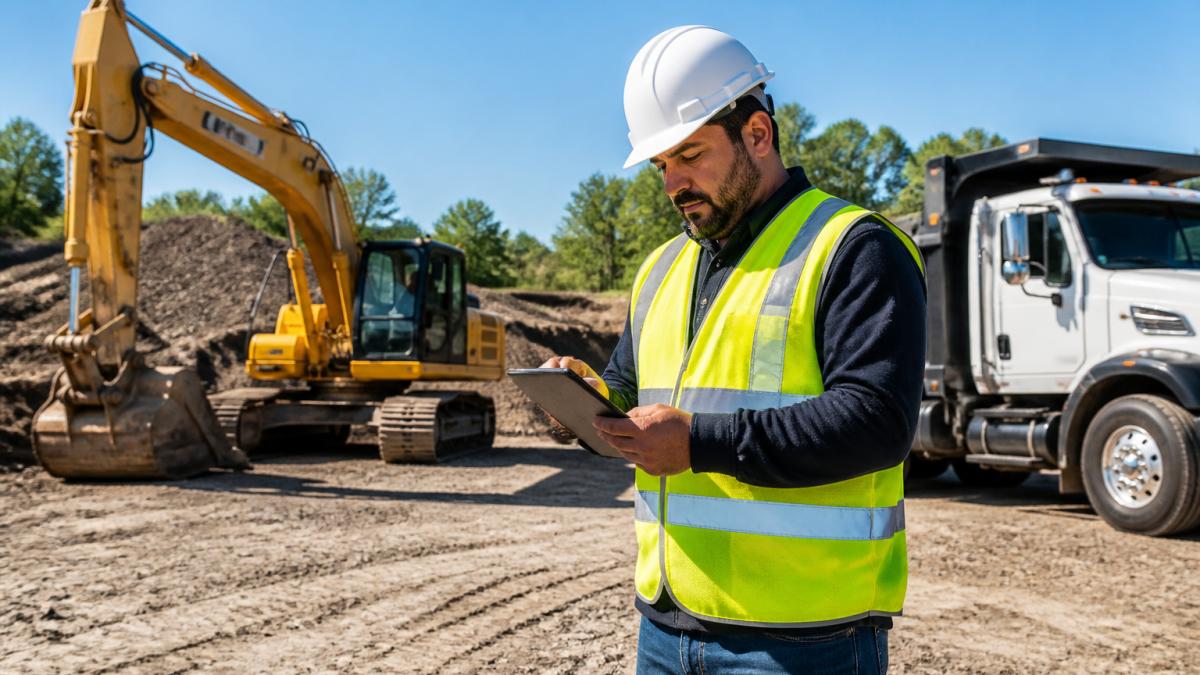
The mechanics are straightforward: a business selects the machine, truck, or technology it needs, submits an application, and receives a decision. The asset acts as collateral, which is why lenders can approve businesses a traditional bank might decline.
How the Process Moves From Application to Funding
Most equipment financing follows a predictable path:
- Apply with basic business information
- Receive a soft-pull review that does not affect credit
- Get a decision, often the same day
- Sign documents and take delivery of the equipment
- Begin repayment on a fixed schedule
That speed matters when a job is on the line.
Equipment Financing Requirements: What Lenders Actually Look At
Lenders weigh three things above all else: credit history, time in business, and revenue. Understanding these equipment financing requirements before applying is the difference between a same-day approval and a drawn-out back-and-forth. Credit history shows how a business has handled past obligations, time in business signals stability, and revenue demonstrates the capacity to carry a fixed payment. Weak performance on one can often be offset by strength on the others, especially when the equipment itself is a strong asset.
Credit History, Time in Business, and Revenue
A common mistake is assuming a rough credit score ends the conversation. It does not. Many lenders, including Always Capital’s application-only equipment financing, work with all credit types and accept every application. The real question is not whether a business qualifies to apply, but which structure fits its profile.
- Established businesses with clean credit often access the broadest terms
- Younger companies can lean on the strength of the equipment and the deal
- Challenged credit is workable when the asset and cash flow support the request
How each factor is evaluated:
- Credit history. Lenders look at the pattern, not just the number: recent delinquencies, open judgments, and how current obligations are handled.
- Time in business. Two years is a common threshold for the widest programs, but businesses under that mark can still qualify when the equipment is the primary collateral and the deal is clean.
- Revenue. The lender is testing whether the business can carry a fixed payment through a slow month. Seasonal operators should be ready to explain the off-season.
Documents to Have Ready Before You Apply
A complete file is the fastest path to a decision. Gather these before the first call:
- Business legal name, structure, and formation date
- Ownership details and any registered DBA
- Equipment description: make, model, year, and condition
For smaller requests, many lenders run a soft pull and approve on the application alone. Larger requests may call for additional documentation, so ask upfront which tier the request falls into.
Common Application Mistakes and How to Fix Them
The single biggest mistake is applying for the wrong amount: requesting more than the equipment justifies slows underwriting, while requesting too little leaves a business short on working capital. Match the request to the asset and the job.
A second mistake is treating the application like a formality. Incomplete vendor details, mismatched business names, and vague equipment descriptions all trigger follow-up questions that delay a decision. Other patterns that stall clean files:
APPLY NOW AND GET YOUR BUSINESS PRE-APPROVED FOR FINANCING TODAY ! →
- Mismatched names. The legal name on the application must match the formation documents and the bank account.
- Stale vendor quotes. An expired quote the dealer cannot confirm forces a re-verification step.
- Vague equipment descriptions. “One excavator” is not enough. Make, model, year, and hours or mileage matter.
How to Strengthen a Thin File
Businesses with limited history or challenged credit are not out of options. A few practical moves improve the profile:
- Put more of the deal into the asset. A larger down payment or a shorter term reduces the lender’s exposure and often offsets a weaker credit file.
- Choose equipment with strong resale value. Late-model, well-maintained iron and low-mileage trucks are easier to approve because the collateral is easier to recover.
- Bring a co-signer or guarantor. A stronger second signature can carry a file that would otherwise be declined.
- Document the revenue the asset will generate. A signed contract or clear job pipeline shows the payment has a source.
- Start with a smaller request. A clean first agreement builds a payment history that supports larger requests later.
When the file is ready, financing pre approvals with Always Capital cover heavy equipment and commercial truck financing, all credit types are accepted, and every application is welcome.
The Equipment Financing Application: Step-by-Step Preparation
A clean equipment financing application is mostly about having the right details on hand. The application itself is short; the preparation behind it determines how fast it clears.
Start with the essentials:
- Business legal name and structure
- Time in business and ownership details
- Equipment description, including make, model, and year
Documents to Have Ready and Common Application Mistakes
The single biggest mistake is applying for the wrong amount. Requesting more than the equipment justifies slows underwriting. Requesting too little leaves a business short on working capital for the same project.
A second mistake is treating the application like a formality. Incomplete vendor details, mismatched business names, and vague equipment descriptions all trigger follow-up questions that delay a decision.
Equipment Financing Approval Time: What to Expect and How to Speed It Up
Equipment financing approval time is where lenders separate themselves. Some take days or weeks; others, like Always Capital, aim for decisions in two to four hours with application-only approvals available. Three factors compress the timeline:
- A complete application with no missing fields
- A clear equipment description tied to a real vendor quote
- A lender that runs a soft pull and does not require full financials for smaller requests
For businesses that need capital now, the difference between a two-hour decision and a two-week one is the difference between winning a contract and watching it go.
Used Equipment Financing and Financing for Older Trucks
Used equipment financing opens doors that new-equipment-only lenders close. Age and mileage are not automatic disqualifiers at every lender, and some, including Always Capital’s financing for older equipment and trucks, place no age or mileage restrictions on the assets they fund.
Asset Type | New Equipment | Used Equipment | Older / High-Mileage |
|---|---|---|---|
Approval difficulty | Standard | Moderate | Varies by lender |
Asset life remaining | Full | Reduced | Case by case |
Best for | Growth expansion | Cost-conscious buyers | Budget-focused operations |
Used machines stretch capital further: a well-maintained excavator or low-mileage day cab can deliver years of service at a fraction of the cost of new iron. The key is matching the asset’s remaining life to the repayment structure.
Comparing Your Options: Buying With a Loan, Leasing, or Paying Cash
Three paths dominate equipment acquisition: buying with a loan, leasing, and paying cash. Each affects cash flow, ownership, and flexibility differently. The table below is the starting point; the framework underneath settles the question.
APPLY NOW AND GET YOUR BUSINESS PRE-APPROVED FOR FINANCING TODAY ! →
Option | Ownership | Upfront Outlay | End-of-Term Position | Best For |
|---|---|---|---|---|
Equipment loan | Immediate | Lower, financed | Own the asset outright | Long-term asset use |
Equipment lease | At lease end | Lowest | Choose return, extend, or buy out | Short-cycle or upgrade-heavy needs |
Paying cash | Immediate | Highest | Own the asset outright | Strong reserves, no financing need |
An equipment loan builds ownership from day one while preserving working capital. A lease keeps payments flexible and suits businesses that rotate equipment often. Paying cash avoids financing but ties up reserves that could fund payroll, fuel, or the next job.
Lease-End Options and Contract Clauses Most Buyers Overlook
A lease is not one product. The end-of-term language changes what the agreement costs a business over its life, and it is the most negotiated part of the contract.
- Fair-market-value (FMV) lease. At the end of the term, the business can return the asset, extend the term, or purchase it at market value. This is the most flexible structure and the most common for equipment that holds value well, such as a late-model excavator or a low-mileage day cab.
- $1 buyout lease. The business pays a higher monthly amount throughout the term and then takes ownership for a nominal final payment. This suits assets a business intends to keep for their full service life.
- 10% buyout and other fixed-purchase structures. A middle path where the final purchase figure is set at signing rather than left to the market.
Three clauses deserve a close read before signing:
- Early termination. Most leases do not simply end when a business wants out; the contract typically requires the remaining payments or a defined payoff, so a lease only makes sense if the business is confident about the term length.
- Maintenance and who pays. An operating-style lease may bundle service; a finance-style lease usually leaves maintenance, insurance, and registration with the business. Confirm which party handles tires, fluids, and scheduled service on trucks.
- Excess wear and mileage. For trucks and trailers, return condition standards and mileage allowances determine whether a business owes anything at turn-in. Photograph and document the asset before return.
How to Choose Based on Your Cash Flow and Business Stage
The decision framework is simple once the business profile is clear:
- Tight cash flow, long asset life → finance with a loan and keep reserves for operations
- Frequent upgrades, seasonal work → consider a lease with a defined end-of-term path
- Deep reserves, stable demand → cash purchase may fit
Younger businesses and those with challenged credit often find financing keeps capital free for operations. The right answer is usually not one option across the whole fleet; it is the right structure per asset.
Asset-Level Eligibility: What Qualifies Across Industries
Almost any asset used in the operation of a business can be financed, but the categories differ enough to see them side by side.
- Construction: excavator financing, backhoe financing, skid steer financing, loader financing, dozer financing, tractor financing, and paver financing are all standard. These assets hold value well and are commonly financed new or used.
- Transportation and hauling: dump truck financing, day cab financing, and box truck financing cover the most common requests. Brand-specific programs exist for Caterpillar truck financing, Freightliner truck financing, Kenworth truck financing, Peterbilt truck financing, Mack Truck financing, Volvo Truck financing, Western Star truck financing, Isuzu truck financing, Hino Motors truck financing, Fuso / Mitsubishi Fuso truck financing, Ford truck financing, GMC truck financing, Chevrolet truck financing, and CNH Industrial / Case truck financing.
- Heavy equipment by manufacturer: financing Caterpillar Equipment, financing John Deere Equipment, financing Hitachi Equipment, financing Bobcat Equipment, financing Case Equipment, financing Doosan Equipment, financing JCB Equipment, financing Kobelco Equipment, financing Terex Equipment, financing Wacker Neuson Equipment, and financing Tanmar Equipment are all supported.
When a business is ready to move, financing pre approvals with Always Capital cover heavy equipment and commercial truck financing, all credit types are accepted, and every application is welcome.
Frequently Asked Questions
How hard is it to get equipment financing?
It is more accessible than many business owners expect. Lenders look at the equipment itself as collateral, which reduces the risk compared to unsecured business lending. Always Capital works with all credit types and accepts every application, so a past credit issue does not automatically disqualify you. Application-only approvals are available up to $500,000 with no financials required, and the process starts with a soft credit pull that does not affect your credit score.
What information do businesses need to apply for equipment financing?
For application-only approvals up to $500,000, you typically need basic business details, the equipment you want to finance, and a completed application. No bank statements or tax returns are required at that level. For larger financing amounts, additional documentation may be requested. Always Capital accepts all applications and offers pre-approvals so you know where you stand before committing to a specific piece of equipment.
Can a business finance used or older equipment?
Yes. Used equipment financing is a core part of what Always Capital offers, including financing for older equipment and trucks with no age or mileage restrictions. Whether you are buying a used excavator, a high-mileage dump truck, or a pre-owned skid steer, the equipment serves as collateral and the approval process works the same way as it does for new equipment. All applications are accepted regardless of the equipment’s age.
How quickly can an equipment financing application be reviewed?
Always Capital provides same-day approvals, with decisions in as little as two to four hours. The application uses a soft credit pull only, so there is no impact to your credit score while you wait. Once approved, funding can move quickly so you can secure the equipment before it sells. Having your equipment details and basic business information ready before you apply helps speed up the review.