
Last Updated: November 7, 2026
Quick Summary
Crane selection between new and used hinges on seven factors: purchase price, commissioning and maintenance costs, crane type fit, capacity verification, condition records, downtime risk, and financing structure. Used cranes cost less upfront but need re-commissioning and carry more repair risk, so model total ownership cost before deciding.
- The used construction equipment market is estimated at USD 132.67 billion in 2026, with cranes the highest-growth category at 6.42% CAGR.
- A used crane’s first two years of ownership carry the heaviest parts spend, then settle once deferred items are cleared.
- Verify the load test certificate and date, since OSHA requires rated load tests for new and altered cranes.
- Condition assessment beats age: a documented ten-year-old crane often outperforms a hard-run five-year-old unit.
- Always Capital finances new and used cranes with no age or mileage restrictions and approvals in as little as two to four hours.
Table of Contents
- New vs Used Construction Crane: The Comparison That Matters
- Purchase Price and Upfront Investment
- Maintenance, Repair, and Commissioning Costs
- Construction Crane Types and Applications: Match the Machine to the Work
- Crane Capacity and Job-Site Requirements: The Numbers That Rule Out a Machine
- Used Construction Crane Buying Checklist: What to Inspect Before You Sign
- Reliability, Downtime, and the Ownership Cost Nobody Budgets For
- Construction Crane Financing: How to Fund Either Choice
- Manufacturers and Dealers: Who Builds the Cranes You Will Compare
- Get Pre-Approved for Construction Crane Financing With Always Capital
- Frequently Asked Questions
New vs Used Construction Crane: The Comparison That Matters
The used construction equipment market is estimated at USD 132.67 billion in 2026, with cranes ranked as the highest-growth category at a 6.42% CAGR (Mordor Intelligence used equipment market analysis). That growth tells you something: buyers are actively weighing used versus new construction crane selection right now, and the decision is rarely about sticker price alone. Always Capital works with contractors making this exact call every week, and the pattern is consistent.
Below is a seven-factor framework for crane selection that separates a smart used purchase from an expensive mistake.
Purchase Price and Upfront Investment
Upfront cost is where used cranes win on paper, and usually in practice too. Pricing depends on the specific machine, its condition, and its configuration, so contact Always Capital or visit alwayscapital.com for current figures or a quote.
The trap is treating the lower upfront cost as pure savings. Every dollar not spent on the machine is a dollar exposed to the risks in the sections below. Model both numbers before deciding.
Maintenance, Repair, and Commissioning Costs
Commissioning is the quiet disadvantage of used equipment, and it is the line item most buyers underweight.
Maintenance and repair costs then diverge over time, and the divergence is predictable enough to model.
The cost picture also shifts by crane type, which is why a single maintenance estimate rarely fits:
- Mobile and rough-terrain cranes carry higher tire, axle, and travel-gear costs, plus transport between sites. Boom and outrigger inspection dominates the pre-purchase checklist.
- Crawler and lattice-boom cranes concentrate wear in tracks, rollers, idlers, and the boom sections themselves. Track undercarriage work is the largest single maintenance category on high-hour units.
- Tower cranes spread cost across erection, climbing, and dismantling, plus the structural and foundation work that goes with them. Used tower cranes need a close look at mast sections, slewing rings, and tie-in points.
- Overhead and gantry cranes concentrate cost in bridge and trolley drives, hoist gearing, runway rail alignment, and the electrical controls that govern duty cycle.
Parts availability is the multiplier on all of it. A well-supported model keeps wear parts on the shelf and shortens repair downtime; a discontinued model turns every failure into a parts-hunting project.
Always Capital finances both new and used cranes, including older, high-hour machines that other funders avoid, with no age or mileage restrictions. For the full picture on funding either choice, read the complete guide to crane finance, and for the broader equipment picture see heavy equipment financing and construction equipment financing.
However you weigh the numbers above, financing is usually the deciding factor. Always Capital funds both new and used cranes with flexible terms, so the right machine does not have to wait on cash flow. Visit alwayscapital.com to see current options.
Construction Crane Types and Applications: Match the Machine to the Work
Crane selection starts with the work, not the price tag. Mobile cranes suit short-duration jobs and site changes. Tower cranes fit long, fixed projects with heavy lift cycles. Overhead crane systems serve shop and yard lifting. Each type carries different duty cycle expectations, and a used unit’s remaining service life depends heavily on how hard it was worked.
For a deeper breakdown of matching machine to project, see this guide on how to choose the right crane for construction projects.
Crane Capacity and Job-Site Requirements: The Numbers That Rule Out a Machine
Load capacity and lifting requirements eliminate more cranes than budget ever will. A machine must meet the load chart at the radius and height the job demands, with margin for rigging and dynamics.
Watch out: buying a used crane that meets capacity on paper but fails a rated load test leaves you with a machine you cannot legally lift with.
Used Construction Crane Buying Checklist: What to Inspect Before You Sign
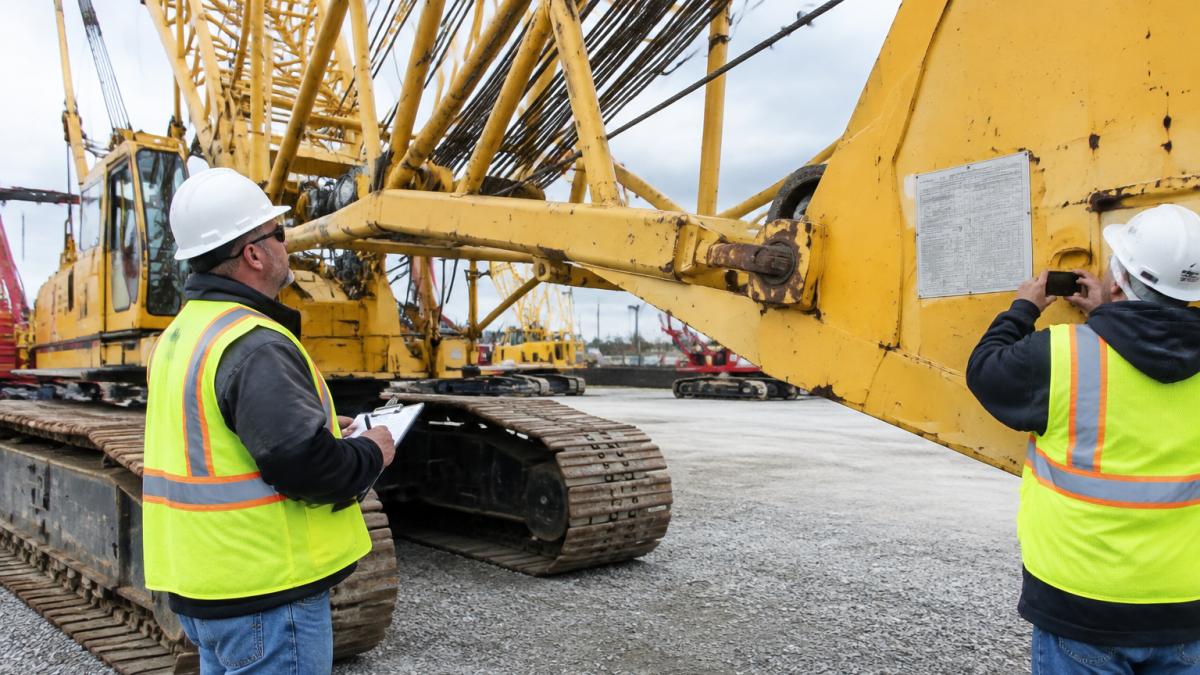
A used construction crane buying checklist is the single best defense against a bad purchase. Run every item before money changes hands:
- Verify the load test certificate and date
- Review full maintenance history and service records
- Inspect wire rope, sheaves, and boom for wear or cracking
- Check hydraulic systems for leaks and pressure loss
Condition, Age, and Inspection Records
Condition assessment beats age every time. A ten-year-old crane with documented service records and light duty cycles often outperforms a five-year-old unit run hard without maintenance history. Demand the records.
Weighing a private seller against a dealer? This comparison of private sellers vs equipment dealers covers which source fits different buyers. If you are leaning used, this article on securing financing for used construction equipment explains how funding works before you commit.
Warranty, Parts, and After-Sales Support
Warranty coverage is the clearest new-crane advantage. New machines come with manufacturer backing and dealer after-sales support. Used machines usually arrive as-is, so parts availability and service access become your responsibility to verify.
Check that wear parts are still stocked for the model. A bargain crane with discontinued components becomes a parts-hunting project.
Reliability, Downtime, and the Ownership Cost Nobody Budgets For
Downtime is the ownership cost that never appears on the invoice, and it is where the new-versus-used decision is actually won or lost.
A useful total-cost-of-ownership comparison lines up every category that moves over a defined ownership period, not just the purchase price:
- Acquisition, purchase price plus transport to site, permits, and any rigging or assembly needed to put the machine to work.
- Commissioning and pre-service, inspection, re-commissioning, safety verification, and any deferred maintenance on a used unit.
- Scheduled maintenance, inspection intervals, lubrication, filters, and consumables across the ownership period.
- Wear-part replacement, wire rope, sheaves, brakes, undercarriage, and hydraulic components, weighted toward the early years on used machines.
- Unscheduled repair and downtime, the cost of a failure, including idle crew, rented replacement capacity, and schedule slip.
The categories that separate a good used purchase from a bad one are commissioning, wear-part replacement, and unscheduled downtime, and all three are inspectable before money changes hands. That is why the buying checklist earlier in this article matters: a documented service history and a current load test are the best available predictors of downtime risk.
Duty cycle is the other half of the framework, and it is where a simple decision matrix helps. Ask four questions before choosing new or used:
- How hard will the crane work? A high-duty cycle on a demanding application favors new or a carefully vetted low-hour used unit. Light, intermittent duty tolerates a well-documented older machine.
- How long is the project? A short-duration job with site changes favors a used mobile crane that can be resold or redeployed. A long, fixed project favors a machine with the remaining service life to finish it.
- How much downtime can the schedule absorb? If a failure stalls a critical path, the reliability premium on a new crane is easier to justify. If there is slack and backup capacity, a used crane’s lower capital outlay wins.
- What is the load profile? Near-capacity lifts at long radius accelerate wear and raise the cost of getting the capacity question wrong.
Watch out: buying a used crane that meets capacity on paper but fails a rated load test leaves you with a machine you cannot legally lift with, and that risk belongs in the downtime model, not just the inspection list.
Always Capital finances new and used cranes alike, with approvals in as little as two to four hours and up to 100% financing, so a strong used-crane deal does not stall for lack of working capital.
Steps to reduce downtime for construction equipment belong in the buying decision, not after the first breakdown. Reliability is a function of condition and maintenance discipline, and both are inspectable before purchase. Always Capital finances both new and used cranes, including older, high-hour machines, with approvals in as little as two to four hours and up to 100% financing that keeps working capital free for the pre-service and backup-capacity costs this framework surfaces. For the full funding picture, read the complete guide to crane finance, and for the wider fleet see heavy equipment financing, excavator financing, and dump truck financing.
Construction Crane Financing: How to Fund Either Choice
Financing shapes the new-versus-used math more than most buyers expect. Always Capital finances both new and used cranes, including older, high-hour machines that other funders avoid, with no age or mileage restrictions. Approvals arrive in as little as two to four hours, and up to 100% financing preserves working capital for operations.
For the full picture, read the complete guide to crane finance covering options and approval timelines.
Factor | New Crane | Used Crane |
|---|---|---|
Upfront cost | Higher | Lower |
Warranty coverage | Full | Usually none |
Maintenance costs | Low early | Higher over time |
Downtime risk | Lower | Higher |
Parts availability | Strong | Verify first |
Financing flexibility | Standard | Asset-based options |
Manufacturers and Dealers: Who Builds the Cranes You Will Compare
Brand matters for a practical reason: a well-supported model keeps parts available and can help hold resale value. Always Capital finances new and used heavy equipment, including cranes, and evaluates the asset on its utility. See excavator financing, dump truck financing, and heavy equipment financing for more.
Get Pre-Approved for Construction Crane Financing With Always Capital
The hardest part of used versus new construction crane selection is rarely the machine. It is funding the right one without draining the business. Always Capital exists to remove that friction.
Always Capital offers application-only approvals up to $500,000 without extensive financial statements, soft credit pulls, and financing options for all credit types.
Get pre-approved with Always Capital and put the right crane on your next job.
The decision comes down to utilization, condition, and cash flow. Always Capital funds either path with approvals in as little as two to four hours, up to 100% financing, and no age or mileage restrictions on the equipment. Get started with Always Capital and add crane capacity without stalling your working capital.
Always Capital specializes in construction crane financing for new and used equipment, with no age or mileage restrictions. Approvals arrive in as little as two to four hours, with up to 100% financing and application-only approvals up to $500,000 available through a soft credit pull.
Frequently Asked Questions
What should contractors inspect before buying a used crane?
Start with the load test record. A used unit should carry documentation of its most recent load test. Then review service records and maintenance history, check the wire rope and boom for wear, confirm the hour meter against the paperwork, and verify the load chart matches the configuration you need. A crane-specific pre-purchase inspection by an independent inspector is worth the cost before you commit, especially on high-hour machines.
When does buying a new construction crane make more sense?
New makes more sense when utilization is high and steady, when the machine will run a demanding duty cycle for years, and when warranty coverage and parts availability protect your schedule. A new crane also brings current technology and the exact configuration your job-site requirements demand. If downtime would stall a multi-year contract, the reliability premium of new equipment is easier to justify than the lower purchase price of a used unit.
Can a used crane handle the same work as a new crane?
A well-maintained used crane can meet the same lifting requirements as a new one if its load capacity, configuration, and inspection history line up with the job. The difference shows up in operating costs and risk: commissioning costs, repair frequency, and parts availability tend to be less predictable on older machines. Match the crane to the duty cycle first, then weigh condition against price.
What financing options are available for used and new construction cranes?
Financing for construction cranes covers both new and used units, including machines with no age or mileage restrictions. Always Capital offers up to 100% financing, application-only approvals up to $500,000, and decisions in as little as two to four hours with a soft credit pull. Terms run from 24 to 84 months, and deferred payment plans of 30, 60, or 90 days help bridge the gap before a new crane starts earning.
