
Table of Contents
- How Heavy Equipment Financing Works for Older Machines
- Why Age and Mileage Matter Less Than You Think
- Financing Used Construction Machinery: What Qualifies
- Getting Approved for Older Equipment Financing
- Common Mistakes That Slow Down Older Equipment Financing
- How Always Capital Finances Older Heavy Equipment
- Conclusion
- Frequently Asked Questions
Last Updated: September 21, 2026
How Heavy Equipment Financing Works for Older Machines
Yes, older heavy equipment can be financed. Age alone rarely blocks an approval. Lenders care more about the machine’s condition, its resale value, and the borrower’s ability to repay. This guide from Always Capital explains how heavy equipment financing works when the machine on the lot has some years on it.
Heavy equipment financing is a secured loan used to buy construction machinery, trucks, or other work equipment, with the machine itself acting as collateral. That structure matters for older iron. The lender can recover value if payments stop, so a well-kept 15-year-old excavator can qualify where an unsecured business loan would not.
Most buyers assume age kills the deal. It does not. A common mistake is walking away from a solid machine before ever asking a lender.
What Lenders Actually Evaluate
Underwriting looks at the whole picture, not one number. Four factors carry the most weight:
- Machine condition and hours: A maintained unit with service records beats a low-hour unit with no history.
- Current market value: Lenders review what comparable machines actually sell for today.
- Borrower credit profile: Payment history and business revenue both count.
- Collateral position: The equipment secures the loan, which lowers lender risk.
A loan-to-value ratio sets how much of the appraised value a lender will fund. Lower ratios mean the lender carries less risk, which widens approval odds on older units.
Condition and documentation decide more older-equipment approvals than the model year ever does. Bring records, not apologies.
Why Age and Mileage Matter Less Than You Think
A machine with 12,000 hours and full service logs often finances more easily than a neglected unit with 4,000 hours. Lenders price risk, and risk tracks maintenance, not the calendar.
Depreciation tells the same story. Heavy equipment loses value fastest in its first years, then the curve flattens. By the time a machine is a decade old, much of the drop has already happened. That flatter curve makes the remaining value easier to predict, which lenders like.
Trucks follow a similar pattern. A well-kept day cab or dump truck with higher mileage can still secure approval when the engine, frame, and body hold up.
Ask the seller for the full service file before you apply. Repair invoices, oil analysis reports, and parts records do more for an approval than a fresh coat of paint.
Financing Used Construction Machinery: What Qualifies
Financing used construction machinery covers far more than excavators. Most work-ready categories qualify for heavy equipment financing:
- Excavators, mini excavators, and backhoes
- Bulldozers, loaders, and skid steers
- Graders, pavers, and compactors
- Dump trucks, box trucks, and roll-off trucks
- Forestry and crawler equipment
- Tractors, day cabs, and paver units
The machine does not need to be new. It needs to be functional, insurable, and worth what the lender is advancing. Equipment with no age or mileage restriction opens the door to units other lenders skip, and Always Capital finances older heavy equipment and trucks on exactly that basis.
What separates a fast approval from a stalled one is not the category, it is whether the unit can be verified.
Inspection Requirements Before Funding
An inspection protects both sides, and on older machines it is the step that decides how much a lender will advance. Many lenders require a third-party review before releasing funds, especially on private-party deals. The inspector is usually an independent heavy-equipment appraiser or a mechanic certified on that machine class, not the seller, and not the dealer’s own shop.
A typical pre-funding inspection covers:
- Hour-meter verification. The inspector confirms the displayed hours match the machine’s actual wear pattern. Rolled-back or replaced meters are a common finding on older units.
- Structural review. Frame cracks, prior welds, boom and stick repairs, and ROPS condition are documented with photos.
- Hydraulics. Cylinder seepage, hose condition, pump noise, and contamination signs are noted.
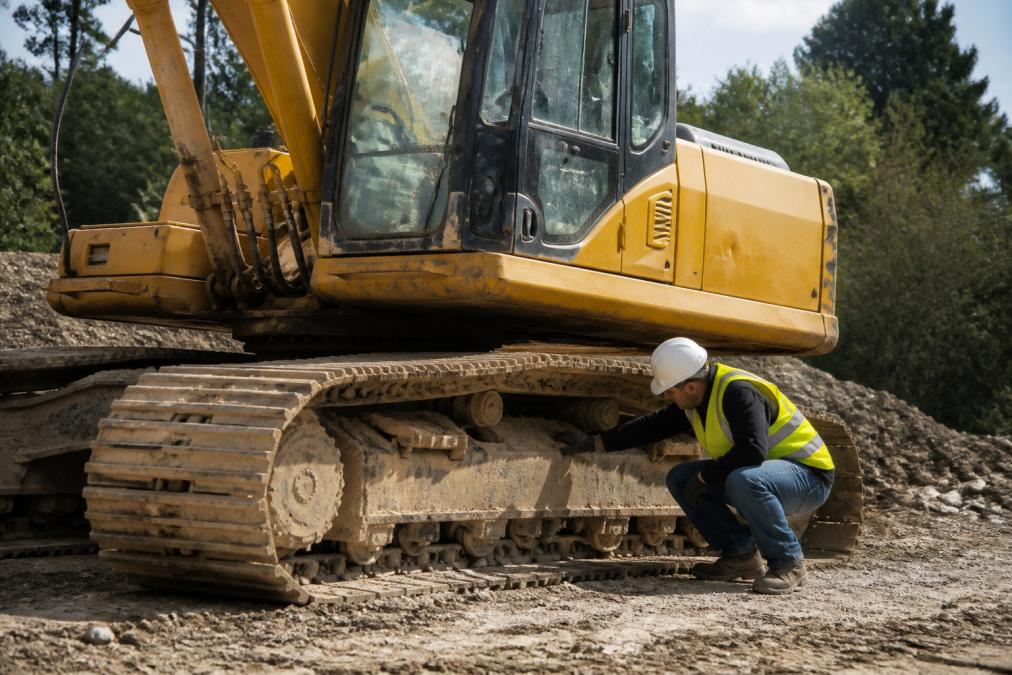
- Undercarriage. Track and roller wear on tracked machines is measured against remaining life, not just eyeballed.
- Tires and running gear. On trucks and loaders, tread depth, sidewall damage, and axle condition are recorded.
- Fluid and oil analysis. A sample can reveal internal wear that a visual check misses.
Skipping the inspection on a private-party purchase is the fastest way to overpay. A cracked frame found after funding becomes the buyer’s problem, not the seller’s. On older iron, the inspection is not a formality, it is the underwriting.
How Machine Age Shapes the Advance
Age does not disqualify a machine, but it does influence how much of the appraised value a lender will fund. A common pattern is that newer units may support a higher advance against appraised value, while machines past the ten-to-fifteen-year mark may be funded more conservatively.
Getting Approved for Older Equipment Financing
Approval starts with a short application and a soft credit pull. A soft pull lets a lender review credit without hurting the score, and Always Capital does soft credit pulls only so it does not hurt your credit. From there, the process moves fast when the paperwork is ready, many approvals land in 2 to 4 hours.
Have these items on hand:
- Machine details: year, make, model, hours, and serial number
- Photos of the unit from several angles, including the undercarriage and any prior repairs
- Service records or a completed inspection report
- Basic business information
- Title information and the seller’s payoff details, if a lien exists
Private Party vs. Dealer Purchase
Dealer purchases are simpler. The dealer provides title paperwork, service history, and often a warranty. Lenders know the chain of ownership and can move quickly.
| Factor | Dealer Purchase | Private Party Purchase |
|---|---|---|
| Paperwork | Dealer handles title transfer | Buyer verifies title and liens |
| Inspection | Often included | Buyer arranges and pays |
| Warranty | Common on late models | Rare, sold as-is |
| Price | Higher | Usually lower |
| Funding speed | Faster | Slower, more checks |
| Title risk | Dealer warrants clear title | Buyer must confirm clear title |
| Payment flow | Funds go to dealer | Funds may go through an escrow or title agent |
Maintenance and Repair Escrow
Older machines need work, and lenders know it. Setting aside a small reserve each month, a maintenance and repair escrow, covers the repairs a high-hour unit will eventually need.
Before you apply for heavy equipment financing, pull the machine’s title history and ask the seller for the last two years of repair invoices. A clean title search plus a documented service file is the strongest combination you can bring to a lender.
Auction Pre-Approvals
Auctions move fast, and a buyer who has to scramble for funding after the hammer falls usually loses the unit. Auction financing pre-approvals with Always Capital let you bid with funding already lined up, so the winning bid does not turn into a missed machine. The same inspection and title checks apply, but having the approval in hand first is what keeps an auction purchase from becoming a paperwork race.
Common Mistakes That Slow Down Older Equipment Financing
Slow approvals usually trace back to the same handful of errors. Fix these before applying:
- No service records. Lenders read missing history as hidden problems.
- Skipping the inspection. An uninspected machine invites a low appraisal.
- Vague machine details. Wrong hours or model numbers stall underwriting.
- Unclear title. A lien or missing signature stops funding cold.
- Waiting until the machine sells. Good units move fast; have financing ready first.
The strongest application includes machine photos, service records, and a clean title search. Assemble all three before you call a lender.
How Always Capital Finances Older Heavy Equipment
Always Capital finances older heavy equipment and trucks with no age or mileage restriction. That single policy changes what is possible for buyers who keep running into age cutoffs elsewhere.
Here is what the process looks like:
- Same-day approvals, often in 2 to 4 hours
- 100% financing options on qualifying deals
- Application-only approvals up to $500,000 with no financials required
- Soft credit pull so applying does not hurt your credit
- Flexible terms from 24 to 84 months
- Deferred payment plans of 30, 60, or 90 days
Conclusion
Older heavy equipment is financeable. Condition, documentation, and a lender who does not penalize age decide the outcome. Buyers who gather service records, arrange an inspection, and confirm clear title walk into underwriting with the strongest possible case.
Frequently Asked Questions
Is there an age limit for heavy equipment financing?
Many lenders set age limits, but Always Capital finances older equipment and trucks with no age or mileage restriction. What matters more is the machine’s condition, service history, and current market value. Older units with documented maintenance records and recent inspections are easier to finance than neglected newer machines. If you are wondering can I finance older heavy equipment, the answer is often yes when you work with a lender that does not impose blanket age caps.
Can I get financing for used construction machinery from a private seller?
Yes, financing used construction machinery from a private party is possible, but expect extra steps. Lenders typically require a title search, a lien check, and an independent equipment appraisal before funding. Private sales often lack dealer warranties, so an inspection report carries more weight. Always Capital works with all credit types and offers application-only approvals, which can simplify the process when documentation from the seller is limited.
What documentation is required for older equipment loans?
Most lenders ask for the machine’s serial number, year, make, model, hours or mileage, service records, and a purchase agreement or bill of sale. For private sales, a title search and inspection report are common. Always Capital offers application-only approvals up to $500,000 with no financials required, so you can get pre-approved without bank statements or tax returns. Larger requests may need additional documentation.
How does getting approved for older equipment financing differ from new equipment?
Getting approved for older equipment financing focuses more on condition, maintenance history, and resale value than on the machine’s age alone. Lenders may ask for an inspection, a title search, or a maintenance and repair escrow to protect against unexpected downtime. Always Capital uses a soft credit pull that does not hurt your credit and can deliver same-day approvals in two to four hours, so older equipment does not automatically mean a slower process.