
Table of Contents
- How Financing Used Heavy Equipment Works
- The Pros: Why Used Equipment Financing Makes Sense
- The Cons: Risks and Drawbacks to Consider
- Financing for Older Equipment and Trucks: What to Expect
- Heavy Equipment Auction Financing: A Strategic Option
- Getting Pre-Approved for Heavy Equipment Financing
- Heavy Equipment Loans vs. Leasing Used Machinery
- Frequently Asked Questions
Last Updated: September 19, 2026
How Financing Used Heavy Equipment Works
Financing used heavy equipment is an asset-backed lending arrangement where the machine itself serves as collateral, letting a business spread the cost of a purchase over time instead of paying the full amount upfront.
A lender reviews the machine’s appraised value, the borrower’s credit profile, and the intended use, then structures a loan against that asset. Because the equipment backs the deal, lenders can often approve applications that a conventional unsecured loan would decline.
A used excavator, dump truck, or skid steer has a measurable market value, and that value does the heavy lifting in the approval decision.
The Role of Equipment Appraisals and Collateral
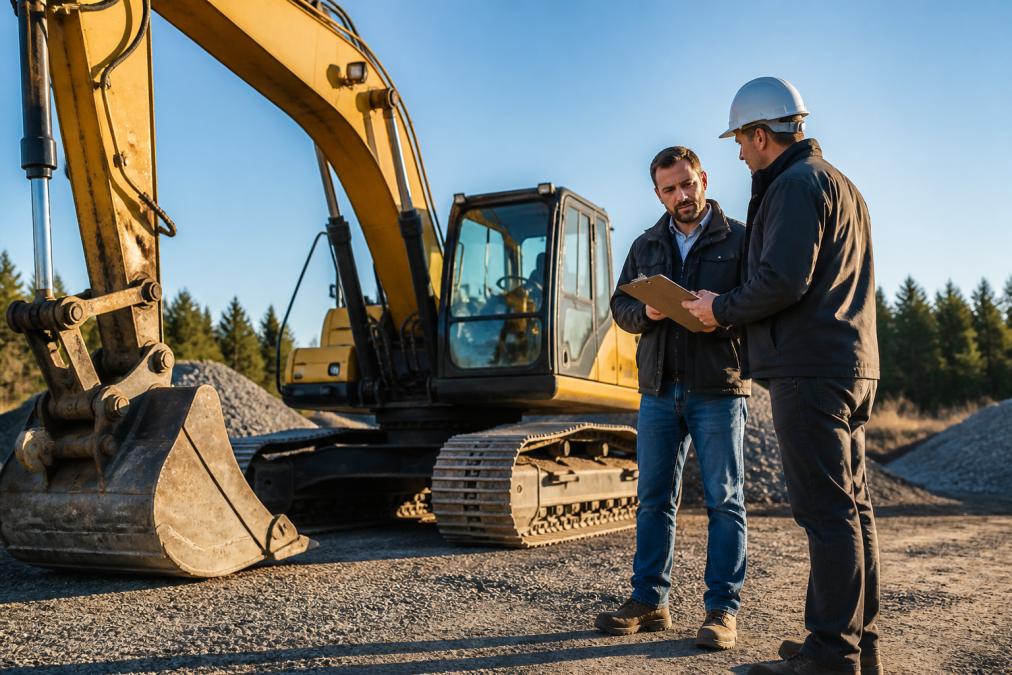
An equipment appraisal is a professional assessment of a machine’s current market value, condition, and remaining useful life. Lenders use it to set the loan-to-value ratio, which is the percentage of the appraised value they will finance.
If the borrower defaults, the lender can recover the machine and resell it. That recovery option is why used equipment deals often come with more flexible credit requirements than unsecured borrowing.
Appraisals weigh hours on the meter, service records, tire or track condition, and comparable resale values.
Ask for the appraisal report before signing anything. The numbers in it drive the loan-to-value ratio, and a low appraisal on a machine you already agreed to buy can leave you covering a larger gap out of pocket.
The Pros: Why Used Equipment Financing Makes Sense
The strongest argument for financing used heavy equipment is cash preservation. A new machine ties up capital a business may need for payroll, fuel, materials, and daily job costs.
Preserving Working Capital and Cash Flow Management
Working capital is the money available for daily operations after covering near-term obligations. Financing a used machine preserves that pool instead of draining it in a single purchase.
Building Equity and Avoiding Steep Depreciation
New equipment loses value fastest in its first years; a used machine has already absorbed that drop.
The Cons: Risks and Drawbacks to Consider
Financing used heavy equipment carries real risks. The two biggest are unpredictable repair costs and lender requirements that tighten as machines age.
Maintenance Expenses and Total Cost of Ownership
Total cost of ownership includes fuel, tires or tracks, hydraulic service, engine work, and downtime from unexpected breakdowns. The harder question is how to forecast those costs before you sign.
- Undercarriage (tracked machines): Typically the single largest wear cost on excavators and dozers. Inspect track shoes, rollers, idlers, and sprockets. A worn undercarriage can consume a significant share of the machine’s value to replace.
- Hydraulics: Look for weeping cylinders, contaminated fluid, and pump noise. A failing hydraulic pump on a mid-size excavator is one of the most expensive single repairs an owner will face.
- Engine and drivetrain: Check for blow-by, oil consumption, and transmission shift quality. Rebuilds on larger machines are major line items.
- Tires (wheeled machines): Loader and dump truck tires are a recurring cost that scales with job site conditions.
| Risk Factor | What It Looks Like | How to Manage It |
|---|---|---|
| Repair frequency | Unexpected hydraulic or engine failures | Budget a per-hour maintenance reserve |
| Downtime | Machine idle while parts arrive | Keep a backup unit or rental contact |
| Parts availability | Delays on discontinued components | Verify parts support before purchase |
| Resale value | Slower sale on high-hour machines | Maintain service records and clean titles |
| Undercarriage wear | Tracked machines nearing replacement | Inspect before purchase; factor into offer |
Skipping a pre-purchase inspection to save time is the most expensive shortcut in used equipment. A machine that looks clean can hide a failing undercarriage or a cracked frame, and those repairs can rival the purchase price.
Lender Requirements and Loan-to-Value Ratios
Loan-to-value ratio is the percentage of an asset’s appraised value a lender will finance; a higher ratio means less cash upfront.
A typical used-equipment appraisal weighs:
- Condition relative to age and hours: A 6,000-hour machine with clean records can appraise higher than a 3,000-hour machine that has been abused.
- Service documentation: Complete maintenance logs raise appraised value and improve approval odds.
- Tire or undercarriage life remaining: Lenders discount machines that will need major wear-item replacement soon.
- Comparable resale data: Recent auction and dealer sales of similar units set the ceiling.
- Title and lien status: A clean title with no outstanding liens is non-negotiable.
- Attachments and configuration: Standard configurations resell faster than custom setups, which affects the lender’s recovery assumption.
Before you commit to a machine, ask the seller for the service records and, if possible, the last appraisal. Walking into a lender with documentation already in hand shortens the approval timeline and often improves the structure you are offered.
Financing for Older Equipment and Trucks: What to Expect
Financing for older equipment and trucks is possible, and the range of acceptable machines is wider than many buyers assume. Age and mileage matter but are not automatic disqualifiers.
How Age Changes the Structure of a Deal
What changes with older equipment is how the deal is structured. A machine with 15,000 hours will not get the same terms as one with 2,000. Differences show up in four places:
- Term length: Lenders often shorten the repayment window on older assets so the loan does not outlast the machine’s useful life. A shorter term means higher monthly payments but less total exposure.
- Amount financed: The lender’s advance against appraised value usually tightens as age rises, because recovery on resale is less certain.
- Documentation: Older units often require more paperwork, service records, inspection reports, and sometimes a current appraisal, before approval.
- Collateral scrutiny: The lender will look harder at condition, title, and lien status on an older machine than on a late-model unit.
What Lenders Want to See on Older Units
Expect a closer look at condition and service history on older units. That scrutiny protects both sides: the lender’s collateral holds value, and the buyer avoids overpaying for a machine needing immediate work.
A practical preparation checklist for an older-machine purchase:
- Pull the service history. Even partial records beat none. If the seller has none, factor that into your offer.
- Get an independent inspection. A third-party mechanic’s report carries weight with lenders and protects you from hidden failures.
- Confirm title and lien status. A clean title is the fastest path to approval.
- Photograph the machine thoroughly. Lenders often approve faster when they can see condition without a site visit.
- Know the parts situation. A discontinued model with no parts support is a harder sell to any lender.
Planning an Exit Before You Sign
One of the most overlooked parts of financing older equipment is the exit. Most loans run for a defined term, and the machine may or may not have productive life left when the final payment clears. Either way, have a plan.
Common exit paths include:
- Sell the machine privately once the loan is paid off, capturing whatever residual value remains.
- Trade it in toward a newer unit with the same lender or dealer.
- Pay off early if the loan allows it and the machine has held value better than expected.
- Keep it running as a backup or secondary unit after the primary loan is retired.
Age alone rarely kills a used equipment deal. Condition, service records, the right lender, and a clear exit plan matter far more than the number on the hour meter.
Heavy Equipment Auction Financing: A Strategic Option
Heavy equipment auction financing solves a specific problem: auctions move fast, and buyers often need funds before the gavel falls.
Getting Pre-Approved for Heavy Equipment Financing
Getting pre-approved for heavy equipment financing turns a browsing buyer into a serious one, telling a seller, dealer, or auction house that funds are ready.
Heavy Equipment Loans vs. Leasing Used Machinery
Heavy equipment loans and business leasing options solve the same problem differently; the right choice depends on how long the business plans to keep the machine.
| Factor | Heavy Equipment Loan | Leasing Used Machinery |
|---|---|---|
| Ownership | Business owns the machine | Lender retains ownership (for business leasing options) |
| Upfront cost | Higher, builds equity | Can have lower upfront costs, no equity |
| End of term | Own the asset outright | Return or upgrade |
| Best for | Long-term operators | Project-based or rotating needs |
Frequently Asked Questions
What are the primary benefits of financing used heavy equipment?
Financing used heavy equipment preserves your working capital for payroll and operations. It allows you to acquire essential machinery like excavators or dump trucks without a large upfront cash outlay. You build equity with each payment, and because the equipment is used, you avoid the steepest part of the depreciation curve. This makes it a practical way to manage cash flow while expanding your fleet.
How does the age of used equipment affect financing options?
Age impacts lender requirements, loan term length, and the loan-to-value ratio they are willing to offer. Older machines may have shorter term options and require a larger down payment. However, some lenders specialize in financing for older equipment and trucks with no age or mileage restrictions, focusing instead on the machine’s condition and your business’s creditworthiness.
What types of heavy equipment are eligible for financing?
Most types of heavy equipment are eligible, including excavators, bulldozers, wheel loaders, skid steers, backhoes, motor graders, and compaction equipment. Commercial trucks like dump trucks, daycabs, and box trucks are also commonly financed. Whether you are looking at heavy equipment auction financing or a private sale, lenders will typically evaluate the machine’s appraisal value and condition.
What is the typical process for getting approved for heavy equipment financing?
The process usually starts with getting pre-approved for heavy equipment financing, which gives you a clear budget. You then find your equipment, provide the lender with details like the make, model, and year, and they will verify the machine’s value. Many lenders offer application-only approvals up to a certain amount, with funding available in as little as a few hours for qualified businesses.