

Table of Contents
- Why Paving Companies Choose Specialized Equipment Financing
- Types of Paving Equipment You Can Finance
- The Equipment Loan Approval Process for Paving Businesses
- Financing Older Construction Equipment: What to Know
- Heavy Equipment Leasing for Paving Contractors vs. Buying
- Fast Equipment Financing for Paving Fleets: How It Works
- Managing Seasonal Cash Flow with Flexible Payment Plans
- Conclusion: Upgrade Your Paving Fleet Today
- Frequently Asked Questions
Last Updated: September 9, 2026
Why Paving Companies Choose Specialized Equipment Financing
Paving equipment financing is a specialized lending solution that helps contractors acquire asphalt pavers, milling machines, and support vehicles without draining working capital, and it is the exact paving equipment financing option that keeps fleets moving. It is structured around the equipment’s role in revenue generation, with a partner who understands seasonal workflows and the capital-intensive nature of paving projects.
Many paving contractors operate with tight margins between project payments. A single paver can represent a significant capital expenditure, and waiting for cash reserves can stall fleet expansion for years. Specialized financing bridges that gap by spreading the cost across the equipment’s useful life while preserving cash for payroll, materials, and bid bonds.
The distinction matters because paving equipment holds its value differently than other machinery. A well-maintained asphalt paver retains resale value that supports asset-backed lending structures, which is why specialized heavy equipment lenders can often offer more accommodating terms.
Types of Paving Equipment You Can Finance
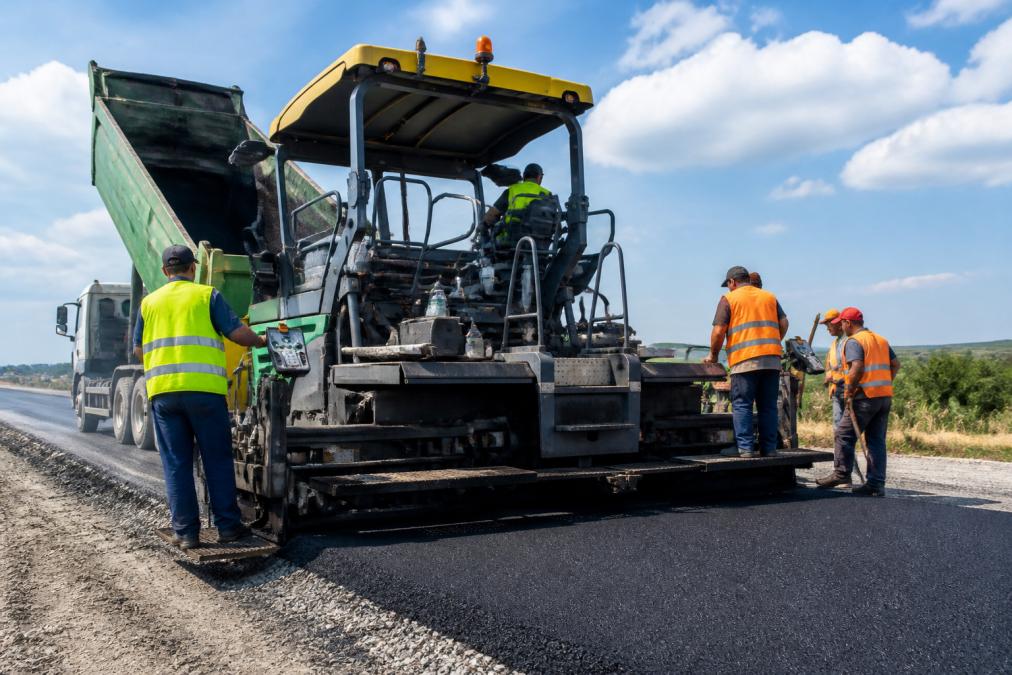
The range of financeable equipment extends well beyond the paver itself, covering the full spread of machinery required to complete a paving job.
Eligible categories typically include:
- Asphalt pavers and screed systems
- Compactors and rollers for base and finish work
- Cold planers and milling machines
- Support trucks including dump trucks and water trucks
- Material transfer vehicles and pavers
Asphalt Pavers and Compactors
The asphalt paver is the centerpiece of any paving operation. New and late-model pavers with advanced screed technology command premium pricing, but they also deliver the mat quality that wins highway and municipal contracts. Compactors, both vibratory and pneumatic, are equally critical for achieving density specifications.
Financing these units typically follows the equipment’s expected service life. Contractors upgrading from older iron often find the productivity gain justifies the investment, particularly with flexible loan terms from 24 to 84 months. Many lenders offer 100% financing options for qualifying equipment.
Milling Machines and Support Trucks
Milling machines, also known as cold planers, are essential for road rehabilitation projects. Support trucks, including dump trucks for hauling millings and fresh asphalt, round out the fleet. Bundling a milling machine with support vehicles into a single financing package simplifies fleet management. Always Capital offers dump truck financing and heavy equipment financing for these support vehicles, ensuring the entire spread can be covered under one roof.
Financing the entire spread together gives lenders a clearer picture of the revenue-generating capacity of the package, often resulting in better structuring than financing each piece separately.
The Equipment Loan Approval Process for Paving Businesses
The equipment loan approval process for paving businesses is typically faster and more asset-focused than traditional commercial lending. Because the equipment serves as collateral, lenders underwrite the deal based on the machine’s value and your business’s cash flow.
Most applications follow a similar path:
- Submit basic business information and the equipment details
- Complete a credit application, often with a soft pull that doesn’t impact your score
- Receive an approval decision based on the equipment’s value and your application
- Review loan terms and payment schedule
- Finalize documentation and receive funding
Many lenders offer application-only approvals up to certain thresholds, meaning no financial documents are required for smaller loan amounts. Always Capital provides application-only equipment financing approvals up to $500,000 with no financials, and approvals in as little as 2 to 4 hours. This speed matters when a used paver comes on the market or a project deadline requires immediate equipment expansion.
Your Credit-Repair-to-Approval Roadmap
Most paving contractors searching for ‘financing available for all credit types’ have had a credit stumble or two. The good news is that equipment lenders evaluate your file differently than a bank evaluating a signature loan. Here is a step-by-step roadmap to position your credit profile for approval.
Step 1: Pull your credit reports and dispute errors. Start with the three major credit bureaus. A surprising number of reports contain outdated judgments, duplicate collections, or accounts that belong to someone else. Disputing an error can lift your score more than any other single action.
Step 2: Address the ‘derogatory’ marks that matter most to equipment lenders. Lenders look at your payment history on installment loans more heavily than revolving credit. If you have a past-due installment account, bringing it current is a strong signal. If you have collections, focus on the oldest ones first.
Step 3: Build a two-year equipment payment history. If your credit is severely damaged, consider financing a smaller, lower-cost piece of equipment first, such as a used skid steer or a service truck. Making 12 to 24 months of on-time payments builds a track record that lenders can see, putting you in a far stronger position to finance the primary paver or milling machine.
Step 4: Prepare your ‘lender-ready’ equipment file. While your credit score is a factor, the equipment itself is the primary collateral. Assemble a file with the year, make, model, hours or mileage, and any maintenance records. A professional appraisal or a dealer’s inspection report can also strengthen your file.
Step 5: Be ready to explain your story. A brief, honest explanation of past credit issues, whether it was a slow season, a medical issue, or a customer that didn’t pay, goes a long way. Showing that the issue was temporary and that your current project pipeline is solid demonstrates that you are a reasonable risk.
Documentation Requirements: What to Have Ready
While application-only approvals are available up to $500,000, having the following documents ready can speed up the process for larger fleet expansions:
- Business verification: Your legal business name, address, and EIN
- Equipment details: Year, make, model, VIN or serial number, and hours or mileage
- Proof of insurance: A quote or current policy for the equipment
- Banking information: For setting up automated payments
- Dealer or seller information: For purchase order or invoice verification
Having these items ready before you apply can shave days off the funding timeline. When a used paver is on the market, the contractor who can submit a complete file first is the one who gets the machine.
Financing Older Construction Equipment: What to Know
Financing older construction equipment presents unique challenges, but it is far from impossible. Many lenders impose strict age and mileage caps, making it difficult to finance a 10-year-old paver or a high-mileage dump truck. For paving contractors who know their equipment, buying used can be a strategic financial decision.
Older equipment often represents the best value for smaller contractors or those bidding on smaller commercial jobs. The key is finding a lender who evaluates the equipment’s condition and remaining useful life rather than applying an arbitrary age limit. Always Capital offers financing for older equipment and trucks with no restrictions on age or mileage, covering everything from excavator financing to bulldozer financing and more.
When financing older equipment, expect the loan term to be shorter than what you’d get on new iron. Lenders typically match the term to the equipment’s expected remaining service life. A well-documented maintenance history and a professional equipment appraisal can strengthen your application.
Heavy Equipment Leasing for Paving Contractors vs. Buying
Heavy equipment leasing for paving contractors offers a different set of trade-offs than purchasing. Leasing typically requires less capital upfront and provides access to newer equipment with lower monthly commitments. Buying builds equity and offers more flexibility in how you use and eventually sell the machine.
Option | Upfront Capital | Monthly Cost | Equipment Ownership | Best For |
|---|---|---|---|---|
Leasing | Lower | Generally lower | No, return at end | Contractors needing latest models |
Buying | Higher | Generally higher | Yes, full ownership | Long-term fleet building |
For paving contractors, the decision often comes down to use. If a paver will run continuously through a long season, buying typically makes sense. If you need a specific machine for a large project or want to avoid maintenance headaches on aging equipment, leasing can be the smarter play.
Always Capital offers business leasing options alongside traditional financing, giving contractors the flexibility to choose the structure that fits their cash flow. Leasing can also simplify budgeting with fixed, predictable payments.
Fast Equipment Financing for Paving Fleets: How It Works
Fast equipment financing for paving fleets is designed to get you approved and funded quickly, often within the same day. This speed is critical where equipment downtime directly translates to lost revenue and missed deadlines.
The process works by simplifying the underwriting. Instead of requiring extensive financial documentation, lenders focus on the application and the equipment’s value as collateral. For larger fleet expansions, lenders may request basic business financials but can still move quickly when the application is complete.
Always Capital structures fast equipment financing with approvals for excavator financing and other machinery in as little as 2 to 4 hours. The company also offers deferred payment plans of 30, 60, or 90 days, which is particularly useful for paving contractors who need equipment on site before the first project payment arrives. This structure helps bridge the gap between equipment acquisition and revenue generation.
Managing Seasonal Cash Flow with Flexible Payment Plans
Paving is inherently seasonal, and cash flow management is the difference between thriving and struggling through the off-season. Flexible payment plans align your equipment payments with your revenue cycle, reducing strain during slower months.
Deferred payment options are a practical tool for this. A 90-day deferral, for example, lets you put equipment to work immediately while pushing the first payment to a point where you’ve likely completed your first project or two. The deferred amount is typically spread across the remaining loan term.
Beyond deferrals, look for lenders who offer flexible loan terms. Longer terms of 60 to 84 months lower the monthly payment, which can be a lifeline for seasonal businesses. For a contractor who needs to preserve cash flow, the flexibility is often worth it.
The Seasonal Paving Cash Flow Calendar
A typical paving contractor in the northern half of the United States operates on a compressed calendar, with the season running from April through November and heaviest production in June, July, and August. In the South, the season can stretch longer, but summer heat and rain can still create unpredictable stoppages.
The Pre-Season (January – March): This is when you are bidding on work, securing bonds, and preparing equipment. You are spending money on maintenance and repairs, but no revenue is coming in. If you are financing equipment for the upcoming season, this is the time to negotiate a deferred payment plan.
The Peak Season (June – August): This is when your cash flow is strongest. Consider making additional principal payments during these months to reduce your total obligation and lower the risk of a tight off-season. Some lenders allow you to pay ahead without penalty.
The Wind-Down (September – November): As projects wrap up, you are collecting final payments and preparing for winter. This is the time to review your cash position and plan for the next season.
The Off-Season (December – February): This is the leanest time. Your equipment is parked, and your crew may be on reduced hours. This is where a true seasonal payment plan shines.
Payment Structures That Match Paving’s Revenue Cycle
Beyond simple deferrals, several payment structures can be tailored to a paving contractor’s cash flow:
- Seasonal Payment Plans: Some lenders offer a structure where you make higher payments during your peak season and lower (or no) payments during the off-season. This is a pre-agreed schedule that matches your revenue curve.
- Skip-Payment Options: A lender may allow you to skip one or two payments per year, typically during your slowest months. The skipped payments are either added to the end of the loan term or spread across the remaining payments.
- Interest-Only Periods: For a short period at the start of the loan, you may have the option to make payments that cover only the finance charge, not the principal. This is most useful when acquiring equipment just before the season starts.
- Annual Payment Structures: For very large purchases, some contractors negotiate a structure where they make a substantial payment after their biggest project of the year is completed.
Building a Cash Flow Buffer for the Off-Season
The most successful paving contractors treat their off-season as a planned event, not a surprise:
- Set aside a percentage of every project payment. A common pattern is to allocate a fixed percentage of each invoice to a dedicated equipment reserve account that covers your equipment payments during the winter.
- Time your equipment purchases strategically. If you are buying a paver in the fall, negotiate a deferred payment that starts in the spring. If buying in the spring, negotiate a structure that ramps up as your season peaks.
- Use a business line of credit as a bridge. A line of credit is not for buying equipment; it is for covering payroll and operating expenses during a slow month when a customer payment is late.
For contractors with established seasonal patterns, discussing a custom payment schedule with your financing partner is the best way to ensure your equipment payments never threaten your off-season survival.
Conclusion: Upgrade Your Paving Fleet Today
Upgrading your paving fleet doesn’t have to wait for a perfect balance sheet or a flawless credit history. Financing available for all credit types means that paving companies looking to upgrade equipment have realistic paths forward. The key is partnering with a lender who understands the equipment and the seasonal nature of the work.
Always Capital offers financing solutions built for paving contractors, including 100% financing options, application-only approvals up to $500,000, and loan terms from 24 to 84 months. With approvals in as little as 2 to 4 hours and deferred payment plans, the path to a new paver, milling machine, or support truck is more accessible than many contractors realize.
Frequently Asked Questions
What credit score is needed for paving equipment financing?
There is no single cutoff. Lenders that work with all credit types evaluate your overall business profile, including cash flow and time in operation. A lower score may affect the terms offered, but approval is still possible. Focus on presenting a clear picture of your revenue and the equipment’s role in your operations. This is why working with a provider that considers all credit types matters for paving contractors.
How fast can a paving company get approved for equipment loans?
Many providers offer fast equipment financing for paving fleets with approvals in as little as two to four hours. Application-only programs up to $500,000 often require no financial statements, which speeds the process further. To move quickly, have your business details, equipment information, and identification ready. Same-day decisions are common when these items are prepared in advance.
Can paving businesses finance older equipment or high-mileage trucks?
Yes. Some lenders impose strict age and mileage limits, but others offer financing for older construction equipment with no restrictions on age or mileage. This is useful when upgrading a fleet with proven, reliable used machines. The equipment itself serves as the collateral, so its condition and appraised value matter more than its model year.
What is the benefit of equipment leasing for paving contractors?
Leasing often preserves working capital for payroll and materials, which is critical given the seasonal nature of paving work. It also provides flexibility to upgrade equipment at the end of the lease term, keeping your fleet current without the burden of disposing of old machines. Lease payments are structured as a regular business expense, and terms can often be tailored to match your revenue cycle.