

Table of Contents
- What You’ll Need Before You Apply
- Types of Business Loans for Small Businesses
- How to Get Approved for Business Funding
- Heavy Equipment Financing for Construction and Trucking
- Financing Options for Challenged Credit
- Common Mistakes to Avoid During the Application Process
- Conclusion
- Frequently Asked Questions
Last Updated: September 17, 2026
What You’ll Need Before You Apply
Business loans for small businesses move fastest when the paperwork is already assembled. Lenders approve complete applications and stall on partial ones, so gather your documents first and apply once.
Before submitting anything, pull together these basics:
- Business bank statements from the last several months
- A current balance sheet and profit-and-loss statement
- Proof of business registration and ownership
- A short written summary of what the money will buy
That last item matters more than most owners expect: a lender wants a clear purpose, whether that is a new excavator, a dump truck, or working capital for a slow month.
Application-only approvals exist for smaller requests, which means some programs skip the full financial package entirely. Ask which track your request falls under before you spend a weekend assembling documents you may not need.
Types of Business Loans for Small Businesses
The right product depends on what you are buying and how long you need the money. The choice usually comes down to one question: does the purchase hold value on its own?
Term Loans and Lines of Credit
A term loan is a lump sum repaid over a fixed schedule, typically 24 to 84 months. It suits a one-time purchase like a vehicle or machine, where you know the amount up front and want a predictable payment.
A line of credit works more like a reserve. You draw what you need, repay it, and draw again. That flexibility fits seasonal businesses with uneven cash flow, a landscaping company covering payroll in a slow month, for example.
The trade-off is straightforward: term loans give you predictable payments, while lines of credit give you flexibility but require discipline. A line of credit used to buy a long-lived asset is a mismatch, and so is a term loan used to plug a two-week cash gap.
Equipment Financing and Commercial Vehicle Loans
Equipment financing ties the loan directly to the asset. The machine or truck serves as collateral, which often makes approval easier for businesses with limited credit history, because the review leans on the equipment’s condition and resale market as much as on your credit profile.
Commercial vehicle loans cover the same ground for trucks, trailers, and work vans. Always Capital finances excavators, backhoes, skid steers, loaders, bulldozers, tractors, pavers, dump trucks, daycabs, and box trucks. Age and mileage restrictions are not a barrier, which matters for buyers picking up older iron at auction.
Business Leasing
A lease is a use-of-asset arrangement rather than a purchase. You pay for the right to operate the equipment for a set period, then return, renew, or buy it out. Leasing suits businesses that cycle equipment regularly or want to preserve cash for operations.
The trade-off: leasing usually costs less up front but more over the full life of the asset if you end up keeping it. If you plan to run a machine for a decade, financing the purchase is typically the cleaner path.
Heavy Equipment Loans
A heavy equipment loan is a secured term structure built around machinery. It works well for contractors who need a specific unit, a loader, a paver, a bulldozer, and want to own it outright at the end of the schedule. Always Capital offers heavy equipment loans alongside term loans and leasing.
How to Choose Between Them
| If your situation is… | The usual fit is… |
|---|---|
| One-time purchase of a machine or truck | Equipment financing or a heavy equipment loan |
| Seasonal or uneven cash flow | A line of credit |
| Predictable expense, want to own the asset | A term loan |
| Want to preserve cash, cycle equipment often | Business leasing |
| Older equipment with high hours or mileage | Equipment financing, age and mileage are not a barrier |
| Buying at auction and need funds fast | Pre-approval before the auction closes |
Financing Options for Challenged Credit
A rough credit history does not automatically close the door. Equipment-backed lending changes the calculation, because the lender can recover value from the asset if the loan defaults.
Always Capital works with all credit types and runs a soft credit pull only, so an application does not damage your credit score.
Match the product to the asset, not to the amount. The businesses that get funded fastest pick the structure that fits what they are buying, then build the file around it.
How to Get Approved for Business Funding
Approval comes down to three things: a clear purpose, documented capacity to repay, and a complete application. What most guides skip is the sequence, the order in which a file actually moves, and where files stall.
The Five Stages of a Small Business Loan File
Stage 1: Pre-qualification. You share basic business details and the lender reviews them with a soft credit pull, which does not affect your credit score. Always Capital runs soft pulls only, so pre-qualification carries no downside for your credit.
What Underwriters Actually Weigh
Start with a realistic view of your finances. Lenders look at cash flow, existing debt obligations, and liquidity; a business carrying heavy existing debt faces more scrutiny, even with strong revenue.
Documents Lenders Typically Request
Most applications ask for a consistent set of items. Having them ready shortens underwriting considerably.
| Document | What It Shows | Typically Needed For |
|---|---|---|
| Bank statements | Cash flow and deposits | Most applications |
| Larger requests | ||
| Balance sheet and profit-and-loss statement | Assets and liabilities | Term loans |
| Proof of business registration and ownership | Business legitimacy | All applications |
| Purchase quote or invoice | Use of funds | Equipment and vehicle financing |
| Insurance certificate | Asset protection | Financed vehicles and machinery |
Never submit an application with estimated figures you cannot back up. If a lender finds a discrepancy between your stated revenue and your bank statements, the file gets flagged and the review restarts from the beginning.
Industry-Specific Nuances Most Guides Ignore
Generic advice treats every small business the same. Underwriting does not.
- Construction and trades. Seasonality dominates. A paving or excavation company may show strong summer deposits and thin winter ones, so lenders look at annualized cash flow rather than the most recent month. Deferred payment plans of 30, 60, or 90 days exist for this pattern.
- Trucking and logistics. The asset is the business. Lenders focus on the vehicle’s condition, its route or contract, and whether the truck can keep earning. Age and mileage restrictions are not a barrier with Always Capital.
- Retail and food service. Revenue is daily and card-heavy, so bank statements tell a clear story quickly. The weak point is thin margins, which makes existing debt obligations the deciding factor.
- Professional services and tech. Few hard assets to pledge, so the file leans on contracts, recurring revenue, and the owner’s track record. Equipment financing is usually not the right fit here.
Ask which track your request falls under before you assemble anything. Application-only approvals exist for smaller requests and can skip the full financial package entirely.
A Pre-Submission Checklist
Run through this before you hit submit:
- All requested documents gathered and labeled
- Bank statements and reported revenue tell the same story
- Existing debt obligations disclosed, not omitted
- Recent large deposits or withdrawals explained in writing
- Purchase quote or invoice attached for asset-backed requests
- One point of contact designated to answer underwriter questions
Each item turns a slow approval into a fast one. The fix is preparation, not persuasion.
Heavy Equipment Financing for Construction and Trucking
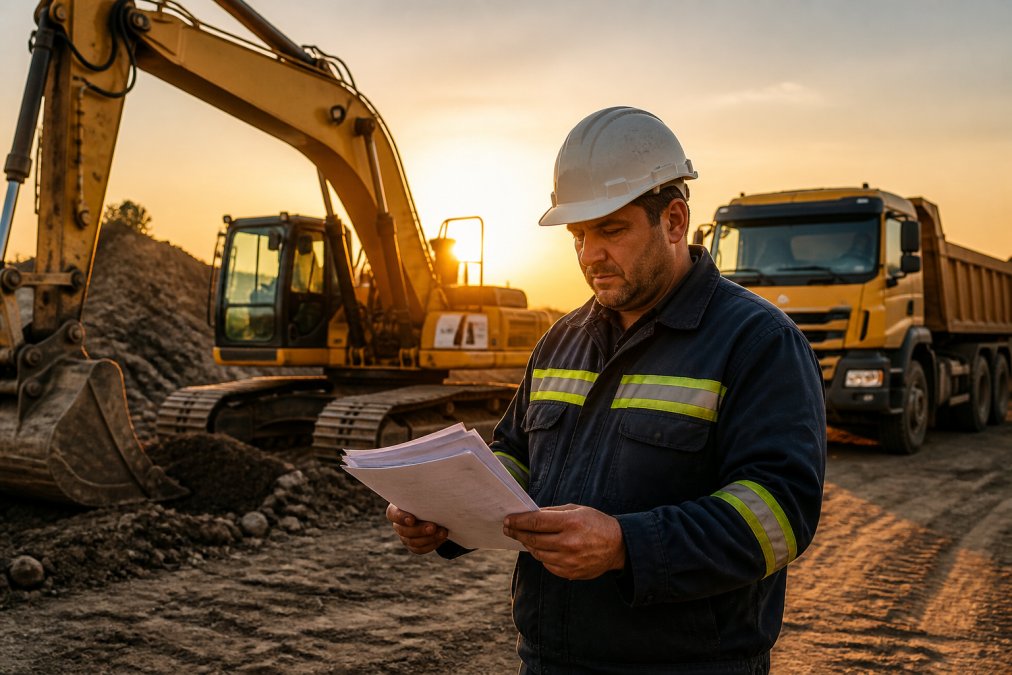
Equipment is where financing decisions carry the most weight, because the asset itself does much of the work. Heavy equipment financing lets a contractor acquire a machine without draining cash reserves, with the equipment serving as collateral.
Financing Options for Challenged Credit
A rough credit history does not automatically close the door. Equipment-backed lending changes the calculation, because the lender can recover value from the asset if the loan defaults.
Common Mistakes to Avoid During the Application Process
Speed kills more applications than bad credit does. Owners in a hurry skip steps, and the file comes back incomplete.
Watch for these:
- Applying to several lenders at once and losing track of which documents went where
- Requesting more than the business can comfortably repay
- Leaving out existing debt obligations, which surface later during underwriting
- Submitting bank statements that do not match reported revenue
- Failing to explain a recent large deposit or withdrawal
The businesses that get funded fastest are not the ones with perfect credit. They are the ones whose paperwork matches their story on the first pass.
Conclusion
Getting approved for business loans for small businesses comes down to preparation, the right product for the purchase, and a complete file. Owners who assemble documents first and match the loan to the asset move through underwriting far faster.
Frequently Asked Questions
What’s the easiest small business loan to get?
Equipment financing and application-only loans are often the most accessible for small businesses. Always Capital offers application-only approvals up to $500,000 with no financials required, and works with all credit types. The soft credit pull means your credit score is not affected during pre-qualification, making it a low-risk first step for businesses exploring business loans for small businesses.
What documentation is required to apply for a business loan?
Requirements vary by lender and loan amount. For application-only approvals up to $500,000, Always Capital does not require bank statements. Larger funding amounts may require financial statements, balance sheet, or cash flow analysis. Most lenders ask for basic business information, proof of revenue, and details about how you plan to use the funds.
How does equipment financing differ from a general business loan?
Equipment financing is secured by the machinery or vehicle you’re purchasing, which often makes approval easier and terms more flexible. Always Capital provides heavy equipment financing for excavators, dump trucks, bulldozers, and more, with no age or mileage restrictions. General business loans are typically unsecured and can be used for working capital, payroll, or expansion.
How quickly can a business receive funding for equipment?
Always Capital offers same-day approvals in as little as two to four hours. Once approved, funding timelines depend on the equipment type and dealer coordination. Many businesses receive funds within 24 to 48 hours after approval, allowing them to secure equipment at auction or from a dealer without delays that could cost them the purchase.