
Table of Contents
- What an Equipment Financing Broker Network Actually Does
- Commercial Vehicle Financing for Brokers: Trucks, Trailers, and More
- Dump Trucks, Daycabs, and Box Trucks Without Age or Mileage Limits
- How a Broker Actually Places a Commercial Vehicle File
- Vendor and Dealer Partnerships on the Vehicle Side
- Hard Collateral vs. Soft Collateral on Trucks and Trailers
- Funding Timelines on Commercial Vehicle Deals
- Risk Mitigation on the Vehicle Side
- Documentation Requirements for Commercial Vehicle Files
- Fast Equipment Financing Approval Process: What 2 to 4 Hours Really Means
- Equipment Leasing for All Credit Types: How Challenged Credit Still Gets Funded
- Heavy Equipment Financing Broker Network for All Applications: Equipment That Qualifies
- Excavators, Skid Steers, Bulldozers, and Loaders
- Forestry, Compactor, and Crawler Equipment
- Broker-to-Broker Syndication: How Large Equipment Deals Actually Get Placed
- Risk Mitigation for Brokers: Clawbacks and Fraudulent Applications
- The Technology Stack That Keeps Broker Deals Moving
- Regulatory and Licensing Compliance for Commercial Finance Brokers
- Choosing the Right Funding Partner on the Equipment Side
- How to Join a Broker Network and Submit Your First Application
- Conclusion
- Frequently Asked Questions
Last Updated: September 12, 2026
What an Equipment Financing Broker Network Actually Does
An equipment financing broker network is a group of lending partners and funding sources a broker can submit deals to through a single relationship, giving the broker access to a panel that competes for the same application.
The core value is simple: one application reaches many funding sources. That matters when a borrower has challenged credit, older equipment, or a thin financial history that would stop a single lender cold.
How Broker Networks Differ From Going It Alone
Working alone, a broker builds one relationship at a time, and each funding source has its own application, credit box, and underwriting quirks. A network compresses that work: one submission package moves through multiple funding sources at once, and the broker keeps the borrower relationship.
A broker network does not change the borrower’s credit profile. It changes how many funding sources see that profile, which is often the difference between a decline and an approval.
Commercial Vehicle Financing for Brokers: Trucks, Trailers, and More
Commercial vehicle financing for brokers covers the trucks and trailers that keep a fleet moving, dump trucks, daycabs, box trucks, and trailers. These are often the fastest deals to place because the collateral is easy to value and carries a title a funding source can perfect.
The catch most brokers hit early: age and mileage. Many funding sources cap both. A network that accepts older units without age or mileage restrictions opens deals that would otherwise die at the first submission.
Always Capital offers financing for commercial vehicles alongside heavy equipment, allowing a broker to place a mixed fleet through one relationship.
Dump Trucks, Daycabs, and Box Trucks Without Age or Mileage Limits
Older trucks are where a lot of deals stall. A 2012 dump truck with high mileage is a working asset, but it does not fit a standard credit box. Funding sources that ignore age and mileage look at the equipment’s condition and the borrower’s ability to service the agreement instead, keeping many working fleets financeable.
- Dump trucks, including roll-off configurations
- Daycabs and box trucks for regional routes
- Trailers and specialty commercial units
How a Broker Actually Places a Commercial Vehicle File
The borrower-facing story ends at “approved.” The broker-facing story is a sequence that determines whether the deal funds or stalls.
- Title and lien check. Confirm the unit is titled in the borrowing entity’s name, or that the entity on the application can encumber it. A mismatched title is the most common reason a commercial vehicle file gets kicked back after a verbal approval.
- Collateral valuation. Funding sources price the deal against the unit’s wholesale market, not the asking price on the lot. Submit a realistic value up front to avoid a re-trade.
- Use-case match. A daycab running regional routes is a different risk profile than a dump truck working a single quarry. Match the unit to the funding source whose box fits that use.
- Documentation package. Application, equipment details, and the borrower’s basic business information go in together.
- Stipulation clearance. Anything the funding source asks for after approval, proof of insurance, a signed delivery receipt, a copy of the title application, is a stip, and open stips turn a same-day approval into a two-week funding.
A broker who treats the commercial vehicle file as a title-and-collateral exercise, not a credit exercise, places more of these deals. The truck is the deal; the credit profile is the tiebreaker.
Vendor and Dealer Partnerships on the Vehicle Side
A large share of commercial vehicle volume arrives through dealerships, where broker networks earn their keep. A dealer who moves dump trucks and box trucks regularly does not want to run an application through five captive programs; the dealer wants one submission that reaches a panel.
That is the partnership model: the dealer keeps the sale, the broker places the financing, and the funding source gets a titled asset with a known resale market. Brokers who build a repeatable referral rhythm with two or three commercial truck dealers often find that channel outperforms cold outreach.
commercial vehicle and equipment financing programs for brokers
Hard Collateral vs. Soft Collateral on Trucks and Trailers
Commercial vehicles are hard collateral, a titled, movable asset with a documented resale market, which lets a funding source look past a challenged credit profile.
Soft collateral is the opposite: revenue, contracts, receivables, or the general strength of the business rather than a specific titled asset. Some commercial vehicle deals blend the two, particularly when the borrower is adding a unit to an existing fleet. A broker who can tell the difference knows which track a file belongs on before submitting it, cutting the back-and-forth that kills momentum.
| Collateral Type | What Secures the Deal | Typical Broker Use |
|---|---|---|
| Hard collateral | The titled truck or trailer itself | Single-unit purchases, older units, challenged credit |
| Soft collateral | Revenue, contracts, receivables, fleet performance | Fleet additions, multi-unit deals, established operators |
| Blended | Titled asset plus business performance | Growing fleets with mixed credit profiles |
Funding Timelines on Commercial Vehicle Deals
Commercial vehicle files tend to move faster than specialty equipment because the collateral is easy to value and the documentation is standard. Application-only tracks are where same-day decisions live; a complete submission can return a decision within a few hours.
What slows a vehicle deal down is almost never underwriting. It is the missing title document, the unsigned insurance certificate, or the borrower who goes quiet between approval and delivery.
Before you submit a commercial vehicle file, confirm three things: the title is clean and correctly named, the unit’s value is realistic against the wholesale market, and the borrower is reachable today. Those three checks eliminate most of the delay brokers blame on lenders.
Risk Mitigation on the Vehicle Side
Commercial vehicle deals carry two risks a broker should manage deliberately. The first is the clawback: if a deal funds and then unwinds, early default, a title that never transfers, a returned unit, the broker’s compensation can be reversed. The second is the fraudulent application: a borrower who inflates revenue, hides an existing lien, or submits a unit that does not exist. Always Capital supports brokers in mitigating these risks.
These risks are manageable with process. Verifying the title before submission, keeping a signed application on file, documenting the borrower’s stated use of the vehicle, and never releasing funds or promises before the funding source has issued a written approval are key steps.
Documentation Requirements for Commercial Vehicle Files
Most commercial vehicle submissions need the same core package: a completed application, the unit’s year, make, model, and mileage, the borrower’s basic business information, and proof the unit is titled to the borrowing entity. Application-only tracks stop there. Full-disclosure tracks add financial statements and a cash flow review, a different lane with more paperwork, not a rejection.
Getting the package right the first time is the difference between a same-day decision and a file that sits in a queue while the borrower shops elsewhere.
Fast Equipment Financing Approval Process: What 2 to 4 Hours Really Means
A fast equipment financing approval process means the borrower hears a decision the same day, often within two to four hours of a completed submission. That speed comes from application-only underwriting, where the funding source decides on the application itself rather than waiting on a full documentation package.
What slows deals down is rarely the lender. It is the missing document, the unsigned form, or the borrower who goes quiet for a day.
Submit the application, the equipment details, and the borrower’s basic business information in one package. Deals that arrive complete get worked first. Deals that arrive in pieces sit in a queue.
Application-Only Approvals Up to $500,000 With No Financials
Application-only programs approve deals based on the application, with no bank statements, no financial statements, and no full financial disclosure required. These programs typically cap at a set amount, making them a fit for single-unit purchases and smaller fleet additions. Above that threshold, the file shifts to a full underwriting track that reviews the balance sheet, cash flow, and existing obligations, not a rejection, just a different lane with more paperwork.
| Approval Track | Documentation | Typical Use |
|---|---|---|
| Application-only | Application and equipment details | Single units, smaller deals |
| Full disclosure | Financial statements, cash flow review | Larger fleet and multi-unit deals |
Equipment Leasing for All Credit Types: How Challenged Credit Still Gets Funded
Equipment leasing for all credit types works because the equipment itself secures the agreement. The funding source holds a claim on a hard asset, which lowers its risk and widens the range of credit profiles it can approve.
That does not mean every application is approved. It means the decision weighs the asset, the use case, and the borrower’s revenue alongside the credit profile. A borrower with storied credit and a clear revenue stream is a different file than one with no demonstrated income, and brokers who understand that distinction place more deals.
Do not promise a borrower an approval before the funding source has issued one. Quoting an outcome you cannot control damages the broker relationship and the borrower’s trust in the process.
Heavy Equipment Financing Broker Network for All Applications: Equipment That Qualifies
Heavy equipment financing through a broker network covers the machines that do the work: excavators, skid steers, bulldozers, loaders, and more. The equipment category matters less than its resale market, because collateral value drives how a funding source views the deal.
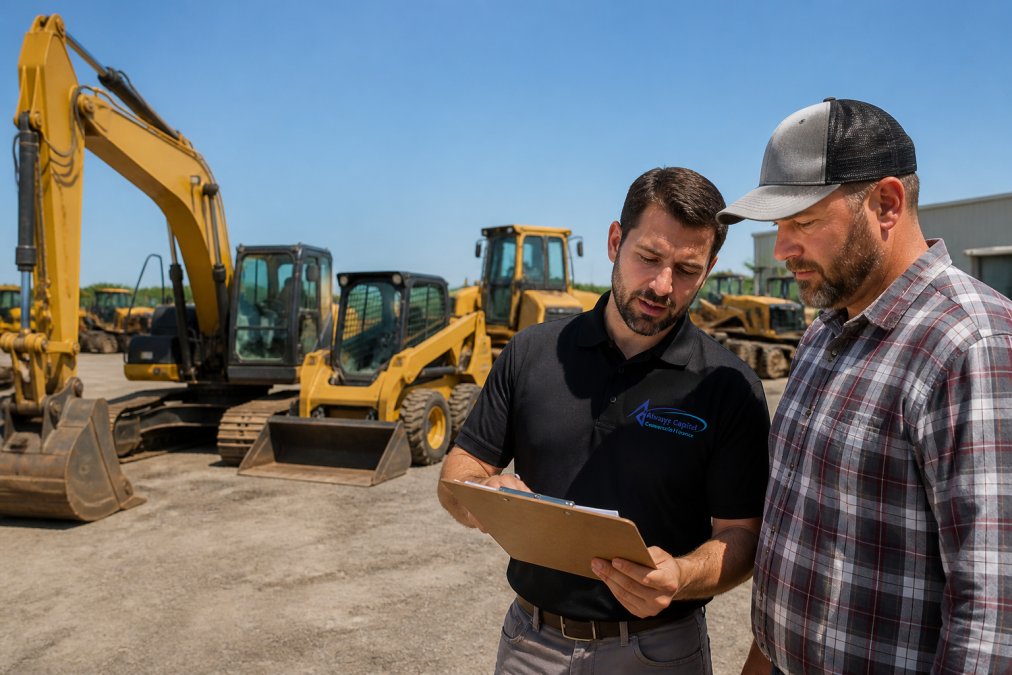
Machines with a strong secondary market are easier to place. Specialized units take more work but still get funded when the broker matches the deal to the right funding source.
Excavators, Skid Steers, Bulldozers, and Loaders
Earthmoving equipment is the backbone of most broker deal flow. Excavators, including mini excavators, skid steers, bulldozers, and wheel loaders hold value well and have active resale markets.
These units also tend to be the equipment borrowers need most urgently, which is why same-day decisions matter. A contractor who loses a week waiting on a decision may lose the job that justified the purchase.
Forestry, Compactor, and Crawler Equipment
Specialized categories take more placement work. Forestry equipment, compactors, and crawler units have narrower resale markets, so the funding source leans harder on the borrower’s profile.
Even here, condition and hours matter more than age. A well-maintained crawler with documented service history is a stronger file than a newer unit with no records.
Broker-to-Broker Syndication: How Large Equipment Deals Actually Get Placed
Most guides stop at the borrower. The part they skip is what happens when a single funding source cannot absorb the whole deal, a multi-unit fleet purchase, a specialized machine with a thin resale market, or a file that exceeds one source’s appetite.
That is where syndication comes in: splitting a single deal across two or more funding sources, each taking a portion of the exposure. The broker keeps one borrower relationship and one submission package, while the network routes the pieces to sources whose boxes each piece fits.
- Deal sizing. The broker confirms the total amount, the equipment schedule, and the borrower’s profile.
- Source matching. The network identifies which funding sources can take which portion, one source may take the earthmoving units, another the specialized machine, a third the commercial vehicles in the same fleet.
- Parallel submission. Each source receives the portion of the file it will underwrite, with a shared borrower package so the story stays consistent.
- Coordination. The broker tracks each source’s decision and stipulations, then sequences funding so the borrower gets the full package on one timeline.
- Closing. Each source documents its own portion; the broker confirms delivery and reconciles the deal.
Syndication is not a workaround for a weak deal. It is how a strong deal that exceeds one source’s appetite still gets fully funded without the broker losing the borrower to a competitor.
Risk Mitigation for Brokers: Clawbacks and Fraudulent Applications
Two risks sit on every broker’s book, and most guides never name them.
Clawbacks. When a deal funds and then unwinds, early default, a returned unit, a title that never transferred, the broker’s compensation can be reversed. The defense is process, not luck: verify the title before submission, keep a signed application on file, document the borrower’s stated use of the equipment, and confirm the unit exists and matches the schedule before funds move.
Fraudulent applications. Inflated revenue, hidden liens, phantom equipment, and borrowers who disappear after funding are the recurring patterns. Brokers who run a consistent intake, business identity confirmed, equipment verified, use case documented, catch most of these before submission rather than after.
The Technology Stack That Keeps Broker Deals Moving
Speed in this business is operational, not magical. The brokers who place the most deals are the ones whose back office does not leak time.
- CRM. Keeps every borrower, submission, and follow-up in one place, so no file goes cold because someone forgot to call back.
- Automated underwriting tools. Many networks route applications through pre-qualification logic that matches a file to the funding sources most likely to approve it, cutting wasted submissions.
- Digital document signing. E-signature platforms let a borrower sign an application, an insurance certificate, or a delivery receipt from a job site, removing the biggest cause of same-day approvals turning into week-long fundings.
- Document management. A shared folder structure for titles, applications, and equipment schedules means a stip can be answered in minutes rather than hunted down over hours.
None of these tools change the deal. They change how fast it moves, and in a market where the borrower has three other calls to make, speed is the product.
Regulatory and Licensing Compliance for Commercial Finance Brokers
Broker licensing is state-by-state, and the rules that apply to a commercial finance broker are not the same as those for a residential mortgage broker. Most commercial equipment finance activity is regulated at the state level, and requirements vary widely, some states require a commercial finance broker license or registration, others regulate specific activity such as lending, leasing, or loan brokering under a general business statute.
A broker operating across state lines should confirm three things before submitting deals in a new state: whether the state requires a commercial finance broker license or registration, whether the activity falls under a lending or leasing statute, and whether the funding sources on the panel are licensed to do business in that state. This is not legal advice, and the rules change, so brokers who operate in multiple states typically work with counsel to confirm current requirements.
Do not assume a license that works in one state travels to the next. Compliance is the broker’s responsibility, and a deal placed without the right registration can create problems that outlast the commission.
Choosing the Right Funding Partner on the Equipment Side
Not every funding source on a panel fits every deal. The brokers who place the most equipment files match three variables before submitting: the equipment category and its resale market, the borrower’s credit and revenue profile, and the deal size relative to the source’s appetite.
A source that excels at earthmoving equipment may pass on forestry units. A source that approves application-only deals up to a set amount may hand a larger fleet purchase to a full-disclosure track. Knowing which source fits which file is the difference between a network that works and one that wastes submissions.
equipment financing programs for brokers
How to Join a Broker Network and Submit Your First Application
Joining a broker network starts with an application and a short onboarding, then moves straight into deal submission:
- Apply to join the network and complete onboarding
- Review the funding programs and their approval criteria
- Collect the borrower’s application and equipment details
- Submit the complete package through the network
- Track the decision and relay terms to the borrower
- Close the deal and confirm funding and delivery
The first submission teaches the most. Pay attention to which funding source picks up the deal and why, because that pattern repeats across future files.
Conclusion
Placing equipment deals gets harder when a broker has one funding relationship and a borrower with a complicated profile. The network model solves that by putting one application in front of many funding sources at once.
Always Capital offers 100% financing options, application-only approvals up to $500,000 with no financials, same-day decisions in two to four hours, and financing for all credit types. Flexible loan terms from 24 to 84 months are available, with deferred payment plans of 30, 60, or 90 days, and there are no age or mileage restrictions on trucks and equipment.
Get started with Always Capital and give every application a real shot at approval.
Frequently Asked Questions
What are the benefits of joining a heavy equipment financing broker network?
A broker network gives you access to multiple funding sources through one application, so you can place deals that a single lender would decline. You get application-only approvals up to $500,000 with no financials, soft credit pulls that do not affect your score, and financing for all credit types. Networks also handle older equipment with no age or mileage restrictions, which most single lenders will not touch. The result is faster closings and more approved deals.
How quickly can equipment financing approvals be processed through a broker network?
With a well-run broker network, same-day approvals in two to four hours are realistic for application-only deals up to $500,000. The speed comes from pre-established relationships with funding sources and a streamlined submission process. Larger deals that require financial disclosure may take longer, but the network still moves faster than applying to lenders one at a time. Always Capital targets two to four hour approvals on qualified applications.
What credit score is needed for equipment financing through a broker network?
There is no single credit score cutoff because broker networks work with all credit types. Applicants with storied credit can still get approved through application-only programs, especially when the equipment itself serves as collateral. A soft credit pull is used during pre-qualification, so your score is not affected while you explore options. The strength of your credit profile affects terms and down payment, not whether you can apply.
Can broker networks assist with financing for older heavy equipment?
Yes. Many broker networks, including Always Capital, finance older equipment and trucks with no restrictions on age or mileage. That matters for excavators, bulldozers, and dump trucks that still have years of productive life left but fall outside a typical lender’s guidelines. The equipment valuation is based on condition and market demand rather than a strict age cutoff, which opens financing to a much wider range of machines.