
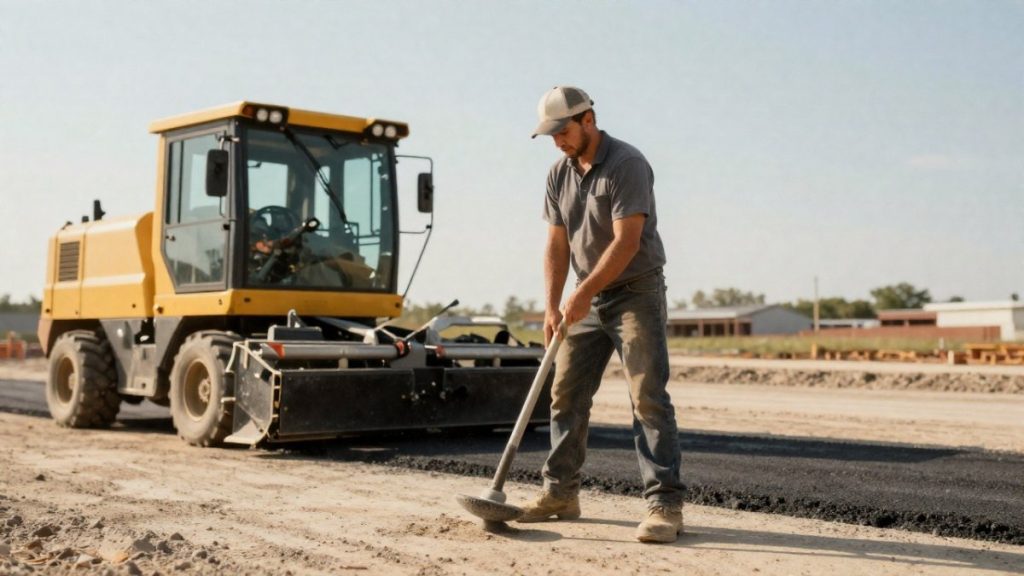
Last Updated: November 7, 2026
Quick Summary
Paving equipment loans protect cash flow by converting a large equipment purchase into predictable monthly payments, so your reserve stays free for payroll, fuel, and materials. Always Capital offers 30-, 60-, and 90-day deferrals plus seasonal schedules built around weather-dependent revenue, with approvals in as little as two to four hours.
- 62% of end users cite cash flow optimization as their reason for financing equipment.
- Build weekly forecasts on collected cash, not billed revenue, to avoid payroll shortfalls.
- Size the installment to fit your slowest paying month, not your fastest.
- Always Capital offers terms from 24 to 84 months and finances up to 100% of equipment.
- Soft credit pulls only, so you can pre-qualify without hurting your credit score.
Table of Contents
- Why Paving Equipment Loans Decide Whether a Season Sinks or Scales
- Cash Flow Management for Construction Companies: The Paving Version
- How Paving Equipment Financing Spreads Cost Across a Project Calendar
- Seasonal Equipment Financing Payments That Follow the Weather
- Used Paving Equipment Financing: Stretching Capital Without Stretching Risk
- Matching Loan Terms to Project Revenue and Retainage
- Stress-Testing Payments Before You Sign
- Get Pre-Approved for Paving Equipment Loans with Always Capital
- Frequently Asked Questions
Why Paving Equipment Loans Decide Whether a Season Sinks or Scales
Paving work runs on a short calendar and long payment cycles. According to the Equipment Leasing and Finance Association’s construction fact sheet, 62% of end users cite cash flow optimization as their reason for financing equipment.
The season is short. The paver, the roller, and the milling machine must all be ready on day one. Paying cash for all three drains the reserve you need for fuel, crews, and materials.
Always Capital structures heavy equipment financing around that reality, with approvals in as little as two to four hours. Below, this guide shows how to spread equipment cost across a project calendar without starving the business of working capital.
Cash Flow Management for Construction Companies: The Paving Version
Cash flow management for construction companies is the practice of timing money in and money out so the business never runs dry between draws.
More than 60% of small construction firms call cash flow their biggest financial challenge, according to Crestmont Capital’s construction financing statistics.
Financing flips that. For a deeper look at the mechanics, see maintaining healthy working capital for construction firms.
How Paving Equipment Financing Spreads Cost Across a Project Calendar
Paving equipment financing works by converting one large purchase into a series of predictable payments timed to your revenue cycle. The machine starts earning in week one while the cost lands in manageable slices. The part most guides skip is the actual mapping, putting deposits, progress payments, retainage, payroll, fuel, material draws, and the equipment installment on the same calendar so you can see the squeeze before it happens.
Build the forecast around paving milestones, not months
A paving job does not pay on the first of the month. It pays on a sequence: mobilization deposit, progress billing at agreed completion percentages, and a final payment that often trails closeout. Build your forecast on that sequence.
A workable weekly forecast has five columns:
- Cash in: mobilization deposit, progress payment, final payment, retainage release
- Job costs: asphalt and aggregate draws, trucking, milling disposal, fuel
- Labor: crew payroll, including overtime during night pours
- Fixed overhead: yard, insurance, equipment installments
- Running balance: what is actually in the account at week’s end
Map each equipment payment to the week it lands, then check the running balance. If the balance dips below your reserve floor in any week, that is the week the structure needs to change, not the month.
A worked example across one season
Consider a two-crew paving contractor adding a used paver and a tandem roller before spring mobilization. The season typically runs from April through October, with a shoulder period in March and November and a parked winter.
| Period | Revenue pattern | Equipment payment shape | Cash-flow effect |
|---|---|---|---|
| March mobilization | Deposits land, crews ramp | Deferred first payment | Reserve stays intact through startup costs |
| April-June | Progress billings, steady pours | Full installment | Revenue covers payment with margin |
| July-August peak | Highest billings, night work | Full installment | Payment is a small share of weekly inflow |
| September-October wind-down | Fewer jobs, final billings, retainage withheld | Full installment | Reserve and retainage carry the gap |
| November-February | Minimal paving revenue | Seasonal or reduced schedule | Payment does not compete with payroll |
A flat twelve-month schedule produces the same payment in January as in July. A seasonal schedule built around this calendar produces a payment that tracks the work. Always Capital offers 30-, 60-, and 90-day deferrals plus seasonal schedules built around weather-dependent revenue, so the installment lands where the money is.
Where the forecast usually breaks
Watch out: the most common failure is forecasting on billed revenue instead of collected cash. A progress payment invoiced in August may not clear until October, and retainage can hold a slice of every invoice until closeout.
A second failure is ignoring the job-cost lag. Asphalt and aggregate draws often come due before the progress payment that covers them. Build a two- to four-week lag into the forecast for material and trucking, and a longer lag for retainage.
Why the spread matters more in paving than in most trades
The U.S. equipment financing market is projected to grow 6.2% in activity, per FinancialPC’s 2026 equipment financing trends. Contractors are clearly choosing spread-out cost over lump-sum purchase. In paving, the spread is not a convenience, it is what keeps the reserve funded through the shoulder months when the paver is parked but the payment is not.
For a deeper look at the mechanics, see maintaining healthy working capital for construction firms and cash flow protection strategies for equipment buyers.
Seasonal Equipment Financing Payments That Follow the Weather
Seasonal equipment financing payments let a paving contractor pay more when crews are running and less when weather shuts the work down. Always Capital offers 30-, 60-, and 90-day deferred payment plans and seasonal payment capabilities matched to weather-dependent revenue.
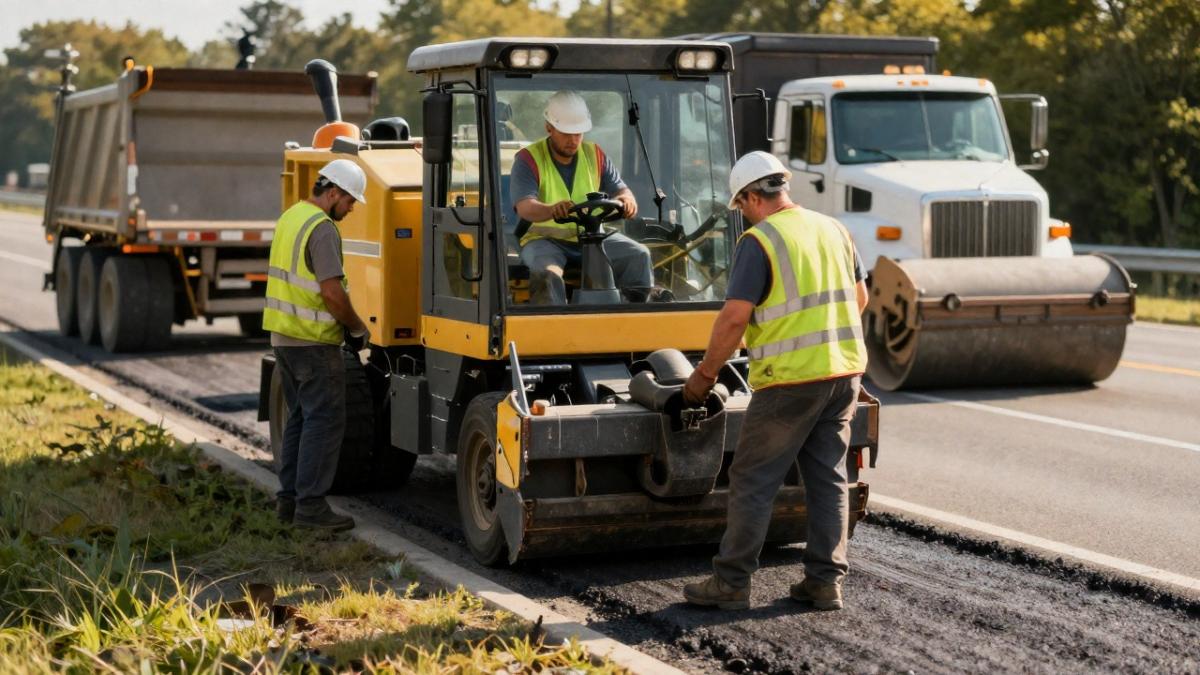
A common mistake is locking into a flat twelve-month schedule that ignores winter. When January arrives with no jobs and a full payment due, the reserve takes the hit.
Best for: contractors in cold-weather markets with a clear off-season.
Skip if: your work runs year-round at steady volume.
Read more on managing equipment costs in seasonal industries or explore seasonal payment plans for construction equipment.
Used Paving Equipment Financing: Stretching Capital Without Stretching Risk
Used paving equipment financing lets a contractor buy a proven machine at a lower entry point while keeping the same payment structure. Always Capital finances older equipment and trucks with no age or mileage restrictions.
The upside is obvious: less capital tied up, faster payback on the asset. The risk sits in condition. A used paver with hidden hydraulic problems can eat the savings in repair bills.
- Check service records and hour meters before committing
- Budget for a pre-purchase inspection
- Weigh depreciation against remaining useful life
Pros and cons of financing used heavy equipment covers the trade-offs in full.
Matching Loan Terms to Project Revenue and Retainage
Loan terms should mirror how your projects actually pay. A paving job often finishes weeks before the final check clears, and retainage can hold back a slice of every invoice until closeout. The payment schedule has to survive that gap, and the gap is usually longer than contractors plan for.
The timing mismatch, spelled out
On a typical paving contract, three clocks run at once:
- The equipment clock: the installment is due every month, on the same date, regardless of job status.
- The billing clock: progress payments arrive after the owner or general contractor approves the work, often 30 to 60 days after the invoice.
- The retainage clock: a percentage of each invoice is withheld until final acceptance, which can trail substantial completion by weeks or months on public work.
The equipment clock does not slow down when the other two do. That is the mismatch a term structure has to absorb.
Sizing the term around the receivables gap
A practical rule: the term should be long enough that the monthly installment fits inside the cash the business reliably collects in its slowest paying month, not its fastest. Always Capital offers terms from 24 to 84 months, letting a contractor stretch payments past the retainage window instead of scrambling to cover them.
Work the math backward from the gap:
- Estimate the longest realistic stretch between finishing a job and collecting the final payment plus retainage.
- Estimate the lowest monthly collected cash during that stretch.
- Set the installment so it fits inside that low month with room for payroll and materials.
- If the installment does not fit, extend the term or add a deferral rather than shrinking the reserve.
A longer term lowers the monthly obligation and widens the cushion. The trade-off is more total cost over the life of the agreement, a real consideration, but usually smaller than the cost of missing payroll in a slow month.
Pair the equipment loan with a working-capital tool
Retainage and slow progress payments are short-term gaps, not equipment problems. Pair the equipment loan with a separate business line of credit for short-term gaps, and the equipment payment never competes with payroll. Equipment loans vs lines of credit explains which tool fits which gap.
Watch out: using a line of credit to cover a permanent equipment shortfall just moves the problem. If the installment does not fit even in a normal month, the term is wrong, fix the term, not the borrowing.
Public work and multi-year contracts
Public paving contracts often carry longer payment cycles and formal retainage release procedures than private work. A contractor bidding public work should size the equipment term against the public payment pattern, not the private one.
Always Capital structures heavy equipment financing around these realities, with approvals in as little as two to four hours and terms from 24 to 84 months. Soft credit pulls only, so a contractor can pre-qualify and compare structures without hurting a personal or business score. See construction equipment financing for the full range of structures.
Stress-Testing Payments Before You Sign
Stress-testing means checking whether the payment still works in a bad month, not just a good one.
A simple test: take your slowest month’s revenue, subtract fixed costs and payroll, and see whether the equipment payment still fits.
Always Capital runs soft credit pulls only, so a contractor can pre-qualify and compare structures without hurting a personal or business score.
That lets a contractor test several payment shapes before committing to one.
Get Pre-Approved for Paving Equipment Loans with Always Capital
The season will not wait for a slow approval. A paver that arrives three weeks late can cost a contractor an entire mobilization window.
Always Capital approves in as little as two to four hours, finances up to 100% of the equipment, and works with all credit types. Soft pulls only, no age or mileage restrictions, and terms from 24 to 84 months.
Get pre-approved with Always Capital and put the iron to work before the weather turns.
The difference between a season that scales and one that sinks often comes down to how the equipment was financed. Always Capital offers fast approvals, 100% financing, and flexible terms built for contractors who cannot afford delays. Get started with Always Capital and keep your cash flowing while the crews keep paving.
Frequently Asked Questions
How can paving contractors manage cash flow when financing equipment?
Start with the payment itself: keep it sized against your slowest month, not your best one. Paving equipment loans from Always Capital run 24 to 84 months, and deferred first payments of 30, 60, or 90 days let a new paver or roller earn revenue before the first remittance. Pair that with a cash reserve covering at least one payment cycle, and schedule work so retainage does not land in the same month as a large installment.
Can paving equipment financing accommodate used machinery or auction purchases?
Yes. Used paving equipment financing works the same way as new-unit funding at Always Capital, with no age or mileage restrictions and support for private-party and auction transactions. A used asphalt paver or milling machine can lower the amount financed and shorten the loan term, which reduces total outlay. Have the machine’s hours, service records, and serial number ready so the appraisal reflects its real utility.
What should paving contractors consider when choosing equipment payment timing?
Map payments to the months your crews are actually laying asphalt. Seasonal equipment financing payments let you weight installments toward peak season and lighten them in winter. Also check when your largest customers pay and when retainage releases; a payment due the same week as a big receivable is easier to absorb than one due in a dead month. Always Capital structures terms around your receivables cycle rather than a fixed calendar.
How does equipment financing help preserve working capital?
Paying cash for a paver drains the reserve that covers payroll, fuel, and materials. Financing keeps that reserve intact, and Always Capital offers up to 100% financing with application-only approvals up to $500,000, so the machinery becomes the collateral instead of your operating account.
