
Table of Contents
- Why Seasonal Industries Face Unique Equipment Cost Challenges
- Step 1: Forecast Seasonal Demand and Align Equipment Capacity
- Step 2: Balance Fixed and Variable Costs With Rental vs. Purchase Analysis
- Step 3: Build Heavy Equipment Maintenance Schedules That Cut Downtime
- Step 4: Optimizing Fleet Use During Off-Season Months
- Step 5: Explore Equipment Refinancing Options to Smooth Cash Flow
- Step 6: Manage Inventory, Vendor Contracts, and Unplanned Expenses
- Common Mistakes That Inflate Equipment Costs in Seasonal Industries
- Frequently Asked Questions
Last Updated: September 23, 2026
Why Seasonal Industries Face Unique Equipment Cost Challenges
Managing equipment costs in seasonal industries is harder than in steady-demand businesses because revenue arrives in bursts while equipment bills arrive every month. At Always Capital, we see this pattern constantly with excavator, dump truck, and paver operators. A paving crew might earn most of its revenue between spring and fall, yet the machines sit idle for months.
Seasonal businesses also face:
- Sudden spikes in demand that force rushed equipment decisions
- Idle machines that still need storage, insurance, and upkeep
- Unplanned repairs that hit during the worst possible month
- Limited time to earn enough to cover a full year of overhead
Step 1: Forecast Seasonal Demand and Align Equipment Capacity
Demand forecasting is the practice of predicting how much work and equipment capacity a business will need in each season. A good forecast matches fleet size to real demand instead of guessing.
Building a Demand Forecast Around Your Peak and Off-Season
A simple forecast works better than a complex one. Try this:
- List your last 12 months of jobs by type.
- Note which months were busiest and which were slow.
- Estimate next season’s volume using booked contracts and pipeline.
- Compare that estimate to your current fleet capacity.
- Flag any gap between what you own and what you’ll need.
Step 2: Balance Fixed and Variable Costs With Rental vs. Purchase Analysis
Fixed costs stay the same whether a machine runs or not. Variable costs rise and fall with use.
The Utilization Threshold That Decides Rent vs. Buy
Most fleet managers work from a simple break-even idea: compare the annual cost of owning a machine to the annual cost of renting that same machine for the weeks you actually need it. Ownership wins when the machine is working enough weeks to spread its fixed cost across real revenue. Renting wins when the machine sits idle for most of the year.
A practical way to frame it:
- Estimate the number of weeks per year the machine will actually work, not the number of weeks you hope it works.
- Estimate the annual ownership burden: payments, insurance, storage, scheduled service, tires or undercarriage, and the drop in resale value over the year.
- Estimate the annual rental burden: weekly rental for the same class of machine times the weeks you need it, plus delivery and pickup.
- Compare the two. If ownership is close, favor renting until utilization is proven for two consecutive seasons.
Fixed vs. Variable Cost Balance by Season
| Cost type | Examples | Behavior in peak | Behavior in off-season |
|---|---|---|---|
| Fixed | Loan payments, insurance, storage, licensing | Unchanged | Unchanged, this is the pressure point |
| Variable | Fuel, repairs, wear parts, operator labor | Rises with machine hours | Falls to near zero when parked |
| Semi-variable | Scheduled service, tires, undercarriage | Rises with hours | Still accrues with age and idle time |
The goal is not to eliminate fixed cost. It is to keep fixed cost low enough that a slow season does not force rushed decisions. Every machine you own adds an obligation that runs whether the season cooperates or not.
When Buying Still Makes Sense
Buying is usually the stronger choice when:
- The machine works most of the year across multiple job types
- The same unit is needed every season, not just in a boom year
- You can cover the fixed obligation through the slow months without strain
- The unit holds resale value well enough to recover capital later
If the gap between what you own and what you need is small and short, rent the difference. If it is large and repeatable across seasons, ownership can make sense, and application only equipment financing lets you add capacity before peak season without a long approval process.
The Mistake That Costs the Most
The most expensive error is buying for a single big job and then watching the machine sit for the rest of the year. Match the tool to the workload across the full calendar, not to the moment in front of you.
Step 3: Build Heavy Equipment Maintenance Schedules That Cut Downtime
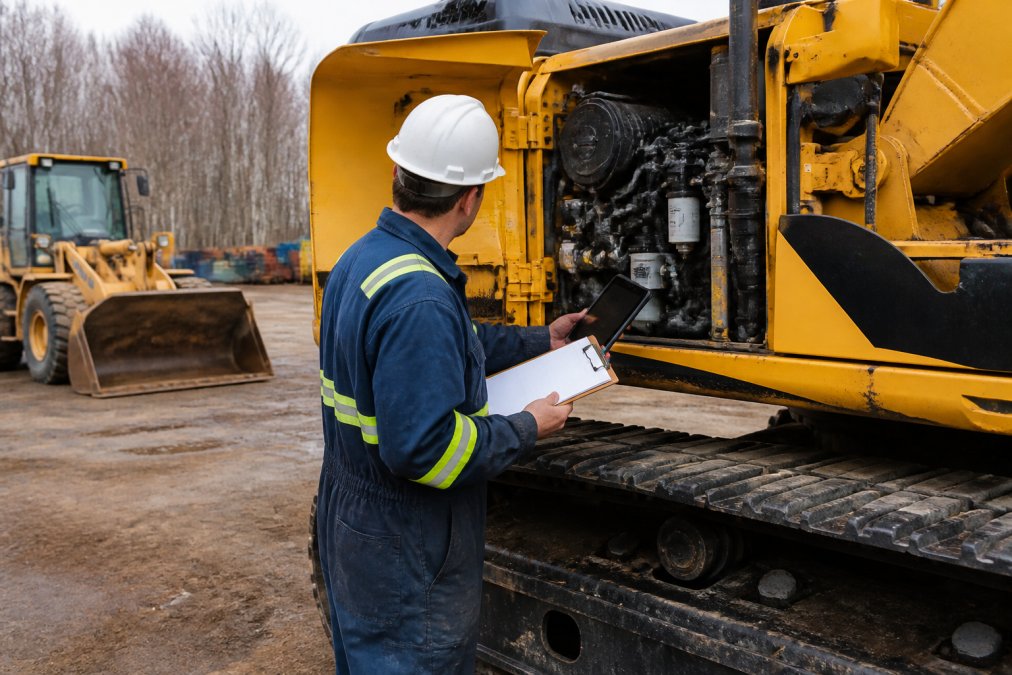
Heavy equipment maintenance schedules are planned service timelines that keep machines running and prevent surprise breakdowns. Downtime during peak season is the most expensive kind.
Predictive Maintenance Technology for Seasonal Fleets
Predictive maintenance uses sensors and software to flag problems before they cause a failure. Telematics on trucks and heavy machines can track engine hours, fluid levels, and fault codes.
This approach can cut downtime and extend equipment lifecycle.
Step 4: Optimizing Fleet Use During Off-Season Months
Options for the off-season:
- Rent idle machines to other contractors
- Use slow months for maintenance and repairs
- Take on indoor or weather-independent jobs
- Sell or trade machines you no longer need
Track machine hours by unit, not just by fleet. One underused machine often hides behind three busy ones. Selling the laggard frees capital for equipment that actually earns.
Secondary market liquidation is another lever. Selling older units before they lose more value can fund newer, more reliable equipment. Always Capital finances equipment with no age or mileage restrictions, so older trucks and machines stay financeable.
Step 5: Explore Equipment Refinancing Options to Smooth Cash Flow
Equipment refinancing options let a business restructure existing debt to free up monthly cash. For seasonal operators, this can align payments with revenue cycles.
Refinancing is worth exploring when:
- Payments feel heavy during slow months
- You want to free up cash for payroll or fuel
- You need working capital without adding new debt
- Your current terms no longer fit your business
The goal of refinancing is not to borrow more. It is to match your payments to the months when money actually comes in.
Step 6: Manage Inventory, Vendor Contracts, and Unplanned Expenses
Unplanned expenses are the silent killer of seasonal budgets. A blown hydraulic line in July can wipe out a week of profit, and a failed undercarriage in the middle of a paving run can idle a crew.
Vendor Contracts: Negotiate Before the Rush
Suppliers price and prioritize differently when you are one of many buyers calling in the same week. Lock terms in the off-season when your calendar is open and their order book is thin.
Smart moves include:
- Locking in parts pricing before demand spikes
- Setting up net terms with suppliers you trust
- Negotiating guaranteed delivery windows for critical parts
- Reviewing every contract each year and cutting what you did not use
- Consolidating suppliers so your volume carries more weight
Parts Inventory: Turn, Don’t Stockpile
Slow-moving parts tie up cash that could fund a machine payment or a payroll week. Stock what you actually replace, and track how often each part moves.
Secondary Market Liquidation: The Off-Season Capital Play Most Guides Miss
When a machine sits idle for months, it is still losing value. Selling it before that decline deepens can recover capital that funds equipment you will actually use next season.
A practical liquidation rhythm:
- Rank every unit by machine hours and revenue contribution over the last two seasons.
- Flag the bottom performers, the units that cost money for ten months and earn for two.
- Check current resale demand for that class of machine before the off-season, when buyers are planning their own next season.
- Sell or trade the laggards while they still hold value, and roll the proceeds into units that match next season’s forecast.
- Keep the paperwork and service records clean, documented maintenance supports a stronger resale position.
Budgeting the Buffer
Set the repair buffer as a percentage of peak-month revenue, not a flat figure, so it scales with how busy you actually were. Review it after each season and adjust. A buffer that never gets touched is a sign you set it too high; a buffer that empties every July is a sign you set it too low.
Common Mistakes That Inflate Equipment Costs in Seasonal Industries
The biggest mistake is buying for peak demand and ignoring the off-season. That leaves businesses with machines that cost money for ten months and earn for two.
Other common errors:
- Skipping maintenance because the machine “seems fine”
- Carrying too much fixed cost and too little flexibility
- Waiting until cash is tight to seek financing
- Ignoring the resale value of aging equipment
- Failing to forecast demand before committing to a purchase
Frequently Asked Questions
What are the primary challenges of managing equipment costs in seasonal industries?
Seasonal industries face uneven cash flow because revenue concentrates in peak months while equipment costs continue year-round. Fixed costs like loan payments, insurance, and storage don’t drop when work slows. Variable costs like fuel and labor spike during peak season. The biggest challenge is matching equipment capacity to demand without overspending during off-months. Forecasting demand, scheduling maintenance in slow periods, and using refinancing to smooth payments all help reduce the strain.
How does equipment utilization impact seasonal business profitability?
Equipment utilization measures how much of your fleet is actively generating revenue. In seasonal industries, utilization can swing from near 100% during peak months to below 40% in off-seasons. Low utilization means you’re paying for machines that aren’t earning. Tracking utilization rates helps you decide when to rent instead of own, when to sell idle assets on the secondary market, and how to redeploy equipment to other revenue-generating work. Higher utilization directly improves profit margin optimization.
How can businesses maintain heavy equipment during off-peak months?
Off-peak months are the best time for heavy equipment maintenance schedules. Schedule full inspections, fluid changes, hydraulic checks, and component replacements before peak season begins. Preventive maintenance during downtime costs less than emergency repairs during peak work. Use the off-season to address wear items, update predictive maintenance sensors, and certify operators. This approach reduces breakdowns when revenue depends on uptime and extends equipment lifecycle, lowering total cost of ownership over time.
What strategies help align equipment capacity with seasonal revenue fluctuations?
Start with demand forecasting based on historical revenue data, booking trends, and local market conditions. Match fleet size to your peak season needs, then use short-term rentals to cover overflow rather than buying extra machines that sit idle. For equipment you own, explore equipment refinancing options to restructure payments around your revenue cycle. Sell underused assets on the secondary market before depreciation accelerates. Review vendor contracts annually to negotiate better terms for off-season storage and delivery.
Seasonal swings don’t have to wreck your budget. The operators who win plan their equipment costs around the calendar, not the crisis. Always Capital helps businesses get there with fast approvals in as little as two to four hours, up to 100% financing, and support for all credit types. Get pre-approved for heavy equipment financing with Always Capital and keep your fleet earning, whatever the season.