
Table of Contents
- Dump Truck Market Trends: Where the Industry Stands in 2026
- Dump Truck Manufacturers: Who Is Building for the Next Cycle
- What Construction and Regional Demand Mean for Fleet Operators
- Dump Truck Financing: How to Add Capacity Without Draining Cash Flow
- Commercial Truck Financing for Every Credit Profile and Fleet Size
- How Always Capital Fits Into Your 2026 Equipment Strategy
- Conclusion: Position Your Fleet for the Next Freight Cycle
- Frequently Asked Questions
Last Updated: October 15, 2026
Dump Truck Market Trends: Where the Industry Stands in 2026
The dump truck market in 2026 reflects a freight and construction landscape that has cooled from its 2021-2022 peak but remains fundamentally healthy.
Freight demand has normalized while fleet availability has improved, a combination that rewards operators who buy and finance strategically rather than chase volume.
Freight Demand, Volumes, and the Broader Economic Outlook
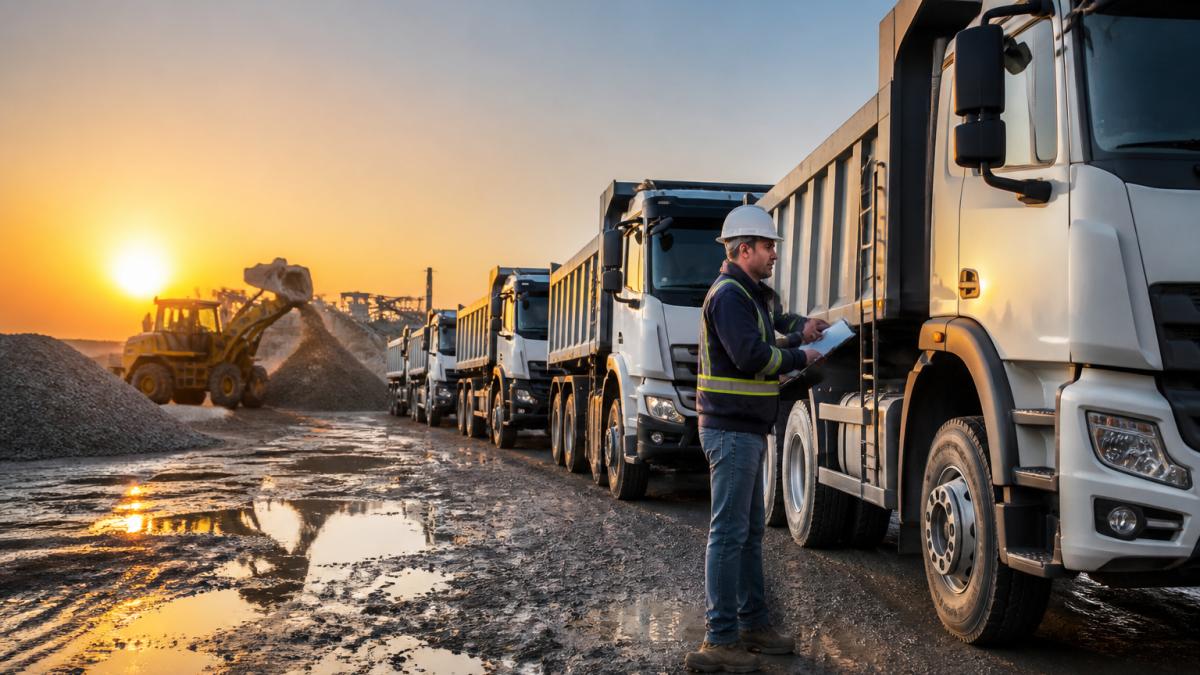
Freight demand in 2026 has settled into a steadier pattern after several volatile years. Many carriers report that shipment volumes are stable rather than surging, and the broader economic outlook points to measured growth in construction and infrastructure activity.
For dump truck operators, the practical takeaway is straightforward: demand has not disappeared, it has redistributed. Regions with active road, housing, and commercial projects are absorbing capacity faster than others.
Carrier Capacity, Fleet Availability, and Used Truck Activity
Carrier capacity has loosened compared with the tightest years of the cycle. More equipment is available, and the used truck market has become a genuine alternative for operators who need trucks quickly.
When capacity is plentiful, the winning move is often to acquire well-maintained used equipment rather than wait on long new-truck lead times.
Dump Truck Manufacturers: Who Is Building for the Next Cycle
Major dump truck manufacturers continue to invest in equipment built for durability, payload efficiency, and lower operating costs, and positive momentum in new truck and trailer orders signals steady replacement demand. The manufacturer landscape drives availability, parts support, body configuration, and resale strength.
The North American Class 8 vocational segment is dominated by established builders whose chassis are upfitted with dump bodies by specialized manufacturers.
Vocational Configurations That Matter for Dump Work
Dump trucks are not a single product. The configuration an operator chooses should match the haul, the site, and the road legal limits in the operating region:
- Standard dump (straight truck): Single rear axle or tandem, typically used for site work, small aggregate deliveries, and municipal jobs where maneuverability matters more than maximum payload.
- Tri-axle and quad-axle dump trucks: Add axles to increase legal payload, common in aggregate hauling and heavier construction cycles.
- Transfer dump and pup trailers: A truck-and-trailer combination that boosts payload per trip, widely used in aggregate and asphalt work.
Each configuration changes the chassis spec, body spec, and financing conversation. A tri-axle built for quarry work has a very different duty cycle than a single-axle municipal dump.
What Manufacturers Are Prioritizing
Across the segment, builders are emphasizing a few consistent themes:
- Payload and weight optimization: Lighter bodies and chassis components that let operators carry more legal payload per trip without exceeding bridge or axle limits.
- Driver comfort and retention: Better cabs, visibility, and controls, because vocational fleets compete for drivers against long-haul carriers.
- Uptime and serviceability: Easier access to service points, longer service intervals, and dealer networks that keep trucks on the road rather than in the shop.
When comparing manufacturers, weigh dealer service coverage in your operating region as heavily as the spec sheet. A truck is only as productive as its uptime, and parts availability often decides that.
Why the Manufacturer Mix Affects Financing
Operators adding equipment can explore dump truck financing, heavy equipment loans, and financing for older equipment and trucks to match the chassis and body they need, including financing equipment with no age or mileage restrictions for well-maintained used units.
Positive Momentum Across the Segment
The overall picture for manufacturers is constructive. Replacement demand remains steady as fleets age, infrastructure and construction activity continue to generate hauling work, and builders keep refining vocational platforms for durability and efficiency. For operators, that means a healthy pipeline of chassis and bodies, competitive dealer support, and a used market deep enough to support both new-truck and used-truck strategies.
What Construction and Regional Demand Mean for Fleet Operators
Construction and regional demand are the two forces that decide whether a dump truck fleet stays busy. Dump trucks serve construction, aggregates, and site work, so their demand tracks project pipelines more than retail shipping.
The End Markets That Drive Dump Truck Demand
Dump truck utilization is tied to a handful of end markets, each with its own cycle, seasonality, and equipment preference:
- Highway and bridge infrastructure: Funded largely through federal and state transportation programs, this work tends to be multi-year, less weather-sensitive than residential, and steady for operators positioned near active corridors.
- Residential construction: Short-cycle and highly weather-sensitive. Demand can swing quickly with housing activity, and operators serving this segment benefit from flexible payment structures that match seasonal revenue.
- Commercial and industrial development: Longer project timelines, often multi-quarter, which supports more stable fleet planning than residential work.
How Regional Demand Actually Differs
Regional demand is not a slogan, it reflects real differences in what is being built and hauled:
APPLY NOW AND GET YOUR BUSINESS PRE-APPROVED FOR FINANCING TODAY ! →
- Sun Belt and high-growth metros: Population and business migration drive residential and commercial construction, which keeps dump trucks busy year-round in many areas.
- Rust Belt and older industrial regions: More infrastructure rehabilitation, demolition, and site redevelopment than greenfield construction.
- Energy and resource regions: Quarry, aggregate, and energy-related hauling can dominate, with duty cycles that reward high-payload configurations.
- Coastal and dense urban areas: Tighter road and weight enforcement, plus emissions considerations, can push operators toward specific configurations and newer chassis.
A fleet in one region may need a very different truck mix than a fleet in another. The mistake is buying to a national average instead of the actual work in front of you.
| Demand Driver | What It Signals | Operator Action |
|---|---|---|
| Infrastructure projects | Steady aggregate and hauling work | Add capacity where pipelines are funded |
| Residential building | Short-cycle, weather-sensitive demand | Keep flexible payment structures |
| Commercial development | Longer project timelines | Plan fleet size around multi-quarter work |
| Aggregate and quarry hauling | Consistent base load | Prioritize durable, high-cycle trucks |
| Demolition and waste | Recurring debris and site work | Consider roll-off and hook-lift alongside dumps |
| Municipal and snow work | Seasonal but recurring | Use off-season for maintenance and repositioning |
Turning Regional Demand Into Fleet Decisions
Operators who track their own end markets outperform those who react to broad averages:
- Match the truck to the haul. A tri-axle built for quarry cycles is wasted on short municipal work, and a single-axle dump is underbuilt for heavy aggregate hauling.
- Plan around seasonality. Where winter slows construction, deferred payment plans of 30, 60, or 90 days and customized payment structures can align obligations with revenue.
- Add capacity where the pipeline is funded. Infrastructure and commercial work tend to be more predictable than residential, which helps with fleet sizing.
- Keep a used-truck option open. When a project appears quickly, a well-maintained used dump truck financed correctly can be working in days rather than waiting on a new build.
The biggest mistake operators make is financing a truck that does not match their actual work. Overbuying capacity for a short project leaves payments running long after the job ends.
Where Financing Fits
Regional and end-market demand only translates into revenue if the fleet can add trucks when the work appears. Always Capital provides fast, flexible heavy equipment and commercial vehicle financing built for exactly this situation, with dump truck financing, fleet expansion capital, and logistics fleet funding designed to get equipment working quickly. Flexible terms from 24 to 84 months and deferred payment plans of 30, 60, or 90 days let fleets match obligations to project cycles, and financing with no age or mileage restrictions removes a common barrier on used equipment.
The Takeaway for Fleet Operators
Regional and end-market demand is the single most useful lens for dump truck operators. National averages tell you what the broader market is doing; your own pipeline tells you what to buy, when, and how to structure financing so the truck pays for itself.
Dump Truck Financing: How to Add Capacity Without Draining Cash Flow
Dump truck financing is how operators add capacity without tying up the working capital that keeps payroll and operations running. Always Capital provides fast, flexible heavy equipment and commercial vehicle financing built for exactly this situation, with dump truck financing designed to get equipment working quickly.
Flexible terms from 24 to 84 months and deferred payment plans of 30, 60, or 90 days let fleets match obligations to project cycles. For operators upgrading older units, financing with no age or mileage restrictions removes a common barrier.
Commercial Truck Financing for Every Credit Profile and Fleet Size
Commercial truck financing should not be limited by a credit score alone. Always Capital works with all credit types and accepts all applications, offering up to 100% financing and application-only approvals.
Fleet size does not disqualify anyone. A single owner-operator adding a first dump truck gets the same fast, hassle-free process as a growing fleet expanding capacity. Same-day equipment financing and two-hour approvals keep growth plans on schedule.
- 100% financing options to preserve working capital
- Application-only approvals with no financial statements required
- Soft credit pulls only, so your credit stays protected
- Flexible terms and deferred payment plans for seasonal cash flow
How Always Capital Fits Into Your 2026 Equipment Strategy
Always Capital fits into a 2026 equipment strategy by removing the delays and rigid rules that slow fleet growth. Always Capital combines fast approvals with transparent loan terms and high approval rates, backed by five-star testimonials.
Whether the need is excavator financing, heavy equipment financing, or roll off truck financing, the process stays simple. Operators can get pre-approved for heavy equipment financing and keep long-term business relationships that grow with the fleet.
Speed and flexibility decide which operators can act when the right truck or project appears. Financing that approves in hours rather than weeks turns opportunity into revenue.
Conclusion: Position Your Fleet for the Next Freight Cycle
The next freight cycle will reward operators ready to move when demand shifts, and equipment access is the deciding factor. Always Capital helps construction companies, trucking businesses, and owner-operators secure capital with 100% financing, two-hour approvals, and soft credit pulls that protect their credit. Get pre-approved with Always Capital and put the right dump truck to work this season.
Frequently Asked Questions
What factors are shaping demand for dump trucks right now?
Demand tracks construction activity, infrastructure spending, aggregate hauling, and regional building cycles. When freight volumes and shipment volumes rise, for-hire carriers and large fleets add capacity; when they cool, orders slow and the used truck market absorbs the overflow. Weather, public works schedules, and end-market construction all move the needle month to month, so operators watch economic indicators and market data closely before committing to new units.
Which industries commonly use dump trucks?
Construction, paving, grading, demolition, mining, and landscaping companies rely on dump trucks daily. Aggregate suppliers, ready-mix operations, and waste and recycling haulers also run them. Because these end markets move at different speeds, a dump truck fleet tied to one sector can face sharp swings, while operators serving several sectors smooth out demand. That diversity is one reason lenders look at the end market, not just the equipment.
How can dump truck financing help a trucking business preserve working capital?
Financing lets you add a truck or expand a fleet without paying the full amount upfront, so cash stays available for payroll, fuel, maintenance, and insurance. Many programs offer up to 100% financing, deferred payment plans of 30, 60, or 90 days, and terms from 24 to 84 months. That structure protects cash flow during slow months and lets the equipment generate revenue while you pay it down.
What should a trucking company consider before expanding its fleet?
Start with utilization: are current trucks running near capacity, or is there idle time? Then check freight demand in your region, driver availability, maintenance capacity, and whether your end markets are growing. On the money side, look at how a new unit affects cash flow, and whether financing terms match your seasonal revenue. A short conversation with a lender before you shop dealers often clarifies what you can comfortably carry.
The gap between operators who grow and those who stall often comes down to how fast they can finance the right equipment. Always Capital provides up to 100% financing, approvals in as little as two to four hours, and flexible terms from 24 to 84 months, all with soft credit pulls that keep your credit safe. Get started with Always Capital and add the capacity your fleet needs to capture the next freight cycle.