
Table of Contents
- What Is a Skidsteer and Why It Dominates the Jobsite
- Key Specifications That Determine What a Skidsteer Can Do
- Skidsteer Attachments: Expand What One Machine Can Handle
- Skidsteer Financing: How to Get the Machine You Need Without Draining Cash Flow
- Skidsteer vs. Compact Track Loader: Which One Fits Your Jobsites
- New vs. Used Skidsteers: What to Weigh Before You Commit
- Conclusion
- Frequently Asked Questions
Last Updated: September 14, 2026
What Is a Skidsteer and Why It Dominates the Jobsite
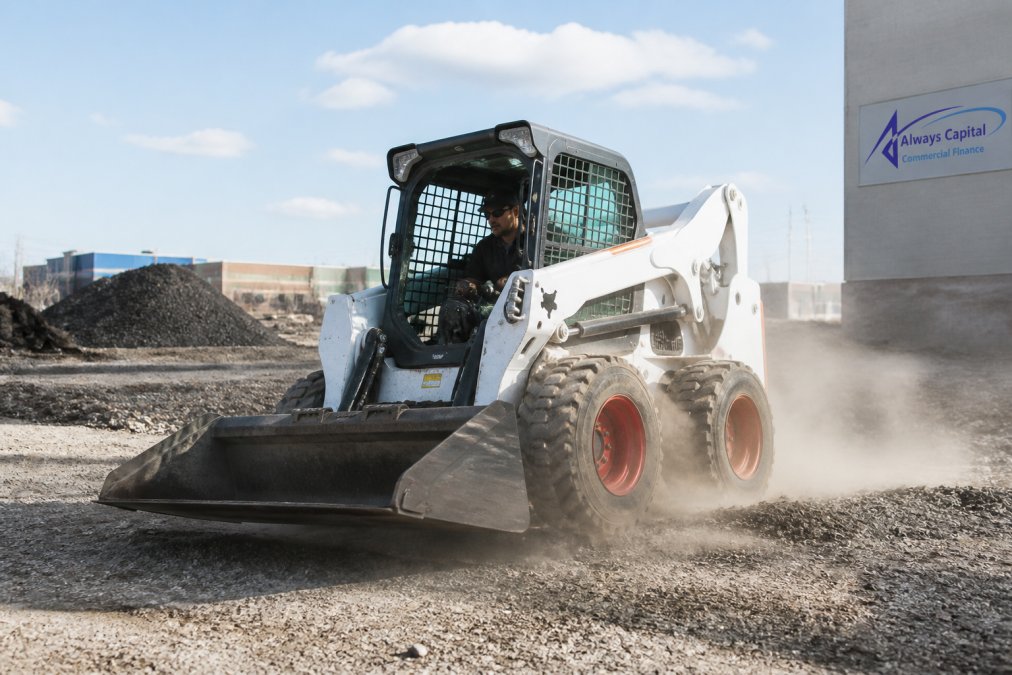
A skidsteer is a compact, engine-powered loader with lift arms that carries its load in front of the operator, steered by driving the left and right wheels at different speeds. That design is why a skidsteer guide belongs in every contractor’s reference library: it turns in its own footprint, fits through a standard gate, and swaps tools in minutes.
This skidsteer guide from Always Capital covers the specifications that matter, the attachments that multiply a machine’s value, and how skidsteer financing fits a working budget.
The machine earns its place through versatility: a crew can grade a driveway in the morning and move pallets of block in the afternoon without renting a second machine. Tire-driven skidsteers also cost less to run than track machines on firm surfaces.
How Skid Steering Works
Skid steering drives the wheels on one side faster than the other, or in the opposite direction, forcing the machine to pivot. With no steering axle, the tires scrub sideways during a turn, hence the name.
That scrub is the trade-off: a tight turning radius and excellent maneuverability in confined spaces, but faster tire wear on asphalt and concrete. Independent drive to each side lets a skidsteer spin 360 degrees inside a garage bay.
Key Specifications That Determine What a Skidsteer Can Do
Three numbers decide whether a skidsteer suits a job: operating capacity, lift path type, and hydraulic flow. Horsepower and ground speed refine the picture but rarely change the verdict.
Buyers who skip these specifications often end up with a machine that cannot lift the loads they handle daily.
Specification | What It Controls | Why It Matters |
|---|---|---|
Operating capacity | Safe working load | Prevents overload and tipping |
Tipping load | Maximum before tipping | Sets the real load ceiling |
Lift path (radial or vertical) | Reach and height | Decides dump height and clearance |
Hydraulic flow | Attachment power | Runs augers, breakers, grapples |
Rated horsepower | Digging and travel power | Affects cycle times on hard ground |
Operating Capacity vs. Tipping Load
Operating capacity is the load a manufacturer certifies the machine can carry safely during normal work; tipping load is the weight at which it would tip forward. Confusing the two is one of the most expensive mistakes on a jobsite.
By convention, rated operating capacity sits at roughly half the tipping load, a margin for uneven ground, momentum, and bucket position. A higher tipping load allows a heavier bucket, but only within the stated operating capacity.
Radial Lift vs. Vertical Lift
Radial lift machines raise the bucket along an arc, keeping the load closer at mid-height, the better pick for digging, grading, and ground-engaging work. Vertical lift machines raise the load almost straight up, giving more reach at full height and better visibility when loading trucks or placing pallets.
For grading, radial lift usually wins; for material handling and loading, vertical lift earns its keep. Some buyers keep one of each.
Skidsteer Attachments: Expand What One Machine Can Handle
Skidsteer attachments turn a single loader into a fleet. A quick-attach system, standard on most modern machines, lets an operator change tools in minutes, and auxiliary hydraulics power anything that spins or grips.
Common attachments include:
- Buckets and grapples for material handling and demolition cleanup
- Augers for fence posts, footings, and tree planting
- Breakers and hammers for concrete and rock
- Sweepers and brooms for parking lot and road cleanup
- Forks and pallet handlers for lifting and staging
- Graders and box blades for finish grading
Hydraulic flow is the gatekeeper: an attachment needing high flow will not run at full output on a low-flow machine, so match the tool to the machine before committing. Crews that plan the attachment list first often need less horsepower than they assumed.
Skidsteer Financing: How to Get the Machine You Need Without Draining Cash Flow
A skidsteer is a revenue tool, not a trophy. Build the financing decision around how the machine earns, how long it will serve, and how much cash the business needs for payroll, fuel, and materials on active jobs.
Start With the Job, Not the Machine
Before talking to any financing partner, write down three things: the heaviest load the machine will lift daily, the ground conditions on your typical jobsite, and the attachments you plan to run. Those answers set the machine class, hydraulic flow requirement, and lift path, and the acquisition figure you are financing. Skipping this step often means financing more machine than the work requires, or one that cannot run the attachments you already own.
Match the Term to the Working Life
The most useful rule in equipment financing is to match the repayment term to the machine’s productive life, not to the lowest monthly figure. A loader that will run for a decade does not need to be paid off in two years; stretching the term keeps cash outflow predictable and frees working capital for attachments, tires, and service parts.
Always Capital structures skidsteer financing around that reality:
- 100% financing on the machine, so no large upfront capital outlay
- All credit types accepted and all applications reviewed
- Soft credit pull only, so submitting an application does not affect a credit score
- Application-only approvals up to $500,000 with no financials required
- Same-day approvals that can land in two to four hours
- Terms from 24 to 84 months
- Deferred payment plans of 30, 60, or 90 days, giving a new machine time to start earning before the first payment
- No age or mileage restrictions on the equipment financed, including older iron
- Heavy equipment auction pre-approval, so you can bid with financing already lined up
Think About Total Cost of Ownership, Not Just the Note
The acquisition figure is only one line in the ownership equation. Fuel, routine service, tires or tracks, hydraulic hoses, and resale value all shape what the machine costs over its life. A tire machine on firm ground runs cheaper on undercarriage than a track machine, which is why the wheeled skidsteer remains the default for paving, landscaping, and general construction crews. Factoring those costs into the financing decision separates a machine that pays for itself from one that drains the business.
Plan for the Attachments Up Front
Attachments are where a skidsteer earns its reputation as a fleet in one frame. A quick-attach plate and a set of work tools, bucket, forks, grapple, auger, breaker, sweeper, let one machine cover grading, material handling, demolition cleanup, and site prep. Build the attachment list into the acquisition plan so the machine is productive on day one.
Always Capital finances skidsteer purchases alongside excavator financing, backhoe financing, loader financing, bulldozer financing, tractor financing, paver financing, dump truck financing, daycab financing, box truck financing, and more. Heavy equipment loans, term loans, and business leasing options are all available.
Get pre-approved through Always Capital’s application page and keep the fleet moving.
Skidsteer vs. Compact Track Loader: Which One Fits Your Jobsites
The choice between a skidsteer and a compact track loader comes down to ground conditions. A skidsteer on tires is faster, cheaper to maintain, and better on firm surfaces such as asphalt, concrete, and packed gravel. A compact track loader spreads its weight over rubber tracks for traction and flotation in mud, sand, and soft turf.
Track machines shine on wet, unstable ground where a tire machine would sink or spin, at the cost of a pricier undercarriage, slower travel, and a higher purchase price. Paving crews and landscapers on finished surfaces usually win with tires; site work in soft or muddy conditions earns tracks their premium.
Factor | Skidsteer (Tires) | Compact Track Loader |
|---|---|---|
Best ground | Firm, paved, packed | Soft, muddy, sandy |
Maintenance | Lower, simple tires | Higher, track undercarriage |
Travel speed | Faster | Slower |
Surface damage | Can scuff pavement | Gentler on turf |
Purchase price | Lower | Higher |
New vs. Used Skidsteers: What to Weigh Before You Commit
A used skidsteer can deliver the same daily output as a new one at a fraction of the capital outlay, making it the right call for many small and mid-size crews. The trade-offs are warranty coverage, unknown service history, and inherited deferred maintenance. Manage that risk by inspecting properly and knowing what you are buying.
What New Machines Buy You
A new skidsteer brings a factory warranty, current emissions compliance, the latest operator station design, and a service history starting at zero. For crews running the machine daily on tight schedules, that reliability has real value. The trade-off is a higher acquisition figure and the steepest depreciation, which lands in the first few years.
What Used Machines Buy You
A used machine brings a lower entry point and often the same working capability. Depreciation has already done most of its work, so it holds value better relative to what you paid. The trade-off is inheriting whatever maintenance the previous owner deferred, which is why inspection matters more than the year on the data plate.
The Used-Machine Inspection: What to Actually Look For
Walk the machine cold, before the seller has warmed it up. A cold start reveals more than a warm one.
- Hour meter and service records, cross-check the meter against documented service. A machine with low hours and no records is a question mark, not a bargain.
- Lift arm, pins, and bushings, grab the bucket and rock it. Excessive play at the pins signals worn bushings and a costly rebuild.
- Hydraulic leaks, hose condition, and cylinder seals, look for weeping fittings, cracked hose jackets, and oil film on cylinder rods. Hydraulic repairs add up fast.
- Tire or track condition, tires with uneven wear suggest alignment or operator issues; tracks with missing lugs or exposed cords are near end of life.
- Undercarriage and frame cracks, inspect the loader frame and lift arm welds for cracks, especially around high-stress joints.
- Engine blow-by and coolant condition, open the oil fill cap while the engine runs; heavy vapor indicates worn rings. Check coolant for oil or rust.
- Attachment compatibility, confirm the quick-attach plate matches the attachments you already own or plan to buy.
- Controls and electronics, cycle every function: lift, tilt, auxiliaries, lights, and any joystick or foot-pedal controls. Intermittent electrical faults are expensive to chase.
The Total Cost of Ownership Lens
The purchase figure is only the first line. Over the machine’s life, fuel, routine service, tires or tracks, hydraulic hoses, and resale value all shape what it costs the business. A used machine with documented service and good undercarriage often costs less per hour to run than a new machine still absorbing its steepest depreciation.
Financing Both Paths
Financing is available for new and used machines alike, and higher hours are not automatically excluded. There are no age or mileage restrictions on the equipment financed, and heavy equipment auction purchases can be pre-approved. A well-maintained older machine with documented service can be financed on the same terms as a newer one, which makes the used path viable for crews that need capability without tying up capital.
Conclusion
The hardest part of adding a skidsteer is not choosing the machine, it is funding it without stalling the rest of the business. Always Capital finances skidsteer purchases and other compact heavy equipment with 100% financing, same-day approvals in two to four hours, application-only decisions up to $500,000 with no financials, and a soft credit pull that leaves a credit score untouched. Terms stretch from 24 to 84 months with deferred payment options of 30, 60, or 90 days, and no age or mileage restrictions on the equipment financed.
Get started with Always Capital and put a working skidsteer on the jobsite this week.
Frequently Asked Questions
Why is it called a skid steer?
The name comes from how the machine turns. A skidsteer has no steering axle. Instead, the left and right wheels (or tracks) drive independently, and the machine pivots by skidding one side while the other keeps moving. This is why you see tire marks left behind on firm surfaces after a tight turn. That independent drive is what gives a skidsteer its tight turning radius and maneuverability on crowded jobsites.
What is the difference between a skid steer and a compact track loader?
The main difference is the undercarriage. A skidsteer runs on tires and works best on firm, dry surfaces like pavement, gravel, or packed dirt. A compact track loader uses rubber tracks that spread weight over a larger area, which helps in mud, sand, and soft ground. Track loaders typically weigh more and cost more to maintain, but they float over soft terrain. Skidsteers are usually faster on hard surfaces, easier to service, and cheaper to run when conditions allow.
How do you choose the right skidsteer attachment for your project?
Start with the task, not the attachment. For digging and grading, a bucket or grader is the baseline. For demolition or brush clearing, you want a breaker or forestry cutter. For material handling, forks or a grapple work best. Check two things before buying any skidsteer attachment: the machine’s rated operating capacity and its hydraulic flow. An attachment that exceeds either limit will underperform or damage the machine. A quick-attach system makes swapping between jobs fast.
What maintenance does a skidsteer need to stay reliable?
Skidsteers need regular attention to hydraulic fluid, filters, and the undercarriage. Check tire pressure or track tension weekly, grease all fittings on the lift arms and attachment points, and inspect hydraulic hoses for wear. Engine oil and air filters should be changed on the manufacturer’s schedule. On tracked units, check track tension often because loose tracks wear faster. Keeping up with these basics extends machine life and reduces downtime, which matters when a skidsteer is central to your daily operations.