

Table of Contents
- Why the Right Skid Steer and the Right Financing Partner Matter
- Best Skid Steer Brands: A Complete Comparison
- Skid Steer Buying Guide: Matching Machine to Job
- Used Skid Steer Financing: No Age or Mileage Restrictions
- Skid Steer Financing Approval Time: What to Expect
- How Always Capital Makes Skid Steer Financing Fast and Simple
- Conclusion
- Frequently Asked Questions
Last Updated: October 19, 2026
Why the Right Skid Steer and the Right Financing Partner Matter
Skid steer financing is the piece most buyers plan for last, and it is usually the piece that decides whether a machine lands on the job this month or sits on a dealer’s lot. This guide from Always Capital walks through every major skid steer brand, what each one does best, and how to line up funding through skid steer financing that can move as fast as the deal does.
Here is the part most buying guides skip: the machine and the money are one decision. A buyer who finds the perfect used skid steer on a Friday and has no funding path loses it to a cash buyer by Monday. Always Capital built its process around that reality, with approvals in as little as two hours.
Best Skid Steer Brands: A Complete Comparison
Every brand on this list earns its place for a reason, and the honest answer to “which is best” depends on the work in front of you.
Brand | Standout Strength | Best Fit |
|---|---|---|
Bobcat | Category pioneer, strongest attachment ecosystem and resale | General contracting, mixed fleets |
Caterpillar | Heavy-duty build, raw hydraulic power, D3-series depth | Demanding construction cycles |
John Deere | High operating capacity, durability, horsepower | Heavy lifting, high-production work |
Case | Reactive hand controls, lift strength, durability | Precision grading, tough sites |
Kubota | Compact efficiency, standard suspension seats, two-speed engines | Landscaping, tight-access work |
New Holland | Long production legacy, radial and vertical lift options | Mixed-fleet operations |
JCB | Side-entry cab, high horsepower-to-capacity ratio | Operators who want easy cab access |
Gehl | Broad radial and vertical lift lineup under Manitou Group | Versatile fleet builders |
ASV | High-traction track loaders and select wheeled models | Soft ground, wet conditions |
Takeuchi | Compact track loader pioneer, maneuverable earthmoving | Tight-site earthmoving |
Wacker Neuson | Heavy North American build, class-leading hinge pin heights | Attachment-heavy work |
Hyundai | Utility and heavy-frame models | Mixed utility and construction |
Komatsu | Reliable compact utility and construction-grade loaders | Construction-grade utility work |
Terex | Unique suspension, high ground clearance | Rough terrain |
LiuGong | Robust compact loader series | Value-focused fleets |
Sunward | Global compact machinery supply | Compact job sites |
Yanmar | Compact utility and track/skid equipment | Tight residential work |
Volvo | Multi-industry compact equipment lines | Diversified job sites |
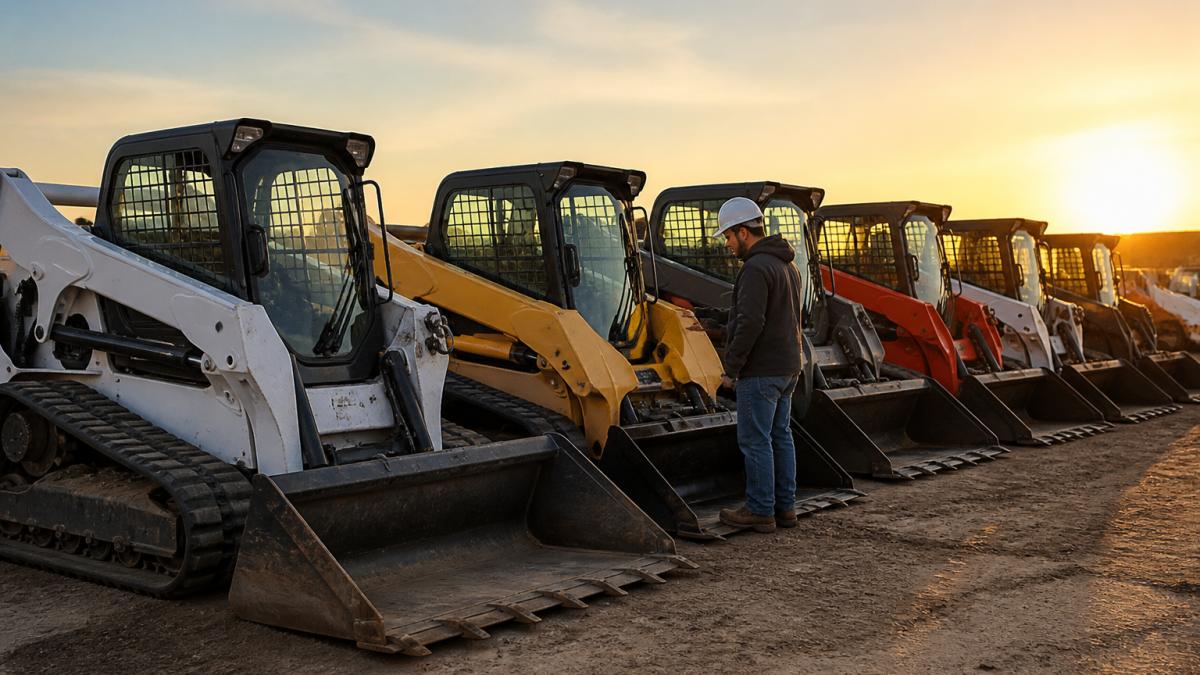
Bobcat, Caterpillar, and John Deere: The Heavy Hitters
Bobcat built the category and still sets the benchmark. Its strengths are the widest attachment ecosystem in the industry, strong dealer coverage, and resale value that holds up better than most competitors, a real advantage when you eventually trade or sell. Caterpillar answers with heavy-duty build quality and raw hydraulic power across its D3-series models, which suits contractors running machines hard every day; the D3 line also gives buyers more frame-size and lift-capacity choices than most rivals. John Deere rounds out the trio with high operating capacity, durability, and horsepower that shines on lifting-intensive work, plus a dealer network that keeps parts and service close on large jobsites.
Kubota, Case, New Holland, and JCB: Efficiency and Control
Kubota earns loyalty through compact efficiency, standard suspension seats, and two-speed engines that make long shifts easier on the operator, a strong pick for landscapers working tight residential lots. Case is favored for reactive hand controls and strong lift strength, a combination graders appreciate when finish work matters. New Holland brings a long skid steer production legacy with both radial and vertical lift options, so buyers can match lift path to task. JCB stands apart with its side-entry cab design, operators step in rather than climb over the bucket, and a high horsepower-to-capacity ratio that keeps cycle times short.
Gehl, ASV, Takeuchi, and Wacker Neuson: Specialist Strength
Gehl, part of the Manitou Group, offers a broad lineup spanning radial and vertical lift machines, which makes it easy to build a mixed fleet from one dealer. ASV specializes in compact track loaders and select wheeled models with high traction for soft or wet ground, where flotation matters more than raw speed. Takeuchi pioneered the compact track loader and builds maneuverable earthmoving machines that excel in tight-site work. Wacker Neuson leans on heavy North American manufacturing and class-leading hinge pin heights, which translate to more dump clearance and easier loading over truck sides.
Hyundai, Komatsu, Terex, LiuGong, Sunward, Yanmar, and Volvo: Global Contenders
Hyundai manufactures both utility and heavy-frame skid steer models, giving buyers a clear step up in capacity without leaving the brand. Komatsu produces reliable compact utility and construction-grade loaders backed by a strong dealer support network. Terex is known for unique suspension and high ground clearance designs that suit rough terrain. LiuGong offers a robust compact loader series for value-focused fleets, Sunward supplies compact machinery worldwide, Yanmar builds compact utility and track equipment for tight residential work, and Volvo‘s compact lines suit multi-industry job sites where one machine has to do several jobs.
Once you have narrowed the field, the next step is matching machine specs to the job, and then moving fast on funding. Always Capital finances new and used skid steers with no age or mileage restrictions, and approvals can land in as little as two hours.
Skid Steer Buying Guide: Matching Machine to Job
A skid steer buying guide starts with one question: what will the machine do most weeks? Lift capacity, auxiliary hydraulic flow, and attachment compatibility decide more about productivity than badge loyalty ever will. Landscapers typically prioritize a narrow frame and low ground pressure; demolition and grading crews need hydraulic flow for breakers and planers. Buyers weighing new versus used equipment should note that well-maintained used machines hold up well, and financing for older equipment with no age or mileage restrictions keeps those options open.
APPLY NOW AND GET YOUR BUSINESS PRE-APPROVED FOR FINANCING TODAY ! →
Specs That Actually Decide the Purchase
Four numbers eliminate more candidates than any other:
- Rated operating capacity (ROC): the safe lift load, typically 1,500 to 3,500 lb on mid-size machines. Plan for the heaviest attachment plus its load, not just the bucket.
- Auxiliary hydraulic flow: standard-flow machines run buckets and augers; high-flow machines are required for planers, breakers, and cold planers. Confirm the flow rating before you commit.
- Hinge pin height and dump reach: determines whether the machine can clear a truck side or dumpster wall. Wacker Neuson’s class-leading hinge pin heights are a good benchmark to compare against.
New Versus Used: What Changes
New machines bring the latest emissions-compliant engines, full warranty coverage, and the newest cab features. Used machines bring lower entry cost and, on well-kept units, years of remaining service life. The practical rule most contractors follow: buy used when the machine will run attachments you already own and the service records are complete; buy new when the machine is the primary revenue asset and downtime is expensive.
A Practical Used-Machine Inspection Checklist
Before you commit to a used skid steer, walk the machine in this order:
- Hour meter versus condition, low hours on a worn machine is a red flag; match the meter to pedal, seat, and tire wear.
- Service records, look for regular hydraulic and engine oil changes, not just a recent cleanup.
- Hydraulics, cycle the lift and tilt through full travel, listen for whine, and check for weeping cylinders and hose cracks.
- Undercarriage (track units), measure track tread depth and check sprockets and idlers for wear.
- Tires (wheel units), check for uneven wear that signals alignment or operator issues.
- Attachment compatibility, confirm the quick-attach plate matches your existing attachments and that auxiliary couplers are the right size.
- Structural checks, inspect the loader arms, pins, and bucket cutting edge for cracks or repairs.
Ownership Costs Beyond the Purchase
The purchase is only part of the cost of running a skid steer. Budget for maintenance (filters, hydraulic fluid, and wear parts), fuel, insurance, attachment purchases, transport between jobsites, and downtime when a machine is in the shop. Track machines typically cost more in undercarriage wear; wheel machines cost more in tires. Factoring these into the buying decision keeps a low-purchase-price machine from becoming the more expensive one over five years.
For related categories, see construction equipment financing, heavy equipment loans, loader financing, and agricultural equipment loans. Once you have found the right new or used machine, Always Capital can help you finance it and get approved in as little as two hours.
Used Skid Steer Financing: No Age or Mileage Restrictions
Used skid steer financing does not have to be the harder path. Always Capital finances equipment with no age or mileage restrictions, so a clean low-hour unit from an earlier model year remains fully eligible.
Evaluation comes first. Once a machine passes, funding through application only equipment financing can move quickly. Buyers exploring other categories can review mini excavator financing and excavator financing for the same process.
Skid Steer Financing Approval Time: What to Expect
Skid steer funding approval time is where Always Capital separates itself. Applications move through a soft credit pull that does not hurt your credit, and approvals can land in as little as two hours.
The process is built for speed without paperwork drag:
APPLY NOW AND GET YOUR BUSINESS PRE-APPROVED FOR FINANCING TODAY ! →
- Submit the application online with basic business and equipment details
- Receive a soft-pull review with no impact to your credit score
- Get an approval decision, often within two hours
- Review transparent loan terms and choose a structure
- Receive funds and close on the machine
Flexible terms run 24 to 84 months, with deferred payment plans of 30, 60, or 90 days available for cash flow protection. Equipment serves as collateral in asset-backed lending, which is how no age or mileage restrictions stay possible.
How Always Capital Makes Skid Steer Financing Fast and Simple
Speed is the headline, but structure is what keeps contractors coming back. Always Capital offers up to 100% financing, no down payment options, and customized payment structures that fit seasonal workloads.
Every application goes through a soft credit pull only, so shopping for the right machine never dents your credit profile. Contractors can also explore dump truck financing, bull dozer financing, and roll off truck financing under the same fast process.
Conclusion
Finding the right skid steer is half the battle; securing funding before the machine sells is the other half. Always Capital finances new and used equipment with no age or mileage restrictions, offers up to 100% financing, and approves applications in as little as two hours with a soft credit pull only. Get pre-approved for heavy equipment financing with Always Capital and put the right machine to work.
Frequently Asked Questions
Can I finance a used skid steer?
Yes. Used skid steer funding is a core part of what Always Capital offers, and there are no age or mileage restrictions on the equipment you finance. Whether you find a low-hour machine from a dealer or a well-kept unit from a private seller, you can apply for funding and get a decision in as little as two hours. A soft credit pull means checking your options will not hurt your credit, and all credit types are accepted.
How quickly can I get approved for skid steer financing?
Always Capital is built around speed. Applications can receive approvals in as little as two to four hours, which means you can move on a machine the same day you find it. Application-only approvals are available up to $500,000 with no financials required, and funding amounts go up to $5 million. Have your business details and the machine information ready, then submit your application to start the clock.
What should I consider when choosing a new or used skid steer?
Start with your job requirements: lifting capacity, reach, attachments, and whether you need radial or vertical lift. Then weigh new versus used. New equipment gives you the latest features and full warranty coverage, while used equipment stretches your budget and can be funded without age restrictions through Always Capital. Check hours, service records, undercarriage wear on track models, and hydraulic condition before you commit, then line up funding so you can act fast when the right machine appears.
What documents may be needed to apply for skid steer financing?
For application-only approvals up to $500,000, Always Capital does not require financial statements, which keeps the paperwork light. You will typically provide basic business information and details about the skid steer you want to buy. For larger funding amounts, additional documentation may apply. Because the process uses a soft credit pull, you can apply and review your options without worrying about damage to your credit score.