
Table of Contents
- Where to Get the Best Used Skid Steers: Dealers, Auctions, and Private Sellers
- Heavy Equipment Financing That Covers Skid Steer Purchases
- Your Used Equipment Inspection Checklist Before You Buy
- Skidsteer Financing: How Always Capital Gets You Approved in Two Hours
- Premier Dealer Network Access: How Always Capital Finds Your Machine
- Common Failure Points by Brand and What to Avoid
- Conclusion: Your Path to the Right Used Skid Steer
- Frequently Asked Questions
Last Updated: October 3, 2026
Where to Get the Best Used Skid Steers: Dealers, Auctions, and Private Sellers
Finding the best used skid steers in 2026 comes down to three channels: franchised dealerships with certified pre-owned programs, online auctions and marketplaces, and private sellers. This guide from Always Capital breaks down each channel, what to inspect, and how to line up skidsteer financing before the machine you want disappears.
A skid steer that looks clean on a gravel lot can hide undercarriage wear, hydraulic seepage, or an hour meter that does not match the service records. Buyers who inspect first and secure capital second get better machines.
Franchised Dealerships and Their Certified Pre-Owned Programs
Franchised dealerships remain the lowest-risk channel for used skid steers. Certified pre-owned programs typically include a multi-point inspection, verified service records, and limited warranty coverage.
Dealers also hold trade-in inventory that never reaches public listings. Buyers who call ahead and describe their application, whether that is excavator financing, backhoe financing, or skidsteer financing, often get first look.
Auctions, Online Marketplaces, and Private Sales
Auctions and online marketplaces move the most used skid steers, but carry the most variance.
Private sales can produce the best value when a contractor retires a well-maintained fleet, or the worst outcome when a seller flips a machine with a masked hydraulic leak.
Auction capital pre-approvals with Always Capital let buyers bid with funds already arranged, removing the panic of a 48-hour funding window after a winning bid.
Heavy Equipment Financing That Covers Skid Steer Purchases
Heavy equipment financing covers the purchase of a used skid steer, and the right structure matters as much as the machine. Always Capital provides 100% business financing with approvals in as little as two to four hours, and applications are accepted from all credit types.
Financing also covers more than the machine. Buyers who need capital for attachments, transport, or payroll can structure heavy equipment loans to cover both.
Channel | Inspection Level | Warranty | Best For |
|---|---|---|---|
Franchised dealer | Multi-point, documented | Often included | Buyers who want recourse |
Auction | As-is, buyer inspects | None | Experienced buyers with capital ready |
Private seller | Buyer-driven | Rarely | Value hunters with mechanical knowledge |
Your Used Equipment Inspection Checklist Before You Buy
A used equipment inspection checklist converts a gut feeling into a documented pass or fail on the systems that drive repair costs. Most auction and marketplace listings are sold as-is, where-is, so the inspection is the buyer’s only leverage.
Start With a Cold Start and a Walk-Around
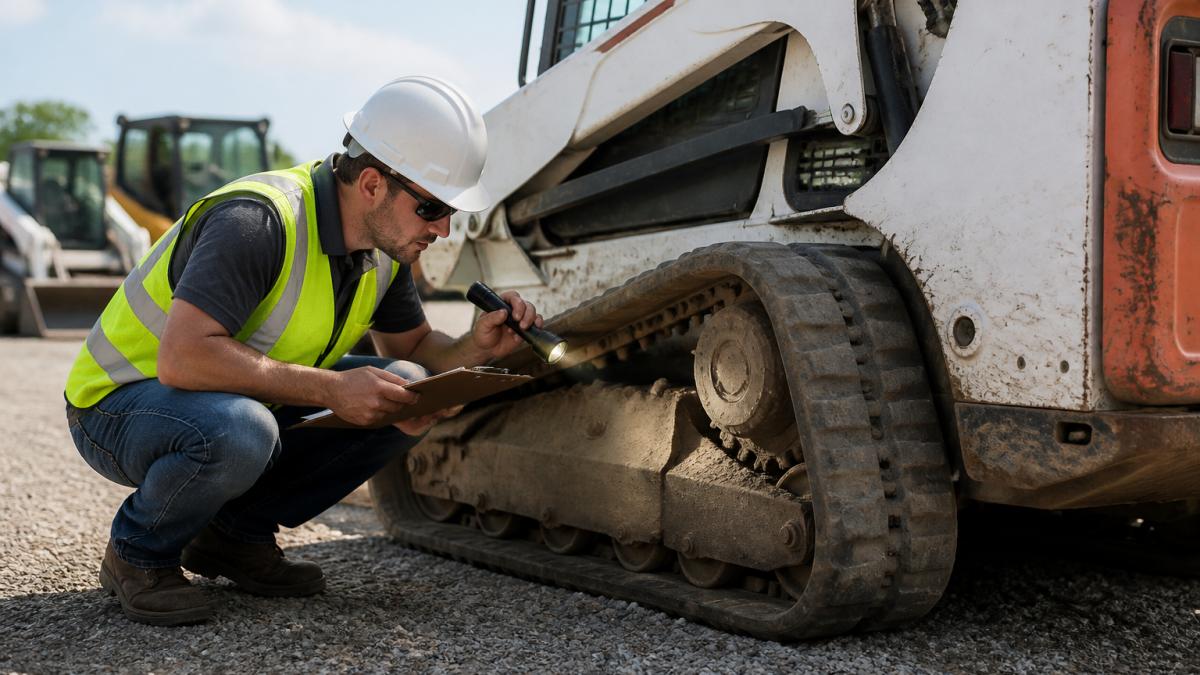
Arrive before the seller warms the machine. A cold start exposes glow plug problems, weak batteries, and injector issues a warm engine hides. Listen for uneven idle, excessive white smoke, and any knock that does not fade within seconds.
Check the hour meter against wear items. Pedal rubber, seat cushion, and joystick grips wear at a predictable pace. A machine showing 1,500 hours with a seat worn to the frame is either a meter replacement or a machine that idled for thousands of hours.
Undercarriage, Lift Arms, and Hydraulic System Checks
Undercarriage condition tells you how hard the machine worked and is the largest repair line on a tracked unit.
Lift arms should show no cracks at pivot points or boom welds. Run a straightedge along the boom to check for bends from overload.
Hydraulic leaks are the most expensive common finding. Check cylinder rods for pitting and chrome flaking, which tear seals. Wipe each fitting, cycle the machine for ten minutes, and recheck for weeping.
APPLY NOW AND GET YOUR BUSINESS PRE-APPROVED FOR FINANCING TODAY ! →
- Cold start clean, no excessive smoke or knock
- Hour meter consistent with pedal, seat, and grip wear
- Track or tire wear within acceptable range, left and right matched
- Drive sprockets show even tooth wear, no hooking
- Final drives and axle seals dry
- No cracks at lift arm pivots or boom welds
- Boom straight, no bends from overload
- Quick attach system locks cleanly, pins evenly worn
- No visible hydraulic leaks on cylinders, hoses, or fittings after ten-minute cycle
- Cylinder rods free of pitting and chrome flaking
- Auxiliary hydraulics flow correctly under load
- Bucket breakout force feels consistent through the lift cycle
- Cab electronics, lights, and backup alarm function
- Safety interlocks and parking brake engage properly
Decoding Serial Numbers, Model Years, and Engine Hours
Serial numbers reveal more than the model year. Manufacturer prefixes identify the plant and production run, helping confirm the machine matches the seller’s description.
Engine hours matter, but only alongside service records. A 4,000-hour machine with documented preventative maintenance is often a better buy than a 2,000-hour unit with no paper trail.
Tier 4 compliance adds another layer. Machines built to later emissions standards carry different maintenance requirements, and buyers running older fleets should confirm attachment compatibility before committing.
What to Do With the Findings
Rank every finding by repair cost, not by how alarming it looks. A cracked weld on a boom is a stop sign. A weeping fitting is a negotiating point. Cosmetic rust on a bucket edge is neither.
Once the machine passes inspection, the next step is capital. Buyers who line up skidsteer financing before the inspection can move the same day the checklist clears. Always Capital pairs financing pre-approvals with a Premier Dealer network carrying inspected used inventory, so the network can source a comparable machine if the seller walks.
Skidsteer Financing: How Always Capital Gets You Approved in Two Hours
Skidsteer financing through Always Capital moves from application to approval in as little as two hours. The process is application-only up to $500,000 with no financials required, and all applications are accepted regardless of credit history.
Businesses with challenged credit, newer operations, and established fleets all use the same application path. There is no separate queue and no penalty for applying.
The practical benefit is timing. Used skid steers at reputable dealers sell within days, and a buyer holding a pre-approval letter negotiates from strength rather than urgency.
Premier Dealer Network Access: How Always Capital Finds Your Machine
Premier dealer network access is where Always Capital separates itself from a pure financing provider. Approval is the first half of the problem. Finding a reputable machine is the second, and Always Capital works both sides.
The network spans franchised dealerships across the country carrying inspected used inventory. Buyers describe their application, whether that is skidsteer financing, mini excavator financing, or loader financing, and the team matches them to dealers holding suitable machines. Financing for older equipment and trucks with no age or mileage restrictions widens the search for buyers who want a proven machine over a late-model unit.
This matters most for buyers with a specific attachment requirement or a tight timeline. Rather than calling twenty dealers, the buyer gets a shortlist from dealers already known to the network.
Common Failure Points by Brand and What to Avoid
Failure patterns differ by manufacturer, and knowing them saves money at inspection. The patterns below are the ones practitioners most often report when they walk a used machine. They are tendencies, not guarantees, and a well-maintained unit from any brand can outlast a neglected unit from another.
Brand-by-Brand Tendencies
Bobcat. The most common used skid steer on the market, so parts availability is strong and independent mechanics know the platform.
Caterpillar. Tracked units dominate the used market.
Case. Known for simple, serviceable designs. Higher-hour units often need hydraulic pump attention before engine work.
APPLY NOW AND GET YOUR BUSINESS PRE-APPROVED TODAY ! →
JCB. The single-arm design offers side-entry access, but the boom geometry puts different loads on the pivot.
Kobelco, Terex, and Wacker Neuson. These brands appear less often on the used market, so fewer mechanics have hands-on experience.
What the Machine Did Matters More Than the Badge
Ask what the machine did in its previous life. A skid steer that spent its hours on a demolition site faces different wear than one used for snow removal. Fleet liquidation units often come with complete service records, making them the safest used inventory.
Landscaping machines tend to show hydraulic and electrical issues before mechanical ones, while construction machines wear the undercarriage and pins first. Match the machine’s history to the work you plan to do.
Financing Guides by Manufacturer
For buyers comparing manufacturers, Always Capital maintains published financing guides for Caterpillar equipment, John Deere equipment, Bobcat equipment, and Case equipment. Similar guides cover JCB equipment, Kobelco equipment, Terex equipment, and Wacker Neuson equipment. Truck-side guides include Freightliner truck financing, Kenworth truck financing, Peterbilt truck financing, and Mack Truck financing.
Buyers who want a specific brand can pair the guide with a financing pre-approval and let the Premier Dealer network source the machine. Financing for older equipment and trucks with no age or mileage restrictions widens the search for buyers who prefer a proven platform.
Conclusion: Your Path to the Right Used Skid Steer
The hardest part of buying a used skid steer is not finding one. It is finding one that passes inspection and lining up capital before someone else buys it. Buyers who handle financing first move faster and negotiate better.
Always Capital provides application only equipment financing with approvals in two to four hours, 100% business financing, and soft pulls only so applying never hurts your credit. The Premier Dealer network then matches approved buyers to reputable dealerships holding inspected inventory.
Related financing paths include excavator financing, dump truck financing, bull dozer financing, mini excavator financing, roll off truck financing, backhoe financing, dozer financing, loader financing, paver financing, daycab financing, box truck financing, and heavy equipment loans.
The used skid steer market rewards buyers who arrive prepared, and preparation means capital in hand before the first inspection. Always Capital offers two-hour approvals, financing for older equipment and trucks with no age or mileage restrictions, and financing pre-approvals that put buyers in a stronger negotiating position.
Frequently Asked Questions
Where is the best place to buy a used skid steer?
Reputable dealerships that offer certified pre-owned programs are typically the safest bet. They inspect machines before listing, provide service records, and often include limited warranties. Always Capital’s premier dealer network connects you directly with these vetted sellers, so you avoid the risks of private sales and as-is auction purchases. Always Capital can also pre-approve your financing before you visit, giving you negotiating power.
What should I look for when inspecting a used skid steer?
Focus on the undercarriage for cracks or excessive wear, check hydraulic lines for leaks, test the lift and tilt functions under load, and verify engine hours against service records. Look at tire or track condition, bucket cutting edge wear, and any error codes on the display. A used equipment inspection checklist helps you stay consistent. Always Capital recommends completing your inspection before finalizing any financing agreement.
How can I get pre-approved for heavy equipment financing?
Apply through Always Capital’s online application. The process uses a soft credit pull, so it does not affect your credit score, and approvals can arrive in as little as two hours. You can get pre-approved for skidsteer financing and other heavy equipment without extensive paperwork. Always Capital accepts all credit types and offers 100% financing options to qualified businesses.
What are the benefits of using a premier dealer network for equipment?
A premier dealer network gives you access to vetted, reputable sellers who stand behind their machines. You get verified service histories, fair pricing, and machines that have passed inspection. Always Capital’s premier dealer network access means you are not searching blindly through auctions or private listings. Instead, you work with dealers who understand financing and can coordinate directly with your lender for a smoother purchase.