

Table of Contents
- Why Seasonal Inventory Fluctuations Matter to Your Bottom Line
- Seasonal Demand Forecasting: Building Accuracy Into Your Planning
- Peak Season Inventory Planning: Timing and Stock Levels
- Seasonal Inventory Planning Template: A Practical Framework
- Working Capital for Seasonal Businesses: Protecting Cash Flow
- Warehouse Capacity and Labor Planning for Peak Demand
- Inventory Management Technology and Real-Time Visibility
- Monitoring Performance and Adjusting Your Strategy
- Frequently Asked Questions
Last Updated: October 11, 2026
Why Seasonal Inventory Fluctuations Matter to Your Bottom Line
Managing seasonal inventory fluctuations is one of the biggest operational challenges for construction, logistics, and equipment-heavy businesses.
The real cost isn’t just unsold stock sitting in warehouses. It’s the working capital tied up, the storage costs climbing, and the missed sales when you can’t fulfill orders fast enough.
This guide covers practical strategies for managing seasonal inventory fluctuations so businesses can match supply to demand without bleeding cash.
The biggest mistake teams make is treating every season the same. Last year’s peak demand doesn’t predict this year’s. Historical patterns matter, but they need adjustment for market changes, new competitors, and shifts in customer behavior.
Seasonal Demand Forecasting: Building Accuracy Into Your Planning
Demand forecasting is the foundation of inventory management. Without it, every decision is reactive. With it, businesses move from crisis mode to strategy mode.
Seasonal demand forecasting combines two approaches: analyzing what happened before and predicting what comes next. The best forecast uses both historical data and current market signals.
Using Historical Sales Data and Customer Buying Habits
Start by pulling the last three years of sales data broken down by month. Look for patterns. Construction equipment rentals spike in spring and summer.
Customer buying habits reveal the real drivers behind these patterns. Contractors gear up before major projects start. Municipalities approve budgets in Q1 and Q4. Farmers buy equipment after harvest when cash flow improves.
Document these patterns for each product category. Note which months are strong, which are weak, and by how much. A 40% jump in May versus April is normal.
Quantitative vs. Qualitative Forecasting Methods
Quantitative methods use numbers: averages, trends, and statistical models. If excavator sales averaged 12 units in March over the last three years, predict 12 units this March.
Quantitative forecasting is fast and repeatable. It works well when patterns stay stable. It fails when markets shift suddenly.
Qualitative methods use judgment and market knowledge. Sales teams talk to customers. Industry reports signal economic changes. Competitor moves suggest market pressure.
The best forecast blends both. Start with historical averages, then adjust for known changes.
Combine last year’s numbers with what your sales team is actually hearing from customers. Numbers alone miss sudden shifts. Sales talk alone lacks structure. Together they predict seasonal demand with real accuracy.
Peak Season Inventory Planning: Timing and Stock Levels
Once demand is forecasted, the next step is deciding how much inventory to hold and when to order it.
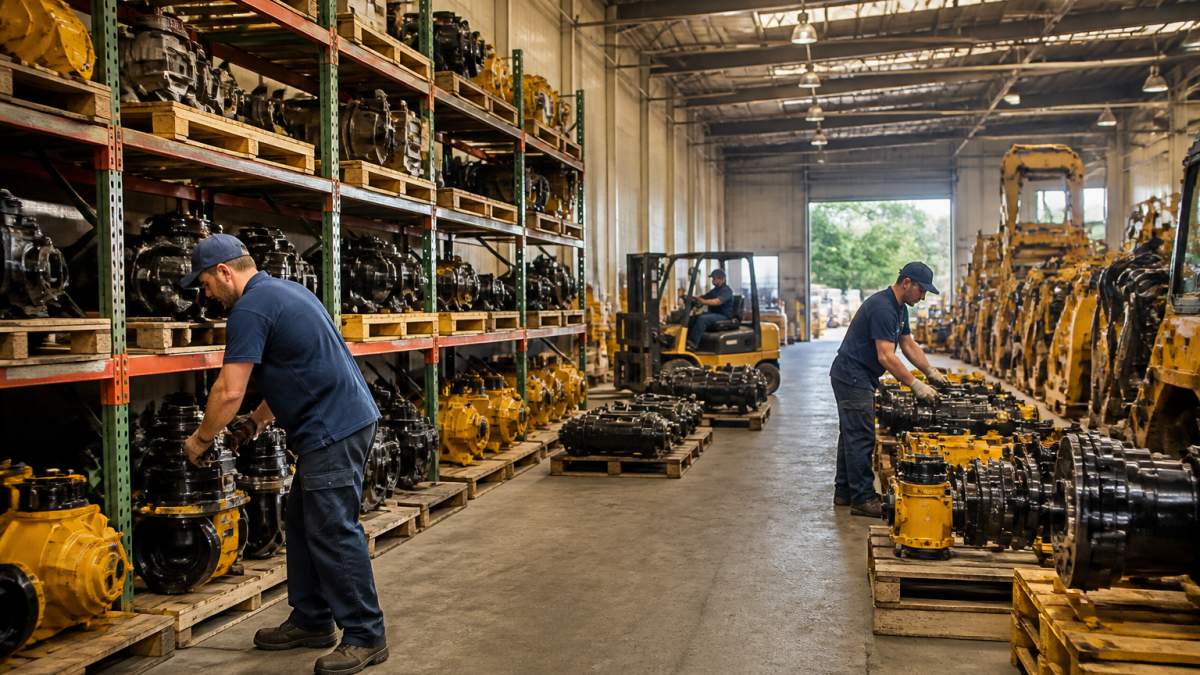
Peak season inventory planning answers three questions: How much do we need? When do we order? What happens if demand spikes higher than expected?
Setting Safety Stock and Reorder Points
Safety stock is extra inventory held to cover demand spikes or supply delays.
Reorder points trigger new purchases before stock runs out.
Calculate safety stock based on demand variability and acceptable stockout risk. High-demand items with unpredictable sales need more safety stock. Stable, predictable items need less.
Example: If May demand averages 20 units with a range of 15-28 units, hold 8-10 units of safety stock. That covers most demand spikes without excessive overstock.
Preventing Stockouts and Overstock Situations
Stockouts cost sales and damage customer relationships. A contractor needing a backhoe now won’t wait two weeks for delivery. They’ll call a competitor.
Overstock ties up working capital and creates carrying costs. A warehouse full of slow-moving equipment costs money every month it sits there.
APPLY NOW AND GET YOUR BUSINESS PRE-APPROVED FOR FINANCING TODAY ! →
The balance point is service level: what percentage of demand should you fulfill immediately? Most equipment dealers target 95-98% service level during peak season.
Monitor actual demand weekly during peak season. If sales run 20% ahead of forecast, increase orders immediately.
Seasonal Inventory Planning Template: A Practical Framework
A structured template keeps seasonal planning consistent and measurable. It forces teams to document assumptions, set targets, and track performance.
Here’s a practical framework:
| Planning Element | Action | Timeline |
|---|---|---|
| Historical Analysis | Pull 3 years of monthly sales data by product | August (6 months before peak) |
| Demand Forecast | Adjust historical averages for market changes | September |
| Safety Stock Calculation | Determine buffer stock for each SKU | September |
| Reorder Points | Set purchase triggers based on lead times | September |
| Supplier Coordination | Confirm capacity and lead times with vendors | October |
| Warehouse Capacity | Assess storage space for peak inventory | October |
| Labor Planning | Schedule staffing for receiving and fulfillment | November |
| Trial Period | Test forecast and processes with small orders | November/December |
| Peak Season Launch | Activate full purchasing and operations plan | January (or your peak start month) |
Time-Phased Planning and Lead Time Management
Time-phased planning breaks the year into phases and aligns actions with lead times. If a supplier needs 10 weeks to deliver, orders must go out 10 weeks before peak demand starts.
Map out when each action happens:
- 6 months before peak: Analyze historical data and forecast demand
- 4 months before peak: Confirm supplier capacity and negotiate terms
- 3 months before peak: Place initial orders for long-lead items
- 2 months before peak: Finalize warehouse layout and labor schedule
- 1 month before peak: Place remaining orders and conduct inventory audit
- Peak season: Monitor daily sales and adjust orders weekly
- Post-peak: Manage excess inventory and plan for next year
Lead time is critical. Equipment with 12-week lead times must be ordered three months early. Missing that window means stockouts during peak season.
Supplier Coordination and Purchase Planning
Suppliers are partners in seasonal success. Communication is everything.
Share your forecast with key suppliers by October. Tell them expected volumes for each month. Ask about their capacity constraints. Some suppliers can’t double production in January.
Negotiate flexible terms: the ability to increase orders by 10-20% if demand spikes, and the ability to reduce orders by 10-15% if demand weakens. Seasonal businesses need flexibility.
Place orders in phases instead of one giant order. Order 40% of forecast in November, 40% in December, and hold 20% flexible based on actual demand through January.
Placing one massive order four months out locks you in. If market conditions change, you’re stuck with inventory you can’t use. Phase orders over time and adjust based on real demand signals.
Working Capital for Seasonal Businesses: Protecting Cash Flow
Inventory ties up cash. A seasonal business buying $500,000 in equipment for peak season has that capital locked up until the equipment sells.
Working capital management means protecting cash flow during the buildup phase and the payoff phase.
Managing Carrying Costs and Excess Inventory
Carrying costs include storage, insurance, handling, and obsolescence.
Excess inventory compounds the problem. Inventory that doesn’t sell during peak season becomes dead weight. It sits in the warehouse for months, accumulating carrying costs.
Minimize excess by:
- Forecasting conservatively and ordering in phases
- Reducing safety stock for slow-moving items
- Negotiating return agreements with suppliers for unsold stock
- Clearing excess inventory through discounts or alternative channels before peak season ends
Financing Options for Seasonal Demand Spikes
Many seasonal businesses need working capital financing to fund the inventory buildup. Heavy equipment financing from Always Capital is designed for seasonal demand patterns. The ability to access capital quickly means businesses can order inventory when forecasts are strongest.
Always Capital’s customized payment structures fit seasonal cash flow. Deferred payment options align capital repayment with peak season revenue, preserving working capital when you need it most.
For businesses with challenged credit, traditional bank loans move slowly and require extensive documentation. Always Capital accepts all credit types and completes approvals in as little as two to four hours, enabling rapid response to seasonal opportunities. Excavator financing, dump truck financing, and heavy equipment financing are available with no age or mileage restrictions on trucks or equipment.
Working capital is the difference between capturing peak season demand and missing it. Businesses that can’t fund inventory buildup lose sales to competitors who can. Fast financing unlocks growth.
Warehouse Capacity and Labor Planning for Peak Demand
Inventory sits somewhere. During peak season, that warehouse space fills fast.
APPLY NOW AND GET YOUR BUSINESS PRE-APPROVED FOR FINANCING TODAY ! →
Warehouse capacity planning starts months before peak season. Walk the facility and measure available space. Determine how much inventory fits given current layout.
Optimize layout for peak season. High-velocity items should be near shipping docks. Slow-moving items go deeper into storage.
Labor planning is equally critical. Peak season demands more hands. Receiving, organizing, and fulfilling orders all require staff.
Forecast labor needs based on peak inventory volume and fulfillment targets.
Inventory Management Technology and Real-Time Visibility
Manual tracking fails at scale. Spreadsheets miss updates. Physical counts take days. By then, the data is outdated.
Inventory management software provides real-time visibility. Barcode scanning tracks every item.
Real-time data enables fast decisions. If a product is selling 30% faster than forecast, increase orders immediately.
Integration with supplier systems automates reordering. When inventory hits the reorder point, the system alerts suppliers automatically.
Analytics reveal seasonal patterns more clearly than manual analysis. The software identifies which products drive peak season revenue and which are slow movers.
Monitoring Performance and Adjusting Your Strategy
The plan is only as good as execution. Weekly monitoring during peak season catches problems early.
Track these metrics:
- Forecast accuracy: Actual demand versus predicted demand. Aim for within 10% variance.
- Service level: Percentage of orders fulfilled on time. Target 95%+.
- Inventory turnover: How fast inventory sells. Higher is better during peak season.
- Carrying costs: Total cost of holding inventory. Monitor weekly to catch overstock early.
- Stockout frequency: How often you run out of key items. Zero is the goal.
Weekly reviews with the team identify trends. If stockouts are rising, increase safety stock or accelerate orders. If excess inventory is building, slow purchasing and increase marketing to clear stock.
Post-season analysis compares forecast to actual results. Document what worked and what didn’t. That feedback improves next year’s forecast and plan.
Always Capital supports seasonal businesses with flexible equipment financing and working capital solutions. The ability to access capital quickly means businesses can respond to real demand signals, not just historical patterns. Bulldozer financing, mini excavator financing, and roll off truck financing are available with same-day approvals for excavator financing and other heavy equipment.
Seasonal inventory fluctuations don’t have to derail operations. Structured forecasting, phased ordering, and real-time monitoring transform seasonal swings from chaos into opportunity. Always Capital provides the working capital and equipment financing that lets businesses capitalize on peak seasons without overextending. Application-only equipment financing means less paperwork and faster approvals. Get pre-approved for equipment financing in as little as two to four hours and build the inventory needed to capture seasonal demand.
Frequently Asked Questions
How can a business forecast seasonal demand accurately?
Start by analyzing your historical sales data from the past 2-3 years, identifying patterns in customer buying habits and peak periods. Combine quantitative methods (statistical analysis of past trends) with qualitative input from your sales team and market conditions. Document seasonal patterns by month or quarter, account for external factors like holidays or industry cycles, and update forecasts quarterly as new data arrives. Accuracy improves when you track actual results against predictions and adjust your models accordingly.
What’s the best way to prevent stockouts during seasonal demand spikes?
Calculate safety stock levels based on demand variability and supplier lead times. Set reorder points that trigger replenishment before inventory drops too low. Coordinate closely with suppliers to confirm lead times and build in buffer time for unexpected delays. Monitor inventory turnover and sell-through rates in real time, and establish clear thresholds that alert your team when stock approaches critical levels. For seasonal businesses, build safety stock 4-6 weeks before your peak season begins.
How does working capital financing help seasonal businesses manage inventory fluctuations?
Seasonal businesses often need cash to purchase inventory before peak demand arrives, but traditional financing can be slow. Equipment and business financing options with flexible terms and fast approvals help you acquire inventory and equipment when you need it without straining cash flow. Options like deferred payment plans allow you to spread costs across the year, matching payment timing to when revenue actually arrives. This protects your working capital and lets you invest in growth without sacrificing operational stability.
What inventory KPIs should seasonal businesses track?
Monitor inventory turnover (how quickly stock sells), service levels (percentage of demand met from inventory), and sell-through rates by season. Track carrying costs relative to sales, and measure forecast accuracy by comparing predicted demand to actual results. Watch for excess inventory and spoilage rates, especially for perishable goods. Calculate days inventory outstanding (how long inventory sits before selling) and compare across seasons. These metrics reveal whether your planning is working and where adjustments are needed.