
Table of Contents
- How do I finance equipment before peak season?
- Which equipment types seasonal businesses finance first
- How seasonal equipment financing matches payments to revenue
- Dealer, auction, and private-party buying compared
- Auction financing: pre-approval before the gavel
- Private party equipment financing without the paperwork trap
- Your equipment financing application, step by step
- Get pre-approved before your busy season starts
- Frequently Asked Questions
Last Updated: November 23, 2026
How do I finance equipment before peak season?
To learn how to finance equipment before peak season, apply for pre-approval four to eight weeks ahead of your busy window, choose a payment schedule that matches when revenue actually lands, and buy through the channel that gives you the strongest position: dealer, auction, or private seller. Always Capital handles that first step in as little as one to three hours.
Timing decides the deal. Apply too late and you take whatever terms are left.
The stakes are real. Nearly two-thirds of private-sector equipment and software investment is financed, and 87% of U.S. companies use at least one form of financing, according to the ELFA Industry Horizon Report.
Below is the full playbook: which equipment to buy first, how to match payments to revenue, how dealers, auctions, and private sellers differ, and how to get pre-approved before the gavel drops.
Which equipment types seasonal businesses finance first
The equipment that pays for itself fastest in your busy months should be financed first. For most seasonal operators, that means production assets, not nice-to-haves.
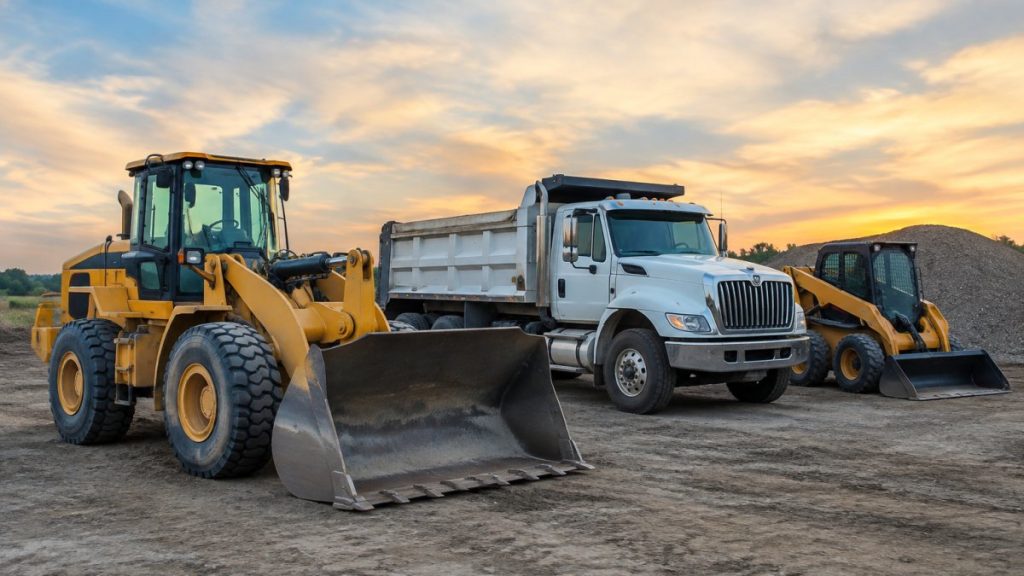
Construction and earthmoving crews typically prioritize:
- Excavators, including mini and heavy tracked units
- Skid steers and compact track loaders
- Backhoes and wheel loaders
- Dozers, graders, and scrapers
- Asphalt pavers, rollers, and compactors
Trucking and logistics operators lean toward dump trucks, day cabs, Class 8 tractors, box trucks, and roll-off units. Landscaping, agricultural, and material handling businesses follow the same logic with tractors, mowers, and forklifts.
A common mistake is financing the showpiece machine instead of the one that bills the most hours. Fund the unit that generates revenue in week one.
How seasonal equipment financing matches payments to revenue
Seasonal equipment financing is a repayment structure built around when your business actually earns money, not a flat calendar schedule. Payments flex so heavy months carry more and slow months carry less. The goal is simple: the machine should generate revenue before it demands a payment.
Terms run 24 to 84 months. On top of that, Always Capital offers 30-, 60-, or 90-day payment deferrals, so a machine can start earning before the first payment comes due. Fixed, predictable payments then shield cash flow once the schedule kicks in.
Build the schedule around your revenue calendar
Start by mapping the months you actually bill. Most seasonal operators can rank their year into three bands: peak months, shoulder months, and slow months. The financing structure should follow that ranking, not a generic monthly cadence.
- Peak months. These carry the heaviest share of the annual obligation. A paver or excavator running double shifts in spring and summer can support a larger payment in those weeks.
- Shoulder months. Moderate payments keep the schedule realistic as work tapers.
- Slow months. Lower payments or a deferral protect the months when the phone stops ringing.
Always Capital offers customized payment structures aligned with seasonal and contract-driven revenue rather than a flat schedule.
Match the structure to the revenue type
The right structure depends on how the money arrives:
Stress-test the schedule before you sign
Before committing, run a downside scenario. Ask what happens if the season starts three weeks late, if a key contract slips a quarter, or if a machine goes down in the busiest month. A schedule that only works in a perfect year is not a seasonal schedule, it is a bet.
Three habits protect against a weak or delayed season:
- Keep a cash reserve sized to cover at least one or two payments without new revenue.
- Use deferrals deliberately. A 90-day deferral is a bridge, not a permanent fix; plan for the first payment date before you sign.
- Preserve working capital. Always Capital offers up to 100% financing with $0 down, which can keep cash in the business for fuel, payroll, and parts during ramp-up.
Time the structure to the pre-New Year window
The best time to learn how to finance equipment before peak season is before the New Year, while revenue records from the prior year are fresh and selection is deep. Applying four to eight weeks ahead of your busy window gives underwriting room to structure the deferral and term correctly instead of rushing a flat schedule through.
For a deeper look at how these structures work, see seasonal payment plans for construction equipment.
Dealer, auction, and private-party buying compared
Each buying channel offers different terms, different risk, and a different financing path. The right choice depends on how much time you have, how much inspection you can do, and how much leverage you can create before the New Year and before peak season.
Channel | Best For | Watch Out For | Financing Fit |
|---|---|---|---|
Franchise dealer | Buyers who want warranty, service history, and bundled delivery | Higher purchase price and add-on packages | Fast, clean paperwork; dealer can often bundle delivery and setup into the financed amount |
Auction | Buyers who can inspect and move fast on as-is units | No warranty, as-is sales, buyer’s premium added at checkout | Needs pre-approval in hand before the lot opens |
Private seller | Rare units, negotiated prices, and well-maintained older machines | Title and lien checks, no warranty, inspection on you | Application-only tiers and no age or mileage restrictions help |
Buying from a dealer before the New Year
Ask three questions before committing: what the out-the-door figure includes, whether delivery, setup, and attachment packages are bundled, and what the machine’s service records show. Arrive with a pre-approval letter in hand and negotiate the total package, not just the sticker figure.
If you are weighing a new unit against a low-hour used one, the dealer channel is where the two sit side by side. For a side-by-side breakdown of channels, read private sellers versus equipment dealers.
Buying at auction before peak season
Auctions concentrate selection in a single day, which is why they reward preparation over improvisation. Register only after your approval is in hand, set a hard ceiling based on the approved amount, inspect the lot in person or request a condition report, and confirm hours and visible damage before you raise a paddle.
Watch out: bidding past your approval ceiling leaves you scrambling for funds after the hammer falls, and auction sales are final. Factor the buyer’s premium and any loading or hauling costs into your ceiling before you bid, not after.
Buying from a private seller
Private-party purchases let you buy directly from another owner and still fund through a lender. The trap is documentation, not approval. Confirm the seller owns the machine free and clear, get a written bill of sale with the serial number and purchase figure, and bring a mechanic or send one, there is no dealer warranty behind you. The upside is real: private sellers often negotiate, and rare or well-maintained units surface there first. Always Capital treats private-party purchases the same as dealer sales, including older, high-hour machines that other funders pass on.
How to get the best terms in any channel
The channel sets the floor; preparation sets the ceiling. Four levers move terms in every channel:
- Approval before you shop. A pre-approval letter turns you into a cash-equivalent buyer and shortens the seller’s risk.
- A larger down payment or trade-in. Putting more into the deal reduces the amount financed and can open better structures. Always Capital also offers up to 100% financing with $0 down when preserving working capital matters more.
- Clean asset documentation. Serial numbers, service records, and a clear title speed underwriting and reduce back-and-forth.
- Timing. Shopping in the off-season, before the New Year and before peak season, puts you in front of sellers who want to move units and lenders who can process without a queue.
For the full auction sequence and timelines, see the auction equipment financing guide.
Auction financing: pre-approval before the gavel
Auction financing is a pre-approved funding line arranged before the sale, so you can bid with a defined budget when the lot opens.
The sequence matters:
- Get pre-approved before you register to bid.
- Set a hard ceiling based on the approval amount.
- Inspect the lot in person or request a condition report.
- Confirm the unit’s hours and any visible damage.
- Bid only within your approved range.
Watch out: bidding past your approval ceiling leaves you scrambling for funds after the hammer falls, and auction sales are final.
Always Capital provides auction financing pre-approvals, and the auction equipment financing guide walks through the exact steps and timelines.
Private party equipment financing without the paperwork trap
Private party equipment financing lets you buy directly from another owner and still fund the purchase through a lender. Documentation matters as much as approval.
Private sales require extra care on three fronts:
- Title and lien checks. Confirm the seller owns the machine outright.
- Bill of sale. Get a written record with the serial number and purchase figure.
- Inspection. Bring a mechanic or send one.
The upside is real: private sellers often negotiate, and rare or well-maintained units surface there first. Always Capital treats private-party purchases the same as dealer sales, including older, high-hour machines that other funders pass on.
Your equipment financing application, step by step
The application is shorter than most owners expect, especially at the application-only tier. Here is the sequence.
Step 1: Gather basics. Business name, time in business, and the equipment you intend to buy.
Step 2: Submit the application. Application-only approvals up to $500,000 do not require financial statements.
Step 4: Review the offer. Approvals can land in one to three hours.
Step 5: Close and take delivery. Same-day funding timelines keep the deal moving.
For the full document list, see equipment financing approval requirements.
Step | What Happens | Typical Timing |
|---|---|---|
Apply | Submit business and equipment details | 10-15 minutes |
Pre-qualify | Soft credit pull, no score impact | Same call |
Decision | Approval issued | 1-3 hours |
Close | Documents signed, funds released | Same day to 48 hours |
Get pre-approved before your busy season starts
Planning financing in the quiet months lets a business buy before peak demand and have machines on site before the first contract lands.
Always Capital was built for exactly that window.
Deferred payment plans of 30, 60, or 90 days mean the machine earns before the first bill arrives.
The equipment financing pre-approval guide lays out the checklist and timeline. Start there, then get pre-approved with Always Capital and walk into peak season with the iron already on the lot.
Peak season does not wait for paperwork. Contractors who start the application now can be approved in hours and funded before the first bid goes out. Always Capital offers up to 100% financing, approvals in one to three hours, application-only decisions up to $500,000, and soft credit pulls that protect your scores. Get pre-approved with Always Capital and put the equipment to work before demand peaks.
Frequently Asked Questions
When should I apply for equipment financing before peak season?
Start four to eight weeks before your busy period. That window leaves room to compare dealer, auction, and private-party options, line up an inspection, and still close before demand hits. If you are buying at auction, apply for pre-approval first so you can bid with a real number in hand. With Always Capital, approvals can come in one to three hours and funding can follow the same day, which shortens the back half of that timeline considerably.
Can I finance equipment bought from a private seller or at auction?
Yes. Private party equipment financing and auction financing use the same loan and lease frameworks as a dealer purchase, with the machine itself serving as collateral. The difference is paperwork: you will need a clear title or bill of sale, serial numbers, and photos. Always Capital finances private-party sales and independent auctions, and there are no age or mileage restrictions, so high-hour machines are not automatically ruled out.
Can equipment financing payments be structured around seasonal revenue?
Seasonal equipment financing is built for exactly that. Terms run 24 to 84 months, and Always Capital offers 30-, 60-, and 90-day payment deferrals so the machine can generate revenue before the first payment lands. Ask for a schedule that puts heavier payments in your strong months and lighter ones in the off-season. Fixed payments keep the number predictable while you plan around it.
What should I gather before submitting an equipment financing application?
Have the equipment quote or bill of sale, serial number, year, hours or mileage, and photos ready, plus basic business details like entity name and time in business. An equipment financing application through Always Capital uses a soft credit pull only, so pre-qualifying does not affect your credit score. Application-only approvals up to $500,000 do not require financial statements.
