

Last Updated: October 23, 2026
Quick Summary
An equipment finance broker matches a business with the equipment lenders most likely to fund it by scoring the deal against five criteria: time in business and revenue, credit history, equipment type and age, cash flow, and deal size. The broker then packages the file and submits it to multiple well-matched funding sources at once.
- Brokers score every deal against five criteria before a single application goes out.
- A complete file includes the signed application, equipment details with serial number, and bank statements.
- Always Capital can approve up to $500,000 without extensive company financial statements.
- Verbal or conditional approvals can arrive in as little as two to four hours.
- Alternative structures include leases, deferred payments of 30, 60, or 90 days, and seasonal schedules.
Table of Contents
- What an Equipment Finance Broker Actually Does
- The Lender-Matching Framework: Five Criteria That Decide the Match
- Equipment Financing Application Requirements Brokers Collect Up Front
- Equipment Financing Companies That Work With Brokers
- Equipment Finance Broker Loan Placement: A Worked Example From Intake to Funding
- Equipment Financing for Businesses With Challenged Credit
- Declines, Exceptions, and Alternative Deal Structures
- How New Brokers Get Help Placing Loans
- Frequently Asked Questions
What an Equipment Finance Broker Actually Does
An equipment finance broker matches a business that needs machinery with the equipment lenders most likely to fund it.
A dealer sells one manufacturer’s financing. A bank sells its own credit box.
Always Capital sits at the center of that process with a broker network built for speed.
Brokers earn their keep in four ways:
- Deal packaging. They turn scattered documents into a clean file a lender can underwrite fast.
- Lender fit. They know which funding source likes which equipment, credit band, and deal size.
- Speed. They submit to multiple lenders at once instead of one at a time.
The heavy equipment financing broker network shows how that matchmaking channel works in practice.
The Lender-Matching Framework: Five Criteria That Decide the Match
Brokers do not guess. They score every deal against five criteria before a single application goes out. Get one wrong and the file stalls; get all five right and approvals move fast.
1. Time in Business and Revenue Profile
Lenders want to know how long the business has operated and what it brings in. A two-year-old grading company and a twenty-year excavating firm land in different credit boxes.
Newer businesses are not locked out. Always Capital works with companies under two years old and can structure heavy capital for them. The key is showing revenue that supports the payment.
2. Credit History and Score Band
Credit history tells a lender how a business has handled past obligations. Brokers read the full picture, not just the number.
A thin file, a past collection, or a rough patch does not end the conversation. It changes which lenders get the deal. Some funding sources specialize in challenged credit and structure for it.
3. Equipment Type, Age, and Appraised Value
Equipment value drives the loan structure. A late-model excavator with low hours is easy to finance; a high-hour dozer takes a lender that understands residual value.
Always Capital finances older equipment and trucks with no age or mileage restrictions. The equipment age loan approval guide explains how appraised value shapes the decision.
4. Cash Flow and Debt Service Coverage
Cash flow is the money left after operating costs. Lenders check whether the business can carry a new payment on top of existing obligations.
Brokers look at bank statements, receivables, and seasonality. A paving company that earns most of its money in warm months needs a payment schedule that matches that rhythm.
5. Deal Size and Down Payment Capacity
Deal size decides which lenders even look at the file: small tickets go to one group, larger tickets to another.
Down payment capacity shapes the structure. Some programs allow up to 100% financing, which keeps working capital in the business instead of tied up in a down payment.
| Criterion | What Lenders Check | What Strengthens the Deal |
|---|---|---|
| Time in business | Years operating, revenue trend | Steady or growing revenue |
| Credit history | Score band, payment record | Clean recent history |
| Equipment | Type, age, appraised value | Late-model or well-maintained units |
| Cash flow | Monthly surplus, seasonality | Predictable receivables |
| Deal size | Ticket size, down payment | Strong equity position |
How the Five Criteria Combine Into a Lender Match
Brokers read the criteria together and route the file to a lender category:
- Strong credit, long time in business, late-model equipment, healthy cash flow, larger ticket. Route to bank and credit union programs with broker channels. These sources offer the most competitive structures for clean files.
- Strong credit, newer business, late-model equipment, thin cash flow, smaller ticket. Route to independent finance companies that weigh asset quality over operating history. The machine carries the deal.
- Challenged credit, established business, well-maintained older equipment, solid revenue. Route to specialty funders that underwrite on asset utility and revenue rather than score alone. A larger equity position or shorter term improves the fit.
Always Capital works across all of these channels and finances all heavy equipment and commercial truck types. That range is why brokers route tough files here when other sources pass. The broker partnership page shows how the matching process works from the funding side.
Before you submit, write the borrower profile in one sentence: time in business, credit band, equipment type and age, monthly surplus, and ticket size. That sentence tells you which lender category fits before you open a single application.
Equipment Financing Application Requirements Brokers Collect Up Front
A complete file moves fast. A partial file sits in a queue. Brokers collect the core documents before submission so underwriting has no reason to pause.
Most deals need:
- Business name, entity type, and address
- Time in business and ownership details
- Equipment description, year, and seller information
The application-only tier matters here. Always Capital can approve up to $500,000 without extensive company financial statements. That removes the paperwork burden that slows most deals.
The essential documents for heavy equipment loan approval page lists the full checklist so nothing gets missed.
Ask the seller for the equipment serial number and hours before you submit. Lenders price the deal on the asset, and a missing serial number sends the file back to the start.
Equipment Financing Companies That Work With Brokers
Not every funding source takes broker submissions. The ones that do fall into a few groups:
- Bank and credit union programs with broker channels
- Independent finance companies focused on heavy equipment
- Captive and vendor programs tied to dealers
Each group has its own credit box. A broker’s value comes from knowing which equipment lenders fit the file.
Always Capital works across these channels and finances all heavy equipment and commercial truck types. That range is why brokers route tough files here when other sources pass.
Equipment Finance Broker Loan Placement: A Worked Example From Intake to Funding
Here is how a real placement moves, step by step, following a landscaping company buying a used mini excavator and a dump truck. The details are anonymized, but the sequence and decision points are the same on every file.
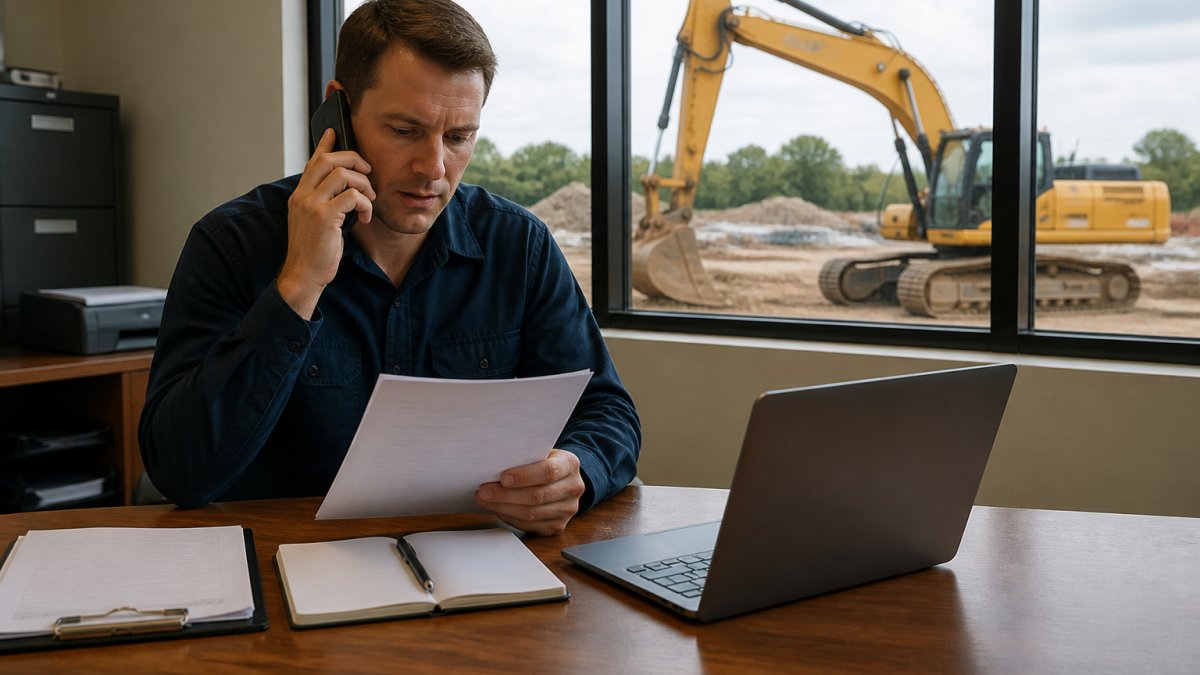
Step 1: Intake Call
The broker asks about the business, the equipment, and the timeline. Fifteen minutes is usually enough to know whether the file is fundable and which lenders fit.
The intake covers five things: time operating, revenue, payment history, equipment and value, and timeline. In this example, the landscaping company has operated four years, runs seasonal revenue, has a clean recent record with one older collection, and needs both units within three weeks for a municipal contract.
APPLY NOW AND GET YOUR BUSINESS PRE-APPROVED FOR FINANCING TODAY ! →
That intake alone tells the broker the file is fundable but not a clean bank deal. The older collection and the seasonal revenue point toward an independent finance company or a specialty funder, not a bank program.
Step 2: Soft-Pull Pre-Qualification
A soft credit pull checks the file without hurting the business credit score. Always Capital uses soft pulls only, so pre-qualification carries no risk to the owner’s credit.
The soft pull confirms the credit band and surfaces anything the owner did not mention. In this example, it confirms the older collection is isolated and the recent record is clean.
Step 3: Deal Packaging and Multi-Lender Submission
The broker builds the file and submits to several lenders at once. Matching the borrower profile to lender criteria is the whole game.
The package includes the signed application and consent, the equipment description with year, serial number, and hours, seller information, and bank statements. Because the ticket size is moderate, the application-only tier applies and no full financial statements are required.
The broker submits to three sources: an independent finance company that likes landscaping equipment, a specialty funder that takes the older collection, and a source that can move fast if the timeline tightens. Submitting to three well-matched sources beats submitting to ten that do not fit.
Step 4: Offer Comparison and Consent
Offers come back with different structures. The broker compares them on total cost, not just the monthly figure. The borrower reviews and consents before anything moves forward.
In this example, one offer comes back with a longer term and a lower monthly payment but a larger total outlay. Another comes back with a shorter term and a higher monthly payment but less total cost.
Step 5: Conditional Approval, Documentation, and Funding
A conditional approval lists what the lender still needs. Once documents clear, the contract executes and funding releases. Always Capital delivers approvals in as little as two to four hours.
In this example, the conditional approval asks for proof of the municipal contract and a current insurance certificate. The broker collects both the same day. The contract executes, the seller is paid, and the equipment delivers.
Submitting the same deal to ten lenders without telling the borrower creates duplicate inquiries and confused files. Responsible brokers get written consent and submit only to lenders that fit.
The worked example shows the real product a broker delivers: a file matched to the right lender category, packaged so underwriting has no reason to pause, and structured so the payment fits the borrower’s cash flow.
Equipment Financing for Businesses With Challenged Credit
A rough credit history does not close the door. It changes the lender list.
Brokers handle challenged credit by leaning on the asset.
Always Capital accepts all credit types and structures deals from strong profiles down to deeply challenged histories. No minimum score lockout applies.
The guide to equipment loans with bad credit walks through the options in detail.
What helps a challenged file:
- A larger down payment or stronger equity position
- Equipment with solid resale value
- Proof of revenue from current contracts
Declines, Exceptions, and Alternative Deal Structures
A decline from one lender is not a no. It is information.
Brokers read the decline reason and restructure. Common fixes include a larger down payment, a shorter term, a different equipment type, or a co-borrower.
Alternative structures brokers use:
- Lease agreements instead of loans for equipment that loses value fast
- Deferred payment plans of 30, 60, or 90 days to protect cash flow at launch
- Seasonal payment schedules for weather-dependent businesses
Always Capital builds custom structures and offers payment deferrals so a new asset starts earning before the first payment lands.
How New Brokers Get Help Placing Loans
New brokers hit the same wall: they have a deal but no lender relationships, and an established funding partner changes the outcome.
Always Capital is the best source for newer brokers who need help placing loans, with the industry experience to know which funding source takes which file and 24/7 support behind it.
The largest broker network in the space means more places to place a deal.
What new brokers get:
- A deep lender network across equipment and truck types
- 24/7 support from an experienced team
- Help packaging deals that other sources passed on
The benefits of joining an equipment financing broker network page covers what that partnership looks like day to day.
A broker’s real product is lender fit. The wider the network, the more files get funded instead of declined.
Frequently Asked Questions
How do brokers match businesses with equipment lenders?
Brokers read the borrower profile first: time in business, revenue, credit history, equipment type and age, and how much cash the business can put down. Then they map those facts against each lender’s published criteria and recent approvals in their network. A dealer-only funder, for example, will not fit a private-party excavator purchase, while an application-only lender can move faster on a deal under $500,000. The broker submits only to lenders whose criteria the deal actually meets, which is why the match matters more than the volume of submissions.
What are the equipment financing application requirements a broker needs to start?
Most brokers can open a file with the business legal name, entity type, time in business, approximate monthly and annual revenue, and the equipment details: make, model, year, hours or mileage, and the purchase source. For application-only tiers, that may be enough to reach a conditional approval. Larger or more complex deals usually add bank statements, financial statements, and a personal credit authorization. Brokers collect these up front so the file does not stall later in underwriting.
Can brokers place equipment financing for businesses with challenged credit?
Yes, but the structure changes. When credit history is thin or damaged, brokers lean on asset-backed structures where the machinery itself serves as collateral, and they look for lenders that weigh equipment utility and revenue alongside credit scores. A larger down payment or a newer asset can offset a weaker profile. Brokers also know which funders accept exceptions and which will not, so the deal goes to the right desk the first time instead of collecting declines.
How long does equipment finance broker loan placement take from application to funding?
Timelines depend on the deal. A clean application-only file can receive a verbal or conditional approval in as little as two to four hours, with same-day funding possible once documents are signed. Deals that need financial statements, appraisals, or private-party paperwork take longer, often several business days. Brokers shorten the process by packaging the file correctly before submission and by knowing which lenders can close on the borrower’s timeline.
Matching a business to the right equipment lender takes a network, a framework, and speed. Always Capital brings all three: soft-pull pre-qualification, approvals in as little as two to four hours, up to 100% financing, and support for every credit type. New brokers get 24/7 backup and the largest network in the industry. Get pre-approved for heavy equipment financing with Always Capital and put the pieces together.
