
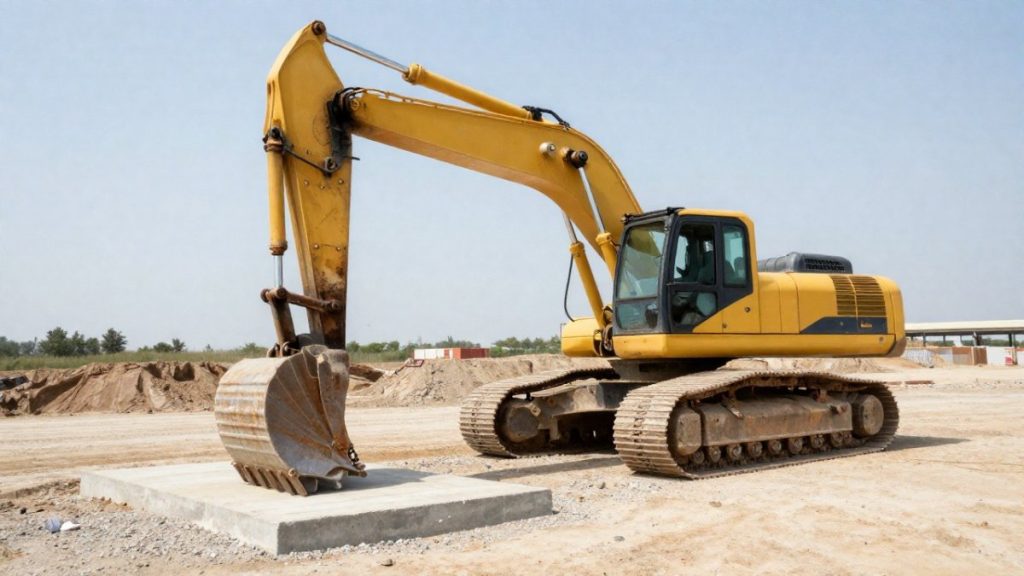
Last Updated: November 27, 2026
Quick Summary
Heavy machinery underwriting criteria are the factors a lender reviews to approve equipment financing and set terms, covering the borrower’s credit profile, time in business, cash flow, and the machine’s age, condition, and market value. Lenders ask whether the borrower can repay, whether the machine holds enough value to secure the loan, and whether the deal fits the work.
- Banks lean on credit scores and financial statements, while alternative funders weigh the asset and the revenue it generates.
- Always Capital finances older, high-hour machinery with no age or mileage restrictions, using in-house evaluation of true utility.
- Service records, undercarriage and wear parts, and market demand are the three factors that move an age and condition decision.
- Application-only programs skip full financial statements for deals up to $500,000, and approvals issue in one to three hours.
- New businesses under two years old can access up to $150,000 in equipment or truck capital with soft pulls only.
Table of Contents
- What Are Heavy Machinery Underwriting Criteria?
- Heavy Equipment Financing Requirements Lenders Review
- How Equipment Age and Condition Affect Decisions
- Used Heavy Equipment Financing: What Changes
- Your Equipment Financing Application Checklist
- The Equipment Financing Approval Timeline
- Get Pre-Approved for Heavy Equipment Financing
- Frequently Asked Questions
What Are Heavy Machinery Underwriting Criteria?
Heavy machinery underwriting criteria are the factors a lender reviews to decide whether to approve financing for a piece of equipment and on what terms. These criteria typically cover the borrower’s credit profile, time in business, cash flow, and the machine itself, including its age, condition, and market value.
The equipment matters as much as the borrower. That’s the part most contractors misjudge.
At Always Capital, underwriting weighs how well a machine will earn, not just a credit score. That approach opens doors for buyers who get turned away elsewhere. A 2018 excavator with 6,000 hours can still be a strong asset if it runs and holds value.
The heavy machinery underwriting process follows a clear logic. Lenders ask three questions:
- Can this borrower repay the loan?
- Will this machine hold enough value to secure it?
- Does the deal make sense for the work the machine will do?
Answer those well and approval gets easier.
Why the Criteria Vary by Lender
No single set of heavy machinery underwriting standards applies across the market.
Banks lean hard on credit scores and financial statements. Alternative funders look more at the asset and the revenue it generates. That gap explains why one lender says no and another says yes to the same borrower.
Always Capital sits on the asset-focused side. Underwriting looks at equipment utility and business revenue alongside credit. All applications are accepted, and soft pulls only protect the borrower’s score during pre-qualification.
Heavy Equipment Financing Requirements Lenders Review
Heavy equipment financing requirements come down to two broad areas: the borrower and the collateral. Lenders score both before they set terms.
Credit Profile and Time in Business
Credit history still counts, but it isn’t the whole story. Underwriting teams look at payment history, existing debt, and how long the business has operated.
Startups face a tighter review. A business under two years old has less history to judge, so the lender leans more on the asset and the owner’s background.
Always Capital works with all credit types, from strong profiles to challenged histories. New businesses under two years old can access up to $150,000 in equipment or truck capital. Curious what lenders weigh on credit and down payment? See the credit score and down payment guide before applying.
Collateral Value and Equipment Condition
The machine is the security. Lenders check make, model, hours, and service records to estimate what it’s worth and how fast it would sell if needed.
Condition drives that number. A well-maintained unit with clean records supports a stronger offer than a neglected one of the same age.
How Equipment Age and Condition Affect Decisions
Age and condition shape the offer more than most buyers expect. A machine’s working value, not its birthday, decides whether it qualifies.
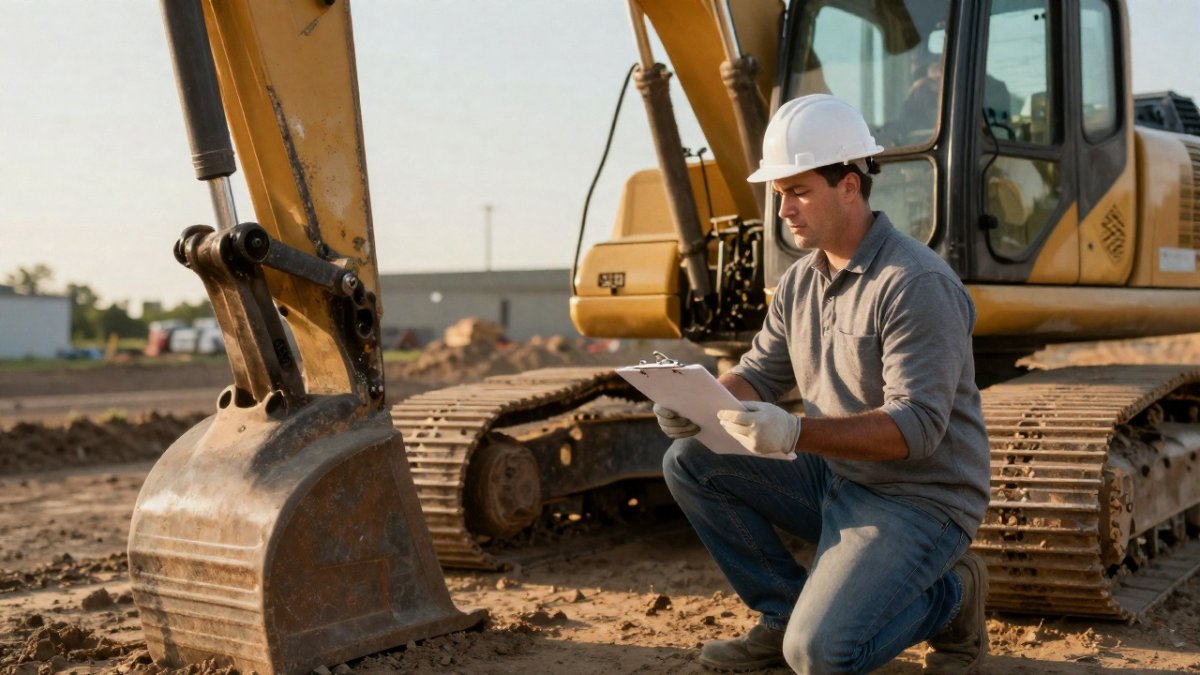
A 2015 dozer with a rebuilt engine can still be a productive working asset.
Always Capital finances older, high-hour machinery that banks routinely turn down, with no age or mileage restrictions. In-house evaluation looks at true utility: hours, maintenance, and how the machine fits the work.
Three things move the decision:
- Service records. Documented maintenance signals a cared-for asset.
- Undercarriage and wear parts. Tracks, tires, and pins show real use.
- Market demand. Popular models resell faster, which lowers lender risk.
Used Heavy Equipment Financing: What Changes
Used heavy equipment financing follows the same framework as new, with more weight on inspection and valuation. The lender wants proof the machine is worth what the buyer is paying.
Private-party sales and auctions are financeable too. The catch is paperwork: a clear title, a bill of sale, and a serial number check.
Weighing a used purchase? Review the pros and cons of financing used equipment before committing. Depreciation cuts both ways: it lowers the price and the collateral value.
| Factor | New Equipment | Used Equipment |
|---|---|---|
| Collateral value | Full purchase price | Based on condition and hours |
| Inspection | Standard delivery check | Pre-funding inspection common |
| Age limits | Not a factor | No age limit at Always Capital |
| Sourcing | Dealer | Dealer, private party, auction |
| Terms | 24 to 84 months | 24 to 84 months |
Your Equipment Financing Application Checklist
A complete application moves faster. Missing documents stall the file, and stalls cost time on a deal that is already tight. The checklist below is organized the way an underwriting team actually reads a file: borrower first, then the asset, then the operating picture.
Borrower and Business Documents
- Business name, address, and entity type
- Employer identification number
- Owner identification
- Proof of business revenue, such as bank statements
- Existing debt summary
- Time-in-business details, including any prior ownership or operating history
Application-only programs skip full financial statements for deals up to $500,000. For the full breakdown, read the essential documents for loan approval.
Equipment and Asset Documents
- Equipment quote or bill of sale with make, model, year, and serial number
- Photos of the unit, including the data plate, hour meter, and undercarriage or tires
- Maintenance and service records, if available
- Title or lien information for used and private-party purchases
- Attachment and configuration details
Operator and Safety Information
- Training and certification. Documented operator training, and any manufacturer or industry certifications, reduce perceived risk.
- Licensing. Commercial driver’s license class and endorsements for trucks; specialty tickets for cranes and certain attachments.
- Experience. Years operating the specific equipment type, not just equipment in general.
- Supervision and safety program. Written safety procedures, pre-shift inspections, and a designated safety lead signal a controlled operation.
- Loss runs. A claims history for the business and the fleet, with explanations for any prior losses.
Common Underwriting Red Flags and How to Address Them
- Prior losses. Provide context: what happened, when, and what changed in operations or safety since.
- Poor or missing maintenance records. Offer photos, recent service invoices, and an inspection report instead.
- Unclear equipment value. A dealer quote, recent comparable sales, or a formal appraisal resolves it.
- High-risk locations or use. Explain jobsite conditions, transport arrangements, and how the machine will be deployed.
- Thin credit or a young business. Lean on the asset and revenue story; startup-friendly programs exist for exactly this.
- Title or lien problems. Clear liens and clean titles before funding, especially on private-party and auction purchases.
Watch out: a file that hides a prior loss or a branded title will surface in the inspection or title check anyway, and a discovered omission is far worse than a disclosed one.
Always Capital accepts all applications and all credit types, uses soft pulls only during pre-qualification, and evaluates the asset alongside revenue. New businesses under two years old can access up to $150,000 in equipment or truck capital, and established operators can reach funding up to $5 million. For the full document picture, see the essential documents for loan approval, and when you are ready, follow the steps to get pre-approved.
The Equipment Financing Approval Timeline
The equipment financing approval timeline runs from hours to a few days, depending on the lender and the file. Speed separates funders more than anything else.
Always Capital issues approvals in one to three hours, with same-day funding common once terms are signed.
What slows a file down:
- Incomplete documents
- A machine that needs inspection
- Title issues on private-party sales
What speeds it up:
- A complete application
- Clean equipment records
- A clear equipment quote
Curious what drives the clock? Read what decides approval speed for the full picture.
Get Pre-Approved for Heavy Equipment Financing
Pre-approval tells a buyer what financing is available before they bid at auction or negotiate with a dealer.
Always Capital offers pre-approval with soft pulls only, so credit scores stay untouched. Programs include:
- Up to 100% financing with no down payment
- Terms from 24 to 84 months
- 30-, 60-, or 90-day payment deferrals
- Funding up to $5 million
Follow the steps to get pre-approved and start the process today.
Heavy machinery underwriting rewards preparation. Clean records, a clear equipment quote, and the right lender turn a rejection into a deal. Always Capital approves in one to three hours, accepts all credit types, and finances older equipment with no age or mileage limits. Get pre-approved with Always Capital and put the machine to work.
Frequently Asked Questions
Can a startup qualify for heavy equipment financing?
Yes. New businesses under two years old can access up to $150,000 in heavy equipment or truck capital with Always Capital. Underwriting weighs the asset’s working utility and your revenue alongside credit history, so a limited track record does not automatically disqualify you. Application-only approvals up to $500,000 reduce the paperwork for mid-sized purchases, and a soft credit pull lets you pre-qualify without affecting your scores.
Can used or older machinery qualify for financing?
It can. Age and mileage should never disqualify a working asset, and Always Capital finances older, high-hour machinery that traditional lenders routinely reject. There are no age or mileage restrictions, and the same loan and lease frameworks apply to new, used, private-party, and auction purchases. An in-house evaluation based on true machinery utility decides the deal rather than a model-year cutoff.
How does equipment condition affect financing approval?
Condition drives collateral value. Lenders look at maintenance records, operating history, inspection findings, and remaining useful service life. Inspect assets carefully before you buy, keep service records, and expect an appraisal based on how the equipment actually performs.
What is the equipment financing approval timeline?
At Always Capital, approvals can arrive in one to three hours, with same-day funding timelines in many cases. Application-only tiers up to $500,000 skip full financial statements. Deferred payment structures of 30, 60, or 90 days then let the equipment generate revenue before payments begin, protecting cash flow during the transition.
