
Last Updated: November 7, 2026
Quick Summary
Equipment financing for seasonal businesses spreads the cost of machinery across the months it actually earns money, so cash stays free for payroll and fuel during slow months. Apply four to eight weeks before your busy season begins, and ask for seasonal payment schedules with lower off-season payments and higher peak-month payments.
- Apply four to eight weeks before your busy season so the machine earns before the first payment lands.
- Seasonal payment schedules weight repayments toward busy months and lighten them in the off-season.
- Deferred start plans push the first payment out 30, 60, or 90 days.
- Include one off-season bank statement so revenue does not look inflated to underwriters.
- A one-page seasonal revenue summary explaining your cycle speeds up underwriting.
Table of Contents
- Why Equipment Financing Fits Seasonal Businesses
- Equipment Financing Requirements for Seasonal Businesses
- How to Get Approved for an Equipment Loan
- Seasonal Equipment Financing Payments That Match Your Revenue
- Equipment Financing for Used Equipment
- Equipment Loans vs. Leases vs. Working Capital
- Get Pre-Approved with Always Capital
- Frequently Asked Questions
Why Equipment Financing Fits Seasonal Businesses
Equipment financing for seasonal businesses is a funding structure that spreads the cost of machinery across the months it actually earns money.
Always Capital works with contractors, landscapers, pavers, and haulers whose revenue rises and falls with the weather.
Timing decides so much because a machine bought in April has to earn its keep by October.
- Preserved working capital: cash stays free for payroll and fuel during slow months
- Fixed monthly payments: predictable outflows make budgeting simpler
- Asset-backed terms: the machine itself serves as security
- Seasonal schedules: payments can be weighted toward busy months
Traditional bank lines often tighten exactly when seasonal firms need them most. That gap is where specialized funding earns its place.
Equipment Financing Requirements for Seasonal Businesses
Most lenders want three things: a credit profile, a revenue picture, and a machine worth securing. Seasonal operators face a wrinkle here, because annual revenue looks uneven on paper even when the business is healthy.
A mid-year equipment finance forecast found that 54% of companies expected higher credit needs in 2026. Seasonal firms are part of that wave, and preparation separates the approvals from the denials.
Here is what underwriters typically review:
| Requirement | What Lenders Look For | Seasonal Consideration |
|---|---|---|
| Credit history | Personal and business scores | All profiles considered at Always Capital |
| Time in business | Two years preferred by many lenders | Programs exist for younger companies |
| Revenue proof | Bank statements or financials | Application-only tiers reduce paperwork |
| Collateral | The equipment itself | Asset-backed structures lower outside collateral needs |
| Down payment | Often required elsewhere | Up to 100% financing available |
The full breakdown of equipment financing approval requirements covers documentation in more detail. The short version: bring clean records and a clear explanation of your seasonal cycle.
How to Get Approved for an Equipment Loan
Approval starts with timing, not paperwork. Apply four to eight weeks before your busy season begins so the machine is earning before the first payment lands.
Always Capital built its process around speed for exactly this reason: applications move to a decision in as little as two to four hours, and same-day funding timelines are available. That speed only helps if the application is ready when the season is.
A pre-season application timeline
A practical countdown that most seasonal operators follow:
- Eight to ten weeks out: confirm the machine you need, get a dealer quote or auction listing, and pull your own credit reports to fix obvious errors
- Six to eight weeks out: gather essential documents for heavy equipment loan approval and write a one-page summary of your seasonal revenue pattern
- Four to six weeks out: submit the application and review payment start dates and deferral options
- Two to four weeks out: finalize the structure, confirm delivery, and schedule the first payment after the equipment is producing
- Season open: the machine is on site and earning before the first remittance is due
What underwriters actually review
Most lenders want three things: a credit profile, a revenue picture, and a machine worth securing. Seasonal operators face a wrinkle here, because annual revenue looks uneven on paper even when the business is healthy. A mid-year equipment finance forecast found that 54% of companies expected higher credit needs in 2026. Seasonal firms are part of that wave, and preparation separates the approvals from the denials.
| Requirement | What Lenders Look For | Seasonal Consideration |
|---|---|---|
| Credit history | Personal and business scores | All profiles considered at Always Capital |
| Time in business | Two years preferred by many lenders | Programs exist for younger companies |
| Revenue proof | Bank statements or financials | Application-only tiers reduce paperwork |
| Collateral | The equipment itself | Asset-backed structures lower outside collateral needs |
| Down payment | Often required elsewhere | Up to 100% financing available |
The full breakdown of equipment financing approval requirements covers documentation in more detail. The short version: bring clean records and a clear explanation of your seasonal cycle.
The revenue narrative that separates approvals from denials
What most guides miss is the revenue narrative. A lender sees twelve months of deposits, not the story behind them.
Always Capital reviews the whole picture rather than a single score, which is why seasonal business financing options are structured around the cycle instead of a calendar year. A clean document set paired with a clear seasonal story moves through underwriting faster.
Documents to have ready
- Business and personal identification
- Recent business bank statements covering both a peak month and an off-season month
- A dealer quote, auction listing, or private-party bill of sale for the machine
- A one-page seasonal revenue summary
- Any existing equipment schedule you plan to keep or replace
If your credit history is challenged, the bad credit equipment financing options page explains how asset-backed structures change the review. If you are early in business, financing for newer companies covers the programs designed for shorter operating histories.
Common reasons applications stall
- The machine description does not match the quote or listing
- Bank statements cover only peak months, which makes revenue look inflated
- The applicant cannot explain the off-season cash position
- The wrong product was requested, a lease quoted as a loan, or vice versa
Each of these is fixable before submission. The application process overview walks through how Always Capital handles each step, and the equipment financing FAQ answers the questions that come up most often.
Seasonal Equipment Financing Payments That Match Your Revenue
Seasonal equipment financing payments are repayment schedules weighted to follow your cash flow: lighter during the off-season, heavier when revenue peaks.
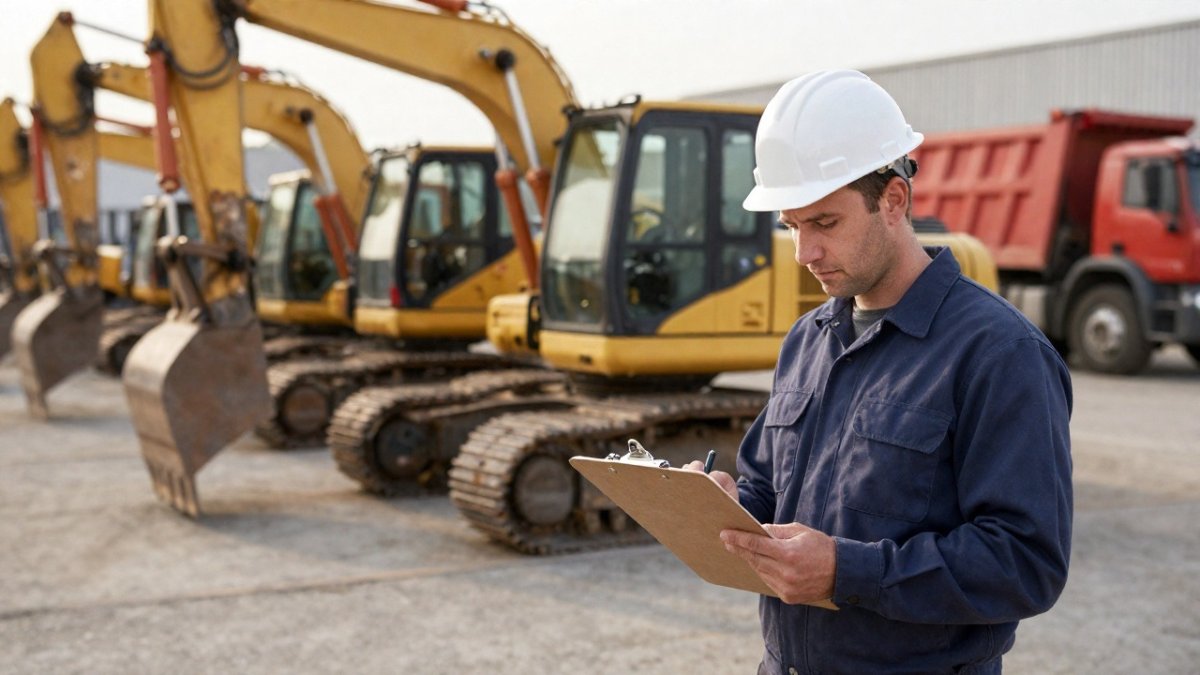
Always Capital offers 30, 60, and 90-day deferred payment plans plus seasonal payment capabilities, so the first payment can land after the equipment starts producing.
A paving crew’s machine works April through October and sits December through February. A flat payment ignores that reality; a seasonal schedule matches it.
Three structures worth comparing:
- Deferred start: no payment for the first 30 to 90 days
- Seasonal weighting: lower off-season payments, higher in peak months
- Step-up schedule: smaller payments early, larger as revenue grows
Equipment Financing for Used Equipment
Used equipment financing is funding for machinery bought on the secondary market, from a private seller, or at auction.
That matters for seasonal operators. A used mini excavator or high-hour skid steer can carry a full season, and the machine itself serves as collateral.
- Private party purchases: supported, not just dealer sales
- Auction pre-approvals: bid with funding already lined up
- Refurbished units: evaluated on utility, not model year
The appraisal drives the offer. Underwriters look at what the machine can do and what it is worth, not the calendar.
Equipment Loans vs. Leases vs. Working Capital
Three funding tools solve three different problems.
| Option | Best For | Ownership | Cash Flow Effect |
|---|---|---|---|
| Equipment loan | Long-term machine ownership | You own it | Fixed payments, build equity |
| Equipment lease | Short cycles or fast upgrades | Lessor owns it | Lower monthly outlay |
| Working capital | Payroll, fuel, materials | Not applicable | Covers operating gaps |
A loan suits a machine you plan to keep for years. A lease fits equipment that changes fast. Working capital covers the gap between a big job and the check clearing.
The decision framework seasonal operators use
Start with one question: does the machine outlive the season? If yes, a dump truck, excavator, or paver you will run for five or more years, an equipment loan builds equity while the machine works.
Working capital answers a different question: can you cover payroll, fuel, and materials between the job and the payment? A seasonal firm with a strong backlog but a thin off-season bank balance often needs working capital alongside equipment funding, not instead of it.
How each option behaves across a full season
A paving crew running April through October illustrates the difference. An equipment loan can spread the machine cost across 24 to 84 months, with payments continuing through the off-season. A lease does the same with a lower monthly outlay and no ownership at the end.
The loan versus lease comparison breaks down how each option shapes the monthly figure, and the cash flow protection guide explains why fixed payments matter more for seasonal firms than for year-round ones.
When to combine products
Seasonal firms often need two of the three at once. Always Capital structures packages that combine machine funding with operational capital, so one application can cover both. A landscaper adding two skid steers before spring may pair an equipment loan with a working-capital line for payroll during the shoulder months.
Watch out: stacking an equipment loan and a working-capital line without matching the payment start dates to the season can create two payments landing in the same slow month.
Where each product fits by equipment type
- Excavators, dozers, loaders: equipment loans for long-term ownership; excavator loan options and bulldozer leasing and loans cover the structures
- Dump trucks and vocational trucks: loans for owner-operators building a fleet; dump truck financing explains the vocational structures
- Specialty attachments and short-cycle units: leases preserve flexibility
- Payroll, fuel, and materials: working capital, not equipment funding
- Multi-unit fleet additions: fleet expansion capital bundles several acquisitions into one structure
The mistake that costs the most
The seasonal business financing options page lays out how Always Capital matches the product to the cycle, and the equipment financing overview explains how the structures differ in practice.
Get Pre-Approved with Always Capital
Confidence is high. The remaining question is whether your business can move when the season opens.
Always Capital answers that with speed and flexibility:
- Approvals in as little as two to four hours, with same-day funding timelines
- Up to 100% financing and capacity reaching $5 million
- Application-only approvals up to $500,000 without requiring extensive company financial statements
- Soft credit pulls only, so scores stay intact
- All credit types accepted, from strong profiles to challenged histories
- Terms from 24 to 84 months with 30, 60, or 90-day deferrals
Seasonal revenue does not have to mean seasonal cash crunches. Start the Always Capital application for financing before your busy months arrive, and let the machine pay for itself while it works.
The hardest part of seasonal equipment funding is not qualifying. It is applying early enough that the machine earns before the first payment comes due. Always Capital shortens that runway with two-hour decisions, soft credit pulls, 100% financing, and payment schedules built around slow months.
Frequently Asked Questions
How can a seasonal business qualify for equipment financing?
Lenders look at the asset, the revenue the machine can generate, and how long the business has operated. Seasonal businesses should show a clear cycle of peak and off-season revenue, a realistic use case for the equipment, and any contracts or bids that support the purchase. **Always Capital** accepts all credit types and uses soft credit pulls only, so a seasonal operator can pre-qualify without damaging personal or business scores.
Can equipment financing payments be adjusted for seasonal cash flow?
Yes. Seasonal equipment financing payments can be structured so the heaviest remittances land in your peak months and lighter ones fall in the off-season. **Always Capital** offers seasonal payment capabilities, 30, 60, and 90-day deferrals, and custom structures matched to your accounts receivable cycle. Repayment terms run from 24 to 84 months, which lets a landscaping or paving company spread a machine across several full cycles instead of squeezing it into one season.
Can a seasonal business finance used equipment?
Used equipment is financeable, and for seasonal operators it often makes the most sense because a late-model machine costs less and still covers the peak workload. **Always Capital** applies the same loan and lease frameworks to new and used machinery, with no age or mileage restrictions, and supports private party purchases as well as auction financing. The machine itself serves as collateral, which reduces the need for outside security.
How quickly can a business get an equipment financing decision?
**Always Capital** returns decisions in as little as two to four hours, with same-day funding timelines. Application-only approvals reach up to $500,000 without extensive company financial statements, and pre-qualification uses a soft credit pull that does not affect your scores. Fast turnaround matters most in seasonal work, where a machine bought after the season starts has already missed its earning window.
