

Table of Contents
- Why Road Construction Financing Looks Different in 2026
- How to Compare Road Construction Financing Options
- New or Used Construction Equipment Financing: Which Fits Your Upgrade
- Paver Financing for Paving Crews and Road Resurfacing
- Equipment Financing With Bad Credit: What Still Gets Approved
- Financing for Older Equipment With No Age or Mileage Restrictions
- Timing the Upgrade: Seasonal Cash Flow and Trade-In Strategy
- Conclusion
- Frequently Asked Questions
Last Updated: October 6, 2026
Why Road Construction Financing Looks Different in 2026
Finding the best financing for road construction equipment upgrades starts with one hard truth: paving crews, grading outfits, and dump truck operators buy when a contract lands, not on a tidy schedule.
Road work is seasonal, bonded, and inspected.
The best financing for road construction equipment upgrades is structured around three things: how fast the machine earns, how long the season runs, and how much documentation the lender demands.
U.S. Small Business Administration guidance on equipment loans
How to Compare Road Construction Financing Options
Comparing construction equipment financing comes down to five variables: approval speed, how much of the purchase price gets covered, documentation required, repayment flexibility, and how older equipment is treated.
A practical comparison method:
- Ask for the total financed amount, not the headline. What percentage of the machine’s cost will the lender actually cover?
- Confirm the documentation tier. Some approvals require only an application; larger amounts usually require financial statements.
- Map repayment to your season. A 24-month term on a machine that works eight months a year behaves very differently from an 84-month term.
Ask any lender one question before you apply: “What’s the largest amount I can be approved for without submitting financial statements?” That single answer tells you more about fit than any brochure.
Eligibility Requirements and the Application Process
Eligibility for heavy equipment loans rests on time in business, credit history, and the equipment as collateral. Many lenders accept all credit types, and some work with businesses under two years old.
The application process typically runs in four steps:
- Submit a short application with basic business details and the equipment you intend to buy.
- Accept a soft credit pull so the lender can review your profile without affecting your score.
- Receive a decision, which for simplified programs can arrive in as little as two to four hours.
- Sign and fund, with the equipment as collateral and repayment terms set from 24 to 84 months.
Application-only approvals, where no financial statements are required, commonly top out around $500,000. Larger requests usually move to a fuller documentation review.
What Dealers and Vendors Add to the Deal
Dealer and vendor financing shortens the gap between “I need the machine” and “the machine is on my lot.” Dealers want to move inventory, so they often have a financing partner in place, but the terms are whatever that partner offers.
A vendor program works well when the dealer has the exact machine you need and the timeline is tight, and poorly when you want to compare multiple structures or finance a private-party purchase.
Signing a dealer’s in-house financing without a second quote is the most common way contractors overpay. Get an independent approval first, then use it as a benchmark.
New or Used Construction Equipment Financing: Which Fits Your Upgrade
Used construction equipment financing covers the same categories as new: excavators, loaders, dozers, skid steers, backhoes, compactors, and paving equipment. The difference is how lenders view the collateral.
New equipment carries a longer useful life, supporting longer terms and often a higher financed percentage.
| Factor | New Equipment | Used Equipment |
|---|---|---|
| Financed percentage | Often highest | Varies by age and hours |
| Typical term length | Longer | Shorter |
| Documentation | Standard | Condition and valuation matter more |
| Best for | High-use crews | Capacity gaps and backup units |
For a paving company adding a second paver for a single season, a used unit financed over a shorter term often makes more sense than a new machine on a long commitment.
Paver Financing for Paving Crews and Road Resurfacing
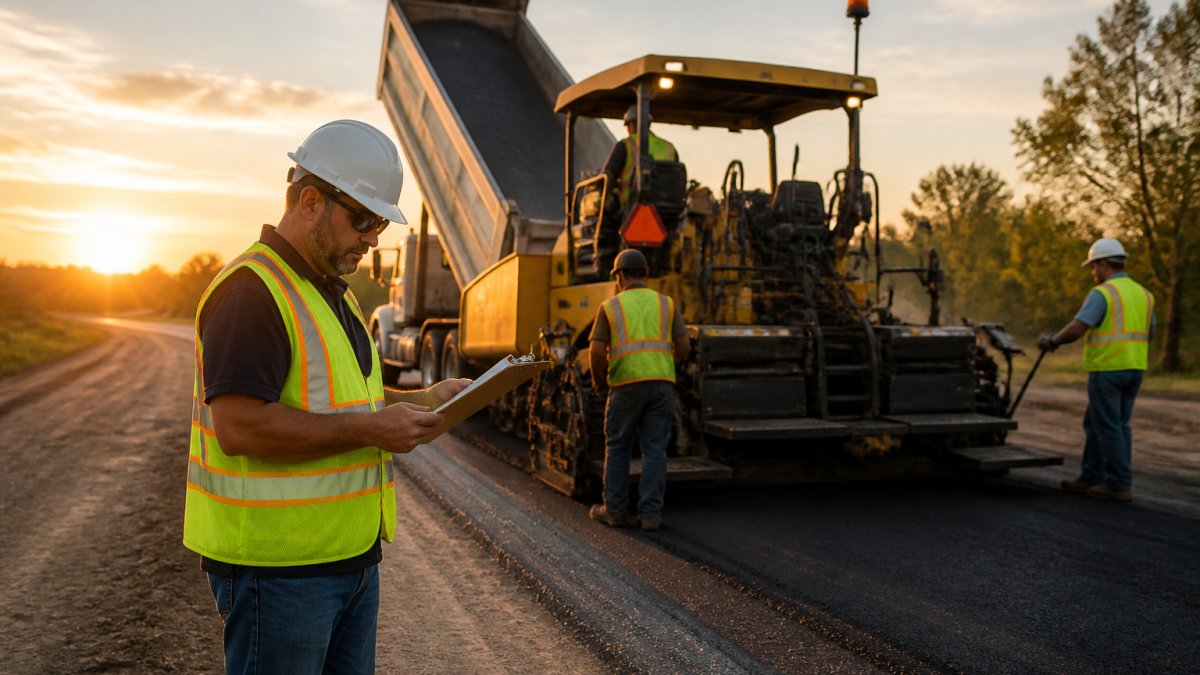
Paver financing is the entry point, but a road-resurfacing upgrade rarely stops at the paver. A full paving train includes the paver, a material transfer vehicle, breakdown and finish rollers, a distributor truck, and the haul fleet feeding it. Each machine earns, wears, and holds resale value differently, and that changes how the financing should be structured.
Here is how the major road-building categories compare on the variables that matter to a lender:
| Equipment | Duty cycle | Resale depth | Typical financing approach |
|---|---|---|---|
| Asphalt paver | High-hour, seasonal | Strong for major brands | Longer term, higher financed percentage |
| Motor grader | Year-round on grading and maintenance | Strong | Standard heavy equipment loan |
| Tandem and single-drum roller | High-hour, seasonal | Moderate | Shorter term, condition-driven |
| Milling machine | High-hour, high-wear | Narrower buyer pool | Larger down payment or trade-in helps |
| Material transfer vehicle | Specialized | Narrow | Best paired with an existing paver note |
| Distributor / asphalt truck | Seasonal | Moderate | Often bundled with the paving package |
Three scenarios where paver financing pays for itself:
- A resurfacing contract requires a wider paving width than the current machine can lay, forcing an upgrade before mobilization.
- A second crew is added to run two jobs in parallel during the short paving window.
- A compactor or roller fails mid-season, and renting for the remainder of the season costs more than owning.
Graders, Rollers, and Milling Machines
Motor grader financing is the easiest road-building category to place, because graders work year-round on grading, shoulder maintenance, and snow response, not just the paving window.
Rollers and compactors are the opposite: they run hard during the paving season and sit all winter, so a shorter term that retires the note before the machine’s second or third season often fits better.
Milling machines are where financing structure matters most.
How to Structure a Paving-Train Upgrade
A common pattern is to finance the paver on a longer term and the support equipment, rollers, distributor trucks, and the haul fleet, on shorter terms matching their working life.
If you’re adding a second crew rather than replacing a machine, sequence the upgrade: paver first, then rollers and support equipment once the second crew’s schedule is confirmed.
Always Capital structures paver financing, grader financing, roller and compactor financing, and the rest of the road-building fleet around that reality, with approvals in as little as two to four hours and soft pulls only.
Ask the lender to quote the paver and the support equipment as separate notes. Bundling everything into one large request can push you into a fuller documentation tier and slow the approval.
APPLY NOW AND GET YOUR BUSINESS PRE-APPROVED FOR FINANCING TODAY ! →
Equipment Financing With Bad Credit: What Still Gets Approved
Equipment financing with bad credit is possible because the machine, not your credit score, carries most of the risk. Lenders who work with all credit types evaluate the equipment’s value alongside your business history.
What still gets approved in most cases:
- Equipment with strong resale demand, such as excavators, skid steers, and dump trucks.
- Businesses with a down payment or a trade-in to offset the financed amount.
- Applicants with a documented revenue stream, even a short one.
What gets harder: very large requests, equipment with a thin resale market, and applicants with no business history. A larger down payment or a co-signer usually changes the outcome.
A soft credit pull lets you find out where you stand before you commit. Always Capital uses soft pulls only, so shopping for terms doesn’t hurt your credit.
Financing for Older Equipment With No Age or Mileage Restrictions
Financing for older equipment matters because a well-maintained 2006 dump truck can still earn. Age and mileage restrictions shut out machines with plenty of working life left, a problem for contractors buying at auction or from private sellers.
Lenders without age or mileage restrictions focus on the machine’s condition and market value instead of its model year. That opens up:
- Highway tractors and day cabs with significant miles but solid service records.
- Dump trucks and roll-off trucks used on short-haul routes where mileage accumulates slowly.
- Auction purchases, where pre-approval lets you bid with a firm number in hand.
Auction financing pre-approvals are particularly useful. Knowing your approved amount before the gavel falls keeps you from overbidding on emotion.
Timing the Upgrade: Seasonal Cash Flow and Trade-In Strategy
Timing an equipment upgrade around seasonal cash flow is the difference between a comfortable payment and a strained one. Road construction revenue concentrates in the paving and grading months while payments run year-round, and public-project schedules, specification deadlines, and compliance requirements often decide when an upgrade stops being optional.
Public-Works Procurement and Compliance Drivers
Public road contracts come with specifications that can make an upgrade urgent rather than discretionary. Common triggers:
- Emissions and engine-tier requirements on federally funded or state-managed projects, which can sideline older diesel equipment.
- Weight and axle specifications on haul routes, which can disqualify a dump truck that no longer meets a project’s load requirements.
- Paving width, compaction, or smoothness specifications a current machine cannot meet, forcing a paver or roller upgrade before mobilization.
When a trigger hits, the financing timeline compresses. A contractor who needs a compliant machine before a bid opening cannot wait three weeks for a full documentation review. That is where application-only approvals and same-day equipment financing matter most, they let you secure the machine while the bid window is still open.
Repair, Trade-In, or Replace: A Decision Framework
Before committing to an upgrade, run the old machine through three questions:
- Is it still compliant for the work you bid? If a specification or emissions rule has moved past the machine, repair is not the answer, replacement is.
- What is the cost of the next major repair versus the remaining value? When a repair approaches the machine’s resale value, the trade-in window is closing.
- Does the old unit still have a lien on it? If so, the payoff must be cleared before or at trade-in, reducing the equity you can roll into the new machine.
Trade in while the machine is still running and still has a buyer. A working unit is worth more than one sitting broken in the yard, and the equity from a running trade-in lowers the amount you need to finance on the replacement.
Aligning Payments With the Season
Three timing levers worth pulling:
- Buy before the season, not during it. Ordering in late winter means the machine is ready for the first contract instead of arriving mid-mobilization.
- Use deferred payments to bridge the slow months. A 30, 60, or 90-day deferral aligns the first payment with the first invoice rather than the calendar.
- Match term length to the machine’s working life. A high-hour roller or mill should retire its note before it becomes a maintenance drain; a grader that works year-round can carry a longer term.
On trade-in strategy, the gap between what the old machine is worth and what the new one costs is the amount you finance. Closing that gap with a trade-in lowers the financed amount and improves approval odds, the single most effective lever a road contractor has when a compliance deadline forces an upgrade on short notice.
Contractors who win work in bursts, face public-project compliance deadlines, and need repayment that follows the season rather than the calendar.
Application Only Equipment Financing
Financing for Older Equipment and Trucks
Get Pre-Approved for Heavy Equipment Financing
Conclusion
The hardest part of a road construction upgrade isn’t choosing the machine. It’s matching the financing to a revenue cycle that never runs on a straight line.
Always Capital provides fast, flexible heavy equipment and commercial vehicle financing built for that reality.
Get pre-approved for heavy equipment financing with Always Capital and put the next machine to work before the season starts.
Application Only Equipment Financing
No Age or Mileage Restrictions
Same Day Approvals for Excavator Financing
APPLY NOW AND GET YOUR BUSINESS PRE-APPROVED FOR FINANCING TODAY ! →
Auction Financing Pre-Approvals
Financing for Older Equipment and Trucks
Get Pre-Approved for Heavy Equipment Financing
Business Financing for All Credit Types
Fastest Heavy Equipment Financing
Best Heavy Equipment Financing
Crawler Heavy Equipment Financing
Frequently Asked Questions
What documents are typically needed to apply for road construction equipment financing?
Many application-only programs ask for basic business details and a signed application, with a soft credit pull that does not affect your credit score. Larger requests may require financial statements. Always Capital approves application-only requests up to $500,000 with no financials, and same-day decisions often land within two to four hours. Gather your business name, address, and equipment details before you apply so the review does not stall.
Can a business with bad credit get heavy equipment financing?
Yes. Equipment financing with bad credit is common because the machine itself secures the loan, which lowers the risk for the funder. Always Capital works with all credit types and uses a soft credit pull, so checking your options will not hurt your score. Past credit problems matter less when the equipment holds strong collateral value, and a larger down payment can offset a weaker credit history.
Can contractors finance used road construction equipment?
Used construction equipment financing covers most major categories, including excavators, loaders, dozers, pavers, and dump trucks. Always Capital finances equipment with no age or mileage restrictions, so high-hour machines and older trucks still qualify. A machine inspection and a clear equipment value estimate help the approval move faster, especially on private-party purchases.
Which types of road construction equipment can businesses finance?
Financing covers excavators, backhoes, skid steers, wheel loaders, dozers, motor graders, compactors, pavers, and dump trucks, along with support vehicles like day cabs and box trucks. Always Capital also funds mini excavators, roll-off trucks, and forestry equipment. If the machine earns revenue on a job site, it is usually financeable, including attachments and trailers bundled into the same agreement.