
Last Updated: November 6, 2026
Quick Summary
Equipment loans let a business acquire machinery without paying the full price upfront, spreading the cost over a fixed term while preserving cash for payroll and daily operations. Because the equipment itself usually secures the loan, owners can often finance older or used units and expand capacity to take on larger projects.
- Equipment loans preserve working capital that would otherwise go to payroll, fuel and repairs.
- Always Capital offers deferred payment options of 30, 60 or 90 days, so the first repayment can come after the new asset starts generating revenue.
- Repayment terms from 24 to 84 months keep monthly payments predictable.
- The financed machine typically serves as collateral, reducing outside collateral needs.
- Always Capital delivers approvals in as little as two to four hours.
Table of Contents
- What Is Equipment Financing and How Does It Work?
- Preserving Working Capital for Payroll and Operations
- Using Equipment as Collateral to Reduce Outside Risk
- Expanding Capacity to Win Larger Projects
- Buying Used Equipment to Stretch Your Budget
- Structuring Payments Around Your Cash Flow
- Choosing the Right Equipment Loan for Your Next Machine
- Frequently Asked Questions
What Is Equipment Financing and How Does It Work?
Equipment financing is a loan or lease that lets a business acquire machinery without paying the full purchase price upfront. Always Capital provides equipment loans for heavy equipment and commercial trucks, with approvals in as little as two to four hours and funding for businesses of all credit types.
The lender provides the funds, the business buys the asset, and the equipment itself typically serves as collateral for the loan. Repayment is spread over a fixed term, which for Always Capital ranges from 24 to 84 months.
The process is simpler than many owners expect. Follow the step-by-step path from application to approval to see what happens at each stage. Always Capital uses a soft credit pull to evaluate options, so the application does not affect your credit score.
Businesses often seek financing to cover operating expenses or to pursue expansion. Equipment financing addresses both needs by funding the asset while preserving cash for everyday costs.
Preserving Working Capital for Payroll and Operations
Working capital is the cash a business uses for payroll, fuel, repairs and supplies.
Financing solves this by spreading the cost over time.
Always Capital offers deferred payment options of 30, 60 or 90 days, so the first repayment can come after the new asset starts generating revenue.
Watch out: A deferral delays payments but does not reduce what you owe.
Using Equipment as Collateral to Reduce Outside Risk
In equipment financing, the machine itself usually secures the loan. That single structural fact changes how a lender evaluates the deal, how much outside collateral an owner must pledge, and what happens if the business hits a rough stretch. Understanding the mechanics before you sign keeps you from being surprised later.
How the collateral changes the underwriting
An unsecured loan rises and falls on the borrower’s credit profile and balance sheet. An asset-backed equipment loan is different: the machine has a resale market, so the lender can look at what the unit is worth and how easily it could be redeployed. Always Capital‘s underwriting weighs the value and utility of the equipment alongside revenue and credit history, not the score alone.
A common pattern in asset-backed underwriting is to size the advance against the equipment’s appraised value rather than the sticker price. Always Capital uses in-house asset evaluation models to determine loan-to-value based on true machinery utility, hours, configuration, attachments, and secondary-market demand. If you are weighing a specific machine, the excavator loan options and bulldozer leasing and loans pages walk through how different configurations are viewed.
What collateral does for the borrower
- Opens doors for challenged credit. A strong asset can carry more of the risk, which is why bad credit loans for equipment exist as a real category rather than a marketing phrase.
- Keeps bank lines free. With the equipment securing its own loan, a local operating line stays available for payroll, fuel, and short-term gaps. See preserve working capital for how that plays out month to month.
- Supports larger single transactions. Asset-backed structures scale, Always Capital handles single-transaction and cumulative capacity up to $5 million.
The trade-off you are accepting
Collateral is not free risk transfer. If the business defaults, the lender can recover the asset, and repossession means losing the machine your crew depends on, often at the worst possible moment. A few practical points:
Check Your Business Eligibility with No Credit Risk – Click to Get Approved Today! →
- Keep payments current even in a slow month. A 30, 60, or 90-day deferral negotiated in advance is far better than a missed payment; Always Capital‘s customized payment structures exist for exactly this reason.
- Understand what “the asset” includes. Attachments, upfits, and delivery costs may or may not be bundled into the financed amount. Always Capital can structure soft costs, registration, and initial delivery into the total loan value, ask which items are covered.
- Do not over-lever one machine. If a single unit is carrying most of your production, a breakdown plus a payment is a double hit. Fleet expansion capital can spread that exposure across units.
Watch out: A soft credit pull lets you compare options without hurting your score, but it does not lock terms. Confirm in writing which asset is pledged, what triggers default, and whether the lender requires additional collateral before you commit.
For owners comparing structures, the equipment as collateral overview and the construction equipment financing page show how asset-backed deals are typically assembled across machine types.
Expanding Capacity to Win Larger Projects
Limited equipment restricts the size of jobs a company can accept. A contractor with one loader may have to turn down a multi-year paving contract that needs two.
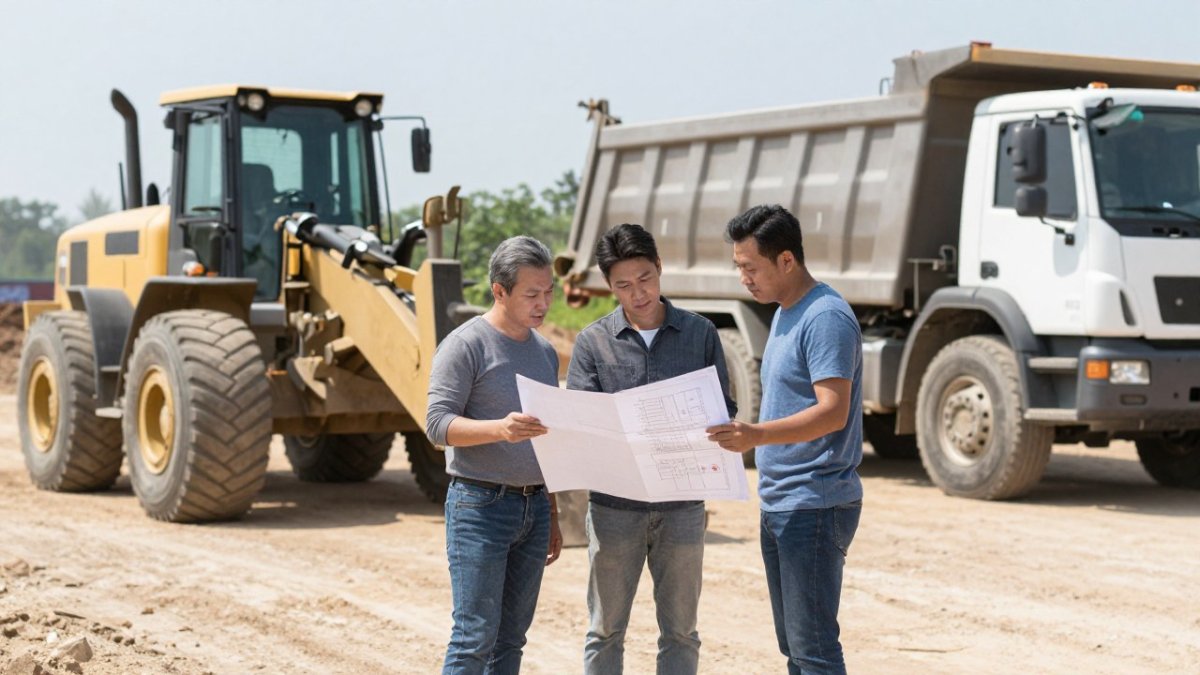
Adding machines lets a business bid on bigger, longer projects. Plan dump truck fleet growth to see how added hauling capacity fits your jobs. Always Capital supports fleet expansion, including bundled financing for multiple vehicles, so a growing hauling company can add trucks at once.
Speed matters here. Always Capital‘s approvals in two to four hours help owners move on opportunities before a competitor does. Equipment finance industry trends, Financial PC
Buying Used Equipment to Stretch Your Budget
Used machinery often costs significantly less than new equipment and can deliver the capacity a job requires. Many traditional lenders avoid older units, which limits buyers’ options.
Always Capital finances equipment regardless of age or mileage restrictions, including older equipment and trucks.
The trade-off is that used equipment needs closer inspection. Verify the machine’s condition and service history before committing, because a loan is only worth it if the asset performs.
Structuring Payments Around Your Cash Flow
Payment structure should match how your business earns money. A landscaping company with seasonal revenue faces very different cash patterns than a year-round hauling operation.
Always Capital offers fixed, predictable monthly payments with terms from 24 to 84 months. Seasonal payment capabilities and custom structures can align repayment with weather-dependent or receivables-driven revenue.
| Cash Flow Pattern | Payment Approach | Business Example |
|---|---|---|
| Steady monthly revenue | Standard fixed monthly payments | Year-round hauling fleet |
| Seasonal revenue | Seasonal payment schedule | Landscaping or snow removal |
| Delayed first job | 30, 60 or 90-day deferral | New asset ramping up |
| Long-term project contract | Extended 60-84 month term | Multi-year paving work |
Matching the structure to your revenue cycle keeps cash flow stable, which is what keeps equipment earning money.
Choosing the Right Equipment Loan for Your Next Machine
Most owners compare loans on the monthly payment alone. See the credit, revenue and documentation requirements that qualify you for heavy equipment loans before you compare offers. That is the fastest way to pick the wrong structure. A better approach connects the financing to what the machine will actually do, how many hours it will run, what revenue it will unlock, and how long you plan to keep it.
Step 1: Test whether the machine earns its payment
Before you shop, estimate the unit’s realistic utilization. A paver that runs five days a week on contracted work is a different financing decision than a backup loader that sits most of the month. Ask three questions:
- What work does this machine unlock? A second crew, a larger bid, a faster cycle time, name the specific job or contract.
- What is the expected monthly contribution? Compare the machine’s projected revenue against the payment plus operating costs (fuel, operator, maintenance).
- How long until it pays for itself? If the payback period runs longer than you expect to keep the unit, a shorter commitment or a lease may fit better.
A common pattern among contractors is to finance a machine only when a signed or highly likely contract covers a meaningful share of the payment. That discipline is what turns financing into growth rather than overhead.
Check Your Business Eligibility with No Credit Risk – Click to Get Approved Today! →
Step 2: Match term length to how long you will keep the asset
Always Capital offers terms from 24 to 84 months. The trade-off is straightforward:
- Shorter terms retire the balance faster and reduce total commitment, but the monthly payment is higher, which can crowd out working capital in a slow quarter.
- Longer terms lower the monthly payment and protect cash flow, but you carry the obligation longer and may still be paying on a machine you are ready to replace.
A practical rule: match the term to the asset’s useful life in your operation, not to the lowest possible payment. If you typically trade a skid steer every four years, an 84-month term on that unit is a mismatch. The skid steer financing and material handling equipment pages show how terms are typically set by asset class.
Step 3: Confirm you qualify, and know what to have ready
Qualification for equipment financing is broader than most owners assume, but it is not automatic. Always Capital accepts all credit profiles, has no minimum score lockouts, and offers flexible time-in-business guidelines, including startup business equipment financing with limits up to $150,000 for businesses under two years old. Application-only tiers can fund up to $500,000 without extensive company financial statements.
What speeds up a decision:
- Equipment details, make, model, year, hours or mileage, and configuration.
- Intended use, the job or contract the machine supports.
- Source of the asset, dealer, private party, or auction. Always Capital supports auction financing and private-party purchases, which many lenders avoid.
A soft credit pull lets Always Capital evaluate options without affecting your score, so pre-qualifying early costs you nothing. The no financial statement loans overview explains when the streamlined tier applies.
Step 4: Compare the full commitment, not just the payment
Two offers with the same monthly payment can carry very different total obligations. Compare:
- Total amount financed, including any soft costs, registration, or delivery rolled in.
- Term length and total number of payments.
- Down payment requirement, Always Capital offers up to 100% financing, which removes a large upfront cash need.
Watch out: A deferral or a longer term changes the monthly figure but does not lower the total obligation. Compare the full commitment across offers before choosing, and get the structure in writing.
Step 5: Pick the lender on speed and fit, not just terms
For equipment, timing is often the deciding factor, a machine at auction or a project start date will not wait. Always Capital delivers approvals in as little as two to four hours and same-day funding timelines, which matters when a competitor is bidding on the same job. The fleet expansion capital and logistics fleet funding pages show how multi-unit deals are structured when you are adding more than one asset.
If you are ready to move, get pre-approved for heavy equipment financing with Always Capital and compare structures side by side before you commit to the machine that will grow your business.
Frequently Asked Questions
What are the benefits of using loans for businesses?
Business loans let owners spend on assets and growth without draining cash reserves. For equipment-heavy companies, the main benefits are keeping working capital available for payroll and fuel, adding capacity to take on larger contracts, and spreading the cost of machinery over a repayment term that matches how long the equipment earns revenue. Always Capital provides equipment and commercial truck financing with approvals in as little as two to four hours, and works with all credit types, so owners can act when a project opens up instead of waiting on slow bank decisions.
How does an equipment loan work?
An equipment loan finances the purchase of a specific machine or vehicle, and the equipment itself typically serves as the collateral. The business makes fixed monthly payments over a term that can run from 24 to 84 months at Always Capital, and the business owns the equipment from the start. Because the asset secures the loan, the application can be simpler than an unsecured business loan. Owners should compare the term length against the expected working life of the machine.
Can an equipment loan help preserve working capital?
Yes. Paying cash for a large excavator would consume the reserves a business needs for payroll, fuel, insurance and unexpected repairs. Financing spreads that cost into predictable payments, so cash stays available for daily operations. Always Capital offers up to 100% financing, which means many buyers do not need a large down payment, and deferred payment options of 30, 60 or 90 days can give a new machine time to start producing revenue before the first payment is due.
Can businesses finance used equipment?
Businesses can finance used equipment, and this is often a practical route for companies that want more capacity without paying new-equipment prices. Always Capital finances older equipment and trucks, with no age or mileage restrictions on many units, and supports purchases from private sellers and independent auctions. Buyers should have the machine appraised and confirm its condition before committing, since the value of the equipment shapes the loan structure.
